Herringbone floor tiles have long been celebrated for their elegance, transforming ordinary rooms into spaces of refined sophistication. Their distinct zigzag pattern adds a sense of movement and depth, making them a favorite for both classic and contemporary interiors. Yet beyond their timeless charm lies a practical question many overlook: how safe are these tiles when wet?
The truth is, a tile’s slip resistance depends on more than just its pattern. It’s also shaped by material, finish, and proper care. Understanding how these factors work together allows you to enjoy the beauty of herringbone tiles with confidence, creating spaces that are both visually striking and reliably safe underfoot.

Understanding How Tile Slip Resistance Works
When it comes to preventing slips and maintaining stable footing, the science behind tile surfaces is more important than the design itself. Slip resistance depends on the interaction between your foot and the tile surface, specifically its texture, finish, and how it reacts to moisture. The measure of this interaction is known as the Dynamic Coefficient of Friction (DCOF), a standard used across the tile industry to evaluate safety in wet environments. For interior floors that may get wet, a DCOF rating of 0.42 or higher is recommended. Tiles with matte or lightly textured finishes typically exceed this threshold, providing better traction and reducing the likelihood of slips. In contrast, polished tiles, while elegant and light-reflective, often have a smoother surface that can become slippery when exposed to water.
It’s also important to clarify a common misconception: the herringbone pattern itself doesn’t influence slipperiness. The pattern is purely visual, determined by how tiles are arranged rather than how they function. Whether tiles are laid in a straight grid or in a striking zigzag layout, their slip resistance is entirely dictated by the material, texture, and finish. For example, a glossy porcelain tile in a herringbone pattern will be just as slippery as a glossy grid layout, while a matte porcelain herringbone tile will naturally offer better grip. The key takeaway is that safety lies not in the pattern but in the properties of the tile itself.

Material Choices That Influence Safety
Not all tiles perform the same way in wet conditions. The core material of a tile determines how it interacts with water, how much traction it provides, and how well it resists moisture over time.
Porcelain
Porcelain tiles are among the most reliable choices for wet areas because of their non-porous and highly dense composition. This structure allows them to resist water, making them ideal for use on floors in bathrooms, kitchens, laundry rooms, and other high-moisture zones. Their inherent water resistance also keeps the surface stable, even when exposed to frequent spills or humidity.
A matte or textured porcelain finish further enhances traction, ensuring you can walk confidently across the floor without worrying about slips. Beyond safety, porcelain’s strength and durability make it a long-lasting investment. It resists staining, chipping, and wear, maintaining its clean, elegant look for years. The entryway image shown above beautifully features our Juliet 2.5x10 Matte Porcelain Tile in Iron, a rich charcoal-gray hue that brings depth and modern character to the herringbone layout. Its subdued tone also complements both light and natural wood accents, creating a refined yet grounded look that performs exceptionally well in everyday environments. For flooring, especially in wet or busy spaces, porcelain remains the top recommendation for both performance and peace of mind.
Ceramic
Ceramic tiles are a design favorite for their versatility, vibrant finishes, and timeless appeal. Like porcelain, glazed ceramic tiles are non-porous and resistant to moisture, but their slightly lighter and less dense structure makes them better suited for walls rather than busy or wet flooring. This characteristic allows ceramic tiles to be installed vertically with ease, making them ideal for backsplashes, feature walls, and decorative herringbone layouts where weight and installation flexibility matter most.
Their wide range of colors, glazes, and patterns also gives you more creative freedom to personalize your space. In wet environments, however, glossy ceramic tiles should be used with care, as their smooth surface can become slippery when exposed to water. Opting for a matte or lightly textured finish enhances grip and keeps surfaces safe while maintaining ceramic’s soft, elegant charm. When paired with porcelain floors, ceramic wall tiles create a cohesive and visually balanced design that beautifully unites practicality with style.
Natural Stone
Natural stone tiles like marble, travertine, and limestone bring a luxurious, organic character to herringbone floors, but they require consistent care to maintain both beauty and safety. Polished stone surfaces, while elegant, can become slippery when wet, making honed or textured finishes a smarter choice for better traction. These subtle textures enhance grip without taking away from the natural richness and variation that make stone so appealing.
However, proper sealing is crucial. Without it, water and dirt can penetrate the surface, dulling its finish and reducing friction over time. Applying a high-quality sealant, and reapplying it every year or two, also keeps natural stone water-resistant and slip-safe, ensuring it remains durable and visually stunning in areas prone to moisture like bathrooms, entryways, and kitchens.
Glass
Glass tiles add a luminous, reflective quality to herringbone designs, bringing brightness and visual depth to any space. Because they are non-porous and naturally smooth, they resist moisture well but can become slippery when wet, making them better suited for walls, backsplashes, or decorative accents rather than floors.
When used as part of a herringbone layout, glass tiles work beautifully as highlights or borders that contrast with textured porcelain or natural stone. If you plan to use them on floors, choose textured or frosted glass tiles specifically rated for that purpose to improve traction. With regular cleaning to prevent smudges or residue buildup, glass tiles can also retain their radiant clarity while enhancing both the elegance and design balance of your space.

The Role of Finish, Texture, and Grout in Slip Resistance
A tile’s finish and texture have just as much influence on slip resistance as the material itself. The way a surface interacts with moisture and light determines how stable it feels underfoot. Add in the grout lines of a herringbone layout, and you get an extra layer of detail that can either enhance or diminish traction.
Matte and Honed Finishes
Matte and honed finishes naturally provide better grip than polished surfaces because they contain fine textural irregularities that increase micro-friction. This subtle texture helps your feet maintain contact with the floor, even when moisture is present. Because of that, matte tiles are often recommended for spaces like bathrooms, laundry rooms, and entryways where water or condensation can make surfaces slick. A great example is our Catalina 2x16 Matte Porcelain Tile in Mushroom, seen in the photo above, whose warm beige tone brings softness and balance to spaces while maintaining dependable traction underfoot. Its muted color and matte surface also make it ideal for bathrooms where elegance and practicality must coexist seamlessly.
Although polished tiles create a striking, reflective finish that enhances light and drama, that same smoothness is what reduces traction. In contrast, matte finishes diffuse light and create a soft, grounded feel underfoot. They also hide water spots and smudges more effectively, which keeps your space looking cleaner between wipes. When choosing tiles for busy or wet areas, a matte or honed surface is the safer choice, providing both visual comfort and reliable stability.
Grout Lines
One of the hidden advantages of a herringbone layout is its abundance of grout lines. Unlike large format installations that minimize joints, herringbone patterns use smaller tiles set at angles, naturally creating more grout lines per square foot. These joints serve as micro-grip points that subtly increase traction, especially when combined with a textured tile surface. The result is a design that’s not only visually dynamic but also functionally safer underfoot.
However, this safety benefit relies on proper maintenance. Grout must be sealed to prevent moisture buildup and cleaned regularly to avoid soap scum or residue that can make it slick. Over time, unsealed or dirty grout can negate the very advantage it provides. By keeping the grout in good condition, you preserve both the aesthetic integrity and the slip resistance of your herringbone floor, proving that beauty and safety can go hand in hand.

Performance in Common Spaces
The slip resistance of a herringbone floor tile depends as much on where it’s installed as on the tile itself. Every environment presents unique conditions that affect how a floor performs under wet or busy situations. By pairing the right tile finish with thoughtful installation, you can maintain both visual impact and dependable traction in any space.
Bathrooms and Wet Rooms
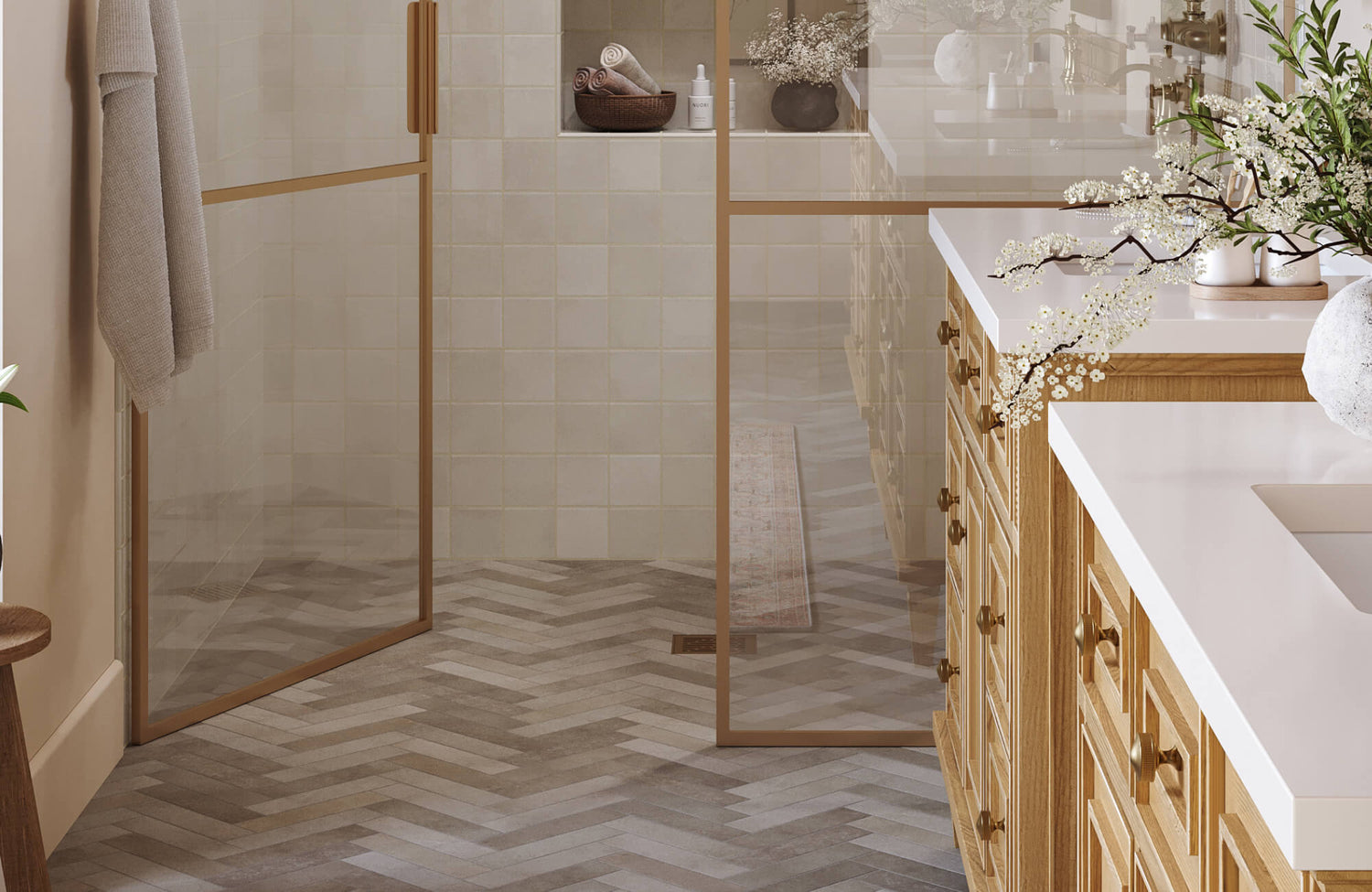
In bathrooms and wet rooms, where moisture is ever-present, slip resistance becomes essential to everyday comfort and safety. Herringbone tiles made from matte porcelain are particularly effective in these spaces because they combine water resistance with a tactile surface that helps prevent slipping. The small, angled tiles that form the herringbone layout also create more grout lines, which subtly enhance traction and provide an added layer of security when the floor gets damp. The flooring displayed in the picture above features our Natasha 2x6 Matte Porcelain Tile in Bone, a soft beige tone that brings warmth and balance to the clean lines of the shower. Its matte finish not only enhances traction but also complements both cool and warm accents, creating a soothing, spa-like atmosphere that feels safe and inviting.
To maximize these benefits, proper installation techniques are equally important for maintaining both safety and comfort. Slightly sloping the floor toward a drain ensures that water flows away instead of pooling on the surface. Incorporating non-slip additives into the grout or using sealants designed for wet environments can also enhance surface grip. With careful planning and execution, a herringbone-tiled bathroom can achieve the perfect balance of luxury and practicality, proving that safety and style can coexist beautifully.
Kitchens and Entryways
Kitchens are among the busiest parts in any space, and with constant exposure to water, oils, and food residue, they’re prime spots for slips if not properly designed. Choosing a matte or lightly textured porcelain herringbone tile helps maintain traction even when spills happen. These tiles are easy to clean and resist staining, making them as practical as they are stylish. The pattern’s visual energy also adds movement to the space, giving the kitchen character without compromising safety. A beautiful option for this setting is our Juliet 2.5x10 Matte Porcelain Tile in Olive, featuring a muted green tone that adds warmth and a natural, grounded feel to the room. Its matte finish enhances slip resistance while complementing wood, brass, or stone accents effortlessly, creating a kitchen that’s both functional and refined.
Entryways face their own challenges, often acting as the transition between the outdoors and the interior. Rain, mud, or even snow can be tracked in, creating slick surfaces near the door. Installing durable, outdoor-rated herringbone tiles with a high DCOF rating ensures that your flooring can handle changing conditions while maintaining stability underfoot. Beyond function, this design choice also offers a seamless visual flow between exterior and interior areas, proof that a safe floor can still make a strong first impression.

Maintenance Habits That Keep Herringbone Tiles Safe
Even the most slip-resistant herringbone floor tile can lose its safety over time if it isn’t properly maintained. Everyday use introduces dirt, moisture, and cleaning residues that can gradually dull a tile’s surface and reduce its grip. Regular maintenance not only preserves the beauty of your flooring but also ensures it performs safely in the long run. Establishing a consistent cleaning routine is the first and most effective line of defense. Using a manufacturer-approved pH-neutral, non-wax cleaner with a microfiber mop helps remove debris and soap film without leaving behind a slippery residue. This simple approach also keeps both matte and textured finishes at their best while preventing buildup that can make any surface slick.
In addition to routine cleaning, proper sealing and regular inspections are essential to keeping your floors in optimal condition. Natural stone tiles and cement-based grout rely heavily on sealants to protect against water absorption and surface wear. Over time, these coatings naturally break down, especially in areas exposed to high moisture or heavy use. Reapplying a quality sealant every year or as directed by the manufacturer helps maintain both the appearance and slip resistance of your tiles. You should also watch for subtle warning signs like dull patches, uneven sheen, or discolored grout, all of which suggest that your protective layer is weakening. Addressing these small issues promptly prevents larger problems such as moisture damage or loss of texture.

How to Choose the Right Herringbone Tile for Your Lifestyle
Designing with herringbone tiles is about finding the perfect balance between beauty and practicality. Every space has its own demands, from moisture levels to usage, and the right tile can make all the difference in how your space feels and functions.
Matching Tile Type to Room Usage
Each room in your space places different demands on flooring, which is why matching the tile material to its environment is key. Porcelain remains the most versatile and dependable choice for areas exposed to water, like bathrooms, kitchens, and entryways. Its density and low porosity make it highly resistant to moisture, while textured or matte finishes improve traction underfoot. This includes handcrafted look zellige-style porcelain tiles, which capture the artisanal charm of traditional Moroccan craftsmanship while offering the same durability and water resistance as standard porcelain. These tiles also add rich variation and depth to herringbone layouts, combining aesthetic warmth with dependable safety. Together, these qualities ensure your floor performs beautifully and securely, even in spaces that regularly get wet.
In rooms that see less usage such as bedrooms, powder rooms, or formal dining areas, you can explore polished tiles for a sleeker finish. Although they may not be as slip-resistant as matte porcelain, they work perfectly in drier zones where safety isn’t as pressing a concern. A sophisticated choice for these spaces is our Harley 3x12 Polished Porcelain Tile in Graphite, featuring a deep black tone and a polished surface that reflects light beautifully, adding depth and dimension to more intimate rooms. Its smooth texture and elegant sheen also make it ideal for low-moisture settings where a touch of drama and luxury can shine.
Considering Who Uses the Space
When choosing your herringbone floor tiles, think about who will be walking on them every day. If your household includes children, older adults, or anyone with mobility challenges, matte or honed finishes are your safest and most practical options. Their subtle surface texture provides extra grip and reduces the chance of slipping, all while maintaining a refined, modern appearance. For spaces that see frequent activity, a timeless option like our Jameson 8x48 Matte Porcelain Tile in Camel, featured in the image above, offers both comfort and durability. Its warm, wood-inspired tone brings a natural glow to entryways and living areas while its matte surface ensures dependable traction, making it an excellent choice for households that value both style and safety.
Lighting conditions also play an important role in how a tile performs. Glossy tiles can reflect strong light and create glare in sunlit or well-lit rooms, while matte finishes absorb light to produce a softer, more grounded ambiance. By matching the tile’s texture and finish to both the people using the space and the lighting it receives, you create a space that feels cohesive, comfortable, and intentionally designed. This approach allows your herringbone floors to be not only visually captivating but perfectly suited to your everyday life as well.
Style and Safety
Herringbone floors prove that safety and sophistication can go hand in hand, especially when crafted from porcelain, the most dependable material for wet or busy spaces. Its dense, non-porous composition resists moisture and staining while providing consistent traction through matte or textured finishes. Porcelain’s strength also ensures that your floor maintains both its beauty and stability over time, performing effortlessly in areas like bathrooms, kitchens, and entryways. When installed thoughtfully and maintained with care, porcelain herringbone tiles deliver a perfect blend of form and function, offering the elegance of timeless design with the reassurance of everyday safety.
If you’re ready to create a herringbone floor that combines elegance with lasting safety, we offer support to help you bring your vision to life with confidence. You can explore our design services for expert guidance on selecting the ideal layout, finish, and tile material suited to your space. To visualize your choices in real time, you can also use our augmented reality (AR) tool and see how your selected tiles look within your own room. With these resources, you can design a herringbone floor that’s timeless, refined, and tailored to your lifestyle and safety needs.