Shedding is one of the first practical questions that comes up when choosing between wool and polyester rugs, and the answer is not as straightforward as the material alone suggests. Wool is a natural staple fiber, which means it is made from short strands spun together, and that structure is what causes it to shed more noticeably in the early months of use, particularly in hand-tufted and cut-pile constructions. Polyester is built differently, from synthetic continuous filaments or heat-set cut-pile yarns that resist fiber loss from the start and maintain that resistance over the life of the rug. In this blog, we'll break down how wool and polyester compare on shedding, what drives the difference, and how to choose a rug that suits both your space and your expectations for upkeep.

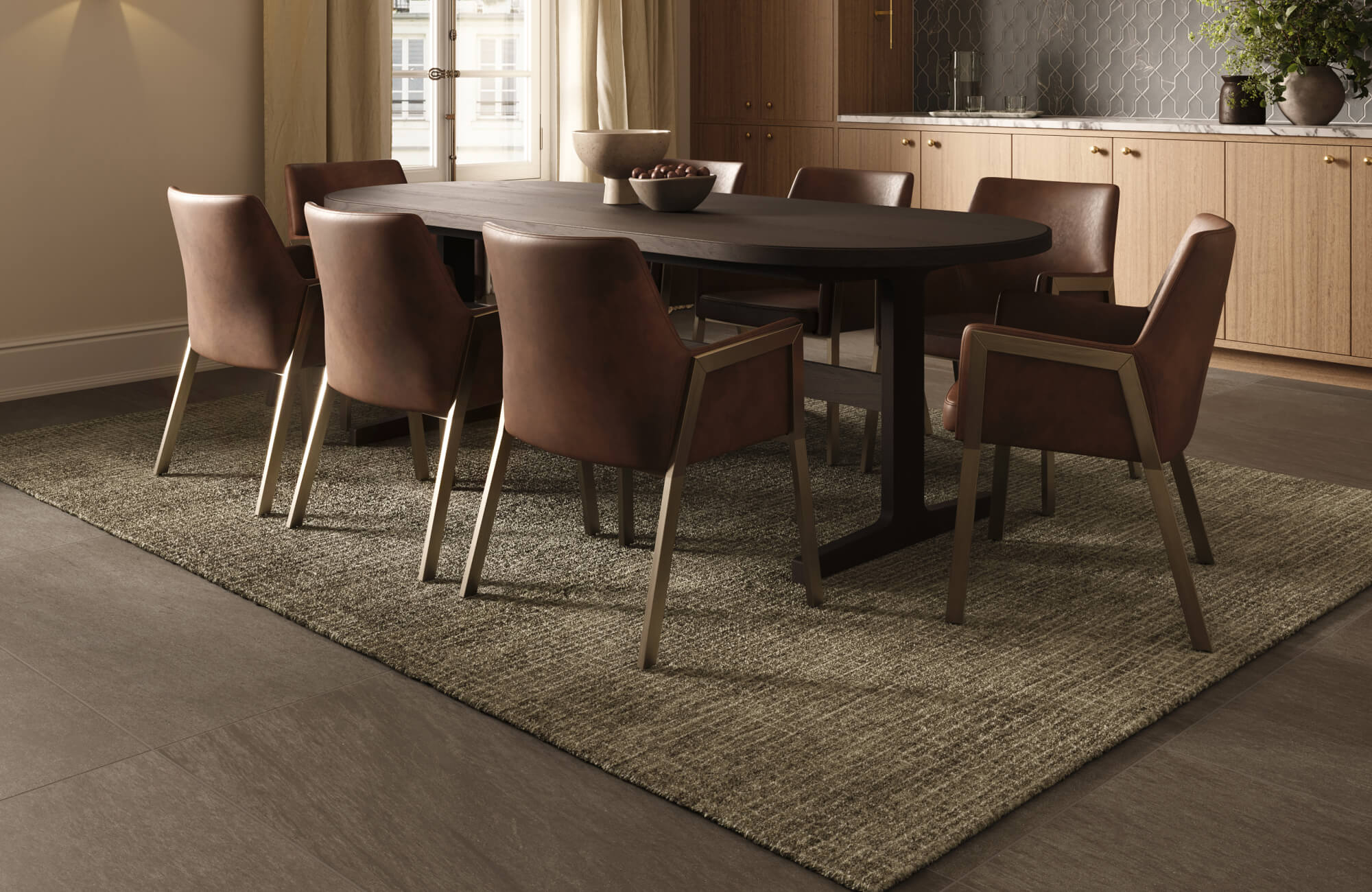
The McGowan Rug in Moss/Sand holds its color and surface under the Rita Dining Chairs in Taupe, which is exactly what a low-shedding polyester rug looks like in a well-used space.
What Determines How Much A Rug Sheds
To understand why some rugs shed more than others, it helps to start with the basics. From the type of fiber used to how the rug is made, each detail helps determine how much shedding you can expect.
At the core of rug shedding lies the type and structure of the fibers themselves. All rug fibers fall into two categories: staple fibers or continuous filaments. Staple fibers, like wool, are made of short strands spun together, which can loosen and shed over time. This is why wool, particularly in cut-pile or hand-tufted styles, tends to shed more during its initial months of use. On the other hand, polyester and other synthetics are often continuous filaments or heat-set cut-pile yarns. These strands are longer, smoother, and more cohesive, reducing the chance of fiber breakage or surface fuzzing. Even when cut, heat-setting strengthens polyester filaments, leading to less early-stage shedding.
Shedding is also significantly shaped by how a rug is constructed. In particular, hand-tufted wool rugs often release more fibers early on because the yarns are glued into a backing rather than tightly knotted. Over time, friction from vacuuming or walking can cause these loosely anchored fibers to surface. Conversely, machine-woven or hand-knotted rugs, especially those using heat-set synthetic yarns, are more tightly constructed. The heat-setting process fuses the outer layer of each fiber, locking it into place and drastically reducing fiber migration. Tighter weaves, high-twist yarns, and dense construction further suppress shedding, making these rugs a more resilient, low-maintenance option.

A rolled-up view of the Georgette Rug in Desert/Multi shows the tight, flat-woven construction and black backing that keep the fibers bonded and shedding minimally.
Polyester Rugs Shedding Characteristics
Polyester rugs are often praised for being easy to maintain, but there's more to their performance than meets the eye. When it comes to shedding, several factors, from how the rug settles in at first to the type of pile it features, can influence what you’ll experience over time.
Initial Shedding Phase & Long-Term Shedding Behavior
Polyester rugs tend to shed far less than their natural fiber counterparts, especially during the initial break-in phase. Most early fiber loss is minor and superficial, typically limited to leftover manufacturing residue, especially in cut-pile constructions. Because polyester is made from continuous filaments and often heat-set during production, its fibers are more cohesive and resistant to fraying, resulting in minimal surface fuzz.
Over the long term, polyester’s synthetic composition offers impressive shedding resistance. Its non-absorbent, stable structure prevents moisture expansion and fiber fatigue that often affects natural materials like wool or viscose. Even in high-use areas, polyester fibers generally remain firmly bonded to the rug’s backing unless physically damaged. Many modern versions, such as Edward Martin’s Georgette Rug in Desert / Multi, shown in the photo above, offer lasting color vibrancy and minimal shedding even in well-used spaces. With proper care, long-term fiber release remains negligible, making polyester a reliable, low-maintenance choice.
Construction and Pile Impact on Polyester Shedding
The pile type, referring to how the yarn is cut or looped, greatly affects shedding behavior in polyester rugs. In particular, loop pile rugs, where the yarns remain uncut and form a series of closed loops, offer the highest resistance to shedding. Because the loops remain intact, they help contain the fibers within the rug’s surface structure, minimizing disturbance from friction or vacuuming. For this reason, loop pile polyester rugs are an excellent choice for spaces where durability and cleanliness are priorities, such as entryways or family rooms.
Conversely, cut pile polyester rugs, while often more plush and luxurious underfoot, are more susceptible to light linting during the early stages of use. This is because cutting the yarn exposes the filament ends, which may release some surface fibers, particularly if the yarn wasn’t properly heat-set during manufacturing. Even so, compared to cut-pile wool rugs, polyester variants still shed significantly less and maintain a clean appearance with proper care. Additionally, textured pile options like frieze or shag can help disguise minor linting visually, though they may require more frequent vacuuming to manage fiber buildup and maintain their look over time.

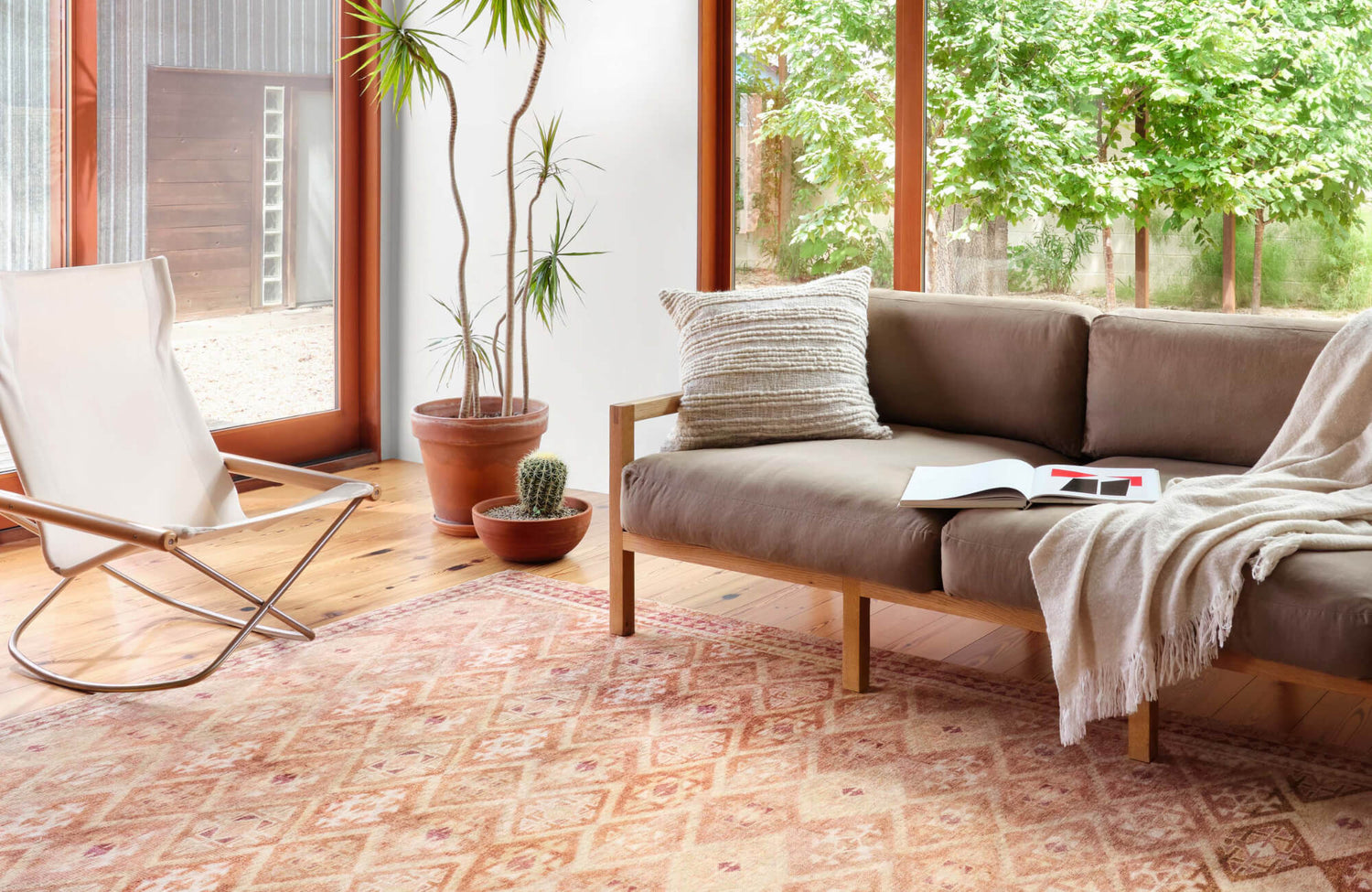
The Micah Wool Blend Rug in Natural/Graphite anchors a white sofa and mid-century chair with a dark gray diamond pattern that holds its look in a well-used living room.
Wool Rugs Shedding Characteristics
Wool rugs have a timeless appeal, but they come with unique characteristics that can affect upkeep, especially when it comes to shedding. To better understand what contributes to this, it’s helpful to look at how wool behaves naturally, how it’s sourced, and how the rug is constructed.
The Natural Shedding Process of Wool
Wool is a staple fiber, meaning it consists of short strands that are spun together into yarn. By nature, this structural trait contributes to shedding, as the shorter fibers can loosen from the yarn with regular use. Unlike synthetic filaments, which are extruded as continuous strands, wool’s organic composition allows for micro-fraying, particularly noticeable in newly manufactured rugs. As a result, this initial shedding phase can last anywhere from several weeks to a few months, depending on usage patterns and pile density.
Typically, the shedding is most intense during the rug’s break-in period, especially in cut-pile wool rugs, where fiber ends are exposed and more vulnerable to friction. Activities such as walking, vacuuming, and even fluctuations in environmental humidity can accelerate fiber release. Importantly, this is not a defect but rather an expected result of wool’s natural properties. Over time, these surface fibers are shed, leaving behind a denser, more compact pile that resists further loss. To manage this phase, regular vacuuming with a suction-only attachment and rotating the rug periodically can significantly reduce buildup and extend the rug’s visual integrity.
The Influence of Wool Quality and Processing
Not all wool is created equal, and the grade and processing method of the wool fiber help determine how much a rug will shed. Generally speaking, high-quality wool, such as New Zealand wool, is longer-staple, cleaner, and more refined. As a result, these longer fibers interlock more effectively within the yarn, reducing the presence of loose fibers and creating a tighter, more durable construction. In contrast, lower-grade wool, often sourced from the neck or belly of the sheep, contains shorter or more brittle fibers that are far more prone to breaking away under friction.
Beyond fiber length, the carbonization and scouring processes used during wool preparation also significantly influence shedding behavior. For example, premium wool undergoes thorough cleaning to remove vegetable matter, lanolin, and other impurities that could compromise fiber strength. On the other hand, poorly processed wool may retain residual debris, which can exacerbate fiber slippage and surface fuzz during regular use. For this reason, investing in a rug made from combed, long-staple wool not only enhances durability but also reduces the likelihood of excessive shedding. Telltale signs of quality, such as fiber luster, bounce-back resilience, and minimal surface fuzzing, can help identify a wool rug that’s better equipped to maintain its integrity over time.
The Impact of Wool Rug Construction
The construction technique of a wool rug is another major determinant of its shedding behavior. Specifically, hand-knotted wool rugs, often crafted in regions like India, renowned for their weaving heritage, are known for shedding less over time due to their structurally integrated design. Each knot is individually tied to the warp threads and secured with a weft pass, creating a dense and durable pile. Because of this meticulous craftsmanship, the fibers are locked into place far more securely than in tufted or machine-made alternatives. Consequently, hand-knotted wool rugs often shed less persistently after the initial settling phase, offering greater long-term stability.
By comparison, hand-tufted wool rugs, though often visually similar, rely on glue and a secondary backing to hold the fibers in place. Due to this reliance on adhesives and the lack of true interlocking knots, the fibers are more susceptible to coming loose with friction or repeated cleaning. In a similar vein, needle-punched and hooked wool rugs tend to release more fibers over time, largely due to looser yarn tension and less sturdy construction. A wool blend rug like Edward Martin’s Micah Rug in Natural / Graphite, shown in the photo above, highlights the visual appeal of tufted construction while offering a balanced feel. However, it may still shed more than a hand-knotted counterpart, especially when exposed to regular cleaning or high levels of foot activity.

The cream and gray patterned surface of the Liddy Rug in Fog/Stone on a light oak floor is a good example of what low-shed polyester looks like in practice.
Comparing Shedding Intensity Between Polyester and Wool
Now that we’ve looked at how polyester and wool rugs shed on their own, it’s worth comparing them side by side. From the first few weeks of use to how they interact with tile flooring underneath, the differences can influence both your maintenance routine and overall flooring care.
Wool vs. Polyester Rugs
To better understand how wool and polyester rugs differ in shedding behavior, the table below offers a clear side-by-side comparison. It highlights key factors like fiber structure, maintenance needs, and long-term performance to help guide your selection.
| Aspect | Wool Rugs | Polyester Rugs |
| Initial Shedding | Substantial shedding is common at first due to the fiber structure, which contains many short, loose strands. | Minimal shedding; typically limited to manufacturing residue. Continuous filaments and heat-set yarns reduce fiber release during the break-in phase. |
| Construction Sensitivity | Hand-tufted or cut-pile wool rugs shed more due to exposed fiber ends; hand-knotted options shed less over time. | Cut-pile polyester rugs are less prone to shedding thanks to heat-setting; overall, they maintain a tighter, more cohesive surface. |
| Vacuuming Needs (Initial) | Frequent vacuuming is often required in the first few months to manage fiber and lint buildup. | Light maintenance is sufficient; early shedding tends to subside quickly with routine care. |
| Long-Term Shedding | New wool rugs often shed during the initial break-in period, but this typically lessens with regular use and consistent vacuuming. However, hand-knotted wool rugs tend to shed far less over the long term compared to tufted or machine-made alternatives. | Long-term shedding is virtually negligible. Synthetic polymers resist breakdown, even in high-use environments. |
| Environmental Sensitivity | Susceptible to humidity, sunlight, and improper cleaning, all of which can accelerate fiber brittleness and prolong shedding. | Moisture- and UV-resistant; holds up well under daily use and environmental stress without increasing fiber loss. |
| Overall Shedding Behavior | Prone to both initial and some occasional shedding due to natural fiber characteristics. | Stable and low-shed over the rug’s lifespan, making it ideal for those seeking ease of care and minimal maintenance. |
Impact on Underlying Tile Flooring
A commonly overlooked aspect of rug shedding is its effect on the flooring beneath, particularly on smooth surfaces like ceramic, porcelain, or natural stone tile. Wool rugs, for instance, are prized for their natural beauty and tactile warmth, but they may shed more visibly during the initial break-in phase. By comparison, polyester rugs release finer, less voluminous particles that are generally easier to manage. Because synthetic shedding is typically short-lived and lighter in density, it’s far less likely to interfere with tile appearance or complicate routine maintenance. Moreover, polyester’s inherent moisture resistance prevents fibers from becoming sticky or attracting excess dust, which is especially advantageous in humid environments.
Even so, both materials can still pair beautifully with tile when maintained properly. A low-shed option like our Liddy Rug in Fog / Stone, seen in the photo above, offers a practical solution for preserving clean tile surfaces while adding subtle texture and tonal depth. On the other hand, for those who appreciate the craftsmanship and character of wool, selecting a hand-knotted or high-quality blend, along with consistent upkeep, can help minimize shedding’s impact while maintaining its enduring appeal.

A person in white overalls and purple gloves running a vacuum across a green and gray geometric rug in a living room.
Practical Ways To Keep Rug Shedding Under Control
Shedding is a natural part of a rug's life, particularly in the early months of use, but it can be managed effectively with the right approach. The tools used, the frequency of care, and the support placed beneath the rug all play a role in how much fiber loss occurs over time.
Vacuuming Technique And Frequency By Fiber Type
The way a rug is vacuumed affects how much shedding occurs as much as how often it is vacuumed. Vacuums with beater bars or rotating brushes introduce mechanical friction that pulls at yarn ends, which accelerates fiber release, particularly in looped or cut-pile constructions. A suction-only vacuum with adjustable height settings lifts surface debris without agitating the pile, which is the more appropriate tool for wool rugs in particular during their initial shedding phase. Always checking the manufacturer's care instructions before establishing a vacuuming routine confirms the right approach for the specific fiber and construction.
For new wool rugs, vacuuming two to three times per week during the first month manages the initial release of loose fibers before they compact deeper into the pile. Once shedding tapers off, weekly vacuuming is generally sufficient to maintain the surface. Polyester rugs shed far less from the outset and typically require only once-a-week maintenance to stay in good condition. Vacuuming in the direction of the pile rather than against it preserves the surface structure and prevents premature fuzzing regardless of fiber type, which keeps the rug looking consistent between deeper cleaning sessions.
Why A Quality Rug Pad Reduces Fiber Stress Over Time
A rug pad does more than keep a rug from sliding. When a rug shifts across a hard floor surface, the friction generated at the base of the pile creates mechanical stress that gradually loosens fibers from their anchoring point, which contributes directly to shedding over time. A non-slip pad made from natural rubber or felt keeps the rug firmly in place, which removes that source of ongoing fiber stress at the foundation of the construction. For wool rugs in particular, which are more susceptible to matting and fiber displacement under uneven weight distribution, the cushioning a pad provides also reduces the compressive force that repeated foot pressure and heavy furniture place on the pile.
The airflow a pad creates between the rug and the floor surface also reduces moisture accumulation beneath the rug, which matters most in humid environments where trapped moisture can weaken fiber structure over time. A rug sitting directly on a hard floor without airflow is more likely to develop the kind of fiber deterioration that accelerates shedding, whereas one supported by a quality pad stays drier and more structurally stable between cleaning sessions. Choosing a pad sized to the rug rather than slightly smaller ensures the full perimeter of the rug is supported, which prevents the edge curling and uneven tension that contribute to fiber loss at the borders.
When Professional Cleaning Is The Right Next Step
Routine vacuuming manages surface fiber and loose debris, but it does not address the particulate matter that settles into the base of the pile over months of use. Fine particles that reach the rug's foundation act as an abrasive against the yarn, gradually weakening fiber integrity from the inside out in a way that is not visible until the shedding or matting has already progressed. Professional cleaning removes this deep-seated buildup using methods suited to the specific fiber and construction, including cold water immersion, low-moisture encapsulation, or dry compound extraction, none of which places the mechanical stress on the pile that aggressive home cleaning methods can. For wool rugs, professional handling is particularly important because improper water temperature or a pH-imbalanced cleaning product can strip the natural lanolin coating that gives wool fiber its resilience, leaving it brittle and more prone to shedding after cleaning rather than less.
Polyester rugs require less intensive professional care but still benefit from periodic deep cleaning that refreshes the fiber surface and reduces static buildup, which is one of the less obvious contributors to surface fuzz in synthetic pile. A professional cleaning schedule of once every twelve to eighteen months, adjusted for how heavily the rug is used, keeps both fiber types performing at the level they were designed for and extends the interval before shedding becomes a noticeable issue again. When selecting a professional cleaner, asking specifically about their experience with the rug's fiber type and construction ensures the method chosen is appropriate rather than a standard process applied uniformly regardless of material.
Rotating Your Rug To Distribute Wear Evenly
Uneven wear is one of the less obvious contributors to shedding because it concentrates friction and foot pressure on the same section of pile repeatedly, which breaks down fiber in that area faster than the rest of the rug. Rotating the rug 180 degrees every three to six months redistributes that wear across the full surface, which keeps the pile density more consistent and reduces the localized fiber loss that builds up in the most-used areas over time. This practice is particularly relevant for rugs placed in front of sofas, beneath dining chairs, or in any position where movement follows a predictable path across the same section of the rug. For wool rugs in the early shedding phase, rotating also ensures that any uneven fiber release during the break-in period is distributed across the surface rather than concentrated in one area, which produces a more consistent result as the pile settles over the first several months of use.
Choosing the Right Rug for Shedding Control
When it comes to shedding performance, polyester rugs consistently outperform wool in both initial and long-term scenarios. Thanks to their synthetic filament structure, heat-set yarns, and minimal fiber migration, polyester rugs are designed to retain their integrity with minimal upkeep. By contrast, while wool offers natural resilience and a handcrafted, artisanal appeal, its fiber composition and sensitivity to friction make it more prone to shedding, particularly in tufted constructions or when lower-grade wool is used.
That said, your decision should best reflect your priorities for maintenance, longevity, and overall design goals. To simplify your selection process, Edward Martin offers complimentary support through a personalized design consultation service that pairs expert insight with your unique space. If you have further questions, need tailored recommendations, or simply want help selecting the right rug, don’t hesitate to contact us, Edward Martin is always here to help you find the rug that’s just right for your space.