Interior design can dramatically influence how we perceive space, and one of the most common ideas is that lighter-colored rugs make rooms look bigger. But how much truth is there to this belief? This article explores the science and strategy behind using lighter rugs to expand visual space. By understanding key psychological principles, practical applications, and design interactions, you’ll be better equipped to make rug choices that maximize both style and spatial impact.

The Psychology of Light and Space
Light affects how we see and feel space. Lighter colors play a significant role in shaping our perception of openness and size.
Brightness Perception
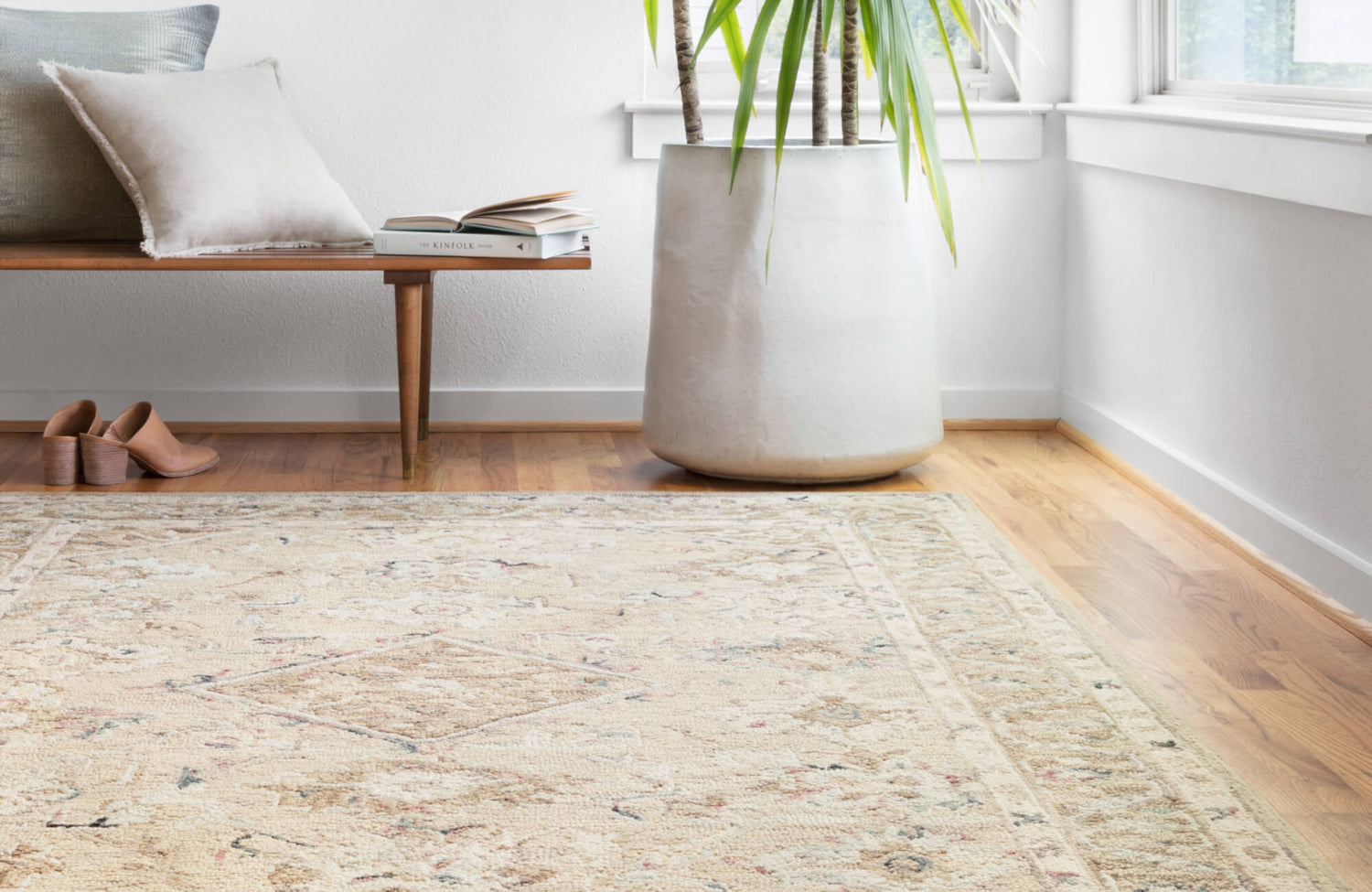
When a room has light-reflective surfaces, like a pale rug, it feels brighter and more open. Lighter colors tend to recede from the eye, which makes them appear to occupy less space and adds to a sense of visual airiness. The Edward Martin’s Pascal Polyester Face Rug in Platinum / Mist, shown in the photo above, exemplifies this beautifully—its cool, light tones subtly reflect ambient light, softening the overall space while enhancing that open, breezy feel. In contrast, dark hues absorb light and carry visual weight, anchoring the floor and making the space feel more enclosed. Placing a light rug across a large portion of the floor lifts that heaviness, offering a more expansive visual field.
Reducing Shadows and Enhancing Continuity
Light rugs don’t just brighten a space; they help distribute light more evenly across the room. Low-pile, light-toned rugs reflect light outward, helping reduce shadows that create divisions in a space. Fewer shadows mean smoother transitions between surfaces, which enhances the illusion of continuity. This effect becomes even more noticeable when the rug contrasts with darker floors or furniture.
Diminishing Visual Clutter
Clean visual lines are essential in making a room feel more spacious. Light-colored rugs, particularly those with subtle patterns or no pattern at all, help create a blank canvas that minimizes visual distraction. The uninterrupted floor surface allows the eye to move freely, which is especially helpful in small or multifunctional rooms. Compared to dark or busy rugs that break up the floor area, a light rug visually extends the space by simplifying it.

Practical Applications
Creating the illusion of more space with a rug involves more than choosing a light color; it’s also about tone, texture, and placement. These elements work together to influence how open or confined a room feels.
Color Spectrum for Expansion
Neutral tones like ivory, pale beige, and light grey remain go-to choices for reflecting light and maintaining a soft, cohesive look. Cool tones such as pastel blue or light mint can also create the impression of depth and airiness, especially in small or enclosed areas.
The effect of color can also depend on how it interacts with the room’s overall palette. For example, a light blue rug paired with white walls evokes openness, while a greige rug in a warm-toned room adds softness without compromising the feeling of space. A great example of this balance is our Haverford Polyester Pile Rug in Ecru / Mist; its muted hues effortlessly reflect light and adapt to a variety of neutral settings, subtly enhancing spaciousness while adding gentle visual texture.
The Role of Texture
Rug texture also affects spatial perception. Low-pile or flat-weave rugs reflect light more consistently, supporting a clean and expansive look. In contrast, high-pile rugs, though plush, can create shadow and segmentation that visually compress the floor. Choosing a flatter, light-colored rug helps keep the space open and cohesive.
Real-World Example
Imagine a compact apartment with dark flooring and substantial furniture. Replacing a dark rug with a large, pale grey low-pile rug that extends beneath furniture can instantly lighten and open up the room. In narrow hallways, using a light-toned runner can guide the eye forward, giving the impression of greater length and less confinement.

Nuances and Exceptions
While lighter rugs are widely recognized for their space-enhancing qualities, there are certain contexts where their impact might be diminished, or where a darker alternative can offer unique advantages.
Natural Light's Dominance
In spaces already bathed in natural light, such as south-facing rooms with generous windows, the need for a light-reflecting rug becomes less crucial. These environments already feel open and airy due to the sheer amount of sunlight streaming in. In such cases, other design goals may take priority over enhancing perceived space.
A slightly deeper-toned rug or one with a soft pattern can add warmth, anchor specific zones, or introduce visual interest without making the room feel smaller. In fact, extremely light rugs in sun-filled rooms can sometimes appear too stark or sterile unless balanced with complementary textures or décor.
Pattern and Proportion Matter
Even the lightest rug can lose its space-enhancing power if it overwhelms the eye with busy patterns or is poorly scaled for the room. Bold, oversized prints, such as large florals or geometric shapes, can dominate the floor and fragment the space, making it feel smaller.
More refined patterns, including tone-on-tone motifs or soft, abstract textures, maintain openness while adding subtle character. Proportion is equally critical. A light rug that’s too small for the room or the furniture it’s meant to support will appear disconnected and may visually shrink the space. Choosing a rug large enough to anchor key furnishings creates cohesion and supports the sense of expansiveness that lighter tones aim to achieve.
Strategic Use of Dark Rugs
There’s a strong case for choosing darker rugs in larger or multifunctional spaces. Deep hues like navy, charcoal, or forest green can serve as visual anchors, especially in open-concept layouts where rugs help define zones. A dark rug beneath a seating area, for instance, helps organize the room, providing visual balance and a grounded feel, like our Georgette Polyester Pile Rug in Spice / Indigo, displayed in the photo above, which blends deep spice tones with rich indigo to create a moody yet inviting focal point.
Darker tones absorb light and bring richness to the floor, adding contrast in rooms with pale walls and light furniture. While these rugs don’t contribute to the illusion of a bigger room, they offer something equally valuable: depth, definition, and intimacy. The visual focus shifts from expanding space to crafting an environment that feels curated and comfortable.

Integrating Other Elements
A lighter rug plays a powerful role in spatial perception, but its impact is significantly influenced by the elements surrounding it. Wall color, furniture choices, and lighting all contribute to whether the rug enhances or diminishes the room's openness.
Coordinating with Walls
Pairing a light rug with equally light-colored walls and ceilings creates a seamless visual flow, helping the eye move uninterrupted across the room. This cohesive palette makes the room feel taller, wider, and more continuous. Shades like soft white, pale grey, and pastel hues reflect light just like the rug, amplifying its spatial effect. A perfect match for this approach is our McGowan Polyester & Polypropylene Pile Rug in Moss / Sand, as seen above, which blends muted green and beige tones into a soft, grounding base that enhances airy, tone-on-tone palettes.
Opting for a monochromatic or tone-on-tone approach—where the rug, walls, and even ceiling are in harmonious hues—can establish a tranquil, expansive feel. In contrast, dark or saturated walls absorb light and visually draw the space inward, potentially reducing the rug’s ability to open up the room. When walls and rugs work in unison, they act as a light-reflecting duo that can dramatically enhance the sense of spaciousness.
Furnishing for Flow
Furniture selection and arrangement directly influence how effectively a light rug performs. Pieces with slender legs and open frames allow the rug to remain visible, which extends the visual floor area and preserves the open feel. Materials such as glass and acrylic are especially useful for minimizing visual weight, keeping sightlines clear, and allowing light to travel freely.
To support the illusion of space, arrange furniture in a way that maintains wide, clear paths and avoids interrupting the rug’s surface with bulky, centered pieces. Heavy or oversized furnishings placed directly on the rug can create visual density that undermines its lightening effect. The aim is to promote movement, both physical and visual, so the room feels balanced, breathable, and cohesive.
Illuminating the Illusion
Lighting amplifies every benefit of a light-colored rug. General ambient lighting fills the room with a soft glow, enhancing how light bounces off the rug’s surface. This glow reduces harsh shadows and helps maintain visual continuity across the floor and walls.
Complementing ambient lighting with focused task or accent lights adds dimension and draws attention to the rug’s brightening effect. Strategically placed lamps and uplights can extend perceived boundaries by highlighting light surfaces and diminishing darker recesses. When used thoughtfully, lighting doesn’t just brighten a room; it reinforces the open, spacious environment the rug helps establish.

Maximizing Function and Feel
While visual spaciousness is often a driving reason for choosing a light rug, its practical and emotional contributions to a room shouldn’t be overlooked.
Zoning for Purpose
Light rugs can double as design tools that define and structure specific areas, especially in open-plan layouts. A well-placed rug can subtly separate a living area from a dining nook without the need for walls or dividers. The lighter color supports this function by maintaining a sense of unity and openness, rather than drawing harsh boundaries.
Even in compact rooms, a light rug can help carve out functional zones. A cozy reading area or a quiet workspace gains definition and purpose without compromising the room’s sense of flow. Rather than segmenting the space, it ties it together.
Comfort Underfoot
The tactile benefits of a rug are just as important as its visual effects. On hard surfaces like tile, wood, or stone, a rug introduces softness underfoot, adds warmth, and reduces noise. A light rug can do all of this while also contributing to the perception of a larger, more inviting room.
These comfort-based features, insulation, sound absorption, and softness, help create a peaceful and livable environment. The space feels more welcoming and serene, not just bigger. Even when spatial impact is a bonus, the sensory comfort a rug brings often becomes its most appreciated trait.
Reflecting Personal Style
Design success hinges not only on visual strategy but also on authentic expression. While light rugs are excellent for creating airy, expansive spaces, they should also reflect your personal style and functional needs.
For those who favor minimalist or coastal aesthetics, a light rug might be a natural fit. But if your space thrives on bold contrasts, deep tones, or layered textures, then a darker or patterned rug may suit you better, even if it doesn’t visually enlarge the room. As tackled earlier, spatial enhancement is only one part of the equation. Comfort, personality, and intention complete the picture.

Final Reflections
Lighter rugs play a powerful role in shaping how spacious and cohesive a room feels. Their ability to reflect light, minimize visual heaviness, and unify the floor surface helps create the impression of a brighter, more open environment. These qualities make them a smart choice for enhancing both perception and comfort.
Still, the impact of a light rug depends on how well it integrates with its surroundings. Walls, furniture, lighting, and overall layout all influence the rug’s effectiveness. When these elements are intentionally coordinated, the rug becomes more than just a decorative layer; it functions as a key part of a broader design strategy that improves both form and function.
Whether your goal is to visually expand a small room or bring clarity and cohesion to a larger space, a light-colored rug can be a valuable tool. The key lies in thinking holistically, considering how each detail works together to shape the room’s atmosphere, usability, and character. If you need help selecting the perfect rug for your space, feel free to contact us; we’re here to help you bring your vision to life with expert guidance.