
)
)
)
)
)
)
)
)
Can I Use Porcelain Tiles As Pavers?
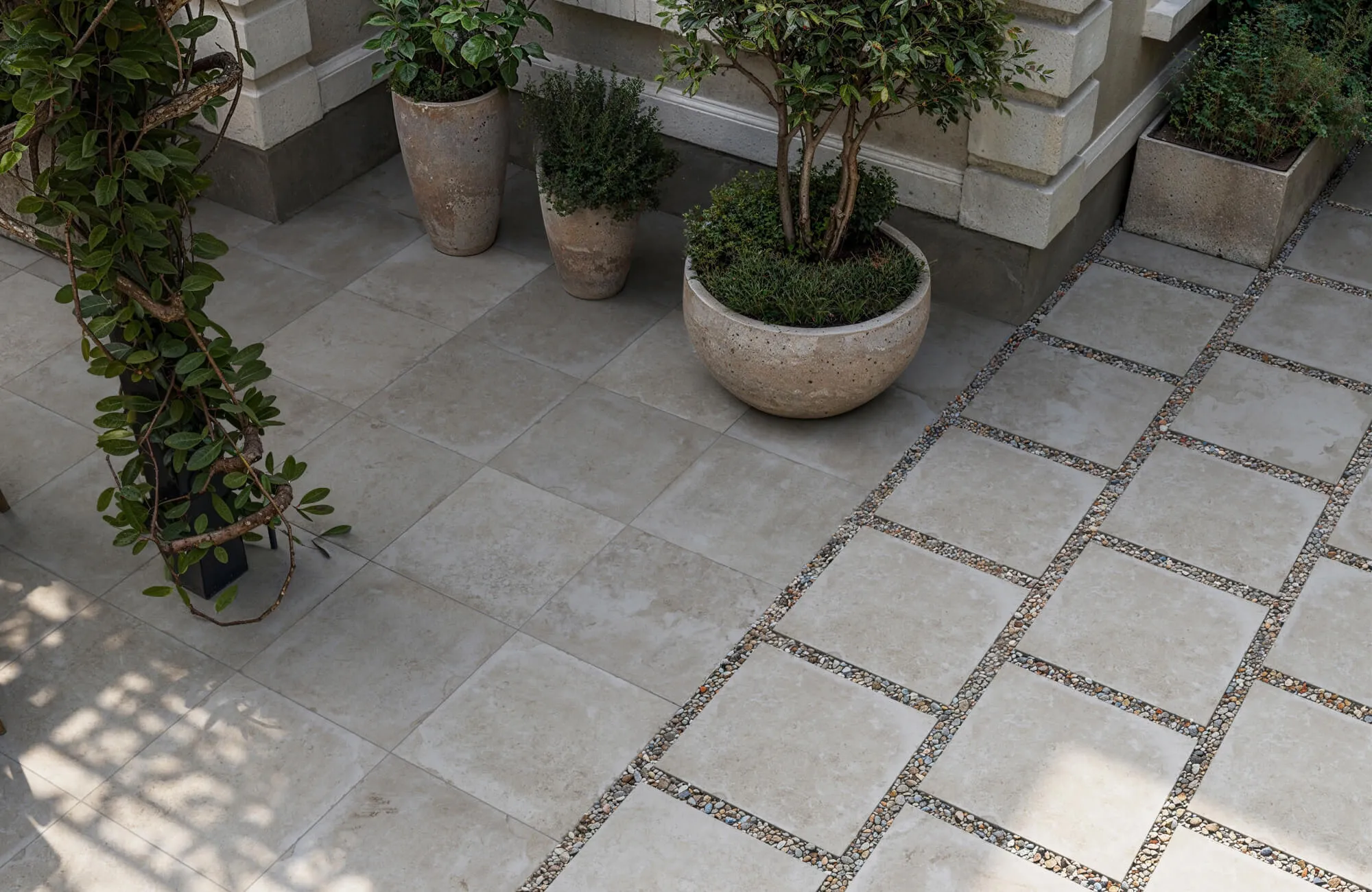
Porcelain tiles have long been valued for their sleek appearance, stain resistance, and ease of maintenance in indoor environments. As outdoor living spaces increasingly mirror the sophistication of interior design, a common question emerges: Can porcelain tiles transition from kitchens and bathrooms to patios and walkways? This article provides a clear and informative exploration into the use of porcelain tiles as pavers, examining their properties, installation methods, durability, design versatility, and overall value.
The Appeal of Porcelain Outdoors
Porcelain has long been favored indoors for its clean lines, aesthetic flexibility, and resilience. As homeowners strive to extend their design sensibilities beyond the walls of their homes, porcelain’s potential for outdoor use is gaining attention. It offers both elegance and performance, making it a promising candidate for patios, walkways, and pool surrounds.
Seamless Indoor-Outdoor Living
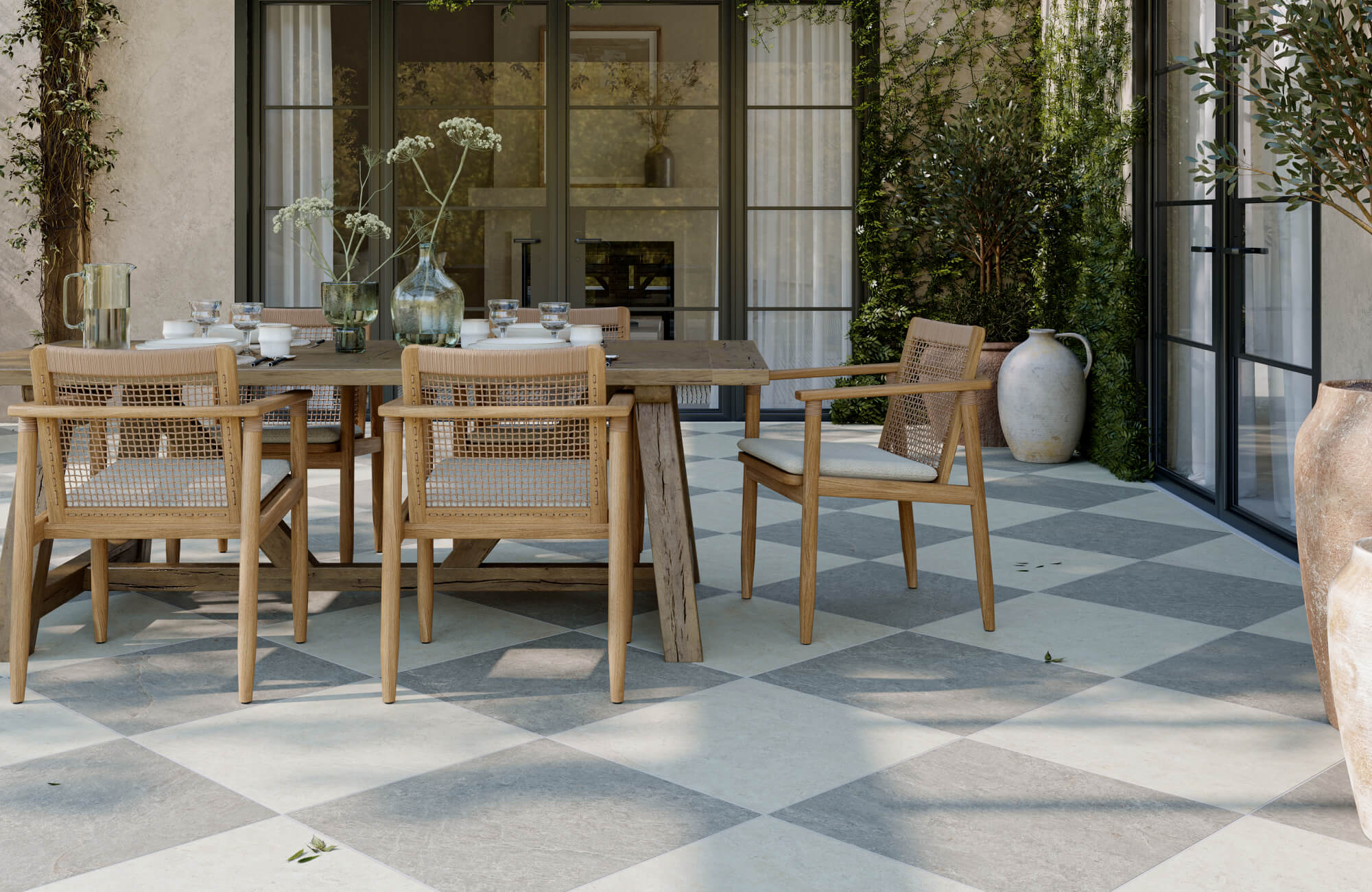
One of porcelain’s key advantages is its ability to create seamless transitions between interior and exterior areas. Today’s design trends favor continuity, where outdoor spaces feel like a natural extension of the home. Porcelain pavers support this approach with large format tiles, consistent sizing, durable finishes, and visual compatibility with interior flooring. A standout choice for achieving this unified look is the Dawson 24x24 Checkerboard Grip 2cm Porcelain Paver Tile in Ash & Alabaster from Edward Martin, as shown in the photo above. Its bold yet timeless checkerboard pattern introduces personality and structure while maintaining a refined elegance that transitions beautifully from a modern kitchen to a terrace or courtyard. With this kind of visual rhythm and surface grip, the tile enhances both aesthetic appeal and functionality, perfect for cohesive, high-impact design that spans inside and out.
Design Possibilities
Porcelain tile offers impressive flexibility when it comes to aesthetics. It’s available in a vast array of colors, textures, and patterns, allowing for creative customization across all types of outdoor environments. Whether your style leans modern, rustic, minimalist, or eclectic, porcelain tile provides the options to bring your design vision to life. Its precision-cut edges and clean lines lend themselves to sophisticated layouts, from symmetrical modern grids to more playful, mixed-size arrangements.
Porcelain as a Paving Material
Porcelain's performance outdoors is largely due to its unique composition and manufacturing process, which differentiate it from other ceramic or stone-based materials.
How Porcelain is Made
Porcelain is crafted from a refined mix of clay, feldspar, and silica, then fired at temperatures exceeding 1200°C (2200°F). This high-temperature process, known as vitrification, fuses the materials into a dense, non-porous structure. The result is a tile with a water absorption rate of less than 0.5%, making it exceptionally resistant to moisture penetration—an essential trait for outdoor use.
This density not only enhances water resistance but also plays a critical role in other performance areas. Porcelain’s non-porous surface helps prevent the growth of moss, mildew, and stains, ensuring your outdoor space remains clean and low maintenance. Moreover, its color stability means that even in areas exposed to intense UV rays, the tiles won’t fade over time.
Outdoor Durability
Because outdoor conditions can vary dramatically, from blazing sun to freezing temperatures, porcelain tiles must deliver across a wide range of demands. In colder climates, the minimal water absorption prevents internal moisture from expanding and causing cracks during freeze-thaw cycles, a common problem with more porous materials like concrete or natural stone.
Additionally, porcelain’s inherent hardness provides excellent resistance to daily wear and tear. It holds up well against scratches from furniture, frequent use, or pet activity, and it ranks high on the Porcelain Enamel Institute (PEI) scale, making it suitable for both residential and commercial outdoor settings. This resilience means porcelain maintains its refined appearance even in high-use areas like patios, walkways, and pool decks.
The Importance of Thickness
One of the defining features that separates indoor tiles from outdoor-rated porcelain pavers is thickness. While indoor tiles typically range from 8 to 10mm, outdoor porcelain pavers are usually 20mm thick. This added thickness gives them the structural integrity needed to withstand shifting sub-bases, heavy loads, and versatile installation methods such as dry-lay or pedestal systems.
Safety in All Conditions
Safety is a key consideration in any outdoor space, especially in areas that may become wet. To ensure traction underfoot, porcelain pavers designed for exterior use feature specialized slip-resistant textures, such as structured, brushed, or lightly abrasive finishes. These products are rated for slip resistance using the R-rating system, with higher numbers indicating greater grip.
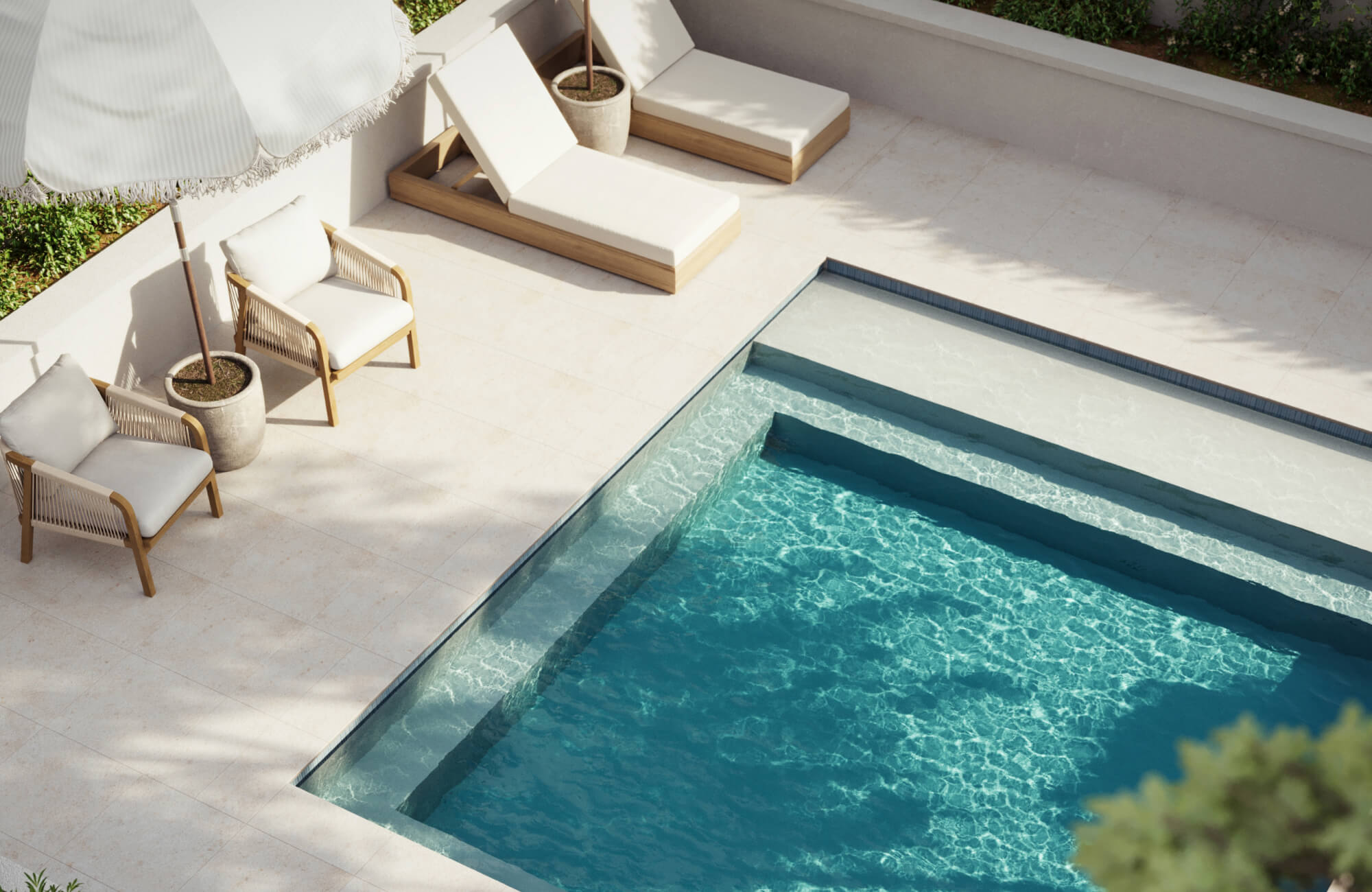
For busy zones like patios, pool surrounds, or garden paths, choosing porcelain rated specifically for wet outdoor conditions is essential. A standout option is the Bowden 24x24 Grip Porcelain 2cm Paver in Canvas, as depicted in the photo above, which offers a clean, contemporary look along with dependable slip resistance, making it an ideal choice for creating safe, stylish, and low-maintenance poolside environments.
Aesthetic Versatility
In addition to its strength and practicality, porcelain stands out for its unmatched ability to replicate high-end natural materials with stunning realism, offering beauty with fewer compromises.
Mastering the Look of Nature
Thanks to advanced digital printing and refined manufacturing, porcelain pavers now convincingly replicate the nuanced textures and tones of natural materials, without the upkeep those materials typically demand. Wood-look designs beautifully echo the warmth and grain of hardwoods like oak or ash, while stone-inspired options highlight the veining and character of marble, slate, or travertine.
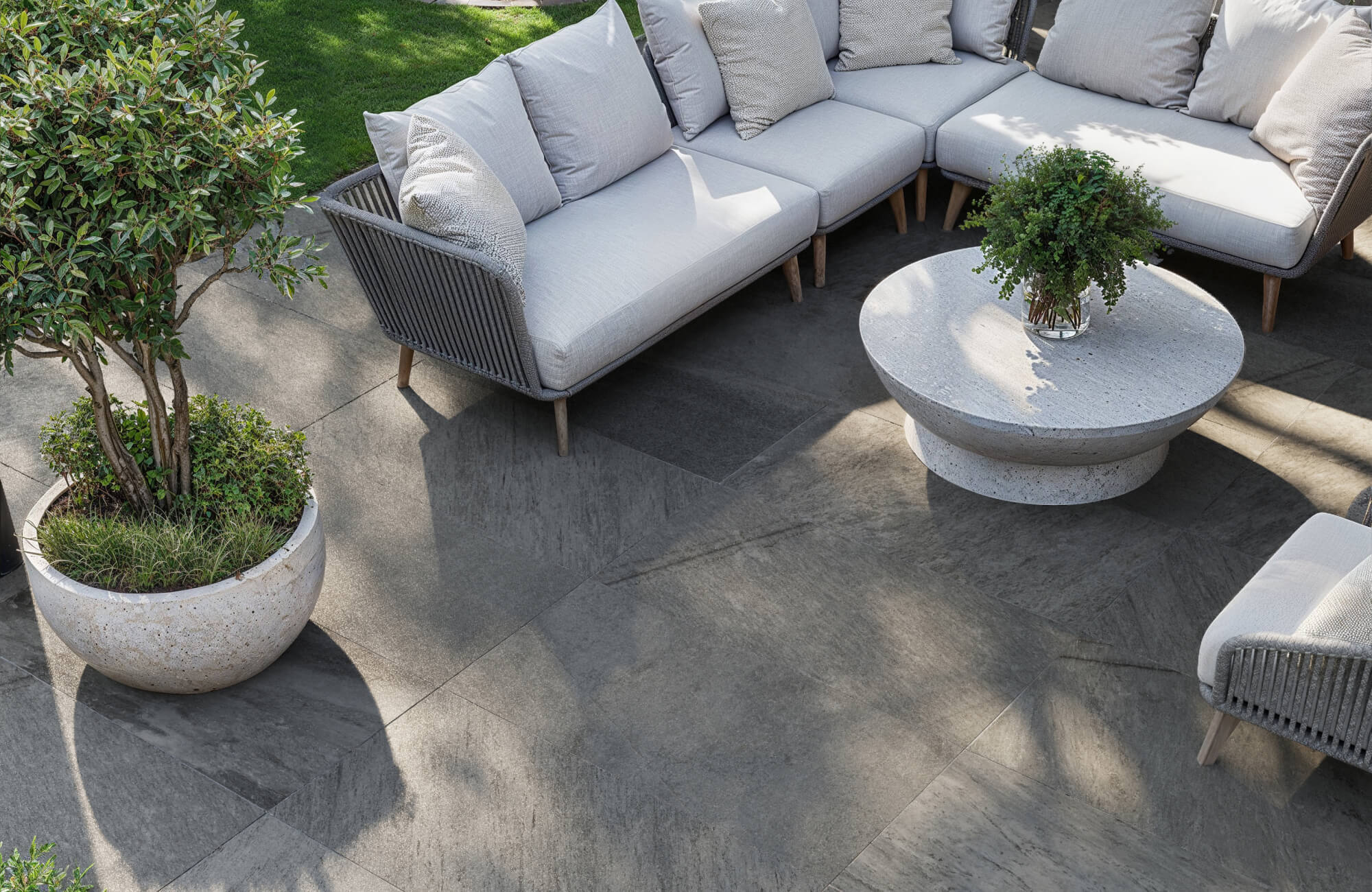
For those drawn to the raw appeal of concrete, porcelain offers that industrial aesthetic with greater consistency and fewer imperfections. A striking example is our Carter 24x48 Grip Porcelain 2cm Paver Tile in Fossil, seen in the photo above, which captures the layered elegance of sedimentary stone in a large-format surface. It delivers the organic look of nature with the added durability and slip resistance required for outdoor environments, perfect for patios, walkways, or modern poolside settings.
Achieving Modern and Classic Styles
Porcelain’s ability to adapt across styles makes it an ideal fit for both traditional and contemporary landscapes. Clean edges and geometric precision lend themselves to modern, minimalistic layouts, while textured finishes and natural hues suit more rustic or transitional spaces.
Whether you’re designing a city courtyard, suburban retreat, or tranquil garden path, porcelain’s versatility ensures it complements and enhances the overall aesthetic. For a more immersive planning experience, try the AR tool to visualize how specific pavers will look in your space before making a final decision.
Consistent Color and Long-Term Beauty
Unlike natural materials that can vary from batch to batch or fade over time, porcelain maintains a high degree of color consistency. Full-body porcelain integrates color throughout the tile, while glazed varieties use ultra-durable finishes to lock in shade and pattern. This ensures that the look you select on day one remains vibrant for years to come, even under intense sun exposure or in variable climates. The result is an outdoor space that retains its intended beauty with minimal effort or upkeep.
How to Install Porcelain Pavers
Proper installation is crucial for the success and longevity of porcelain pavers. Unlike traditional tile installation, outdoor settings demand a more robust and adaptable approach. For best results, it is recommended to consult with a professional who can assess site conditions and ensure correct installation techniques are followed.
Foundation First
The success of any porcelain paver installation begins with a solid foundation. Outdoor settings typically require excavation followed by the layering and compaction of a stable sub-base, such as crushed gravel. This base not only provides structural support but also promotes proper drainage, critical for avoiding frost heave in colder regions. Above this, a leveling layer of sand or stone dust is carefully applied and screeded to create a uniform, even surface. Additionally, proper grading of the sub-base is vital to direct water away from structures and prevent pooling. Skipping or rushing this foundational step can compromise the entire installation, no matter how high-quality the pavers are.
Specialized Setting Techniques
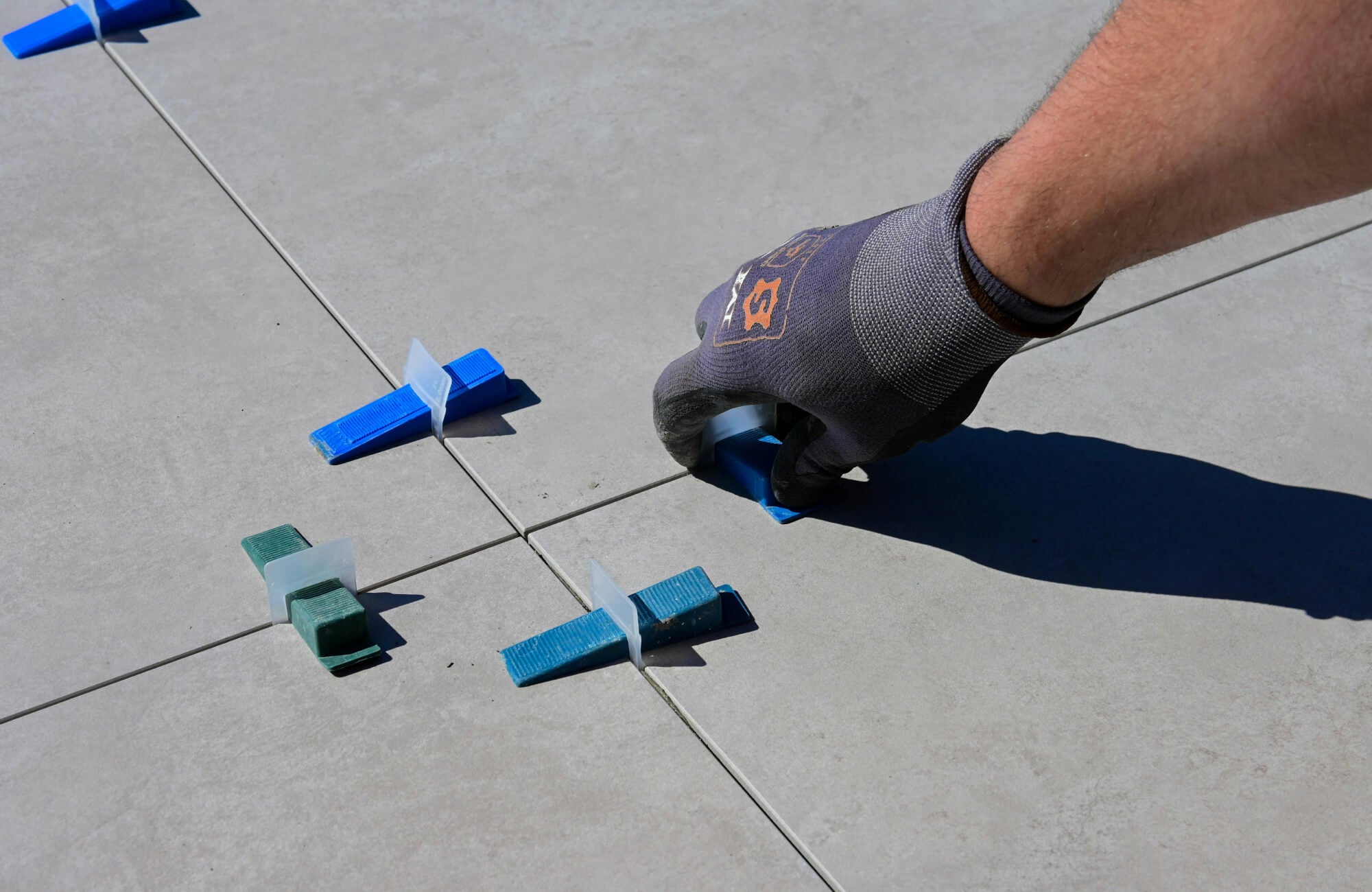
Porcelain pavers offer flexibility in installation methods depending on the application. For patios, walkways, or other low-load areas, dry-laying is a common technique—placing 20mm porcelain tiles directly on compacted sand or gravel for ease of maintenance and future adjustments. In areas where a permanent surface is required, such as driveways or heavy-use zones, a mortar-set method is ideal. This involves using outdoor-rated thin-set mortar applied over a concrete slab or stable base, with proper bonding agents to ensure adhesion. Full bedding of the paver is essential to eliminate hollow spots that could lead to cracking. Joint materials vary depending on the method—permeable polymeric sand is often used for dry-laid installations, while mortar-set applications typically call for grout designed for exterior use.
Edge Retention and Stability Secrets
To maintain the integrity of your paver layout over time, edge restraints are crucial, especially in dry-lay systems. These restraints prevent lateral shifting caused by regular use, weather, or ground movement. Available in materials like heavy-duty plastic, metal, or poured concrete, edge restraints are installed along the perimeter to lock pavers in place and preserve alignment. Without them, the installation is vulnerable to spreading, joint displacement, and pattern disruption. Investing in reliable edge retention ensures your project remains stable, polished, and long-lasting.
Cost and Value
When assessing porcelain pavers, it’s essential to consider both the initial outlay and the long-term return on investment. While the upfront cost may be higher than other materials, porcelain’s durability and low-maintenance nature often translate into meaningful savings and increased property appeal over time.
Initial Investment
Porcelain pavers typically carry a higher price tag than basic concrete alternatives, placing them in a range similar to premium natural stone. Installation costs may also be elevated, especially when mortar-setting is involved, due to the precision and preparation required, such as sub-base grading and handling heavier tile formats. These factors contribute to a higher upfront expense but are balanced by the performance benefits.
Long Term Savings
What porcelain lacks in budget-friendly pricing, it makes up for in minimal maintenance. Resistant to stains, UV fading, moss, and mildew, porcelain tiles don’t require sealing or heavy-duty cleaning. Over time, these low upkeep requirements reduce the recurring costs associated with outdoor surface care, making porcelain a smart option for homeowners seeking durability without the maintenance burden.
Property Value Enhancement
A well-installed porcelain patio or walkway not only improves daily livability but also elevates curb appeal. Homebuyers often value outdoor spaces that are both functional and easy to maintain. Investing in porcelain can enhance a property's marketability, especially when paired with modern landscape design. For homeowners, this means enjoying the benefits now while potentially increasing resale value in the future.
The Paving Pathway Ahead
Using porcelain tiles as pavers is not only feasible but often advantageous for creating durable, low-maintenance, and visually striking outdoor spaces. Porcelain is especially effective in settings where appearance, performance, and minimal upkeep are top priorities. It excels in modern patios, pool decks, and homes in freeze-prone climates. If you value long-term durability and visual sophistication, porcelain is a sound investment. Though the initial cost may be higher, the long-term benefits make it a compelling choice for homeowners seeking both form and function in their exterior environments.
Follow us on Instagram
@EDWARD.MARTIN
)
)
)
)
)
)
)
)
)
)
)
)
)
)
)
)