Kitchen pendant lights are often praised for their style, ambiance, and ability to anchor a space with sculptural presence. Yet homeowners frequently wonder whether these decorative fixtures can truly deliver the level of task lighting required for precision work along counters and islands. The answer depends on a combination of light output, fixture design, placement strategy, and how pendants interact with supplemental lighting sources.
When these elements are thoughtfully balanced, pendants can absolutely provide effective task illumination while also enhancing the overall visual character of the kitchen. Understanding how they perform and how to optimize them ensures the lighting plan is purposeful, beautiful, and responsive to daily living.

Understanding the Mechanics of Light Output
Before deciding whether pendant lights can truly function as task lighting, it helps to understand the fundamentals of how light behaves. Looking at lumens, color temperature, and color rendering sets the foundation for everything that follows, giving homeowners a clear sense of what “good lighting” actually means in practice.
Why Lumens Matter More Than Watts
Many homeowners still associate brighter lighting with higher wattage, but in modern kitchens using LED technology, lumens offer the most accurate measure of effectiveness. Lumens quantify visible light, making them directly tied to the quality of illumination across a task surface. A pendant may appear substantial in scale or outfitted with multiple bulbs, yet still fall short if the lumen output is insufficient, especially when compared to the more predictable output of ceiling lights.
Proper task lighting generally benefits from pendants that produce at least moderate to high lumen levels, particularly over a large island where cooking, prepping, and gathering often overlap. By focusing on lumens rather than wattage, homeowners gain clarity on how well a pendant functions beyond its decorative role. The right output ensures that bright, functional light reaches the working plane without relying on guesswork or outdated assumptions about bulb strength.
The Importance of Color Temperature for Tasks
Color temperature significantly influences how usable pendant lighting feels in a kitchen. Measured in Kelvins, the spectrum ranges from warm, amber tones to crisp, daylight-like cool whites. When performing detailed kitchen tasks such as chopping vegetables or reading recipe measurements, cooler temperatures around the neutral to daylight range enhance contrast and clarity.
Too warm a tone can flatten details and diminish visibility on darker countertops, while overly cool tones may create a stark, clinical effect that disrupts the kitchen’s inviting atmosphere. Achieving a balanced temperature ensures pendants support both accuracy and aesthetics. In many cases, a neutral white provides the sweet spot, offering functional brightness without compromising the kitchen’s sense of warmth and hospitality.
Color Rendering Index and Visual Accuracy
Even with adequate brightness and a well-chosen color temperature, pendants must accurately render colors to be effective task lights. The Color Rendering Index, or CRI, describes how faithfully a light source displays hues compared to natural daylight. For kitchen tasks, a higher CRI improves the appearance of ingredients, surfaces, and decor elements, helping homeowners perceive true color distinctions when preparing food or inspecting materials.
Lighting with a low CRI can distort tones, making it more difficult to differentiate between similar ingredients or notice subtleties in textures. High-CRI pendant bulbs help the kitchen feel vibrant and visually reliable, contributing to both function and the overall quality of the environment. When evaluating pendants, ensuring they are equipped with bulbs that offer strong color accuracy enhances everyday usability far more than most homeowners initially realize.

How Fixture Design Determines Light Direction
Once the basics of light output are clear, the next step is understanding how the pendant itself shapes and directs that light. The design of the fixture, whether it focuses, diffuses, or exposes the bulb, directly affects how effectively those core lighting qualities reach the work surface.
The Focused Power of Metal Shades
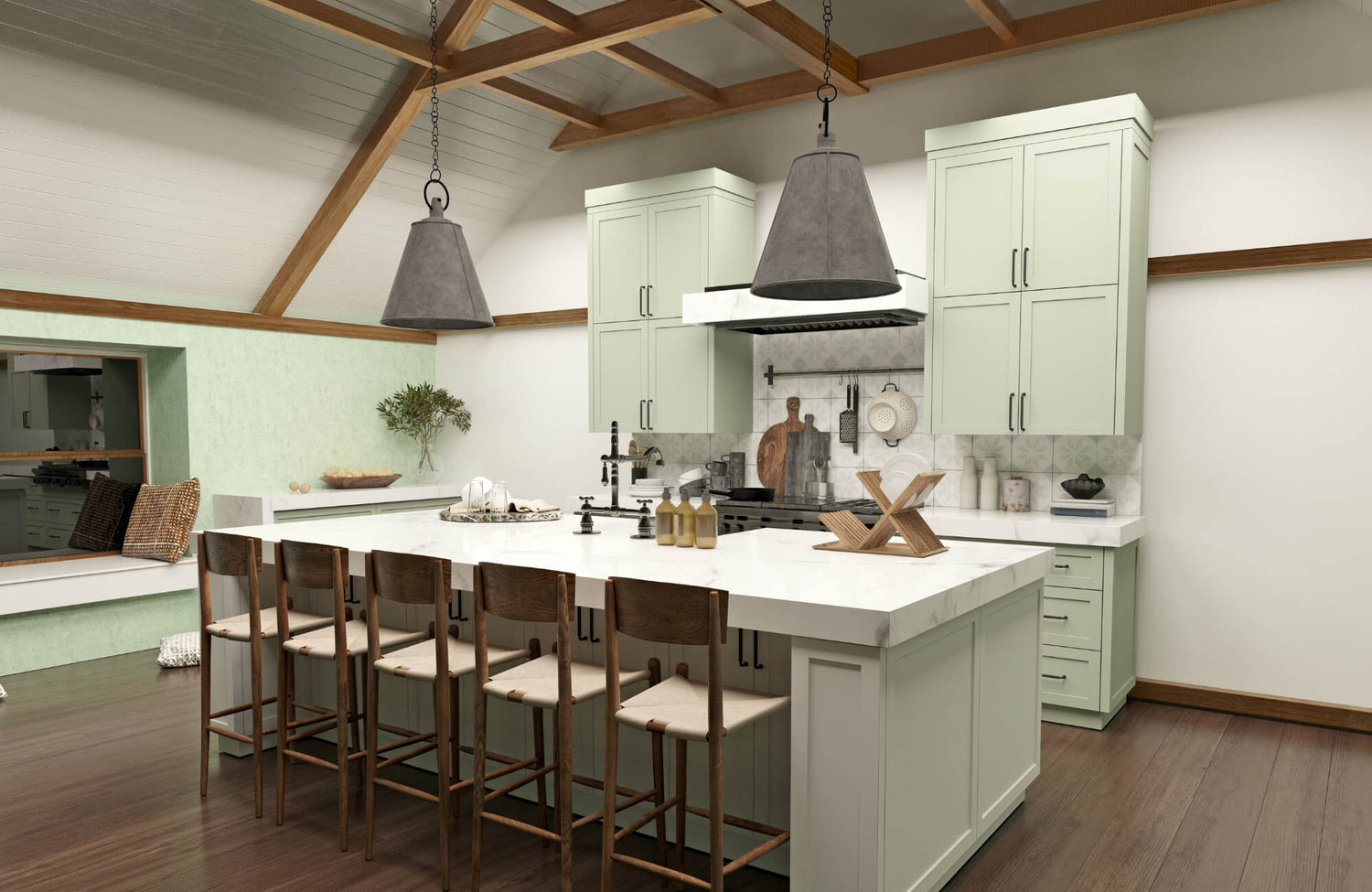
Metal-shaded pendants function as directional light sources, concentrating illumination downward onto the surface below. Their design prevents light from scattering outward, which increases efficiency for task work and reduces glare in open kitchens. This targeted distribution creates a strong, consistent beam that enhances visibility on countertops and islands where precision is essential, similar to the focused throw created by Edward Martin’s Barnes 14" Pendant in Aged Antique Distressed Bronze, seen in the image above.
Metal shades also help define zones within a larger kitchen, visually organizing the space while reinforcing the sense of purpose at central work areas. Because these pendants limit ambient spill, they are particularly effective in kitchens with ample supplementary lighting, where the pendants can serve as dedicated task lights without the expectation of brightening the entire room. Their sharp focus becomes a key advantage when preparing food or performing detailed, hands-on tasks.
The Ambient Glow of Glass Globes
Glass globe pendants behave differently, diffusing illumination in multiple directions and creating a more ambient, atmospheric effect. This glow softens the environment and contributes to an inviting, evenly lit backdrop that blends function and aesthetics. While they may not provide the sharp concentration of metal shades, glass globes can still offer excellent task lighting when paired with high-lumen bulbs and proper placement.
Their transparency allows light to travel unobstructed, making them ideal in kitchens where a warm, luminous quality is desired without sacrificing visibility. The surrounding glow also helps reduce contrast between the pendant’s light and the rest of the room, minimizing harsh transitions that can occur with more directional designs. When thoughtfully chosen, globe pendants can fulfill both decorative and practical roles, especially in kitchens that favor a lighter, airier visual style.
The Glare Issue with Exposed Bulbs
Pendant designs that feature exposed bulbs introduce another consideration: glare. Although these fixtures can create a bold, modern aesthetic, they often place the brightest point of light directly in the line of sight. Glare can interfere with comfort during tasks, making it harder to focus on surfaces without visual distraction.
To counteract this issue, homeowners often choose frosted bulbs or lower-brightness lamps, but these adjustments can reduce the functional output of the pendant. Finding a balance between style and performance becomes essential. Pendants with subtly shaded or partially diffused designs offer a similar contemporary appeal without the discomfort associated with bare bulbs. In kitchens where both form and function must work seamlessly together, minimizing glare ensures the lighting remains practical during prolonged use.

Strategic Placement Rules for Optimal Coverage
After considering output and fixture design, placement becomes the crucial third layer of making pendants work as reliable task lights. Proper spacing, height, and alignment ensure that even a well-designed, high-performing pendant delivers light exactly where it’s needed.
The Height Rule for Shadow Reduction
Getting the height right is one of the most influential factors in determining whether pendants can truly provide task lighting. When hung too high, pendants disperse light before it reaches the island effectively. When hung too low, they create harsh shadows, obstruct sightlines, and interfere with movement. The ideal height typically positions the bottom of the pendant at a comfortable level above the island, allowing the light to fall evenly across the surface while still maintaining visual openness.
Correct height placement reduces shadowing created by the human form, ensuring work areas receive sufficient illumination. This careful calibration enhances both the functionality and the aesthetic proportion of the kitchen, allowing pendants to integrate seamlessly with surrounding cabinetry, appliances, and architectural features.
Creating Overlapping Pools of Light
Pendants are most effective when their light footprints overlap across the surface they are intended to illuminate. Isolated pools of light leave gaps of inconsistent brightness, making tasks more difficult and straining the eyes during precise work. Overlapping illumination creates uniformity, smoothing transitions from one area to the next and supporting movement along larger island countertops.
When pendants are spaced at intervals that allow their light cones to meet, the result is a broad, coherent wash of usable illumination. This layered brightness enhances both the practicality and the sense of intentionality in the kitchen’s lighting design. It allows homeowners to experience continuous visibility across all points of the island, free from the disruptions of uneven lighting.
The Rule of Three versus The Power of Two
The conversation around how many pendants to install, typically two or three, depends more on proportion and surface size than any fixed design rule. Three pendants often create a rhythm that feels balanced and symmetrical across longer islands, offering a steady pattern of overlapping light. This effect is particularly evident when fixtures with substantial presence, such as Edward Martin’s Carly 22" Pendant in Vintage Brass, shown in the image above, are used to create a cohesive visual cadence.
However, two larger pendants can produce an equally effective lighting plan when selected in appropriate scale. The decision ultimately relies on how well the pendants contribute both light and presence. Islands with broader surfaces or multi-use functions benefit from the visual alignment of three fixtures, while more compact spaces succeed with two pendants that cast wide, generous illumination. Choosing between the two configurations ensures pendants fulfill their functional purpose while maintaining harmony with the kitchen’s architectural proportions.

Why Pendants Should Never Work Alone
Even with the right output, thoughtful design, and strategic placement, pendants perform best as part of a layered lighting plan. Understanding how they interact with recessed lights, dimmers, and natural illumination ties the entire concept together and shows what it truly takes to create a well-lit kitchen.
The Partnership with Recessed Lighting
Pendants excel as task lights when paired with a comprehensive lighting plan that incorporates recessed fixtures. Recessed lights provide general illumination that supports the entire room, filling in areas that pendants cannot reach and ensuring there is no reliance on a single lighting source.
In kitchens with varied activities, from cooking to cleaning to entertaining, this partnership ensures a smooth, adaptable experience. Recessed lighting reduces shadows, enhances visibility along perimeters and walkways, and creates a consistent base layer upon which pendants can shine. Together, these sources create a balanced, layered lighting environment that maximizes both functionality and atmosphere.
The Necessity of Dimmers for Multi-Use Spaces
Kitchens function as hubs of family life, hosting everything from meal prep to late-night conversations. Installing dimmers on pendant fixtures allows homeowners to tailor brightness levels according to mood and activity. Bright, full-output lighting supports detailed tasks, while softened levels create ambiance for dining or relaxation. This flexibility reinforces the pendants’ versatility and enables the room to transition smoothly throughout the day, and those who want expert guidance on selecting the right dimmable fixtures or coordinating them with their broader design vision can benefit from Edward Martin’s design consultation service for personalized recommendations.
With dimmers, pendants become dynamic tools rather than static light sources, offering homeowners nuanced control over the kitchen’s emotional and visual tone. This adaptability ensures the lighting never feels harsh or insufficient, supporting both energy efficiency and comfort. And for additional help with product questions or project-specific advice, you can always contact Edward Martin for support that meets your needs.
Assessing the Role of Natural Light
Natural light influences how pendants perform and how much supplemental lighting the kitchen requires. Sunlight streaming through windows can dramatically elevate visibility during daytime hours, allowing pendants to function in a supporting rather than primary role. In spaces where the interplay between daylight and fixtures matters, designs like Edward Martin’s Otis Pendant in Aged Brass, featured in the image above, offer clarity and balance without overpowering the room.
However, kitchens with minimal natural light depend far more heavily on pendants to bridge the gap, making lumen output, fixture design, and placement even more important. Assessing how daylight interacts with cabinetry, surfaces, and sightlines helps determine whether pendants alone can meet the needs of the space or if more robust supporting fixtures are necessary. Thoughtful consideration of natural light ensures the kitchen remains well lit around the clock, regardless of weather or time of day.
Yes They Can, With the Right Strategy
Pendants are more than decorative elements; they are capable and adaptable light sources that, when thoughtfully selected and strategically placed, can provide excellent task lighting in the kitchen. Their effectiveness depends on lumens, color temperature, CRI, fixture design, hanging height, spacing, and the support they receive from surrounding lighting.
By understanding how these components work together, homeowners gain the confidence to incorporate pendants that not only elevate the kitchen’s aesthetic appeal but also support real-world functionality. With the right strategy, pendant lights offer both beauty and performance, transforming the kitchen into a space where clarity, comfort, and style coexist effortlessly.