
)
)
)
)
)
)
)
)
What Is The Rule For Hanging A Large Mirror Over A Sideboard?
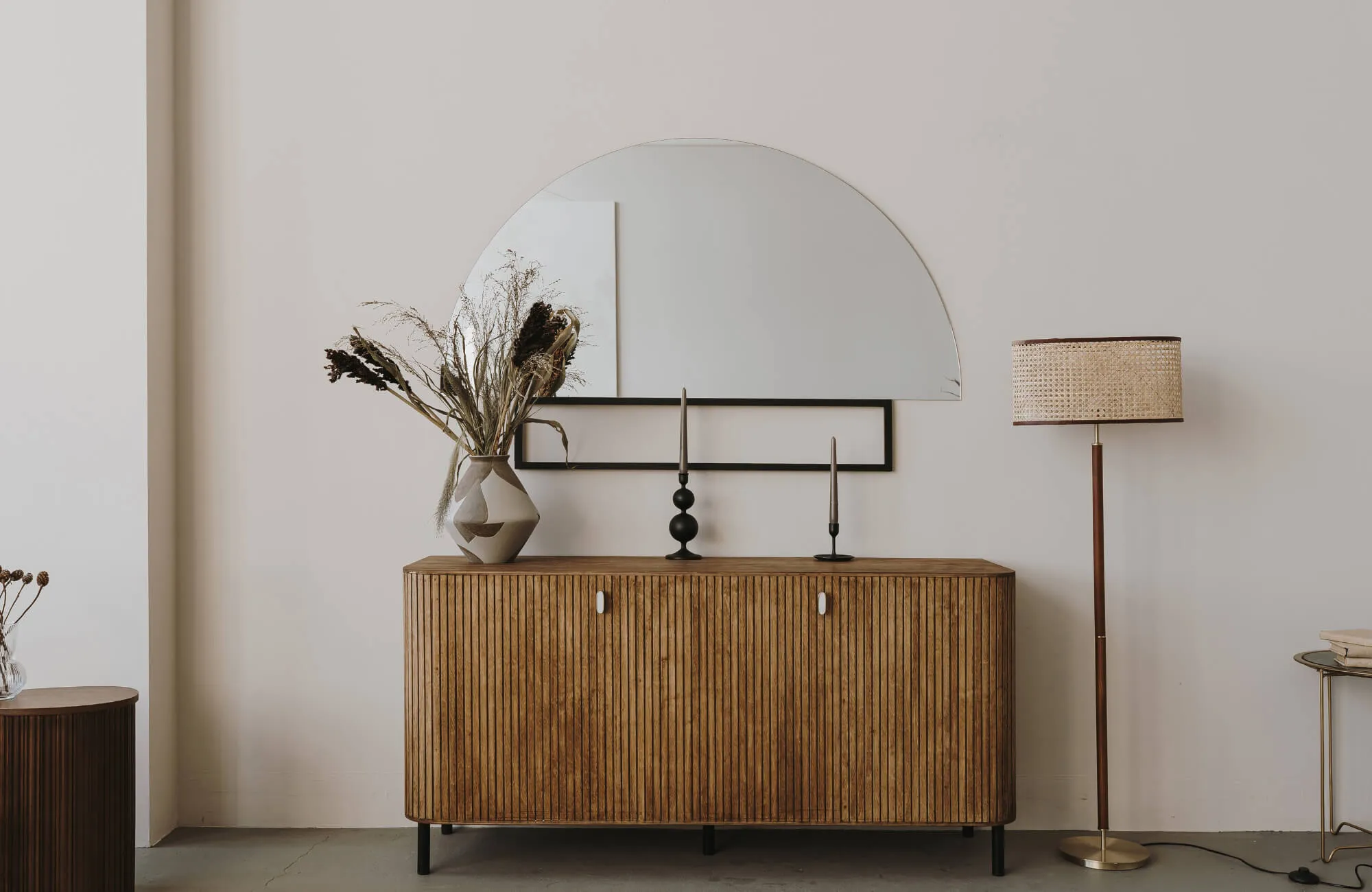
A large mirror above a sideboard does more than fill a wall; it shapes the room’s sense of height, depth, and balance while anchoring the entire vignette beneath it. When positioned correctly, the mirror becomes a functional and aesthetic centerpiece that ties together the furniture, surrounding architecture, and any decorative elements placed across the surface.
Its placement can either elevate the room’s composition or disrupt it, which is why understanding the guiding principles behind height, width, and styling is essential. Safety and strategic placement add another layer of consideration, ensuring the mirror not only looks right but performs well in a busy household. When these pieces work in harmony, the result feels calm, cohesive, and welcoming, qualities that define beautifully curated interiors.
The Vertical Rules: How High Should It Go?
Before exploring the many ways a mirror can enhance a sideboard, it helps to begin with height, since this first decision sets the tone for the entire composition. Establishing the right vertical positioning creates the visual connection that everything else will build upon.
The Four to Six Inch Gap Guideline
The most widely accepted starting point for mirror height is establishing a gap of approximately four to six inches between the top of the sideboard and the bottom of the mirror frame. This distance creates visual connection without allowing the mirror to appear crowded or awkwardly detached. A gap smaller than four inches often feels accidental, while a larger gap can make the mirror float too far above the furniture, weakening the relationship between the two. Staying within this range keeps the arrangement visually cohesive and provides room for surface styling without creating a cramped layout.
This guideline also addresses proportional balance. When the mirror sits too high, the eye must travel a disproportionate distance, interrupting the natural flow from furniture to wall decor. The four to six inch spacing maintains rhythm, creating an elegant transition that feels both grounded and refined. It also maintains the mirror’s role in reflecting nearby architectural or lighting elements, which enhances depth and reinforces the room’s overall atmosphere.
Adjusting for High Ceilings and Tall Mirrors
Homes with elevated ceilings or dramatically tall mirrors benefit from subtle adjustments to the standard spacing. In rooms with ceilings higher than nine feet, maintaining the typical gap may cause the composition to appear visually bottom-heavy, with too much negative space above. In such cases, lifting the mirror slightly, while still keeping it clearly connected to the sideboard, helps distribute visual weight more evenly across the wall. The key is to maintain proportion rather than follow an exact measurement, ensuring the mirror neither overwhelms the furniture nor disappears into the expanse above.
Tall mirrors introduce another consideration. Their height can exaggerate vertical lines and draw the eye upward, which can be desirable when trying to enhance the sense of openness. However, they should still remain integrated with the sideboard, not independent of it. A tall mirror placed too far above the furniture detaches from the composition, while one placed too low may feel unstable. Adjusting the height by one or two inches can make a meaningful difference, allowing the mirror to breathe while still honoring its relationship with the sideboard. The goal is a visually fluid line that connects floor, furniture, mirror, and ceiling in one unified vertical progression.
The Eye Level Factor for Functionality
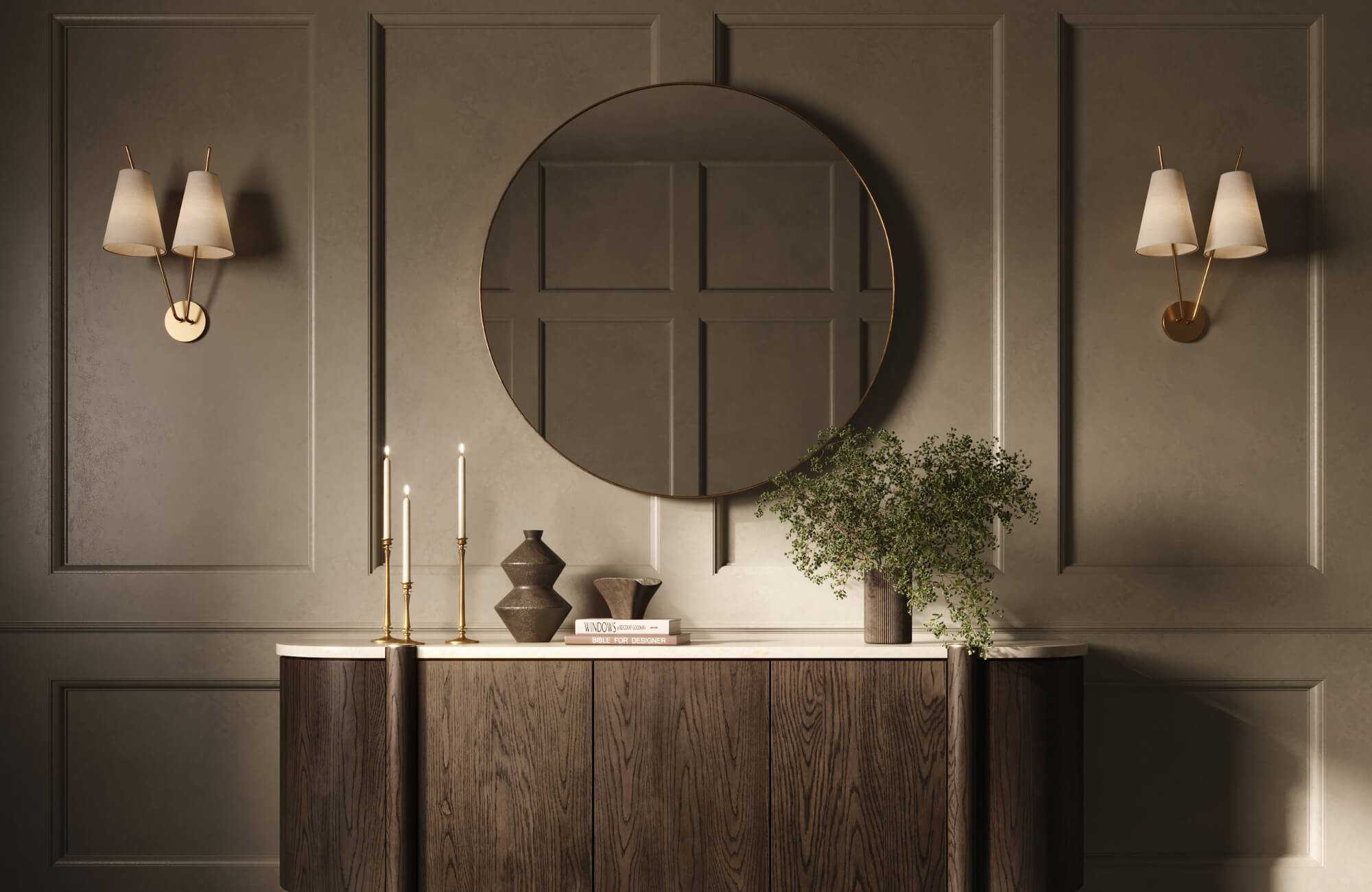
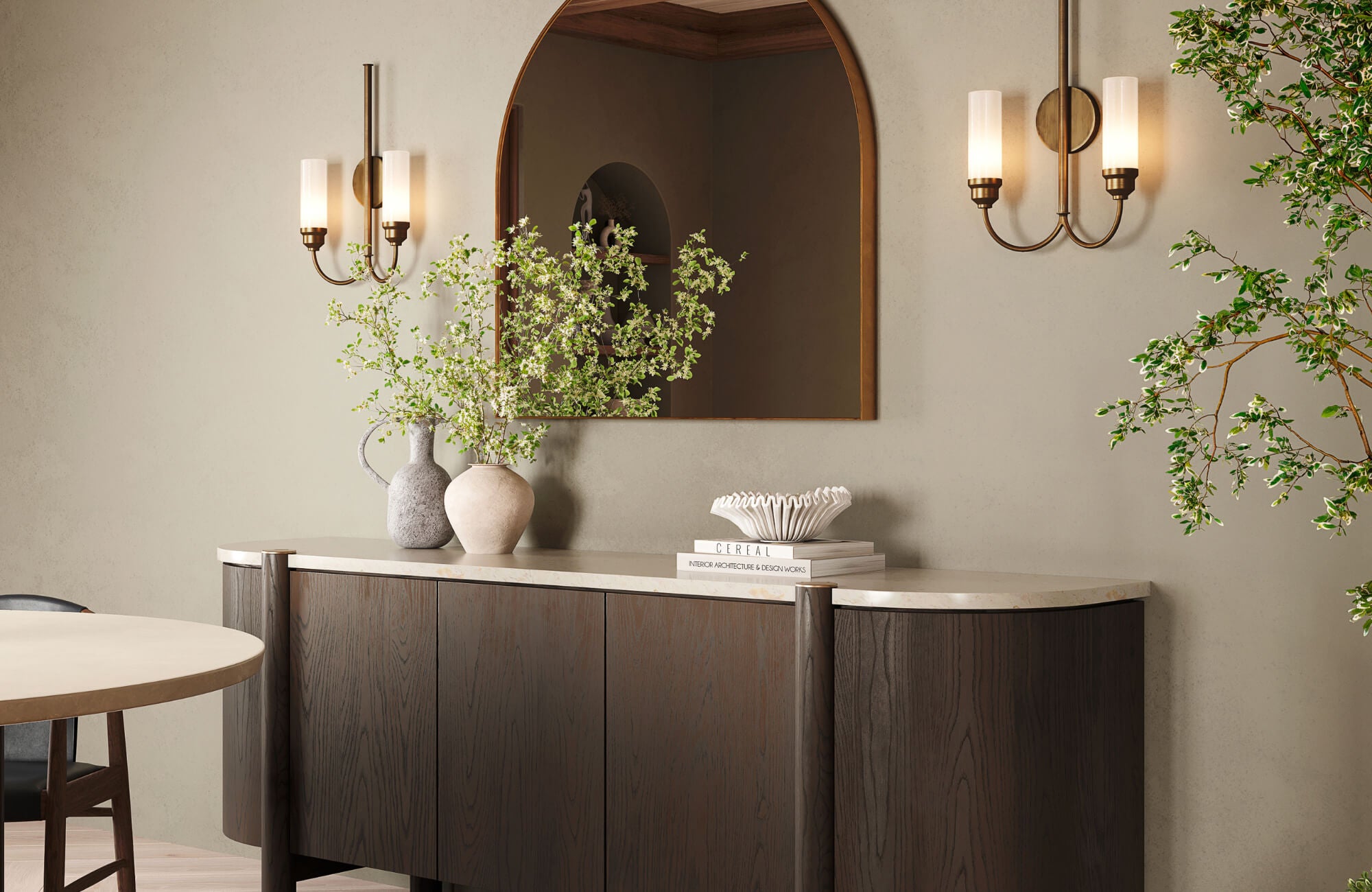
While aesthetic rules guide most decisions, functionality should also shape mirror placement. A mirror hung above a sideboard is often meant to reflect light, enhance depth, or offer the option for a quick visual check when moving through a space. The setup in the image above, featuring Edward Martin’s Leonardo Sideboard in Brown paired with the Esmeralda Round Mirror in Polished Brass, demonstrates how the center of a mirror should generally rest around average eye level, usually between fifty-seven and sixty-five inches depending on the household. When the mirror’s midpoint sits at this height, it serves its intended purpose without requiring anyone to crouch or stretch.
This rule becomes particularly important in multipurpose spaces like dining rooms that also connect to living areas, entryways, or kitchen zones. In such environments, the mirror acts as part reflection tool, part architectural enhancer, and part decorative anchor. Keeping the mirror at a functional eye level ensures it remains useful without compromising the elegance of the overall composition. Because sideboards vary in height, the mirror’s placement must adapt while still respecting both the gap guideline and the visual needs of the room’s occupants.
The Horizontal Rules: Getting the Width Right
Once the height feels intentional, the next step is finding the right width to maintain balance across the wall. This horizontal relationship reinforces the vertical decisions already made, ensuring the mirror and sideboard feel unified rather than competing for attention.
The Two Thirds to Three Quarters Rule
The width of the mirror relative to the sideboard is often the most defining factor in creating a balanced composition. The general rule recommends selecting a mirror that measures between two thirds and three quarters of the sideboard’s total width. This proportion feels deliberate and visually stable, offering alignment that neither overwhelms the furniture nor diminishes its presence. A mirror within this range acts as a natural focal point, drawing the eye upward and outward while maintaining harmony across the entire wall.
Choosing a mirror that adheres to this proportion also strengthens the architectural relationship between the furniture and surrounding space. It creates boundaries that feel appropriate to the room’s scale and prevents the arrangement from feeling either cramped or oversized. The sideboard remains the anchor, while the mirror becomes the complementary feature that reinforces depth, symmetry, and style. Even in eclectic or asymmetrical interiors, this rule creates predictability that helps all visual elements coexist without competing.
Avoiding the "Same Width" Trap
It may seem intuitive to choose a mirror that matches the exact width of the sideboard, but doing so typically disrupts the composition rather than enhancing it. A mirror with the same width creates an overly rigid appearance, leaving no breathing room between the edges of the mirror and the outer contours of the furniture. This tight alignment eliminates the negative space that gives the arrangement sophistication and ease. Instead of framing the furniture, the mirror ends up shadowing it, making the entire wall feel flat and heavy.
Margins matter in design because they create a sense of movement and openness. A mirror that is slightly narrower than the sideboard allows the eye to rest comfortably, creating balance and allowing styling pieces to complement rather than compete. The subtle difference in width contributes to a sense of elegance and intentionality, reminding the viewer that the furniture and mirror are conversing with one another, not mirroring each other literally.
When to Use Multiple Mirrors
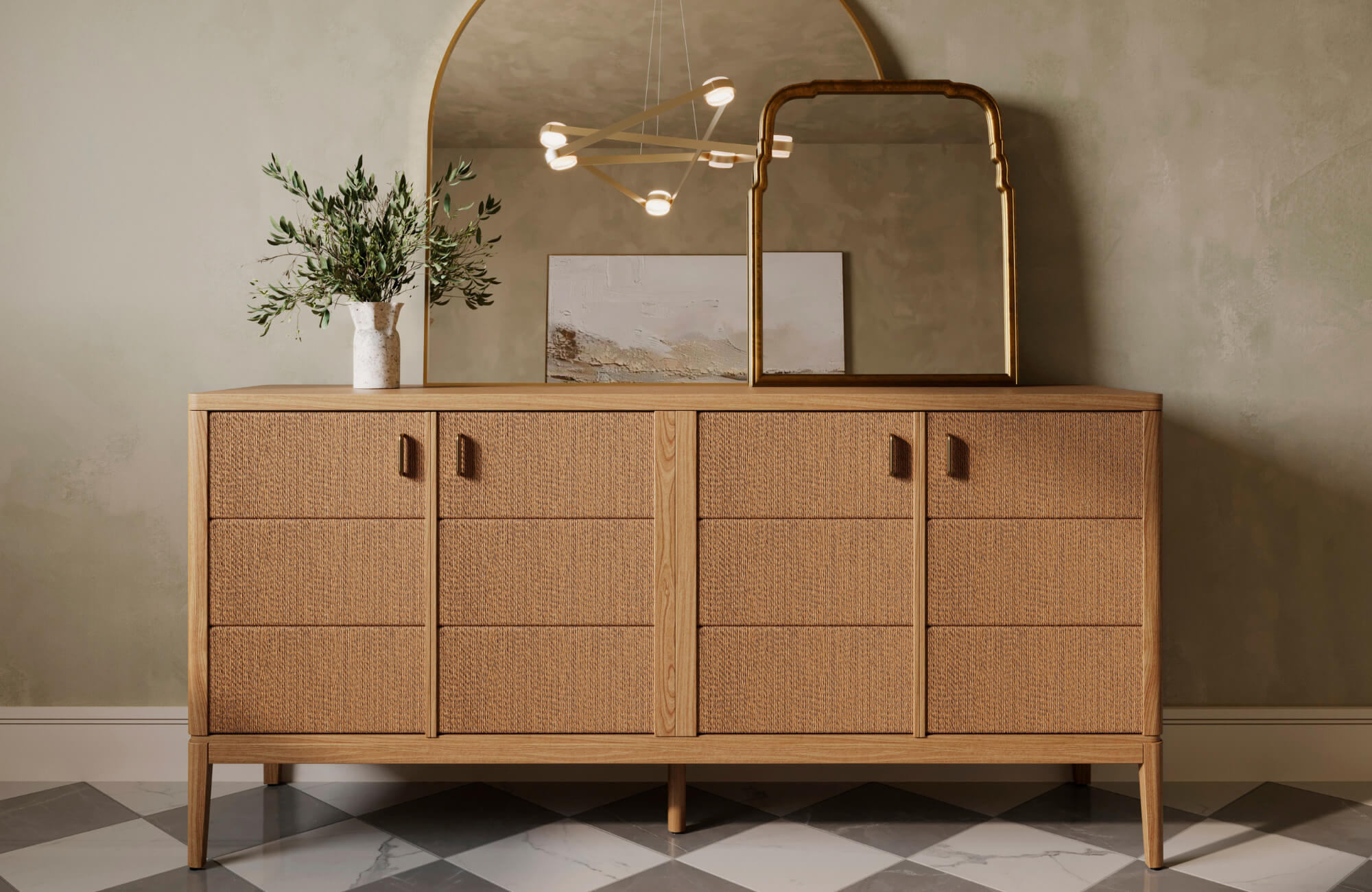
There are moments when a single large mirror may not be the most effective solution. Unusually wide sideboards, oversized dining rooms, or long, narrow walls sometimes benefit from incorporating two or three mirrors instead of one. This technique introduces rhythm and repetition, breaking up a broad horizontal expanse while still bringing in reflected light and a sense of expanded depth. Designs like those echoed in Edward Martin’s Julian Sideboard in Rustic Oak, along with pieces such as the Esmeralda Wide Mirror in Polished Brass or the Clementine Mirror in Antiqued Gold Leaf, show how multiple mirrors can create a cohesive, gallery-like effect when they share alignment and spacing.
This approach works especially well in modern or transitional homes where clean lines and structured compositions define the aesthetic. Multiple mirrors also allow homeowners to explore mixing shapes or subtle variations in frame styles to add character while maintaining unity across the wall. The key is to keep spacing consistent and ensure the overall width still follows the two-thirds to three-quarters proportion relative to the sideboard. When thoughtfully arranged, multiple mirrors deliver the same grounded elegance as a single large one but with added dimensional interest.
Styling the Surface to Connect the Elements
After the proportions are in place, the focus shifts to the decor that brings the mirror and sideboard together. Thoughtful styling deepens the cohesion created by the height and width guidelines, turning the arrangement into a polished, visually engaging focal point.
Bridging the Gap with Decor
Once the mirror is hung at the correct height and proportion, the next step is bridging the physical and visual gap between the sideboard and the frame. Decorative pieces placed across the surface guide the eye upward in a soft, intentional progression. Sculptural objects, vases, framed artwork, or stacked books can form that visual link, as seen with Edward Martin’s Leonardo Sideboard in Brown supporting layered accents in the image above while the Esmeralda Wide Mirror in Polished Brass rises just above them. These objects build interest through varied heights while remaining low enough not to interfere with the mirror’s reflection.
When decor is thoughtfully positioned, it prevents the furniture and mirror from reading as separate components. Instead, they work together as a cohesive vignette that complements the surrounding architecture. This vertical connection softens the transition between the horizontal plane of the sideboard and the upright presence of the mirror while reinforcing the room’s palette and textures. The result is a unified composition where every element contributes, rather than competes, within the overall design.
Creating Balance with Symmetrical Lamps
Symmetry is a powerful tool when styling a sideboard, and lamps placed on either end of the surface offer both beauty and function. A pair of matching lamps introduces visual stability, grounding the arrangement and framing the mirror with warm, ambient light. Their vertical lines echo the height of the mirror without overwhelming it, creating harmony through consistent scale and proportion. In rooms where the sideboard sits along a dim or shadowed wall, symmetrical lamps also improve visibility and contribute to the room’s layered lighting plan.
The warm glow of the lamps enhances the mirror’s ability to reflect light, making the room feel brighter and more expansive. This is particularly effective in dining rooms or living spaces where balanced lighting contributes to comfort and atmosphere. Symmetry also helps the mirror feel more centered and supported, reducing the appearance of empty or unanchored corners on the sideboard. The combination of height, illumination, and rhythm turns the entire composition into a polished, inviting focal point that conveys both sophistication and practicality.
The “Valley” Styling Method
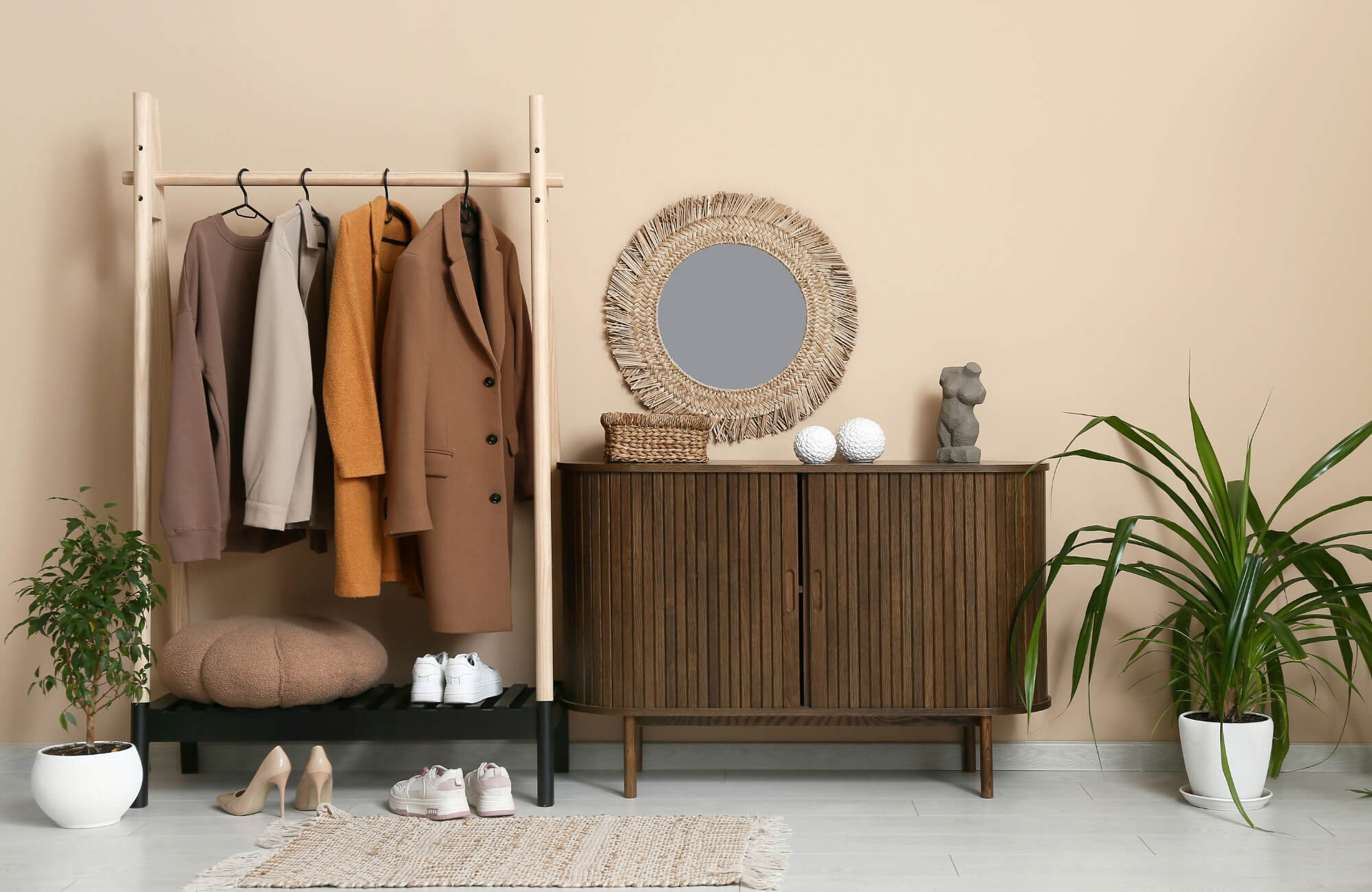
The “valley” approach to styling creates a gentle downward slope from the outer edges toward the center of the sideboard. This method reinforces the mirror as the dominant central element by allowing the tallest decor items to sit on the ends, gradually descending toward lower pieces in the middle. The resulting shape resembles a valley, which directs attention upward to the mirror and downward to the center of the composition. This style feels natural, balanced, and visually pleasing because it guides the eye without creating abrupt interruptions, and homeowners who want reassurance in selecting the right mix of heights and shapes can always turn to Edward Martin’s design consultation for personalized guidance.
Using the valley method also helps organize decor with intention. Taller lamps or floral arrangements on the ends frame the mirror, while mid-height sculptures or books fill the transition, and shorter accents like candles or small bowls settle in the center. If you’re unsure which pieces work best together, or need help coordinating decor with tiles, rugs, or furniture, reaching out to contact Edward Martin or simply contact us can provide expert recommendations tailored to your space. The approach ensures variety without clutter and reinforces the mirror’s role as the focal point, avoiding the common issue of placing all tall objects in the middle, which can overpower the mirror and make the composition feel top-heavy. The valley style creates quiet sophistication, allowing each piece to contribute to the overall harmony without dominating the arrangement.
Safety and Strategic Placement Considerations
With the aesthetic framework established, it’s important to consider the practical factors that ensure the mirror performs well in daily life. These final checks support everything built in the previous sections by keeping the arrangement secure, functional, and visually refined.
The Reflection Check Rule
Before finalizing the mirror’s placement, it is essential to consider what the mirror will reflect. A beautiful mirror loses impact if it reflects unappealing areas such as blank walls, cluttered corners, or harsh lighting. The most successful placements capture strategic views, natural light from a nearby window, architectural details, artwork, or even a glimpse of greenery from outside. These reflections amplify the mirror’s purpose, adding emotional warmth and visual depth to the room.
Stepping back to evaluate the reflection ensures the mirror enhances rather than distracts. This check becomes especially important when the mirror sits across from a bright window or light fixture, as the reflected glare can be uncomfortable. Adjusting the angle or height by even a small amount can correct unwanted reflections without altering the overall design. The reflection check is a final but crucial step that transforms the mirror from merely decorative to exceptionally functional.
The Leaning Alternative
Leaning a mirror on a sideboard offers a relaxed, contemporary look that still feels curated. This approach creates a layered, artistic composition that softens formal edges and makes the space feel approachable. Leaning works particularly well with oversized mirrors that may feel imposing when hung or with interiors that emphasize casual refinement. The angle allows the mirror to reflect more ceiling or ambient light, creating a sense of height and openness.
However, leaning requires attention to stability and proportion. The base of the mirror should sit flush against the sideboard with a secure, nonslip backing or adhesive pads to prevent shifting. The tilt should be gentle, not so steep that the mirror reflects only the ceiling or loses connection to the surrounding decor. When executed with care, the leaning alternative balances elegance and ease, offering a design-forward approach that still respects safety and practicality.
Securing Heavy Anchors into Studs
Safety takes priority when hanging a large mirror, especially one with a substantial frame or heavy glass. Anchoring into wall studs provides the strongest support, ensuring the mirror remains stable over time and resists accidental impact. Mirrors hung on drywall alone risk loosening or falling, particularly in busy areas where the sideboard may be bumped or leaned against. Using the correct hardware, such as heavy-duty D-rings, French cleats, or reinforced brackets, protects both the wall and the mirror.
Securing the mirror properly is not only a matter of structural safety but also of preserving long-term alignment. A well-anchored mirror stays flush, level, and visually consistent, preventing subtle shifts that can disrupt the entire composition. Taking the time to locate studs and use the appropriate mounting method ensures the mirror remains a permanent, polished feature of the room. Stability reinforces elegance, allowing you to enjoy the mirror’s beauty and function with confidence.
Confidence in Your Composition
Hanging a large mirror over a sideboard is an exercise in balance, proportion, and thoughtful refinement. The right height reinforces connection; the proper width creates harmony; and the surrounding styling turns the arrangement into a polished centerpiece that elevates the entire room. By considering both aesthetic guidelines and functional needs, homeowners can avoid guesswork and create a composition that feels timeless, intentional, and deeply integrated into their home’s personality. Attention to reflections, secure installation, and layered decor ensures the mirror serves as both a practical tool and a defining design statement.
When these principles come together, the sideboard and mirror form more than just a decorative pairing. They become an anchor for the space, a reflection of natural light and curated style, and a testament to thoughtful interior design. With confidence in these foundational rules, creating a beautifully composed wall becomes a rewarding and transformative part of shaping a home.
Follow us on Instagram
@EDWARD.MARTIN
)
)
)
)
)
)
)
)
)
)
)
)
)
)
)
)