Hexagon tiles have become a favorite choice in modern interiors, but their bold geometry often sparks the question: do they make a room look bigger or smaller? The answer depends on how they’re used. Factors like scale, pattern flow, grout choices, and where the tiles are placed can all influence how spacious or compact a room feels. In this blog, we’ll explore how to use hexagon tiles to achieve balance, style, and the right sense of space.

The Impact of Tile Shape on Space
Tile geometry has a powerful effect on how a room feels, often shaping whether a space appears more open or more confined. The human eye naturally follows lines and edges, so the way tiles are cut and arranged can either guide movement smoothly or create visual breaks. Shapes that allow patterns to flow without interruption tend to expand a room, while more rigid layouts can make it feel static. This is why shape is just as important as size when considering tiles for design impact.
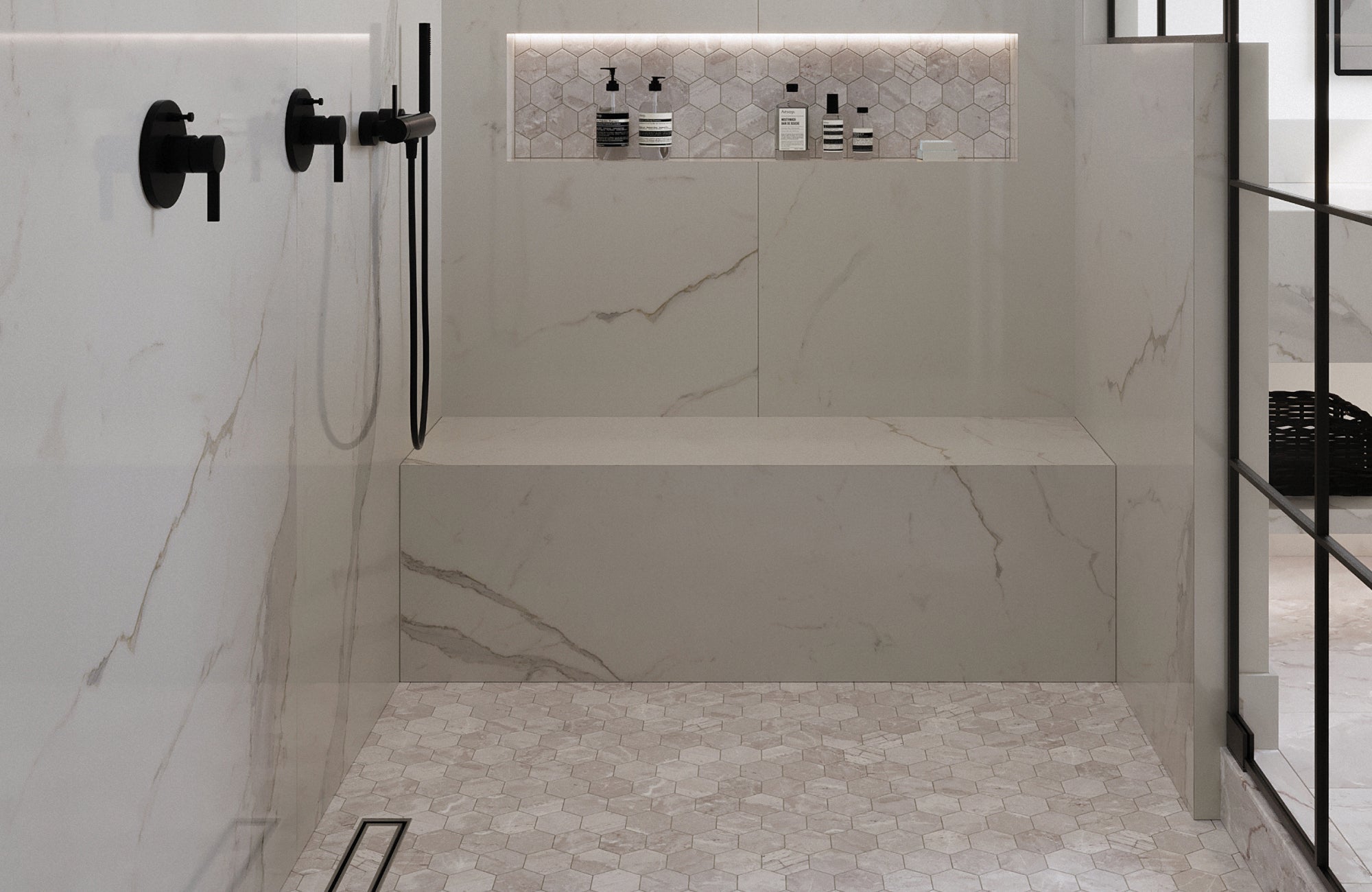
Compared to traditional squares or rectangles, hexagons introduce a more dynamic visual experience. A great example is our Juliet 7x8 Hexagon Matte Porcelain Tile in Pearl, seen above, where the six-sided form creates continuous interlocking patterns. These can stretch across walls or floors without the harsh grid effect of straight-edged tiles, giving a sense of openness and movement. Rectangles, by contrast, emphasize rigid lines that can shorten or narrow the look of a space. By breaking away from strict uniformity, hexagons offer a softer, more fluid perception of dimension.
The angled edges of hexagon tiles also contribute to the sense of flow in a room. Instead of drawing the eye in only one direction, their geometry pulls attention outward in multiple paths, creating a subtle impression of depth. This multidirectional quality keeps a space from feeling boxed in and can make small areas appear more layered and interesting. When used thoughtfully, the angular rhythm of hexagons becomes a design tool that enhances both space and style.

When Hexagon Tiles Make a Room Look Bigger
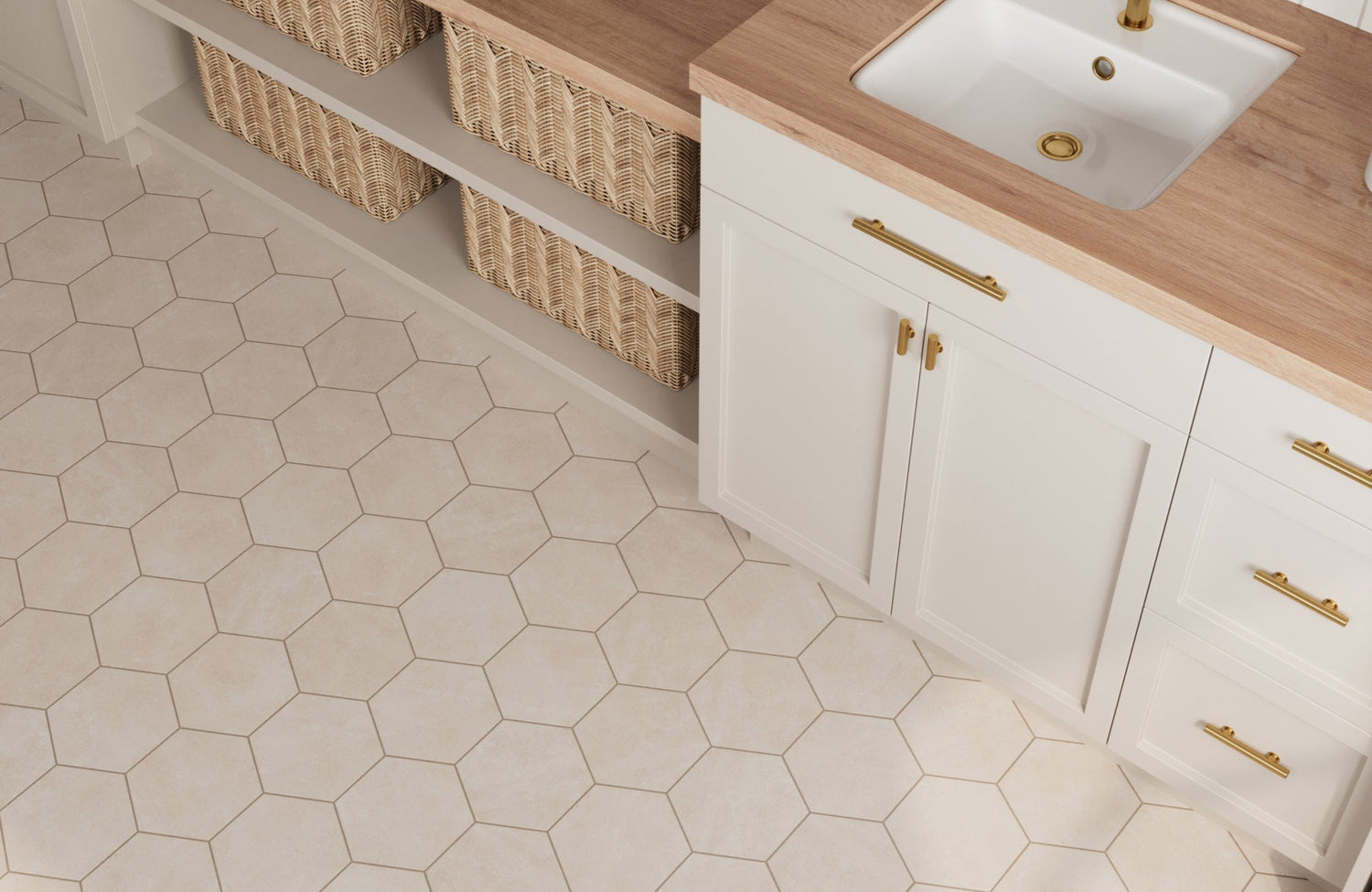
Hexagon tiles, such as our Catalina 7x8 Hexagon Matte Porcelain Tile in Cotto above, have the ability to visually expand a space when used with the right scale, pattern, and layout. By minimizing visual interruptions and encouraging flow, they can turn even compact rooms into areas that feel more open and connected
Using Large-Format Hexagon Tiles for Expansion
Large-format hexagon tiles create fewer grout lines, which reduces visual clutter and makes surfaces appear more expansive. When installed across a floor or wall, they trick the eye into seeing one continuous plane rather than dozens of small pieces. This approach works especially well in smaller bathrooms or kitchens where space is at a premium. The bigger scale creates a clean, open look that feels far less crowded.
Continuous Patterns That Extend Walls and Floors
Hexagons naturally interlock in a way that creates continuous, unbroken patterns. When carried across both walls and floors, the geometry creates a sense of depth and connection, making the boundaries of the room less noticeable. This trick draws the eye outward and can make narrow or boxy layouts feel more generous. By visually extending surfaces, the space feels unified rather than segmented.
Light Colors and Minimal Seams That Add Openness
When paired with lighter tones and subtle seams, hexagon tiles contribute to a brighter, more open look. Their multi-directional lines reflect light in different ways, adding dimension while keeping the space airy. A pale hexagon tile with carefully matched grout almost disappears into the surface, creating a seamless feel. This reduces heaviness and makes compact areas feel more spacious and inviting.
Strategic Placement on Feature Areas for Illusion
Beyond scale and color, placement also affects how hexagon tiles influence space. Using them on a feature wall or along a central floor area draws attention outward and gives the illusion of a larger footprint. For example, a hexagon backsplash running to the ceiling can elongate the height of a bathroom or kitchen. This targeted use makes the room feel bigger without overwhelming the entire design.

When Hexagon Tiles Make a Room Look Smaller
While hexagon tiles can open up a space, certain choices in scale, pattern, or layout can have the opposite effect. Busy arrangements or heavy contrasts can overwhelm a room, making it feel tighter than it actually is. Knowing what to avoid ensures the bold geometry works in your favor instead of against it.
Small, Dense Hexagon Patterns That Feel Busy
Tiny hexagon mosaics, such as our Quinn 12x12 Matte Porcelain 1x1 Hexagon Mosaic Tile in Black & White Flower above, create a lot of visual activity in a small area. Because the eye tries to follow every edge, the overall effect can feel cluttered rather than expansive. In compact bathrooms or kitchens, this density often closes the space in. These patterns work best in larger rooms where the extra detail has room to breathe.
High-Contrast Grout That Breaks Up Flow
Grout plays a major role in how hexagon tiles are perceived. When grout lines are much darker or lighter than the tiles themselves, they outline every single shape, creating a fragmented look. This constant interruption draws the eye to the grid rather than the room as a whole, which makes the space feel smaller. Softer, lower-contrast grout choices help maintain visual flow instead.
Dark Hexagon Tiles in Compact Rooms
Deep colors paired with hexagons can make small rooms feel closed in. Because darker tiles absorb light, they reduce the sense of openness and make boundaries more noticeable. In a compact bathroom, this often results in a heavier, more confined feel. Dark hexagons can still be used effectively, but they work better as accents rather than full coverage in small layouts.
Overly Complex Layouts That Overwhelm
Hexagon tiles already introduce movement through their angles, but combining them with intricate patterns or mixed materials can be too much for a small space. Layering multiple effects makes the room feel chaotic, leaving little room for the geometry to shine. Instead of feeling stylish, the area can come across as cramped and overdone. Simplified layouts let the hexagons add interest without shrinking the room visually.

Pairing Hexagons With Other Tile Styles for Balance
Hexagon tiles carry a lot of character on their own, which is why pairing them with simpler shapes can help strike the right balance in a room. Subway tiles, for example, provide a linear counterpoint to hexagons, toning down their geometric complexity while still complementing their style. This combination works particularly well in bathrooms or kitchens, where a hexagon floor meets a clean subway-tiled backsplash, keeping the space visually engaging without feeling overwhelming. The contrast between shapes creates balance that feels intentional and modern.
Large-format tiles are another smart partner for hexagons because they naturally reduce grout lines and create an open, expansive look. When placed alongside smaller hexagons, the larger tiles provide visual breathing room, helping the eye move comfortably across the space. This is especially useful in compact rooms, where too many small patterns could feel busy. The smoother backdrop of a large-format tile allows hexagons to act as accents rather than dominate the entire room.
Plank-style tiles, often used to mimic wood, add warmth and grounding to hexagon layouts. Their elongated lines guide the eye and create movement, balancing the structured geometry of hexagons with a more natural flow. For instance, pairing a wood-look plank floor with a hexagon shower niche adds both texture and contrast in a way that feels layered yet cohesive. By mixing these shapes thoughtfully, homeowners can enjoy the boldness of hexagons without sacrificing harmony and comfort in their design.

Balancing Style and Space With Hexagon Tiles
Hexagon tiles bring bold geometry to a room, but balance is key to making them feel stylish rather than overwhelming. When used thoughtfully, they can add depth, contrast, and personality without shrinking the space. The goal is to highlight their unique shape while maintaining a clean and cohesive design.
Strategic Placement on Feature Walls or Floors
Using hexagons selectively on a feature wall or a central section of flooring makes them a focal point rather than a covering for the entire room. This approach draws the eye to one area, giving the impression of thoughtful design without overwhelming smaller spaces. A hexagon backsplash, for instance, can make a statement while leaving the rest of the room open and bright. Strategic placement ensures style and balance go hand in hand.
Creating Depth With Contrasting Accents
Hexagons naturally add movement, and pairing them with contrasting materials or finishes enhances that effect. A matte hexagon tile beside glossy subway tile, for example, creates depth without closing off the room. The interplay of textures adds interest while preventing the space from feeling monotonous. Done well, this kind of contrast elevates both the hexagons and the surrounding surfaces.

Practical Tips for Choosing Hexagon Tiles
Choosing hexagon tiles isn’t just about falling in love with the pattern; it’s about making smart decisions that suit your room’s proportions and everyday use. With a few practical steps, homeowners can ensure their choice feels intentional, balanced, and functional for years to come.
Consider Scale and Room Size Together
The size of the hexagon tile should always be considered in relation to your room. Larger tiles can make small spaces feel more open, while smaller ones add texture in larger rooms without overwhelming the design. For example, using oversized hexagons in a compact bathroom floor helps minimize grout lines and create a smoother look. Thinking about scale early prevents design mistakes and ensures the tiles enhance rather than restrict the space.
Test Samples in Real Light Conditions
It’s also important to test tile samples under the actual lighting of your space before making a final decision. Tiles can look dramatically different under bright natural daylight compared to soft artificial bulbs. For instance, a tile that seems bold in the showroom may appear muted at home, or vice versa. By observing samples at different times of day, you’ll avoid surprises and ensure the hexagons truly fit the atmosphere you want.
Visualize Layouts With Our AR Tool
For extra confidence, you can use our AR visualization tool to see how hexagon tiles will look in your exact space before installation. This technology allows you to preview scale, pattern flow, and placement, helping you avoid design missteps. It’s especially useful when deciding how bold patterns or larger tiles will interact with existing furniture, lighting, and wall finishes. By seeing a realistic preview, you’ll feel more assured in your final selection.
Making the Most of Hexagon Tile Design
Hexagon tiles have a unique ability to transform how a room feels, whether by opening up tight spaces or adding bold definition to larger ones. Their geometric flow creates movement and interest, but the key lies in knowing how to balance size, placement, and pairing with other materials. With thoughtful planning, hexagons can highlight focal areas, add depth, and bring personality into your home without overwhelming the layout.
If you’re unsure how to strike that balance, a professional design consultation can provide clarity. Our team can guide you through choices in scale, layout, and complementary tile styles to ensure your project feels intentional and cohesive. With expert support, your space won’t just look beautiful, it will feel comfortable, practical, and perfectly tailored to your vision.