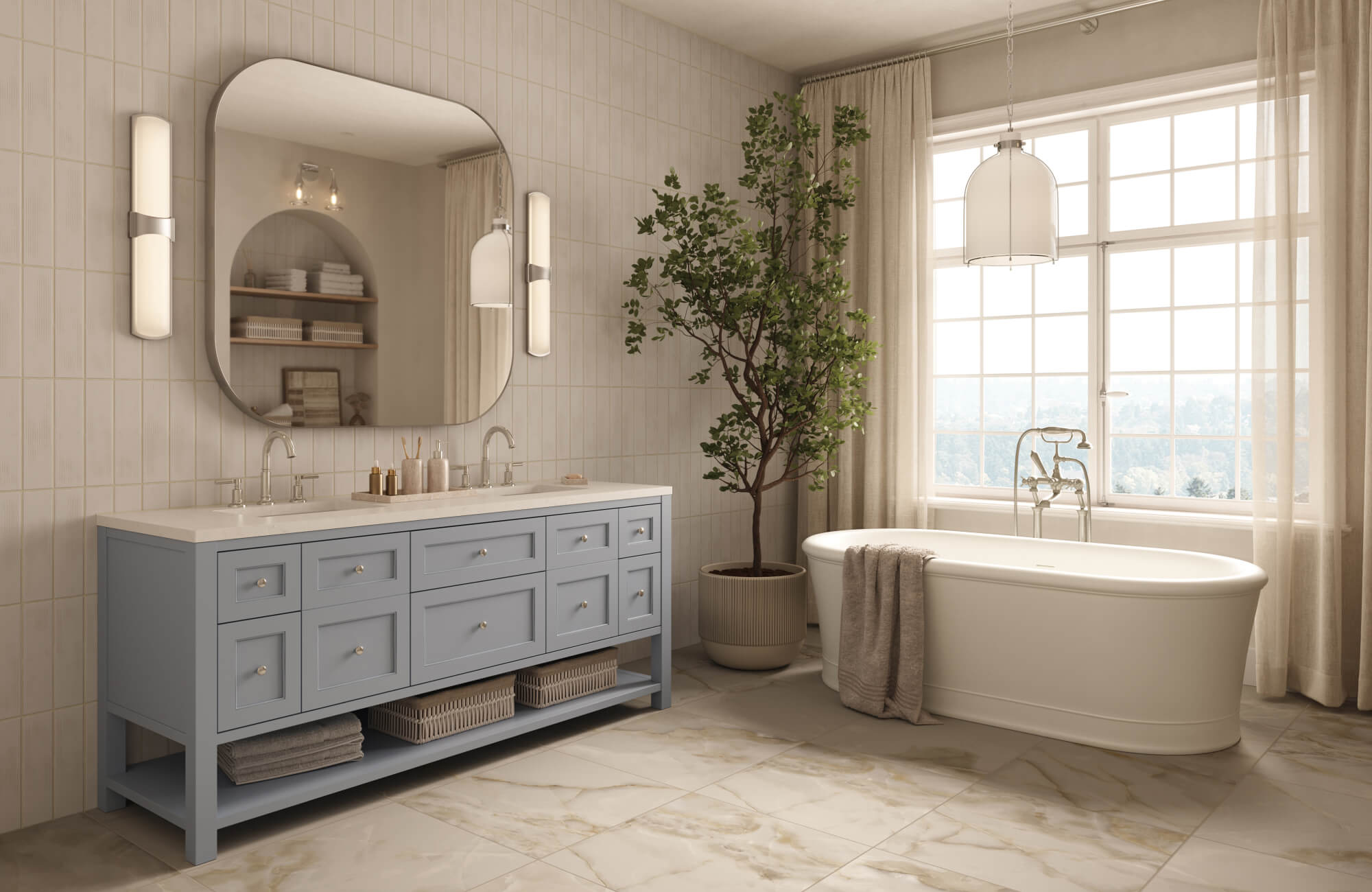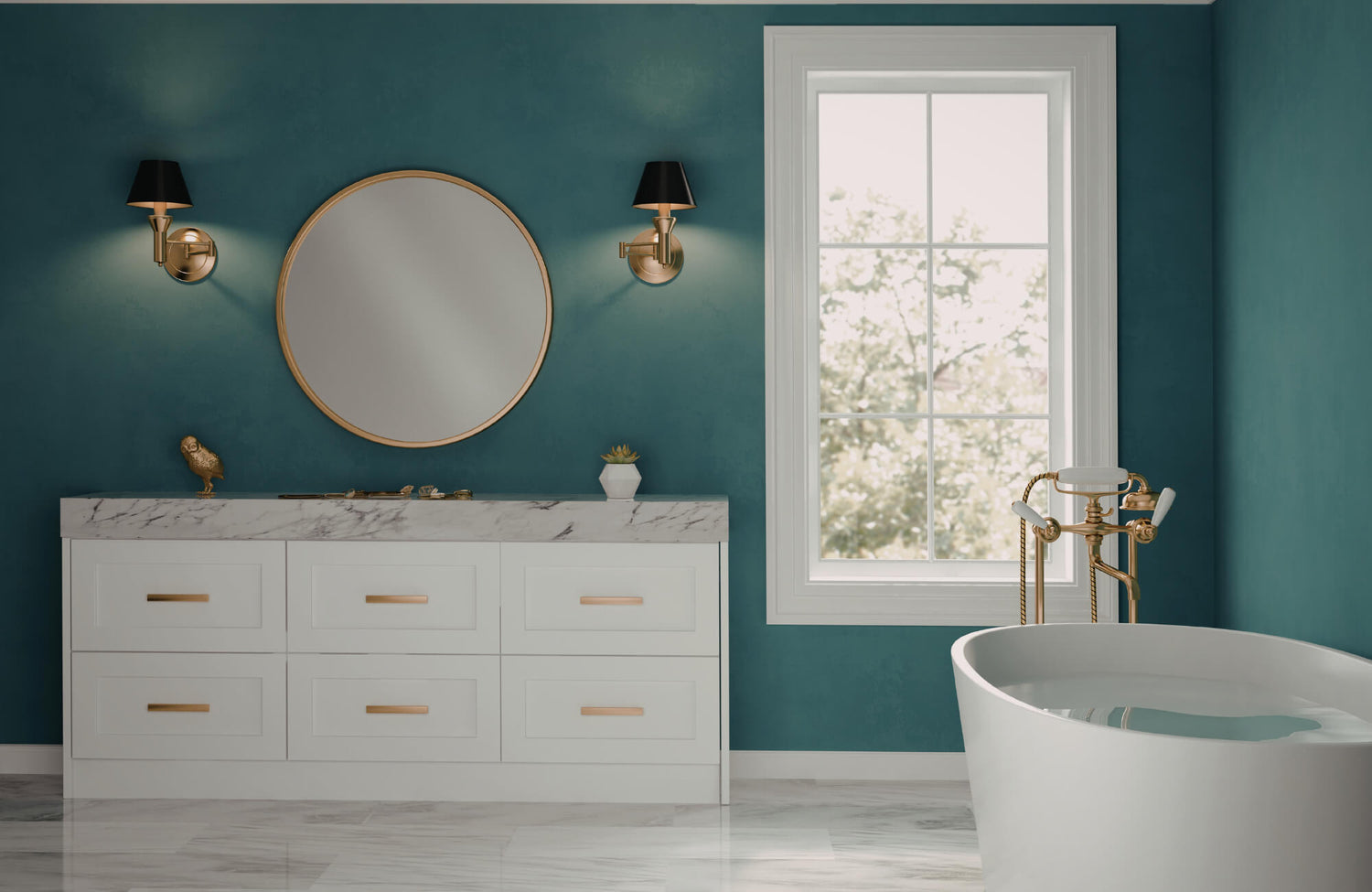
Modern minimalism is often misunderstood as a cold or restrictive design approach, yet at its core it is deeply intentional. It prioritizes clarity over excess, purpose over ornament, and materials that speak for themselves. In spaces like the bathroom, where functionality and atmosphere must coexist seamlessly, lighting becomes one of the most defining elements of the design language.
Black vanity lights have emerged as a striking choice within minimalist interiors, challenging the long-held association between minimalism and light or neutral finishes. Their presence raises an important question: can something so visually bold still adhere to the disciplined principles of modern minimalism? When evaluated through the lens of essentialism, contrast, material honesty, and spatial balance, black vanity lights not only follow minimalist rules but often express them with exceptional clarity.

The Principle of Essentialism and Clean Lines
Minimalist design begins with essentialism, the idea that every element must justify its presence. Nothing is added simply for decoration, and every line contributes to the overall structure of the space. Lighting, particularly vanity lighting, serves a pivotal function in reinforcing this philosophy because it sits at the intersection of form and function.
Eliminating Ornamentation for Pure Geometry
Black vanity lights designed for modern interiors typically rely on simple geometric forms such as straight bars, cylindrical shades, or rectangular backplates. These shapes are not arbitrary. They echo the architectural lines found in minimalist spaces, reinforcing visual order rather than competing with it. By eliminating decorative flourishes, etched details, or ornamental curves, these fixtures allow geometry to take center stage.
The absence of embellishment makes the design feel intentional rather than sparse. Each line has a purpose, whether it aligns with the mirror’s edge, echoes the vanity’s silhouette, or frames the user’s reflection. In this way, black vanity lights become an extension of the room’s architecture rather than an applied accessory, aligning perfectly with minimalist values.
The Visual Recession of Matte Finishes
Finish selection has a subtle yet powerful influence on how a fixture interacts with space. Matte black finishes, in particular, have a unique ability to visually recede despite their dark tone. Unlike polished or reflective surfaces that catch the eye and demand attention, matte finishes absorb light and reduce glare, allowing the form to remain present without overwhelming the composition. This effect is evident in Edward Martin’s Primm 12" Socket Wall/Vanity Light in Matte Black, seen in the image above, where the streamlined silhouette blends effortlessly into the surrounding palette while maintaining crisp definition.
This visual restraint is essential to modern minimalism. The fixture is clearly defined, yet it does not dominate the room. Instead, it quietly reinforces structure and contrast. Matte black vanity lights maintain a calm visual rhythm, supporting the space rather than interrupting it. Their subdued surface quality allows other elements, such as stone textures, wood grain, or the mirror itself, to remain part of a cohesive whole.
Form Follows Function in Lighting Design
Minimalism is not about stripping away comfort or usability. On the contrary, it demands that function be refined and elevated. Black vanity lights often exemplify this principle through thoughtful engineering and purposeful placement. Linear fixtures distribute light evenly across the face, minimizing shadows and enhancing clarity during daily routines.
The simplicity of the form ensures that nothing interferes with performance. There are no unnecessary angles that block illumination or decorative elements that diffuse light unpredictably. Every aspect of the design serves the primary goal of providing effective, flattering light. This disciplined approach to function is one of the clearest indicators that black vanity lights belong comfortably within minimalist design.

Anchoring the Space with High Contrast
Minimalist interiors often rely on restrained color palettes, which makes contrast an essential tool for defining space. Black vanity lights introduce contrast in a way that feels deliberate rather than decorative, grounding the room and giving it visual clarity.
Creating Definition in a Neutral Palette
Bathrooms designed around whites, soft grays, warm beiges, or pale stone surfaces can sometimes feel visually flat without moments of definition. Black vanity lights provide that definition by creating clear visual anchors. Their dark tone frames the mirror and vanity area, helping the eye understand where the focal point of the room lies.
This contrast is not about drama for its own sake. It is about legibility and balance. The black fixture outlines functional zones within the space, reinforcing spatial hierarchy while maintaining a restrained aesthetic. In minimalist design, contrast is most effective when it feels structural, and black vanity lights achieve exactly that.
The Concept of Negative Space
Negative space is one of the most powerful tools in modern minimalism. It allows the eye to rest and gives greater impact to the elements that remain. Black vanity lights interact beautifully with negative space because their crisp outlines are enhanced by the emptiness around them.
Rather than filling the wall with visual noise, a single well-proportioned black fixture can define the area while leaving ample breathing room. The surrounding space becomes part of the design, emphasizing simplicity and intention. This relationship between object and emptiness is central to minimalist thinking, and black vanity lights often exemplify it with striking clarity.
Balancing Visual Weight in the Room
Every room has an inherent visual weight distribution, influenced by materials, colors, and forms. In minimalist bathrooms, heavy elements such as stone vanities or large mirrors can create an imbalance if not countered thoughtfully. Black vanity lights help stabilize the composition by adding visual weight at eye level, as demonstrated by Edward Martin’s Hailey 20" 2 Lights Wall/Vanity Light in Matte Black/Opal Matte Glass in the image above, where the elongated form anchors the expansive mirror and double vanity.
This balance prevents the room from feeling top-heavy or bottom-heavy. The fixture’s presence creates equilibrium between horizontal and vertical planes, reinforcing a sense of calm order. When balanced correctly, black vanity lights feel like an integral part of the room’s structure rather than an afterthought.

Material Authenticity and Timelessness
Modern minimalism places a strong emphasis on material honesty. Surfaces are expected to express their true nature, and finishes are chosen for longevity rather than novelty. Black vanity lights align with these values through their material authenticity and enduring appeal.
The Industrial Roots of Modern Design
The use of black metal in lighting has deep roots in industrial design, which heavily influenced modern minimalism. Exposed steel, iron, and aluminum were originally valued for their strength and utility, not their decorative potential. Black finishes often emerged naturally from these materials, reinforcing a sense of authenticity. Edward Martin’s Madison 12" Socket Wall/Vanity Light in Matte Black/Glossy Ribbed Opal Glass, shown in the image above, subtly references this heritage through its exposed socket detail and structured silhouette.
When incorporated into a minimalist bathroom, black vanity lights reference this lineage without feeling overtly industrial. Their clean forms and refined finishes bridge the gap between raw utility and contemporary elegance. This connection to design history adds depth and credibility to the aesthetic, making the choice feel grounded rather than trendy.
Avoiding the Trap of Trendy Finishes
One of the greatest challenges in modern interiors is resisting finishes that feel fashionable in the moment but dated shortly thereafter. Highly polished metals, novelty coatings, or unconventional colors often fall into this category. Matte black, by contrast, has demonstrated remarkable staying power across decades of design evolution.
Its neutrality allows it to adapt to changing contexts without losing relevance. Black vanity lights do not rely on novelty to make an impact. Instead, they derive their strength from clarity, contrast, and proportion. This timeless quality aligns closely with minimalist principles, which favor longevity over short-lived appeal.
Durability and Ease of Maintenance
Practical considerations are inseparable from minimalist design. A space that requires constant upkeep or shows wear quickly undermines the sense of calm it aims to create. Black vanity lights, particularly those with quality matte finishes, tend to conceal fingerprints, water spots, and minor imperfections more effectively than lighter or glossy alternatives.
This durability supports a low-maintenance lifestyle, which is an often-overlooked aspect of minimalism. When fixtures remain visually consistent with minimal effort, the space retains its clarity and composure over time. The result is a bathroom that feels considered and effortless, reinforcing the minimalist ideal.

Curating a Cohesive and Uncluttered Layout
Minimalism is not achieved through individual pieces alone but through the relationships between them. Black vanity lights contribute most effectively when they are part of a cohesive, well-curated layout that values repetition, precision, and restraint.
The Rule of Repetition for Cohesion
Repetition is a subtle yet powerful strategy in minimalist interiors. When black vanity lights echo other black elements such as faucets, mirror frames, or hardware, they create a visual rhythm that unifies the space. This repetition does not feel monotonous because it is grounded in function and proportion.
Instead, it creates continuity, allowing the eye to move comfortably from one element to another. The space feels intentional and complete, with each black detail reinforcing the overall design language. This cohesive approach is central to minimalist thinking, where harmony is achieved through consistency rather than abundance.
Symmetry and Precision in Placement
Placement is as important as design when it comes to lighting. Black vanity lights often work best when installed with precise alignment, whether centered above a mirror or balanced symmetrically on either side. This precision reinforces a sense of order and control, which is fundamental to modern minimalism.
Symmetry, when used thoughtfully, creates visual calm and reinforces functionality. It ensures even illumination while enhancing the architectural clarity of the space. The crisp contrast of black fixtures makes any misalignment more noticeable, which encourages a higher standard of execution and reinforces minimalist discipline.
Supporting the Hero Pieces
In minimalist interiors, certain elements are intentionally elevated as focal points. These might include a sculptural vanity, a statement mirror, or a beautifully veined stone surface. Black vanity lights often serve as a refined backdrop, framing these hero pieces without competing for attention. In the image above, Edward Martin’s Irene 6" 1 Light Wall/Vanity Light in Urban Bronze/Prismatic Glass complements the warm tones of Edward Martin’s Rosalie 48" Single Vanity in Amber Birch with 3 cm White Zeus Quartz Top, reinforcing the layered composition without overpowering it.
Their restrained design allows the primary elements to shine while still contributing to the overall composition. This supporting role is a hallmark of successful minimalist design, where every component understands its place within the hierarchy. Black vanity lights excel in this capacity, offering definition without distraction.
The Ultimate Minimalist Statement
Black vanity lights do more than simply comply with the rules of modern minimalism. When chosen and placed thoughtfully, they articulate those rules with confidence and clarity. For those refining every detail, Edward Martin’s design consultation service offers expert guidance to ensure each lighting selection aligns seamlessly with surrounding materials, proportions, and overall vision.
Rather than disrupting minimalist interiors, black vanity lights often complete them. They provide structure within neutral palettes, anchor the room visually, and support a cohesive, uncluttered layout. Whether you need personalized recommendations, assistance coordinating tiles, rugs, or furniture, or have specific product questions, you can always contact Edward Martin for tailored support that brings clarity and confidence to your project.