Mixing a wood vanity with wood look floor tiles is one of the most common design dilemmas for renovating a bathroom. At first glance, pairing two wood surfaces in the same space can feel risky, even overwhelming. Many people worry the room will look mismatched, overly busy, or unintentionally dated. Yet when done with intention, this combination can result in a bathroom that feels layered, warm, and distinctly high-end.
The key lies in understanding contrast, undertones, grain, and visual balance rather than trying to force coordination through sameness. Wood look tiles have opened new creative possibilities by offering the character of natural wood with the durability and moisture resistance required for bathrooms. When paired thoughtfully with a real wood or wood-finished vanity, they allow you to create a space that feels both organic and refined. This guide walks through the principles that make this pairing successful, helping you move forward with confidence instead of hesitation.

The Golden Rule of High Contrast Design
At the heart of mixing wood elements successfully is contrast. Designers often emphasize that the most sophisticated spaces are not built on perfect matches but on intentional differences that feel deliberate. High contrast design gives each material its own identity, allowing the eye to read the space clearly rather than blending everything into a single, indistinct tone.
Why You Should Never Try to Match
Trying to perfectly match a wood vanity to wood look floor tiles almost always backfires. Even when tones appear similar in a showroom, lighting, scale, and surface finish will reveal differences once installed. Real wood and porcelain or ceramic tiles reflect light differently, age differently, and carry different levels of depth in color. What initially seemed coordinated can quickly look like a near miss, which draws attention for the wrong reasons.
Instead of chasing an exact match, successful designs embrace contrast. A medium-toned oak vanity can feel intentional and grounded when paired with darker walnut-inspired floor tiles. Likewise, a deep espresso vanity stands out beautifully against lighter wood look planks. By clearly separating the tones, the pairing reads as curated rather than accidental, creating a sense of confidence in the overall design.
The Sandwich Effect of Light and Dark
One of the most reliable ways to mix wood finishes is through what designers often call the sandwich effect. This approach layers light and dark elements vertically so the eye moves naturally through the space. In a bathroom, this often means anchoring the room with darker wood look floor tiles, introducing a mid-tone or contrasting vanity, and balancing the upper portion of the space with lighter walls, mirrors, or ceilings, a dynamic clearly illustrated in the image above with Edward Martin’s Sasha 60" Double Vanity in Mid Century Walnut with 3 cm White Zeus Quartz Top paired with Preston 8x48 Matte Porcelain Tile in Chestnut and finished with Jaden 2.5x16 Glossy Ceramic Tile in Hunter on the walls.
This vertical contrast prevents the bathroom from feeling bottom-heavy or visually cluttered. The floor grounds the room, the vanity acts as a focal point, and the lighter elements above keep the space open and airy. When wood tones are distributed thoughtfully rather than competing on the same visual plane, the result feels harmonious even when the finishes are clearly different.
Using Painted Wood as a Safe Alternative
For those who love the warmth of wood floors but hesitate to introduce a second wood tone, painted wood vanities offer a strategic alternative. A painted finish still provides the depth and craftsmanship of wood while eliminating the risk of clashing tones. Soft whites, warm greiges, muted greens, or deep charcoals can all work beautifully alongside wood look tiles.
Painted vanities also allow the flooring to take center stage. When the floor carries strong grain or variation, a solid-colored vanity creates visual breathing room. This approach is especially effective in smaller bathrooms, where too many competing wood tones can make the space feel crowded rather than cohesive.

Mastering the Science of Wood Undertones
Beyond lightness and darkness, undertones strongly influence how wood elements interact. Two woods can appear similar at first glance but clash subtly if their underlying color temperatures are not aligned. Understanding undertones allows you to mix finishes with far greater precision.
Identifying Warm Versus Cool Bases
Wood undertones typically fall into warm or cool categories. Warm woods lean toward yellow, red, or orange bases, while cool woods carry gray, taupe, or even slightly green undertones. Wood look tiles often exaggerate these undertones to mimic specific species, making it especially important to identify them before pairing finishes.
A warm honey-toned vanity paired with cool gray-leaning floor tiles will often feel off, even if the overall depth is similar. The contrast feels unintentional rather than designed. When mixing wood elements, aligning undertones creates a subtle sense of cohesion that the eye registers instinctively, even when the colors themselves are different.
The Versatility of Neutral White Oak
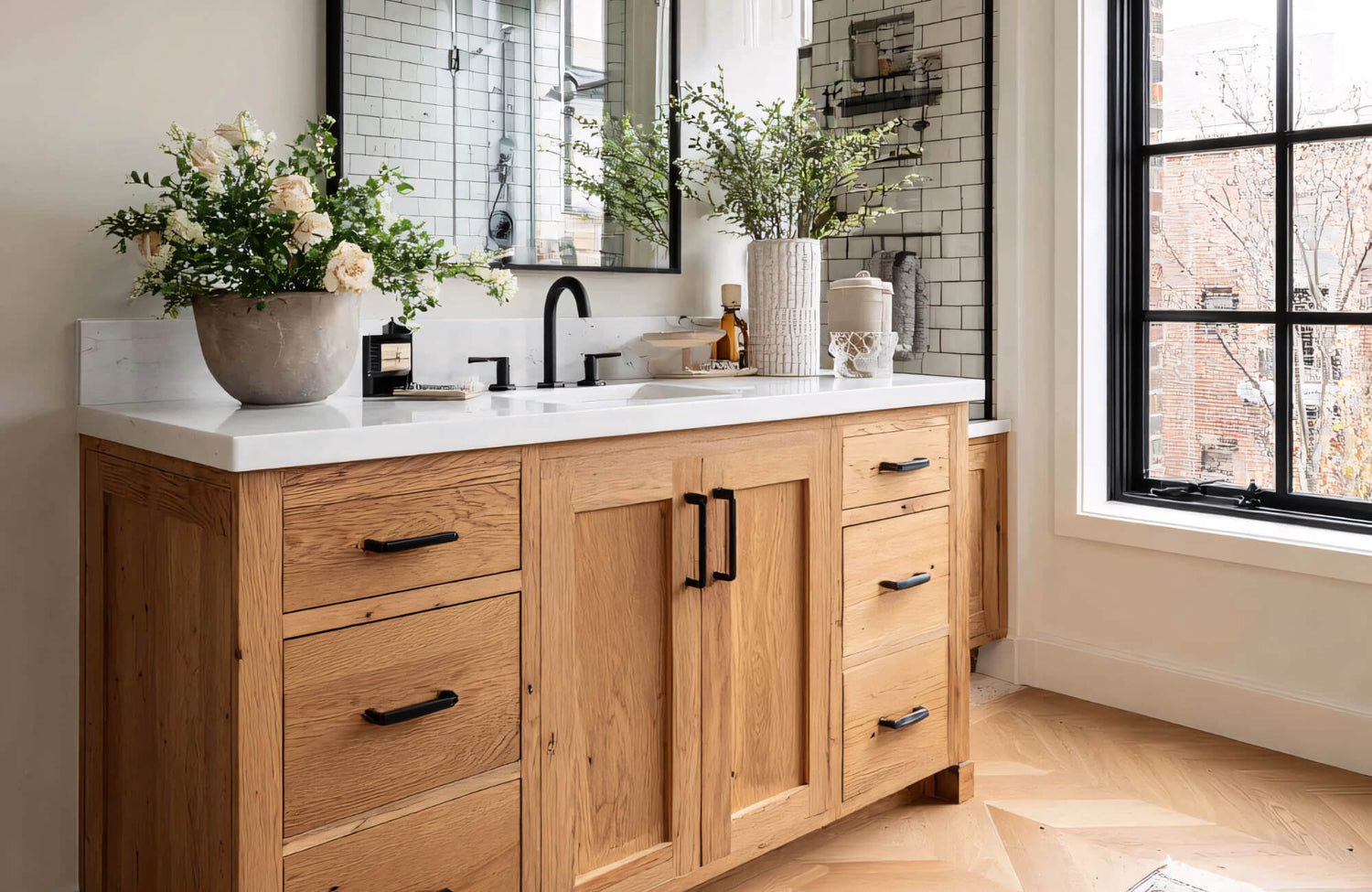
White oak has become a favorite in contemporary and transitional bathrooms because of its remarkable versatility. Its neutral undertone sits comfortably between warm and cool, allowing it to pair well with a wide range of wood look tile finishes, as seen in the image above where Edward Martin’s Bridgette 60" Double Vanity in Whitewashed Oak with 3 cm White Zeus Quartz Top offers a calm, adaptable presence within the space.
This adaptability makes white oak an excellent choice for those who want flexibility. It pairs just as well with modern concrete-look walls as it does with classic marble or soft neutral palettes. When in doubt, a neutral wood vanity provides a reliable foundation that simplifies other design decisions.
Consistency in Color Temperature
While contrast in depth is encouraged, consistency in color temperature is what keeps the design from feeling chaotic. Mixing a cool-toned wood vanity with warm-toned wood look tiles can create visual tension that never quite resolves. When both elements share a similar temperature, the contrast feels intentional rather than jarring.
Lighting matters here as well. Natural and artificial light can shift how undertones appear throughout the day. Reviewing samples together under the actual lighting conditions of your bathroom helps ensure that the chosen finishes remain compatible in real-world use, not just in theory.

Manipulating Grain Patterns and Textures
Grain pattern is another often-overlooked factor when mixing wood finishes. Even when tones and undertones work together, similar grain patterns can compete visually if they are not carefully balanced.
Horizontal Floors Versus Vertical Vanities
Orientation matters. Wood look floor tiles typically run horizontally, emphasizing the width of the room. Vanities, on the other hand, often feature vertical grain or paneling, a contrast that’s easy to appreciate in the image above with Edward Martin’s Sasha 72" Double Vanity in Mid Century Walnut with 3 cm White Zeus Quartz Top set against Jameson 8x48 Matte Porcelain Tile in Camel.
When both the floor and vanity share the same grain direction and scale, the space can feel overly repetitive. Introducing contrast through orientation keeps the eye engaged and reinforces the idea that each surface serves a distinct role within the room.
The Power of Herringbone Layouts
Herringbone and other patterned layouts add another layer of interest that can actually make mixing wood elements easier. A herringbone wood look tile floor introduces movement and texture that feels intentionally decorative. When paired with a simpler vanity finish, the floor becomes a feature rather than a competitor.
This approach works particularly well in bathrooms that aim for a boutique or spa-like feel. The patterned floor elevates the space, while the vanity remains clean and understated, ensuring the overall design feels balanced rather than busy.
Balancing Rustic Knots with Clean Grain
Not all wood textures carry the same visual weight. Rustic wood look tiles with pronounced knots and variation can overwhelm a bathroom if paired with an equally bold vanity. In these cases, choosing a vanity with a cleaner, more uniform grain helps maintain balance.
Conversely, if the vanity features dramatic grain or a reclaimed wood look, selecting floor tiles with a more subtle pattern allows that feature to shine. Balancing texture intensity ensures that one element leads while the other supports, creating a cohesive narrative rather than a visual argument.

Breaking the Visual Plane with Decor
Decorative elements serve as a unifying layer that helps tie wood finishes together. Thoughtfully chosen accessories can act as visual buffers, preventing the eye from directly comparing the vanity and floor.
The Strategic Use of Rugs and Mats
A well-placed rug or bath mat introduces a soft layer between the floor and vanity, breaking up the transition between the two wood surfaces. This separation reduces the risk of clashing tones while adding comfort and warmth to the space, an approach that translates easily to pairings like Edward Martin’s Elodie 72" Double Vanity in Light Natural Oak with 3 cm White Zeus Quartz Top styled with the Georgette Rug in Spice / Indigo, even though the textile differs from what’s shown in the image above.
Neutral textiles work particularly well, allowing the wood elements to remain the stars. Subtle patterns or textures can add interest without competing with the grain of the floor or vanity.
Creating Separation with Countertops
Countertops serve as a natural divider between the vanity and surrounding finishes. Stone, quartz, or solid surface countertops introduce a different material altogether, giving the eye a place to rest. This break makes it easier to mix wood tones below without feeling overwhelmed.
Lighter countertops can lift darker vanities, while darker surfaces can ground lighter wood finishes. Either approach reinforces the sense of intentional layering that defines successful mixed-material design.
Distracting with Metals and Hardware
Metals are powerful visual anchors in a bathroom. Hardware, faucets, mirrors, and lighting fixtures draw attention upward and outward, reducing direct comparison between wood elements. Warm metals like brass and bronze complement warm wood tones, while chrome and black finishes often pair well with cooler palettes.
Consistent metal finishes throughout the space create a cohesive thread that ties everything together. When the eye follows these repeated accents, minor differences in wood tone become less noticeable and far less important.
Confidence in Curation
Mixing a wood vanity with wood look floor tiles is not only possible, it can be one of the most rewarding design choices in a bathroom. The secret lies in letting go of the idea that everything must match and instead focusing on balance, contrast, and intention. By understanding undertones, and using decor as a unifying layer, you create a space that feels composed rather than cautiously coordinated, especially when supported by Edward Martin’s design consultation service for personalized guidance on tile, rug, or furniture selections tailored to your project.
Confidence in curation comes from trusting these principles and allowing each element to serve its purpose. When wood finishes are chosen with purpose, they add depth, warmth, and character that elevate the entire bathroom. For product-specific questions along the way, contacting Edward Martin can help refine decisions with expert insight, ensuring the vanity and floor work together to tell a cohesive design story that feels personal, timeless, and unmistakably well designed.