



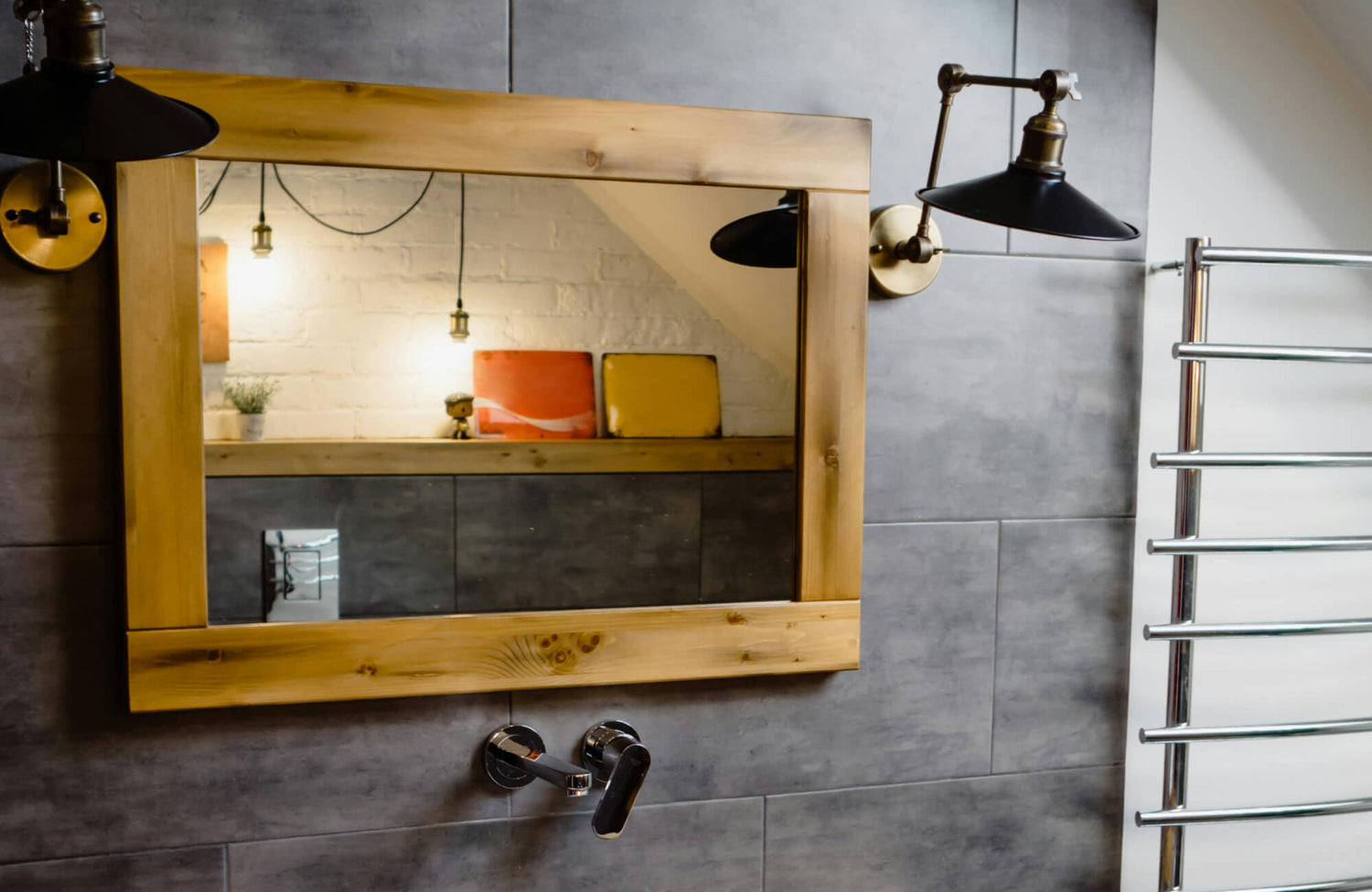
Wood-framed mirrors have a way of making modern spaces feel more lived-in and inviting. Their natural warmth softens sharp edges, while the grain and texture bring depth that sleek surfaces alone can’t provide. In this blog, we’ll look at why wood frames remain such a versatile choice, explore modern alternatives like brass or black, and share styling tips to help you use mirrors as more than just functional accents.

The Timeless Appeal of Wood-Framed Mirrors
Wood-framed mirrors carry a timeless charm that continues to resonate even in modern interiors. Their natural warmth, versatility, and tactile qualities make them more than just reflective surfaces. Instead, they act as design elements that bring comfort, balance, and character to contemporary spaces, softening the harder edges of clean lines and minimal layouts.
One of the greatest strengths of wood-framed mirrors is the inviting atmosphere they bring to pared-back interiors. Minimalist spaces can sometimes feel too stark, but a simple frame in oak or walnut instantly adds a sense of ease and familiarity. This natural touch allows the mirror to blend seamlessly while still offering a focal point that feels intentional. In this way, wood frames strike the right balance between simplicity and warmth.
Their appeal also lies in adaptability, as wood works well across many modern design styles. Scandinavian interiors pair beautifully with light woods, while Japandi spaces benefit from mid-toned options that echo earthy textures. Transitional rooms also find value in wood, since its organic grain bridges modern lines with more traditional details. The texture and subtle variations of the material add depth and personality, ensuring that no two mirrors feel exactly alike and that each space carries its own unique character.

How Wood Complements Modern Design Elements
Wood-framed mirrors have a unique ability to integrate with other finishes and materials in modern interiors. They work alongside glass, stone, and sleek surfaces to bring warmth and balance, while also complementing both neutral palettes and bolder contrasts.
Pairing Wood Frames with Glass or Stone Surfaces
Wood frames pair effortlessly with hard surfaces like glass and stone, adding softness and contrast at the same time. In bathrooms with marble counters or kitchens with stone backsplashes, a wood-framed mirror introduces warmth that prevents the room from feeling too cold. The natural grain enhances the reflective quality of glass, creating a dynamic yet harmonious combination. This mix of organic and polished materials also highlights the beauty of each surface, making the space feel layered and intentional.
Mixing Matte and Glossy Finishes for Balance
Another way wood supports modern design is by balancing finishes that vary in texture and sheen. A matte-painted wall, for instance, feels more dynamic when paired with the subtle sheen of a glossy wood frame. The contrast between the two creates visual depth while still maintaining a cohesive look. Glossy finishes in other elements, such as cabinets or tiles, also benefit from the grounding quality of natural wood. This balance of textures ensures the room feels complete without appearing over-styled.
Coordinating Wood with Neutral Palettes
Neutral color schemes are a hallmark of modern interiors, and wood fits seamlessly into these palettes. Light wood tones enhance airy, minimalist rooms, while deeper shades add richness and depth to monochromatic settings. When paired with whites, grays, or soft taupes, wood frames provide a focal point that feels warm but not overpowering. They also introduce subtle variation in spaces that might otherwise appear too flat. In this way, wood becomes both a complement to neutrals and a feature that keeps them from feeling bland.

Alternatives to Wood-Framed Mirrors for a Modern Look
While wood frames offer timeless appeal, many homeowners turn to other materials when they want a sharper or more contemporary finish. Options like brass, black, painted wood, or even metal frames allow you to adjust the mood of a room without straying from a modern design approach.
Brass and Gold Frames
Brass and gold frames bring an instant sense of luxury to a space. Their warm metallic tones catch the light beautifully, adding a touch of elegance to modern interiors. These finishes work especially well in bathrooms or entryways where you want a focal point that feels elevated. They also pair seamlessly with marble or stone surfaces, reinforcing a high-end look. Choosing brass or gold is a simple way to infuse sophistication without overwhelming the design.
A great example is our Esmeralda Wide Mirror in Polished Brass above, which features a subtle arched silhouette that softens modern lines. Its slender aluminum frame in a polished brass finish makes it versatile for both classic and contemporary interiors, while its generous proportions are perfect for expansive walls or to hang above larger furniture pieces.
Matte Black Frames
For those who prefer a sleek, dramatic aesthetic, matte black frames are a go-to choice. They provide crisp definition around the mirror and stand out against lighter walls or neutral backgrounds. Black frames emphasize clean lines, making them particularly effective in minimalist or industrial interiors. At the same time, they balance well with softer textures like wood or fabric nearby. This combination of boldness and restraint helps create a grounded yet modern atmosphere.
Silver and Chrome Frames
Silver and chrome frames highlight the polished, reflective side of modern design. These finishes bring a cool, clean edge that feels especially at home in contemporary bathrooms or kitchens. Because of their shine, they amplify natural and artificial light, which can make a room appear brighter and larger. They also complement appliances, fixtures, and other metal accents, tying the design together. This makes silver and chrome an easy choice for homeowners who value cohesion and simplicity.
Painted Wood Frames
Painted wood frames provide a way to enjoy the structure of wood while adapting it to a different design style. White or gray finishes, for example, fit well in transitional interiors where modern meets traditional. This option also allows for greater customization, since painted wood can align with nearly any color palette. While they keep the solid feel of wood, the paint finish adds a fresh, modern twist. As a result, they act as a versatile bridge between classic warmth and contemporary style.
Frameless Mirrors
Frameless mirrors take minimalism one step further by eliminating the frame entirely. This creates a seamless, clean look that feels especially striking in modern and ultra-contemporary spaces. Without borders, the mirror blends into walls or becomes part of a larger design scheme. Frameless designs also maximize reflection, making small rooms appear more open and expansive. For homeowners seeking a crisp, uncluttered aesthetic, this option delivers both style and practicality.

Placement Ideas for Mirrors in Modern Homes
Where you place a mirror can shape the flow and overall feel of a modern space. Beyond reflection, mirrors act as anchors that enhance balance, light, and proportion in a room. By choosing strategic locations, you can highlight focal points while also making interiors feel more open and intentional.
Over Consoles and Vanities to Anchor Spaces
Placing mirrors above consoles in entryways or vanities in bedrooms provides both function and structure. In these areas, mirrors not only help with daily routines but also anchor the furniture visually, giving the setup a polished look. This placement works especially well in narrow or transitional spaces, where a mirror can make the room feel less confined. Pairing it with subtle lighting helps the area feel welcoming and complete. With the right size, these mirrors transform functional furniture into design statements.
Full-Length Mirrors to Expand Small Rooms
Full-length mirrors are a tried-and-true way to open up smaller rooms. By reflecting more of the surroundings, they create the illusion of greater depth and make compact layouts feel less restrictive. They also serve a practical purpose for outfit checks, which makes them a staple in bedrooms and dressing areas. In hallways or corners, they can double as both décor and utility, filling otherwise empty spaces with light and dimension. When placed thoughtfully, full-length mirrors bring a sense of scale that elevates the entire design.
Statement Mirrors in Dining Rooms and Living Areas
In shared spaces like dining rooms and living areas, statement mirrors can act as focal points. Large, decorative frames draw the eye and add character without overwhelming the furniture around them. Mirrors in these rooms also reflect natural light, helping to brighten gatherings and make spaces feel more inviting. When grouped with art or positioned opposite windows, they enhance the sense of openness. This makes them a versatile feature for modern homes that prioritize both elegance and comfort.
Bathroom Mirrors That Balance Function and Style
Bathrooms require mirrors that blend utility with visual impact. A well-placed mirror above the sink ensures practicality for grooming while contributing to the room’s design scheme, as seen above with our Fitz Mirror in Antique Silver. Frameless or minimally framed options often feel sleek and contemporary, while larger formats can expand the sense of space. Mirrors in bathrooms also help balance proportions, especially when paired with modern fixtures and lighting. By combining function with aesthetic value, they become essential to both daily routines and interior cohesion.

Styling Tips for Wood and Alternative Frames
Bringing mirrors into a modern home is as much about styling as it is about function. The right frame, shape, and placement can transform a simple mirror into a design feature that feels intentional and well-coordinated.
Choosing Shapes That Complement Modern Lines
Shape plays a big role in how mirrors interact with contemporary design. Clean rectangular or square mirrors often reinforce the sleek lines of modern layouts, while round or oval shapes introduce softness where the architecture feels rigid. Arched frames can add a subtle focal point that feels current without overwhelming the space. The key is aligning the mirror’s outline with the tone of the room so it feels cohesive rather than random. By treating shape as part of the overall design language, the mirror becomes a natural fit in the space.
Balancing Mirrors with Furniture and Décor
A mirror should feel like it belongs with the furniture and décor around it, not like an afterthought. Placing mirrors directly above consoles, sideboards, or sofas ties the elements together visually and creates a more polished look. Balance also matters; a mirror that’s too small can feel lost, while one that’s too large can overpower the furniture. Adding decorative accents such as lamps or plants around the mirror helps soften the transition and makes the setup feel intentional. This balance ensures the mirror enhances the space instead of competing with it.
Using Mirrors to Enhance Natural Light
Mirrors are powerful tools for amplifying natural light in modern interiors. Positioned opposite or near windows, they reflect daylight back into the room, making spaces feel brighter and more open. This trick works especially well in smaller rooms or areas with limited natural light. In living rooms and dining areas, reflective surfaces can also highlight outdoor views, creating a stronger connection with nature. By strategically placing mirrors to capture light, you make the space feel warmer, more inviting, and visually larger.
Mixing Multiple Frames Without Overcrowding
Layering different mirror styles can add richness to a modern interior, but it requires a thoughtful approach. Mixing wood with brass or black frames, for instance, creates contrast that feels dynamic yet sophisticated. The key is avoiding clutter by leaving enough negative space between mirrors so the wall doesn’t feel crowded. Grouping mirrors of different shapes in a balanced layout creates visual interest while keeping the design cohesive. When done well, multiple frames work together to tell a story rather than compete for attention.
Bringing Warmth and Character Into Modern Spaces
Wood-framed mirrors remain a timeless choice because they bring warmth, balance, and texture into modern interiors. Their ability to soften clean lines, complement multiple design styles, and add character ensures they never feel out of place, no matter how trends shift. By blending functionality with beauty, they act as more than reflective surfaces, becoming integral design elements that elevate everyday spaces.
If you are considering adding wood-framed mirrors to your home but aren’t sure which style, finish, or placement will work best, our design consultation service is here to help. With expert advice, you can confidently select mirrors that align with your vision, creating interiors that feel cohesive, modern, and distinctly your own.


