Porcelain checkerboard tiles have been making a resurgence in modern interior design. Once associated with traditional or vintage aesthetics, this timeless pattern has found a new lease on life. What’s particularly fascinating is how it seamlessly integrates into contemporary spaces, bridging the gap between the past and the present. So in this article, we’ll explore the potential of this versatile trend by exploring its design applications, practical considerations, and the unique character it can bring to your home.
To fully appreciate the impact of checkerboard tiles in modern interiors, it helps to understand the enduring appeal of the pattern itself. By exploring its historical roots and contemporary reinterpretations, we can better grasp what makes the checkerboard motif so timeless, and why it continues to shape and inspire design today.

The Allure of the Checkerboard Pattern
The checkerboard pattern, with its striking geometric contrast, has captivated designers for centuries. Its alternating squares create a rhythmic sense of harmony and movement, making it a timeless expression of balance and visual interest. Historically, the motif appeared in ancient Egyptian and Roman design, later featuring prominently in medieval art and architecture, where it served both functional and decorative purposes. During the Renaissance, it gained prominence in grand European estates, often adorning entryways and ballrooms. By the Victorian era, checkerboard tilework became a defining element in both public and private interiors, reflecting its enduring appeal across cultures and periods.
In contemporary spaces, the checkerboard motif continues to evolve through diverse applications and color interpretations. Monochromatic palettes such as black-and-white or soft greys lend subtle sophistication, while bold combinations introduce dynamic energy. Alternatively, muted tones offer a calmer, more refined aesthetic.
This versatility is beautifully illustrated in Edward Martin’s Leona 12x12 Checkerboard Polished Porcelain Tile in Calacatta and Amani Bronze, as featured in the photo above. The marble-inspired white and warm bronze tones soften the traditional contrast, while the polished finish enhances light reflection, adding depth and dimension to the dining space. Complementing the floor, the Kenzie Dining Chair in Napa Cognac introduces warm upholstery and brass-finished detailing that subtly echo the tile’s bronze undertones, creating a cohesive and layered composition. Framed by the architectural archway and complemented by warm wood elements, the checkerboard floor balances classic appeal with contemporary refinement. It illustrates how the pattern adapts effortlessly within modern interiors.

The Practicality of Porcelain Checkerboard Tiles
Porcelain checkerboard tiles combine enduring performance with strong visual structure, making them a practical yet design-forward choice for modern interiors. When thoughtfully selected, they offer both resilience and refined aesthetic appeal.
Built for Everyday Durability
Porcelain tiles offer exceptional strength and resilience. Their dense composition allows them to endure daily use and repeated wear while maintaining their appearance over time.
In checkerboard applications, this durability becomes especially valuable. Scratch resistance and water-repellent properties make these tiles well-suited for busy and moisture-prone areas such as kitchens, entryways, and bathrooms. Additionally, a matte finish enhances functionality by offering improved slip resistance, which is an important consideration in wet environments.
This reliability is exemplified by Edward Martin’s Leona 24x24 Checkerboard Matte Porcelain Tile in Calacatta and Nero Marquina, as featured in the photo above. Its generous 24x24 format not only creates a bold, structured foundation but also reduces grout lines, making routine cleaning more manageable. Meanwhile, the matte surface provides added traction underfoot without diminishing the striking contrast of the marble-inspired black-and-white pattern. In a bathroom setting, where water exposure and daily use are constant, the tile demonstrates how porcelain checkerboard flooring can deliver both lasting performance and enduring visual impact.
Designed for Modern Living
Within the broader practicality of porcelain checkerboard tiles, scale and finish contribute not only to aesthetics but also to functionality. Large-format tiles, for example, can reduce the number of grout lines, making surfaces easier to clean and maintain, an important advantage in bathrooms, kitchens, and other busy areas.
Similarly, matte finishes enhance everyday performance by improving slip resistance while softening glare from natural or artificial light. Even when rendered in classic high-contrast tones, the checkerboard layout can feel streamlined and intentional when paired with thoughtful proportions and balanced surroundings. In this way, porcelain checkerboard tiles prove that practical materials can also support a clean, modern design without compromising durability or ease of care.
Low Maintenance and Long-Term Value
One of the most practical advantages of porcelain checkerboard tiles is their ease of upkeep. Their non-porous surface helps resist moisture and stains, making everyday spills easier to manage and clean. Unlike more delicate materials, porcelain retains its color and finish over time, even in frequently used spaces. As a result, it offers a flooring solution that feels structured and refined while delivering lasting value for everyday living.

Incorporating Checkerboard Tiles into Modern Design
Checkerboard tiles can be used in various ways to create a modern, stylish space. By strategically incorporating this classic pattern, you can elevate the visual impact of your home while adding a touch of timeless elegance.
Flooring Ideas
A checkerboard floor can instantly transform the dynamic of a room, elevating it into a defining design feature. In particular, high-contrast pairings like black and white create a bold, timeless statement, while softer combinations such as beige and white offer a more contemporary, understated appeal.
For those seeking a refined aesthetic, neutral-toned checkerboard tiles are especially effective. When paired with a matte finish, they not only soften the overall look but also provide a practical solution for moisture-prone areas like kitchens and laundry rooms. Additionally, opting for smaller tile formats can help maintain visual balance, ensuring the pattern feels proportionate rather than overwhelming in more compact spaces.
Ultimately, by combining subtle contrast with everyday functionality, a checkerboard floor brings together visual interest and lasting performance—making it a versatile and enduring choice for modern interiors.
Wall Tile Ideas
Incorporating checkerboard tiles into modern design can be as impactful on walls as it is on floors. A checkerboard accent wall, for instance, can serve as a striking focal point while reinforcing the clean lines often associated with contemporary interiors. In a modern bathroom, black-and-white tiles positioned behind a freestanding tub establish a timeless yet updated contrast. The geometric layout pairs seamlessly with sleek chrome fixtures and a floating vanity, creating a look that feels bold yet controlled. Soft lighting further enhances the composition, reflecting off the surface to add depth and subtle texture.
Similarly, in the kitchen, a checkerboard backsplash in muted greys or soft pastels introduces pattern without overwhelming the space. When paired with white cabinetry and a wooden countertop, the grid-like design adds structure and visual rhythm while maintaining a streamlined aesthetic. Styled alongside simple open shelving, the checkerboard wall integrates effortlessly into the overall scheme, demonstrating how this classic motif can be thoughtfully adapted to suit modern design sensibilities.
Enhancing Outdoor Spaces with Checkerboard Tiles
A patio with black-and-white checkerboard tiles creates a striking visual contrast against surrounding greenery and vibrant flowerbeds. An outdoor dining set placed on this bold pattern transforms the space into an elegant yet functional area for gatherings or quiet afternoons. This look is exemplified by Edward Martin’s Palmer 12x12 Checkerboard Raw Porcelain Tile in White and Grey, as featured in the photo above. The balanced interplay of crisp white and soft grey tones delivers definition without feeling overly dramatic, while the raw porcelain surface provides a grounded texture suited for outdoor living. Built to endure changing weather conditions, these durable tiles maintain their character through sun, rain, and daily use.
Similarly, checkerboard tiles in earthy tones, such as terracotta and beige, work beautifully for garden pathways or terraces. These hues blend naturally with the surrounding landscape, guiding the way through lush plantings or leading to a seating area beneath a pergola. Their inherent strength and weather resistance make them a practical yet visually cohesive choice for outdoor spaces.
Checkerboard Tiles for Fireplace Surrounds - H3
In the living room, a fireplace framed with black-and-white checkerboard tiles can instantly add character and striking contrast. For example, the sleek geometric pattern can stand out against a neutral wall, lending the space an understated sophistication. Above it, a simple black mantel can be styled with curated décor, such as a ceramic vase or framed photograph, to anchor the design. At the base, a dark stone hearth can reinforce the contrast, while a soft area rug and a pair of armchairs further enhance the inviting, modern atmosphere. Together, these elements can create a balanced composition that naturally positions the fireplace as the focal point.
In a more rustic setting, however, checkerboard tiles in earthy beige and taupe tones offer a softer interpretation. For instance, when paired with a stone fireplace, the pattern feels organic and layered rather than bold. A reclaimed wood mantel can be styled with candles or a small potted plant, adding warmth and a subtle touch of greenery. Nearby, a woven basket filled with firewood further adds tactile texture, reinforcing the cozy character of the space. In this way, the muted checkerboard motif blends seamlessly with natural materials, resulting in an atmosphere that feels relaxed, welcoming, and thoughtfully styled.
Creating Visual Separation with Checkerboard Zones
Checkerboard tiles can be strategically used to define different zones within an open-plan layout, adding both structure and style. For example, using checkerboard flooring to mark a dining area within a larger kitchen or a seating area in a spacious living room subtly designates distinct areas without the need for physical dividers. This approach maintains an open feel while subtly defining areas in a natural, cohesive way. Choosing tile colors that complement the surrounding decor also ensures the pattern enhances, rather than disrupts, the room’s aesthetic harmony.
For an enhanced design experience, our AR tool lets you visualize checkerboard tiles directly within your space before installation. This interactive feature lets you explore different tile sizes, colors, and layouts, making it easier to find a design solution that feels perfectly suited to your home.
Incorporating checkerboard tiles into modern design opens up endless possibilities for crafting spaces that feel both distinctive and visually compelling. However, achieving the right balance between this bold pattern and other design elements is essential to ensure harmony and practicality throughout your home.

Challenges and Considerations
While checkerboard tiles offer timeless appeal and strong visual impact, thoughtful planning is essential to ensure they enhance rather than overwhelm a space. Understanding how to balance pattern, scale, and practicality allows the design to feel intentional and cohesive.
Balancing Visual Impact
Checkerboard tiles can introduce bold character to a space, but their high-contrast pattern may feel overwhelming if not applied thoughtfully. Covering expansive areas with this striking design can dominate the room, making it appear visually busy. To maintain balance, it’s best to limit the pattern to key focal points, such as floors or feature walls, while keeping surrounding elements more restrained. Achieving harmony between the checkerboard layout and other design features is essential for a cohesive result.
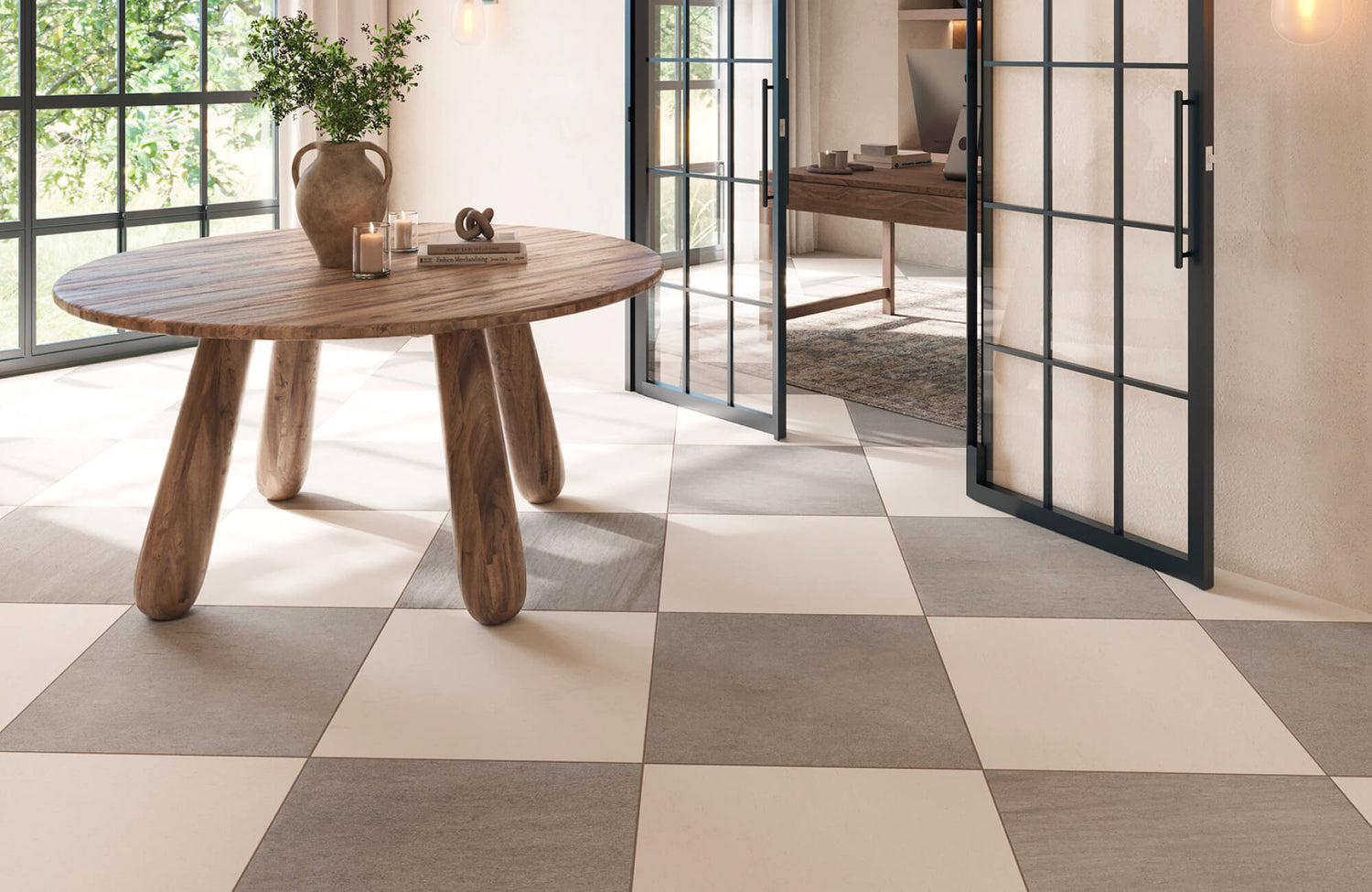
When executed in softer, muted tones, however, the pattern can feel more integrated and refined. Edward Martin’s Leona 24x24 Checkerboard Matte Porcelain Tile in Marfil and Amani Bronze, as featured in the photo above, demonstrates how warmer hues and a larger format can temper contrast. Paired with neutral walls and warm wood elements, the layout enhances the architecture without overpowering it.
Cost Considerations
Budget also plays an important role when planning a checkerboard tile installation. High-quality porcelain options may involve a higher upfront cost, particularly in larger formats or premium finishes. However, thoughtful planning can help manage expenses without compromising design intent. For example, incorporating checkerboard tiles in smaller areas, such as a backsplash, entryway, or powder room, can create a strong visual impact without requiring a full-scale installation. Exploring bulk purchasing options or seasonal promotions can also help manage overall costs while preserving a cohesive design vision.

Maintenance Tips for Porcelain Checkerboard Tiles
Porcelain checkerboard tiles are designed for durability, but a consistent care routine helps preserve their appearance over time. Always follow the manufacturer’s care recommendations for both the tiles and grout, as different finishes and sealants may require specific products or methods.
Start with regular cleaning to prevent buildup. Sweeping or vacuuming removes loose debris, while mopping with warm water and a mild detergent refreshes the surface. Drying the floor afterward can help minimize streaks or water marks, particularly in areas where spills are common.
For tougher stains, such as wine or grease, use a cleaner formulated for porcelain. Allow it to sit for a few minutes, then gently scrub with a soft-bristle brush. Grout lines should also be cleaned periodically using a suitable cleaner and brush to maintain a uniform appearance.
Simple preventative measures can further protect the surface. Placing rugs beneath dining tables and adding felt pads to chair legs can help minimize wear, while promptly wiping up spills, especially on lighter tiles or grout, keeps the surface looking clean and polished. With thoughtful care, porcelain checkerboard tiles can retain their refined character while performing beautifully in everyday spaces.
A Timeless Trend for Modern Spaces
Porcelain checkerboard tiles are an ideal choice for creating a modern design with a touch of timeless appeal. This versatile pattern brings a striking visual element that can enhance contemporary interiors with bold, high-contrast styles or subtle, muted tones. By thoughtfully selecting tile size, color, and finish, you can achieve a sleek, minimalist look that feels fresh and relevant, while still nodding to the checkerboard’s classic roots.
To explore this unique design option further, consider ordering samples from Edward Martin to experience the tiles firsthand. Our sample service lets you experience textures, colors, and finishes directly within your space, helping ensure each selection aligns seamlessly with your overall design vision.