The herringbone pattern is one of the most timeless and visually dynamic layouts in interior design. Its signature zigzag arrangement adds movement, sophistication, and an architectural feel that elevates both traditional and contemporary spaces. While homeowners often fall in love with the look, many discover that achieving it successfully requires more than simply choosing a rectangular tile and turning it on a diagonal.
Ratios, scale, material characteristics, and installation realities all influence whether a tile will produce a crisp, balanced herringbone or a visually awkward layout that detracts from the room. Understanding these nuances empowers you to select tiles that not only look beautiful but also perform well throughout installation.

Understanding The Math Behind Tile Aspect Ratios
Before choosing a tile for herringbone, it helps to understand the simple geometry that determines whether the pattern will look crisp or awkward. This section lays the foundation by breaking down how tile proportions influence the flow, balance, and overall success of the layout.
Why The 1 to 2 Ratio Is The Absolute Minimum
A herringbone pattern relies on the balance between length and width. The mathematical relationship between these dimensions dictates how smoothly the tiles interlock and how cleanly the zigzag rhythm appears. A tile must be at least twice as long as it is wide to create the proper overlap that defines a true herringbone. When the dimensions fall below this threshold, the pattern becomes compressed, the angles feel abrupt rather than elegant, and the visual energy that typically makes herringbone a standout feature becomes muddled. Tiles with a 1:2 ratio meet the baseline requirement by allowing each piece to extend clearly past the width of the one it intersects. This overlap creates continuity in the pattern without leaving awkward gaps or forcing the installer to make unnatural adjustments.
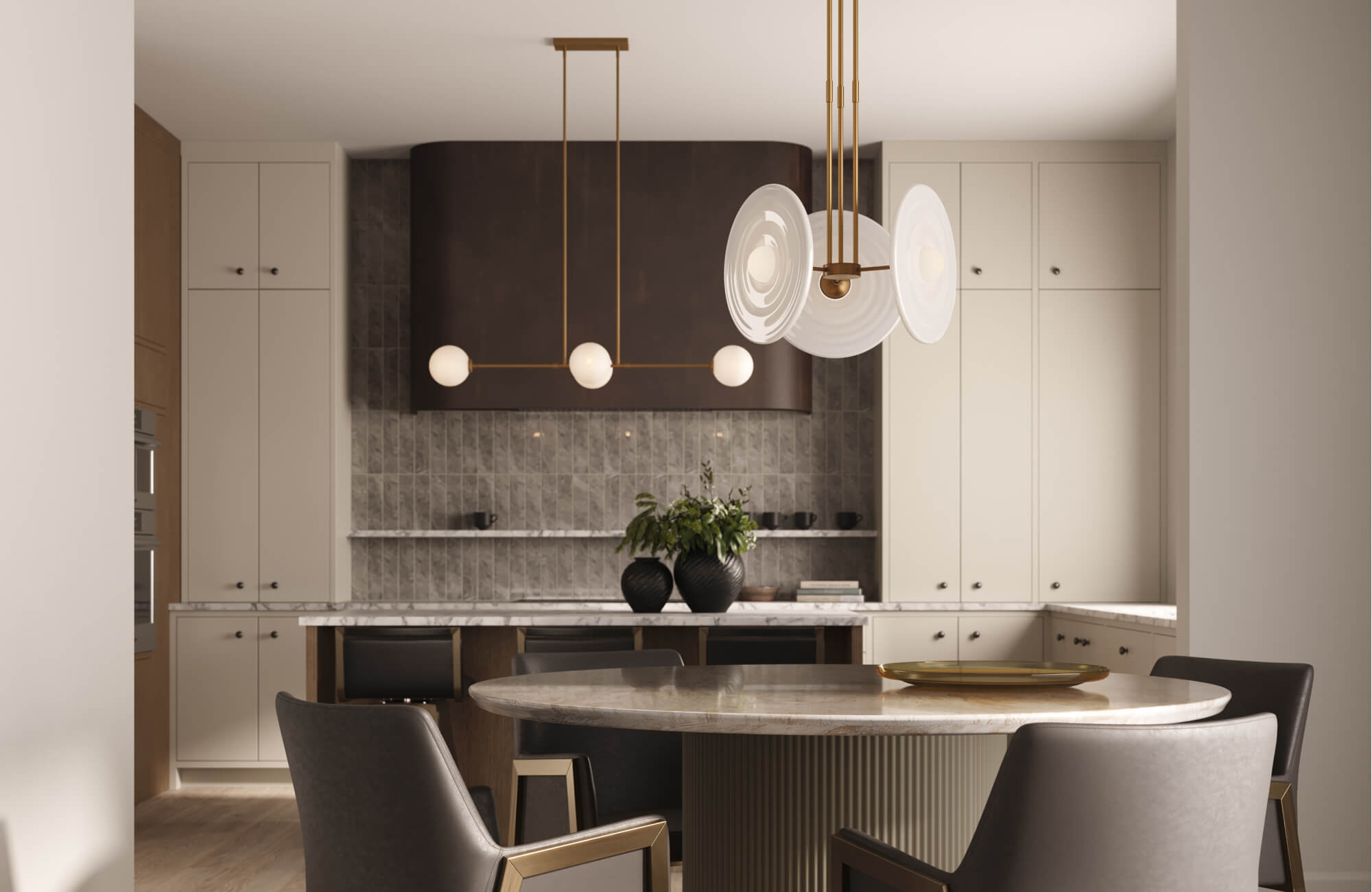
A minimum ratio also influences the grout line spacing. With a 1:2 rectangle, the grout joints tend to fall into predictable alignment without producing bulky intersections, which is why designs using tiles like Edward Martin’s Catalina 2x16 Matte Porcelain Tile in Mushroom, shown in the image above, maintain such clarity. Although the pattern will still appear more compact than higher ratios, it maintains structural integrity and avoids a blocky or staggered appearance that mimics running bond rather than herringbone. If your goal is a straightforward, minimally stylized version of herringbone, a tile with a 1:2 ratio will get you there.
The Elegant Sweet Spot Of 1 to 3 and 1 to 4 Ratios
Beyond the minimum lies the sweet spot that designers gravitate toward. Tiles with ratios of 1:3 or 1:4 create a graceful, elongated overlap that accentuates the directional movement of herringbone. This proportion draws the eye smoothly along the diagonal lines, introducing a sense of luxury that works well in both small and expansive rooms. A longer tile enhances the optical flow and helps the pattern feel more intentional rather than utilitarian.
The visual effect of these extended ratios is especially noticeable in spaces where the herringbone becomes a focal point, such as a primary bathroom, entryway, or feature wall behind a kitchen range. The longer form allows the pattern to breathe, creating negative space between intersections that gives the layout its trademark elegance. Light interacts more dramatically with elongated rectangles, producing subtle variations in tone that can deepen the sense of dimensionality. For homeowners seeking a refined and modern interpretation of herringbone, this ratio range offers the ideal blend of proportion and artistry.
Avoiding The Trap Of Nearly Square Rectangles
Tiles that edge toward a square shape, those with ratios like 1:1.2 or 1:1.3, pose significant challenges. While they may still be technically rectangular, they lack the proportional difference required for the herringbone’s characteristic directional overlap. These tiles produce a pattern that appears cluttered and confused, as the angles collapse into something closer to a stepped grid than a true herringbone.
Nearly square rectangles also magnify layout inconsistencies. Because the length barely surpasses the width, any minor variation in tile size or edge precision becomes more noticeable. Even with careful installation, the pattern can look forced, and the grout lines may bunch up in ways that disrupt the rhythm. These tiles often appeal for their versatility in other layouts, but when it comes to herringbone, they simply do not create the movement or clarity needed for the pattern to succeed. Homeowners hoping to replicate magazine-worthy inspiration should steer clear of tiles that drift too close to square.

Evaluating Scale And Room Size For Large Format Tiles
Once the math is clear, it becomes easier to see how tile dimensions play out in real spaces. Here, the focus shifts from ratios to scale, exploring how room size and tile format work together, or against each other, when creating a herringbone layout.
The Challenges Of Using 12x24 Tiles In Herringbone
Large format tiles like 12x24s are enormously popular for their clean, modern appearance, yet they introduce complexities when used in a herringbone layout. Their substantial size increases both weight and rigidity, making it harder for the installer to maintain consistent alignment as the pattern shifts diagonally across the room. Any minor bowing or dimensional variance becomes magnified when the tiles intersect, potentially leading to lippage or misaligned intersections that can compromise the entire visual effect.
Spatial scale is also an issue. In smaller rooms, 12x24s create oversized peaks and valleys within the herringbone, causing the pattern to overwhelm the space rather than complement it. The layout appears bulky rather than dynamic, and the grout joints often stretch across the room in distracting lines. Even in larger rooms, the scale can feel visually heavy unless the home’s aesthetic leans strongly toward contemporary minimalism. A more proportionate tile helps preserve the geometry of herringbone, much like the balanced look created by Edward Martin’s Maisie 2.5x16 Glossy Ceramic Tile in Ocean, subtly featured in the image above.
Wood Look Planks And The Super Long Ratio
Wood look porcelain planks, often sized anywhere from 6x36 to 8x48, have become a favorite for homeowners seeking to merge the charm of hardwood with the durability of tile. Their elongated proportions create a graceful herringbone with dramatic movement, reminiscent of traditional hardwood parquet patterns. The super long ratio produces elongated V-shapes that exaggerate the diagonal flow, making them ideal for creating a sense of depth and direction in hallways, living rooms, and open-concept floors.
However, these planks also demand high installation precision. Slight bowing, a known characteristic of long-format porcelain, can disrupt the crisp lines essential to herringbone. Skilled installers must adjust setting techniques, often increasing the number of leveling clips or altering mortar application to counteract curvature. The end result can be spectacular, but achieving it requires careful evaluation of material quality and installer experience. When executed well, wood look planks deliver one of the most visually stunning herringbone patterns available.
Small Scale Mosaics For Tight Spaces
In compact rooms or intricate areas such as powder rooms, shower floors, or entry nooks, small rectangular mosaics offer an opportunity to create a beautifully detailed herringbone without overwhelming the space. Their reduced size allows the pattern to scale proportionately, producing a gentle, refined version of herringbone that still enhances movement without dominating the design.
Because mosaics are mounted on mesh sheets, installation becomes significantly easier. The sheets help maintain alignment and spacing even as the pattern turns corners or adapts to unusual architectural features. This flexibility makes small-scale herringbone an appealing option for homeowners who want the sophistication of the pattern in locations where larger tiles would feel intrusive. While the effect is more delicate than dramatic, mosaics allow for precise control in areas that require both functionality and charm.

Critical Material Characteristics Beyond Shape
After considering both proportions and scale, the next step is understanding how material quality affects the final look. This section builds on the previous concepts by examining edge precision, warpage, and texture, all of which can enhance or disrupt the clean geometry of herringbone.
The Necessity Of Rectified Edges For Clean Lines
Rectified edges play an essential role in achieving a crisp, seamless herringbone. These tiles are mechanically finished to achieve uniform edges with razor-sharp precision, reducing dimensional variation to a minimum. Herringbone, with its multiple intersecting angles, exposes any discrepancies immediately. A tile that is even marginally inconsistent across its batch can result in misaligned joints or uneven spacing that becomes obvious once the pattern unfolds across the room.
Rectified tiles support tighter grout joints, which enhances the sophistication and modernity of the pattern. Choosing a rectified option such as Edward Martin’s Juliet 2.5x10 Matte Porcelain Tile in Iron, shown in the image above, helps the shape and motion of herringbone stand out without interruptions from wide grout lines. Without rectification, the visual breaks created by each joint increase, diminishing the fluidity that makes herringbone so appealing. For homeowners seeking clean, architectural geometry, rectified edges provide the consistency required for premium results.
Dealing With Tile Bowing And Lippage
Tile bowing is a natural occurrence in many ceramic and porcelain products, especially those with long dimensions. In a herringbone pattern, where tiles intersect at acute angles, even slight curvature can introduce lippage, leading to an uneven surface that is both visually distracting and potentially hazardous. The interplay between angled lines amplifies imperfections that might go unnoticed in more forgiving layouts like straight stack or running bond.
Installers often mitigate these issues using leveling systems, specialized mortars, and strategic staggering techniques during installation. Still, the success of these measures depends heavily on selecting a tile with minimal inherent warpage. When choosing materials for herringbone, homeowners benefit from inspecting samples laid out on a flat surface. Identifying curvature early helps avoid disappointment later, and ensures that the final installation achieves the smooth, cohesive finish that herringbone demands.
Directional Texture And Pattern Considerations
Texture and printed design on the tile surface significantly influence the final look of a herringbone pattern. Tiles that feature linear veining, wood grain, or brushed textures create heightened movement when installed in herringbone, as the directional elements amplify the sharp diagonals. This dynamic interplay can add richness to a room, especially when paired with balanced lighting and complementary finishes.
However, directional texture also introduces complexity. Misalignment or inconsistent orientation can disrupt the intended visual flow, causing the pattern to appear chaotic. Careful planning is essential to ensure that the design elements complement the herringbone layout rather than clash with it. Homeowners working with stone-look or veined porcelain should review multiple tiles to understand how the pattern repeats, allowing them to anticipate how the veins or textures will interact at each intersection.

Installation Realities And Calculating Waste
With the design principles and material factors covered, the final piece is the practical side of getting the pattern installed correctly. This section ties everything together by explaining how waste, cuts, and layout decisions ultimately determine the success of your herringbone project.
Why You Need More Tile Than You Think
Herringbone patterns require more tile than straight-set layouts due to the angled cuts that occur along walls, corners, and architectural features. While some homeowners estimate waste using standard percentages, herringbone typically demands a greater buffer to account for the complexity of the zigzag arrangement. The diagonal positioning produces numerous triangular offcuts, many of which cannot be used elsewhere in the layout due to directionality and size constraints.
Purchasing additional material ensures that pattern continuity is maintained even when unexpected adjustments are needed. Having extra allows installers to sort through tiles and set aside pieces with defects or excessive warpage, especially when working with options like Edward Martin’s Juliet 2.5x10 Matte Porcelain Tile in Charcoal, subtly visible in the image above. Ensuring enough material from the start prevents delays and keeps the entire installation consistent in color, texture, and finish across the full space.
The 45 Degree Versus 90 Degree Layout Decision
While most homeowners imagine herringbone at a 45-degree angle, a 90-degree layout offers a distinct alternative that can dramatically impact the room’s aesthetic. A 45-degree herringbone creates pronounced visual energy, emphasizing diagonal movement and often enlarging the perceived dimensions of the space. This version works well when the goal is to introduce artistic flair or create a striking focal point, and tools like our AR Visualization Tool make it easy to preview how each angle plays out in your own space before committing.
By contrast, a 90-degree herringbone aligns with the room’s primary axes, producing a more structured and architectural feel. The pattern still provides motion and interest, but with a more grounded presence. Choosing between the two depends on the room’s proportions, the existing finishes, and the homeowner’s stylistic preferences. Both require meticulous planning, and once the layout direction is visualized through AR, homeowners can order our tile samples to confirm color, texture, and scale in person—ensuring the chosen layout translates beautifully in real life.
The Complexity Of Cutting Around Outlets And Obstacles
Any patterned tile installation must contend with obstacles such as outlets, plumbing fixtures, door casings, and cabinetry. In a herringbone layout, these interruptions become more pronounced because each cut must maintain alignment with the surrounding angled tiles. This makes precision cutting essential, particularly around visible focal points like kitchen backsplashes or fireplace surrounds.
Installers must account for these complexities early in the layout process. Planning cuts strategically helps preserve the pattern’s integrity even when obstacles cannot be moved. Accurate measuring, templating, and dry-fitting pieces ensure that the transitions around these points remain seamless. These small moments of craftsmanship significantly influence the final perception of quality, making expert execution just as important as tile selection.
The Ratio Is The Secret Ingredient
In the world of herringbone patterns, the underlying principle that governs success is proportion. While virtually any rectangular tile can technically form a herringbone, the results hinge on choosing the right ratios, materials, textures, and installation strategies.
Ultimately, the magic of herringbone lies not just in its striking geometry but in the harmonious interplay of math, artistry, and craftsmanship. When the ratio is right and the tile is chosen with intention, the pattern becomes more than a design choice, it becomes a defining feature that enriches the home with enduring character and sophisticated charm.