In the world of interior design, a tension often exists between the warmth of natural materials and the clean lines of modern aesthetics. Many homeowners believe that a material like oak, with its traditional and rustic associations, cannot seamlessly integrate into a sleek, contemporary bathroom.
This blog will explore how the right choices in style, finish, and complementary elements can transform an oak vanity from a conventional piece into a striking and sophisticated centerpiece that not only fits but elevates a modern bathroom design.

The Foundation of Modern Bathroom Design
Every successful modern bathroom begins with a strong foundation of design principles. Clean lines, efficient layouts, and thoughtful use of color and texture set the stage for a space that feels both functional and refined.
Key Principles of a Modern Bathroom
At its core, a modern bathroom prioritizes clean lines, geometric forms, and uncluttered surfaces. Layouts often emphasize spatial efficiency, incorporating wall-mounted vanities, frameless glass shower enclosures, and concealed storage to maintain visual clarity. Lighting is layered, using recessed LEDs, task lighting at mirrors, and accent illumination, to highlight architectural details without overwhelming the space. Each design element serves a purpose, reinforcing the balance between form and function.
The Power of a Neutral Color Palette
Neutral tones form the backbone of modern bathroom aesthetics. Shades of white, gray, taupe, and black establish a calming backdrop that enhances natural light and emphasizes architectural features. High-contrast pairings, such as charcoal against crisp white, provide depth and visual drama without cluttering the space.
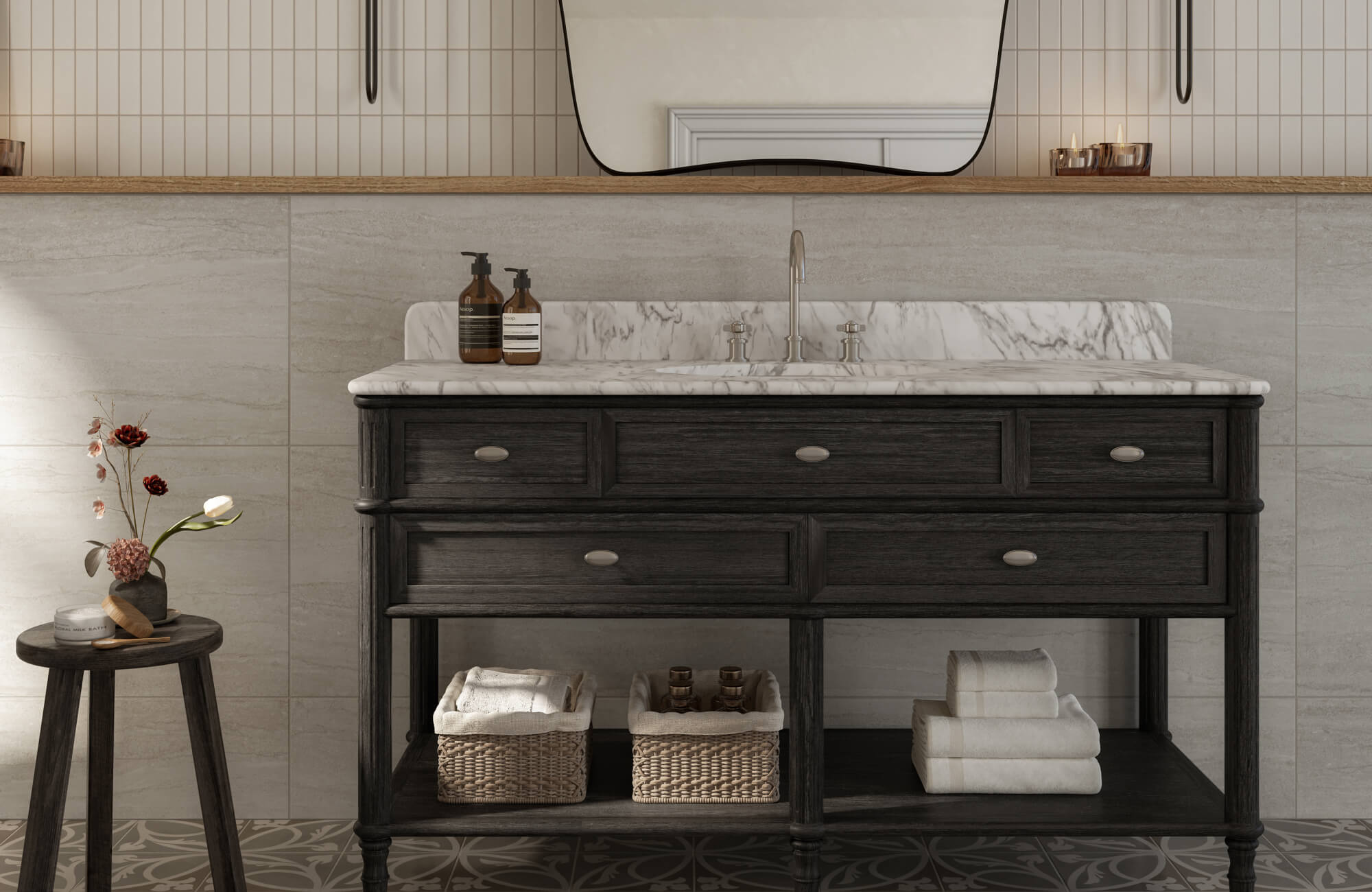
Finishes are essential as well: matte ceramics, high-gloss lacquers, and honed stone surfaces create subtle variations in texture while maintaining harmony across fixtures, flooring, and wall treatments. A refined example of this approach can be seen above in Edward Martin’s Abigail 48" Single Vanity in Light Natural Oak with 3 cm White Zeus Quartz Top, where the soft wood grain pairs beautifully with a crisp quartz surface, illustrating how neutral palettes adapt seamlessly to modern design while allowing statement details to shine.
Incorporating Natural Textures and Elements
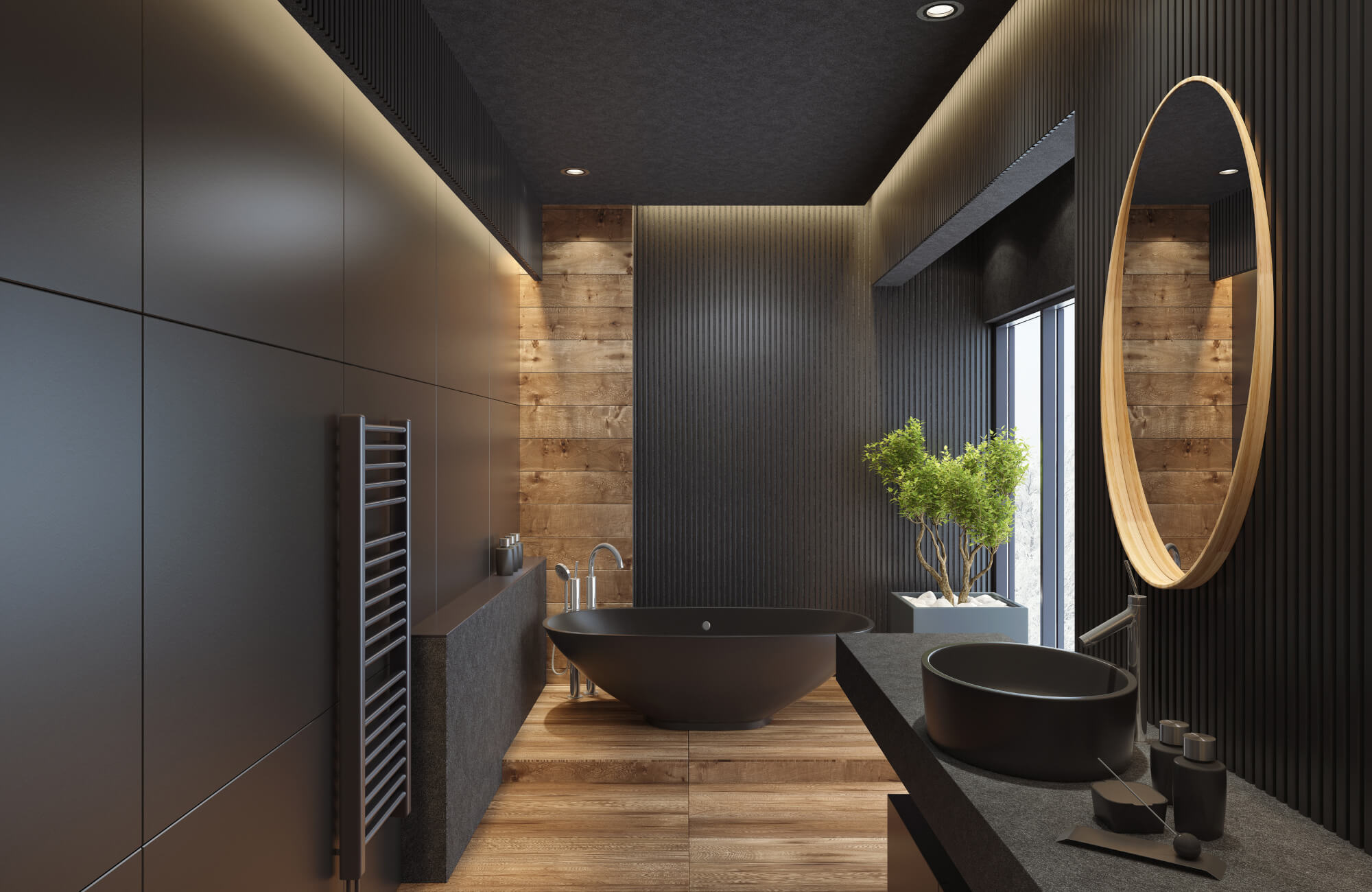
Modern bathrooms balance their streamlined aesthetic with organic materials that introduce warmth and tactility. Oak or walnut vanities, stone vessel sinks, and textured porcelain tiles mimic natural surfaces while offering durability suited to high-moisture environments. Integrating greenery, whether through potted plants or vertical garden features, introduces biophilic design principles, which are known to enhance both well-being and air quality. These natural elements soften the sharpness of modern architecture, creating a spa-like atmosphere that feels both sophisticated and inviting.

The Modern Oak Vanity Reimagined
Building on those core principles, the oak vanity has been reinterpreted to fit seamlessly into today’s modern bathrooms. With updated finishes, sleek hardware, and floating profiles, this once traditional piece now feels contemporary and fresh.
The Rise of Floating Vanities
Floating, or wall-mounted, oak vanities emphasize spatial efficiency while creating a sense of visual lightness. By lifting cabinetry off the floor, designers achieve an open, airy effect that enhances floor visibility and contributes to a larger perceived footprint, an advantage in compact bathrooms. Integrated plumbing concealment and reinforced wall-mount systems ensure structural integrity without compromising the minimalist profile.
Sleek Hardware and Handleless Designs
Modern oak vanities often incorporate streamlined hardware or entirely handleless fronts. Soft-close drawers with concealed channels or push-to-open mechanisms preserve uninterrupted surfaces, reinforcing the vanity’s geometric form. When hardware is used, brushed nickel or matte black finishes provide contrast against oak’s natural grain, echoing the clean, linear vocabulary of contemporary interiors. These details not only enhance aesthetics but also improve ergonomics and durability in high-use environments.
The Power of a Natural or Whitewashed Finish
Surface treatment is central to reimagining oak for modern spaces. While natural oil finishes enhance grain depth and add warmth, a whitewashed treatment introduces a lighter, more versatile character. This softened effect makes oak blend effortlessly into pale tile schemes and airy interiors. The look is exemplified by Edward Martin’s Bridgette 72" Double Vanity in Whitewashed Oak with 3 cm White Zeus Quartz Top, as featured above, where a refined whitewashed finish strikes a balance between rustic texture and modern clarity, creating a centerpiece that feels both grounded and contemporary.

Achieving Synergy Through Material and Finish Pairings
Of course, even the most beautifully designed vanity needs the right surroundings to truly shine. By carefully pairing countertops, fixtures, and accents, oak takes on a new dimension, balancing natural warmth with modern polish.
Countertop Pairings That Complement Oak
The countertop acts as a visual anchor, making material choice critical when paired with oak cabinetry. Quartz and solid-surface composites provide a seamless, low-maintenance option that highlights oak’s organic grain without overwhelming it. For a more natural aesthetic, honed marble or granite introduces subtle veining that complements the wood’s tonal variation.
In busy bathrooms, porcelain slabs offer superior durability and resistance to staining, maintaining a pristine appearance while preserving the vanity’s refined character. This balance of beauty and performance is exemplified by Edward Martin’s Delilah 72" Double Vanity in Seaside Oak with 3 cm White Zeus Quartz Top, as displayed above, where the clean quartz surface amplifies the oak’s texture and anchors the piece as a polished, modern focal point.
Faucet and Fixture Selections for a Polished Look
Fixtures establish the design language of the bathroom and should be selected to reinforce the oak vanity’s role as a focal point. Brushed nickel and matte black finishes emphasize contemporary minimalism, while aged brass or gunmetal introduces a warm contrast that resonates with oak’s natural undertones. Precision in scale and proportion is essential, oversized faucets can overwhelm smaller vanities, whereas streamlined, single-hole mixers enhance spatial efficiency. Wall-mounted faucets paired with vessel sinks further reduce clutter and underscore the clean lines associated with modern design.
Integrating Storage and Decorative Elements
Functional storage solutions must align with the vanity’s aesthetic to maintain design cohesion. Recessed shelving in matching oak finishes or open niches in contrasting materials, such as powder-coated metal or frosted glass, provide both utility and visual interest. Decorative elements should be restrained but intentional: integrated LED lighting beneath shelving, minimalist hardware, or sculptural mirrors that echo the vanity’s geometry. These accents create synergy without detracting from the oak’s natural beauty, ensuring the bathroom remains both highly practical and visually balanced.

The Importance of Strategic Lighting and Mirrors
Once materials are in harmony, lighting and mirrors elevate the design even further. These elements don’t just brighten the space, they enhance scale, highlight textures, and create the atmosphere that ties everything together.
Layered Lighting Strategies for a Modern Feel
Modern bathrooms rely on a layered lighting plan to achieve both practicality and ambiance. Recessed ceiling LEDs provide even, glare-free general illumination, while task lighting around the vanity ensures accuracy for grooming activities. Accent lighting, such as cove LEDs or under-vanity strips, introduces depth and softens the transition between surfaces.
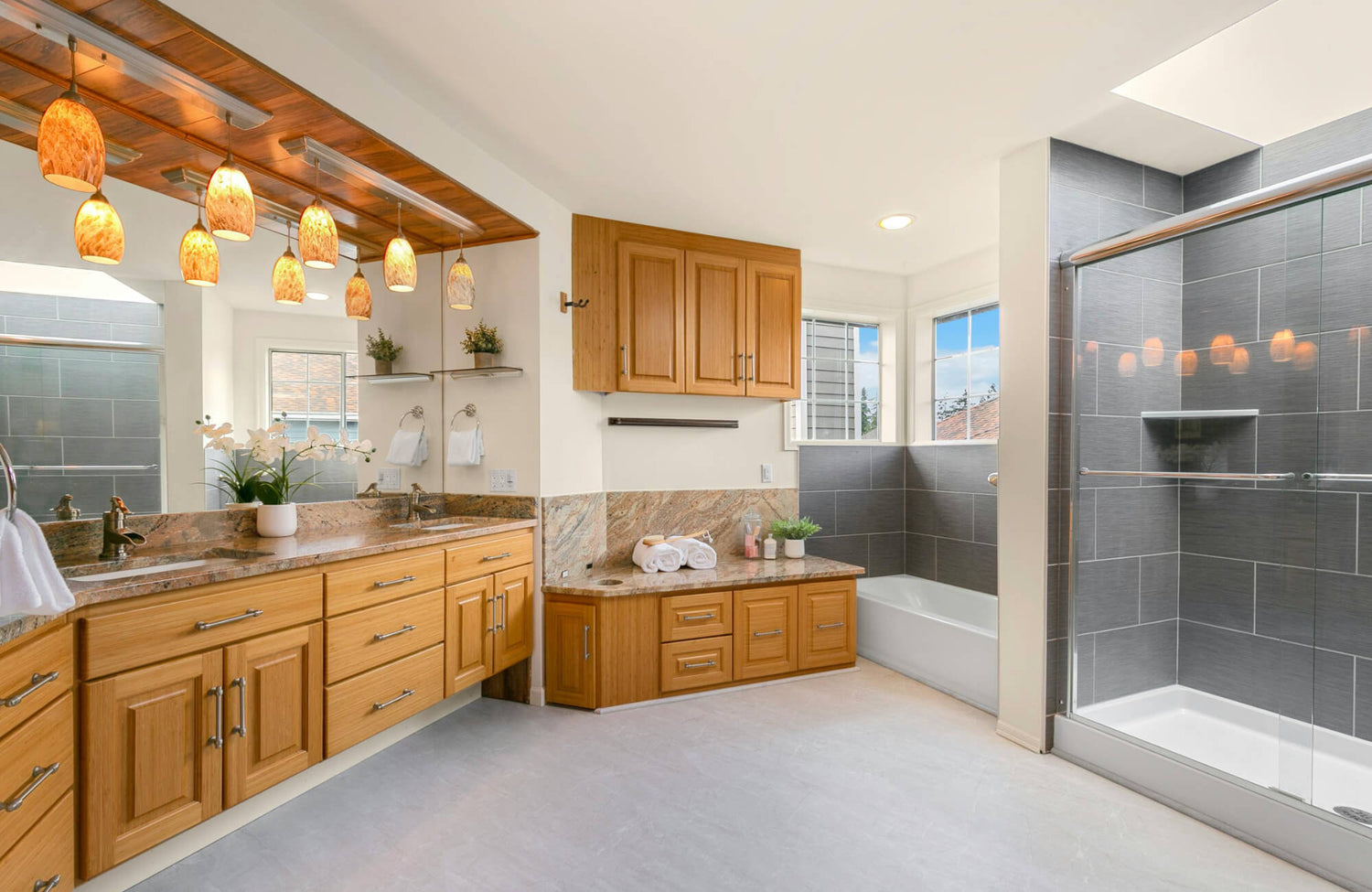
This multi-tiered approach reduces shadows and enhances spatial clarity, supporting both daily routines and spa-like relaxation. The effect is especially striking when paired with statement furnishings, such as Edward Martin’s Gwen 72" Double Vanity in Pebble Oak with 3 cm White Zeus Quartz Top, shown above, where pendant lights highlight the vanity’s geometric detailing and bring warmth to the modern composition.
The Impact of a Frameless or LED-Lit Mirror
Mirrors amplify light and extend sightlines, making them essential to modern bathroom design. Frameless mirrors emphasize clean lines and a seamless aesthetic, while LED-backlit options add both functional brightness and a striking visual feature. Integrated demisters prevent fogging, ensuring clarity even in high-humidity environments. By combining reflection with illumination, these mirrors double as both a practical tool and a sculptural element, reinforcing the bathroom’s modern character.
Using Sconces and Pendants as Design Features
Sconces and pendant lights serve as both functional luminaires and decorative statements. When placed at eye level beside a vanity mirror, sconces eliminate harsh shadows, improving visual accuracy. Pendant fixtures, often in minimalist or geometric forms, draw the eye downward, creating a focal point while complementing the bathroom’s vertical proportions. Finishes such as matte black, brushed brass, or frosted glass shades allow these fixtures to echo or contrast with surrounding materials, ensuring they contribute to the overall design narrative rather than appearing as isolated details.

Practical Considerations for a Functional Design
While aesthetics matter, functionality ultimately determines whether a bathroom works day to day. From sizing and storage to layout choices, practical details ensure that your oak vanity and modern design choices remain both beautiful and highly livable.
Sizing and Scale for a Balanced Space
Proportion is critical in bathroom planning. A vanity that is too large can overwhelm a compact floor plan, while one that is undersized may look out of place and provide insufficient storage. Standard vanity depths range from 18 to 24 inches, but selecting the right width depends on wall length, door swing, and circulation clearance. Ensuring proper spacing between fixtures, such as at least 30 inches of clearance in front of a vanity, maintains accessibility and comfort without crowding the layout.
Choosing Between Single and Double Vanities
The decision between single and double vanities depends on household needs and spatial constraints. Single vanities are ideal for powder rooms or small baths, conserving space while still providing essential storage. In contrast, double vanities support multiple users, making them advantageous for shared primary bathrooms. Plumbing infrastructure, wall reinforcement, and countertop surface area should all be considered, as accommodating two sinks requires both adequate space and efficient utility planning. A well-designed double vanity can streamline morning routines without compromising aesthetics.
Maximizing Smart Storage in a Modern Design
Storage is a cornerstone of bathroom functionality, and modern designs prioritize efficiency through integrated solutions. Wall-mounted vanities with deep drawers optimize usable volume, while compartmentalized inserts keep toiletries organized. Vertical storage elements, such as recessed medicine cabinets or tall linen towers, make use of underutilized wall space without enlarging the footprint.
Incorporating concealed outlets inside drawers for hair dryers or electric toothbrushes reduces countertop clutter, preserving the clean, minimalist look associated with modern design. A thoughtful example is Edward Martin’s Daisy 48" Single Vanity in Sunwashed Oak with Embossed Shagreen and 3 cm White Zeus Quartz Top, pictured above, where multiple drawers and smartly configured compartments showcase how style and function can coexist seamlessly.
The Oak Vanity A Perfect Modern Statement Piece
Hence, the notion that an oak vanity is incompatible with a modern bathroom is a misconception rooted in outdated design principles. By embracing the right style, finish, and complementary elements, this timeless material can be transformed into a striking and functional centerpiece.
To make confident style choices, Edward Martin’s design consultation service offers expert guidance tailored to your project’s specific needs, whether you’re selecting finishes, coordinating materials, or refining layouts. For personalized recommendations, product questions, or assistance with tile, rug, or furniture selections, simply contact Edward Martin for dedicated support.