
)
)
)
)
)
)
)
)
Are Large-Format Tiles The Secret To A Bigger-Looking Bathroom?

When designing a bathroom, homeowners often search for clever ways to maximize the feeling of space, especially in smaller rooms. Exploring different bathroom tile ideas is one of the most impactful ways to achieve this, especially when choosing the right kind of tile to match both your layout and desired aesthetic.
This article will explore the growing trend of using large-format tiles and uncover how they can visually transform your bathroom into a more spacious and luxurious retreat. We’ll delve into the science behind this optical illusion and provide practical tips for making this design choice work for you, whether you’re planning a full remodel or a simple refresh.

The Visual Impact of Fewer Grout Lines
One of the most noticeable advantages of large-format tiles is the way they minimize grout lines. With fewer visual breaks, bathrooms instantly feel more open and cohesive.
How Grout Lines Visually Break Up Space
Grout joints act as visual dividers, segmenting the tiled surface into smaller units. In compact bathrooms, these interruptions can make walls or floors feel busy and fragmented, reducing the sense of openness. Even with matching grout colors, the grid-like pattern creates contrast that the eye naturally follows, which emphasizes boundaries rather than continuity.
Creating a Seamless, Uninterrupted Surface
Using large-format tiles reduces the number of joints, producing a smooth, continuous surface that reads as a single plane. This uninterrupted expanse draws attention away from individual tile units and toward the overall design, promoting visual harmony. The result is a cleaner, more sophisticated aesthetic that feels spacious, especially when tiles are installed with minimal grout widths, such as 1/16" joints recommended by industry standards.
Reflecting Light for Enhanced Brightness
Fewer grout lines also allow light, both natural and artificial, to move more evenly across surfaces. Glossy or polished large-format tiles, in particular, maximize reflectivity by minimizing shadowing from recessed grout lines.
In the space shown above, Edward Martin’s Leona 24x24 Checkerboard Matte Porcelain Tile in Calacatta and Amani Grey demonstrates how a patterned floor can still maintain openness, its subtle sheen catching the light to brighten the room. This creates a welcoming environment that not only enhances visibility but also reinforces the perception of a larger, airier bathroom.

Strategic Installation Techniques for Maximum Effect
Of course, fewer grout joints are only part of the equation, how the tiles are installed makes just as much difference. Smart layout choices and finishing details can maximize both function and style.
Using a Staggered or Running Bond Pattern
A staggered layout, often referred to as a running bond or brick pattern, offsets each tile by one-third to one-half its length. This technique reduces the risk of lippage, a common concern with large-format porcelain tiles, and creates a sense of movement that draws the eye along the surface. The result is a dynamic yet balanced design that makes narrow bathrooms appear wider and long walls feel less monotonous.
Extending Tiles from Floor to Wall
Continuity is a powerful tool in spatial design. By running the same large-format tile from the floor onto the wall, designers eliminate visual breaks, producing a wraparound effect that enhances depth and cohesion. This vertical extension not only emphasizes height but also reduces transitions between different materials, which can otherwise fragment a room. In wet areas such as showers, this method also simplifies waterproofing and promotes a sleek, spa-like aesthetic.
Choosing the Right Grout Color and Type
Grout has the power to either fade into the background or take center stage in a tile installation. Above, the bathroom featuring Edward Martin’s Tatum 24x48 Matte Porcelain Tile in Vein-Cut Sand shows how a carefully chosen grout shade can preserve the uninterrupted flow of vein-cut patterns, letting the stone-like detail speak for itself. This approach enhances visual harmony, while a contrasting grout would shift the emphasis to geometry instead. For performance, epoxy grout excels in moisture-prone settings, offering stain resistance and durability beyond what cementitious grout can deliver.

The Illusion of Scale and Proportion
Thoughtful installation then sets the stage for how scale is perceived. By leveraging proportion and balance, large-format tiles can make even compact bathrooms feel expansive and refined.
Why Large Tiles Don’t Overwhelm a Small Room
Contrary to common belief, oversized tiles do not shrink a small space. Because they cover more surface area with fewer joints, the eye reads them as expansive fields rather than segmented patterns. This reduces visual clutter and tricks the brain into perceiving the room as larger. A 24x48-inch porcelain tile, for example, can make a five-foot-wide bathroom feel broader by minimizing the grid effect of traditional 12x12 tiles.
Balancing a Large-Scale Element with the Overall Design
While large tiles establish a strong visual foundation, balance is essential. Designers often layer complementary materials such as accent mosaics, natural stone, or wood-look finishes to soften the bold scale and provide visual hierarchy. Proportion also matters: aligning tile edges with vanities, tubs, or niches ensures that large-format surfaces enhance rather than compete with architectural elements. A good example can be seen above, where Edward Martin’s Tatum 24x48 Matte Porcelain Tile in Cross-Cut Sand is laid in harmony with the freestanding tub, allowing fixtures and natural accents to remain the focal point.
Creating a Spa-Like, Luxurious Atmosphere
Beyond spatial perception, large-format tiles contribute to an upscale, calming aesthetic. Their uninterrupted surfaces echo the seamless finishes found in high-end spas and resorts, especially when paired with materials that mimic natural stone or concrete. Combined with subtle lighting and minimal grout, these tiles evoke a sense of luxury and tranquility, transforming even modest bathrooms into serene retreats.

Practical Considerations for Tile Selection
Achieving this effect depends on choosing the right materials and preparing surfaces properly. The technical side of tile selection ensures that the final result is not only beautiful but built to last.
Choosing the Right Material
Porcelain is generally the superior choice for large-format applications due to its density, low water absorption rate (<0.5%), and high durability, making it suitable for busy bathrooms and wet areas. Ceramic tiles, while lighter and often more affordable, are more porous and prone to chipping, which limits their effectiveness in demanding environments. For homeowners seeking longevity and minimal upkeep, porcelain provides the technical resilience that supports expansive tile sizes without compromising integrity.
Ensuring Proper Subfloor Preparation
Large-format tiles demand an exceptionally flat substrate to avoid lippage, where adjacent tiles sit at uneven heights. Industry guidelines, such as those from the Tile Council of North America (TCNA), recommend no more than 1/8" variation in 10 feet for tiles with edges longer than 15 inches. Self-leveling underlayment or professional floor grinding may be required to achieve this standard. Without proper preparation, even the most premium tiles can produce uneven surfaces that disrupt the seamless effect.
Navigating the Installation Challenges
Handling large-format tiles introduces unique technical challenges. Their size and weight often require specialized tools such as suction cup lifters, leveling clips, and extended trowels for consistent mortar coverage. Back-buttering each tile ensures full adhesion, reducing the risk of hollow spots that could lead to cracks under pressure.
Additionally, due to limited flexibility in layout, precise planning and dry-laying are critical to avoid awkward cuts at room edges. While these techniques are essential, large-format tile installation is rarely a DIY task, hiring experienced professionals familiar with ANSI standards ensures a flawless, long-lasting result.

Styling Your Bathroom with Large-Format Tiles
Once practical choices are in place, it’s time to bring the design vision to life. By layering textures, fixtures, and lighting, you can transform large-format tiles into a bathroom centerpiece.
Incorporating Warmth with Textural Elements
While expansive tiles create a sleek backdrop, they can sometimes appear stark if left unbalanced. Introducing finishes such as matte, honed, or stone-look porcelain adds tactile depth that softens the visual impact. Pairing these with organic accents, wood vanities, woven storage, or natural fiber rugs, prevents the bathroom from feeling clinical. Even subtle surface variation in rectified tiles can replicate the movement of natural stone, adding richness without disrupting the seamless plane.
The Power of Simple and Streamlined Fixtures
Large-format tiles work best when paired with fixtures that echo their clean lines. Floating vanities, wall-mounted faucets, and linear drains reinforce the sense of openness by minimizing visual clutter. Frameless glass shower enclosures further maintain continuity, allowing uninterrupted sightlines across tiled surfaces. This integration of streamlined fixtures ensures that the bold scale of the tiles remains the focal point while supporting a cohesive, modern design language.
Strategic Use of Mirrors and Lighting
Mirrors and lighting amplify the visual effect of large-format tiles by enhancing depth and reflectivity. Oversized mirrors placed opposite tiled walls can double the perceived scale of a bathroom, while LED strip lighting installed along vanities or niches highlights the smooth continuity of large surfaces. The photo above shows how Edward Martin’s Tatum 24x48 Matte Porcelain Tile in Cross-Cut Straw benefits from natural light streaming through the windows, its pale tone bouncing illumination throughout the space. Layering task, ambient, and accent lighting ensures the surface remains evenly lit, preventing shadows that could disrupt its seamless flow.
Rethinking Scale for Lasting Impact
Nonetheless, large-format tiles are more than a design trend, they’re a strategic solution for making bathrooms feel bigger, brighter, and more refined. By reducing grout lines, they create seamless surfaces that trick the eye into perceiving greater space. When combined with smart installation techniques, proper scale, and thoughtful styling, these tiles can transform even compact layouts into open, spa-like retreats.
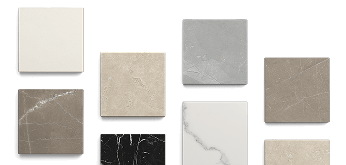
To simplify the process, Edward Martin’s AR Visualization Tool lets you preview tile options in your space, while ordering tile samples provides tactile assurance before making a final decision. Together, these choices ensure your bathroom design achieves both beauty and lasting impact.
Follow us on Instagram
@EDWARD.MARTIN
)
)
)
)
)
)
)
)
)
)
)
)
)
)
)
)