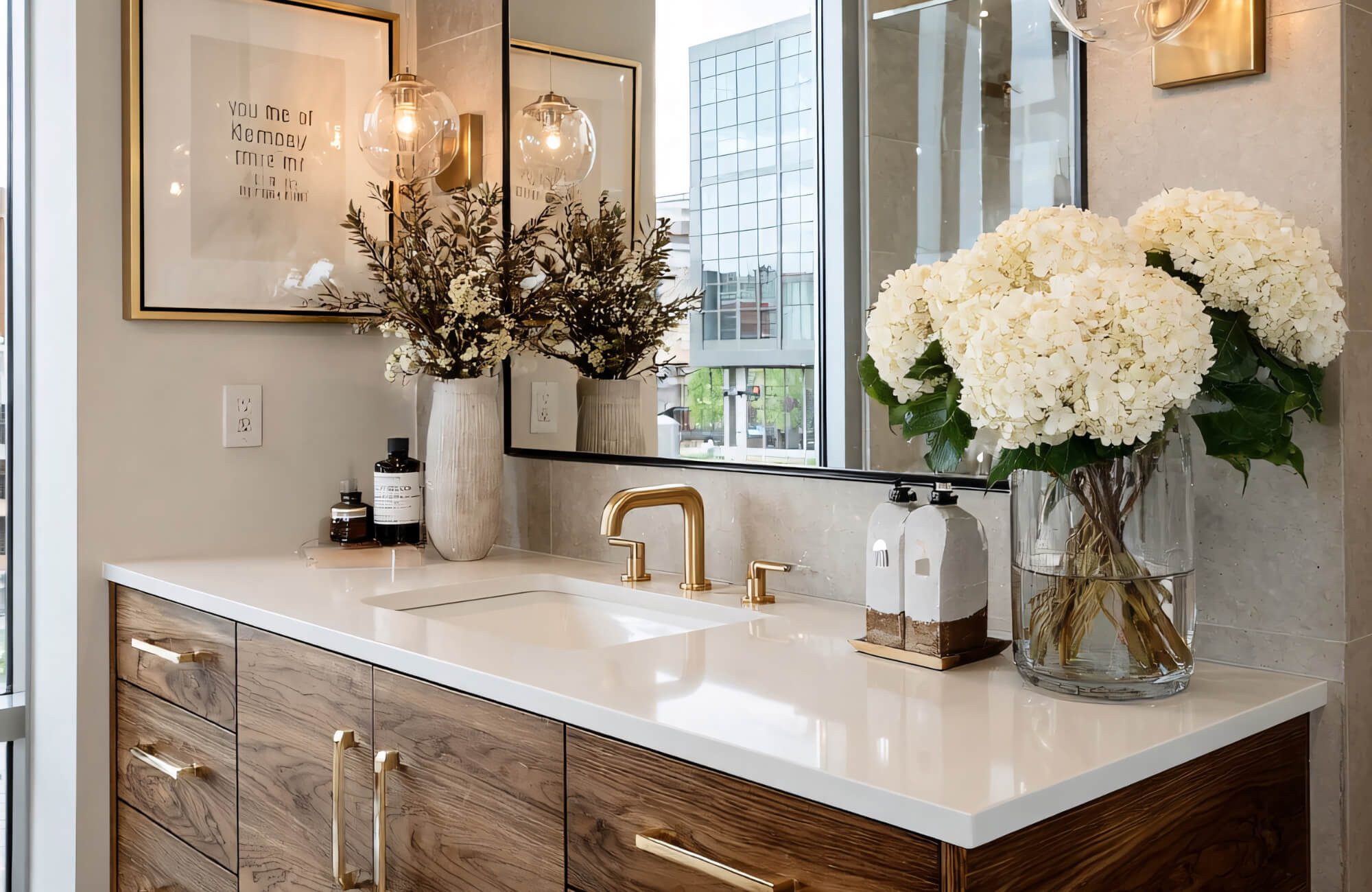
In bathroom design, small layout decisions often have an outsized impact, and the placement of the vanity is one of the most influential choices you can make. A corner vanity, while frequently overlooked, has the potential to reshape how a bathroom looks, feels, and functions by altering sightlines, circulation, and visual balance. When space feels tight or awkward, this subtle shift in placement can change the entire experience of the room.
However, openness is not achieved by location alone. The effectiveness of a corner vanity depends on how well it integrates with lighting, storage, proportions, and overall design intent. As you move through this article, you will see how corner vanities can enhance flow, improve usability, and elevate aesthetics, as well as when they may not be the right solution.

Layout Efficiency in Small and Irregular Bathrooms
When a bathroom has limited square footage or an unconventional shape, every layout decision carries extra weight. A corner vanity offers a strategic way to improve flow and usability by turning overlooked areas into functional space. By shifting the vanity away from primary pathways, you gain flexibility without sacrificing comfort or practicality.
Solving Usage and Door Clearance Issues
In many compact bathrooms, a standard vanity competes with doors, toilets, or showers for space, often creating awkward pinch points. When you place the vanity in a corner, you move the sink out of the main circulation zone, which immediately improves clearance at the entry and along busy areas. This adjustment makes everyday movement feel less constrained and more intuitive.
A piece like our Royce 48" Single Vanity in Chestnut with 3 cm White Zeus Quartz Top, shown in the image above, fits naturally into this type of layout. Although vanities like this are not specifically designed for corners in the traditional sense, its streamlined footprint and straight-wall design allow it to be positioned within alcoves or offset corners where it delivers full functionality without interfering with door swings or walk paths. By keeping the sink zone contained, the vanity also helps resolve common clearance conflicts while maintaining a balanced, intentional look.
Beyond convenience, this layout supports better ergonomics. With the central pathway cleared, you can approach fixtures without sidestepping obstacles or adjusting your stance. Over time, this ease of movement becomes especially valuable in bathrooms designed for long-term use, where generous clearances and smooth navigation contribute directly to comfort and safety.
Maximizing Usable Floor Area
A corner vanity minimizes how much cabinetry projects into the room, which helps preserve open floor space in tight layouts. By tucking the vanity into a previously underutilized corner, you reduce wasted gaps between fixtures and walls, allowing the bathroom to feel more spacious and organized. This reclaimed floor area also improves visual openness, making the room feel less crowded.
This advantage becomes even more apparent in bathrooms with sloped ceilings, dormers, or irregular angles. Corners often coincide with lower headroom or awkward geometry, making them less suitable for movement. Positioning the vanity in these areas frees the higher, more comfortable zones for activities that require space, such as dressing or transitioning in and out of the shower, ultimately creating a layout that feels both efficient and thoughtfully planned.

Aesthetic Value and Timeless Appeal
A corner vanity can elevate your bathroom’s appearance when its design supports a sense of openness rather than competing with it. Although placement sets the foundation, style determines whether the vanity feels light and enduring or visually heavy.
Floating and Freestanding Designs
A floating corner vanity immediately reduces visual weight by lifting the cabinetry off the floor. With more visible flooring beneath, your eye can move freely across the room, which subtly expands the perceived size of the bathroom. This approach also introduces a clean, architectural quality that makes the vanity feel purposeful without overwhelming the space.
Freestanding corner vanities, on the other hand, offer a more traditional sense of presence while still making efficient use of space. Resting on the floor, they provide added storage capacity and a grounded feel that can suit both classic and transitional bathrooms. With thoughtful proportions and clean detailing, freestanding designs maintain visual balance without feeling bulky, offering a practical solution that blends stability, function, and style.
Minimal Profiles and Clean Geometry
In a corner setting, restraint becomes a powerful design tool. Vanities with slim proportions and simplified forms prevent the corner from feeling crowded or heavy. Integrated hardware, recessed basins, and softened edges also help the vanity blend seamlessly into the surrounding architecture instead of standing out as a bulky fixture.
Our Gabriella 36" Single Vanity in Light Natural Oak with 3 cm White Zeus Quartz Top reflects this approach through its clean lines and compact scale. As seen in the photo above, its straight, uncluttered silhouette allows it to sit comfortably within a corner-adjacent layout without overwhelming the surrounding fixtures. The subtle hardware and streamlined cabinetry also keep visual noise to a minimum, reinforcing a sense of balance and order in tighter spaces.
Material choice further shapes how the vanity is perceived. Lighter finishes and subtly reflective surfaces bounce light back into the room, keeping the corner visually bright. As these elements work together, the vanity feels less like an object occupying space and more like a natural extension of the bathroom itself, contributing to a look that remains appealing over time.

Storage Without Sacrificing Openness
A corner vanity proves that smart storage and an open feel can coexist when design decisions are made intentionally. By optimizing the interior layout, you can take full advantage of the vanity’s diagonal depth without increasing its visual footprint. Well-planned internal systems also keep everyday items organized and easily accessible, which in turn allows the countertop and surrounding surfaces to remain clear. As a result, functionality stays high while the bathroom continues to feel calm and spacious.
At the same time, how storage is revealed or concealed plays a major role in the overall perception of the space. Blending closed compartments with carefully limited open storage prevents the vanity from feeling bulky or cluttered. When visible areas are styled with restraint and hidden zones manage daily essentials, the corner maintains a light visual presence. Together, these choices ensure the vanity supports daily routines while reinforcing an open, balanced, and thoughtfully designed bathroom.
Our Bridgette 36" Single Vanity in Light Natural Oak with 3 cm White Zeus Quartz Top strikes this balance through its thoughtful combination of closed storage and open display space. As featured above, its structured drawers provide discreet organization for daily essentials, while the open lower shelf introduces breathing room that prevents the vanity from feeling visually heavy. Baskets or folded linens can also be stored below without disrupting the overall sense of openness, making the layout feel both practical and refined.

Enhancing Light and Reflection in Corner Configurations
Lighting and reflection have a powerful effect on how open a corner vanity feels within a bathroom. When light is guided intentionally, and reflective surfaces are positioned thoughtfully, a corner that might otherwise recede into shadow becomes a bright, visually expansive focal point. This transformation relies on aligning mirrors and lighting so the corner actively participates in the room rather than feeling tucked away.
Corner-Optimized Mirror Design
A corner vanity benefits from mirror designs that respond to its unique geometry. Instead of a single flat mirror, extending reflective surfaces across both intersecting walls allows light to bounce more freely throughout the space. This approach visually dissolves the hard edge of the corner, making it feel less like a boundary and more like an extension of the room.
Curved mirror shapes further enhance this effect by softening sharp angles and encouraging the eye to move smoothly across surfaces. When you position the mirror to reflect natural light, nearby fixtures, or open floor areas, the corner borrows brightness and depth from the rest of the bathroom. Over time, this thoughtful alignment makes the entire space feel larger and more cohesive.
Our Gwen 48" Single Vanity in Pebble Oak with 3 cm White Zeus Quartz Top, shown above, pairs especially well with this strategy. Its wide, balanced proportions support a generously scaled mirror that anchors the vanity while enhancing reflectivity around the corner-adjacent placement. The softly patterned pebble oak finish also adds depth without competing with the mirror, allowing reflective surfaces to remain the focal point and helping the corner feel open, layered, and visually expansive.
Layered and Directional Lighting
To fully activate a corner vanity, lighting needs to be layered rather than relying solely on overhead fixtures. Vertical light sources positioned along both walls provide balanced illumination that eliminates harsh shadows and improves everyday usability. Integrated lighting within the mirror can further enhance clarity while keeping the overall look clean and streamlined.
In addition, indirect lighting helps the corner feel connected rather than recessed. Angled ceiling lights that gently wash the walls, for instance, reduce contrast and prevent dark pockets from forming. When all light sources share a consistent tone and intensity, the corner also blends seamlessly into the bathroom, reinforcing a bright, open atmosphere that feels intentional and inviting.

When a Corner Vanity Isn’t Ideal
Although a corner vanity can enhance openness in many bathrooms, there are situations where it may work against the overall design intent. In larger or more formal layouts, the compact scale of a corner vanity can feel visually disconnected, especially when the room relies on symmetry and strong focal points. Instead of anchoring the space, it may appear secondary, making the bathroom feel unbalanced or incomplete. In these cases, a centered or double vanity often provides the structure and presence needed to match the room’s proportions.
In bathrooms that prioritize balance and visual continuity, a wider vanity placed along a primary wall often proves more effective. Our Sasha 72" Double Vanity in Carbon Oak with 3 cm White Zeus Quartz Top reflects this approach through its expansive footprint and strong linear form. As shown in the picture above, its centered placement establishes a clear focal point, allowing mirrors, lighting, and surrounding finishes to align symmetrically. This sense of order helps anchor the room and prevents the vanity from feeling secondary or visually adrift.
Beyond visual considerations, practical constraints can also limit whether a corner vanity is the right solution. Relocating plumbing or reinforcing walls can introduce unexpected complexity, particularly in spaces with fixed infrastructure or imperfect corners. Without careful planning, installation challenges can outweigh the intended benefits of openness and efficiency. Therefore, evaluating both spatial harmony and structural feasibility early on ensures that your vanity choice supports the bathroom’s function and design rather than creating avoidable compromises.
The Strategic Role of Corner Vanities
A corner vanity can make a bathroom feel more open when it is used with intention and aligned with the room’s layout and goals. By freeing up main wall planes, improving movement paths, and softening visual boundaries, it helps create a space that feels lighter and more cohesive. When paired with thoughtful lighting, efficient storage, and proportionate design, the corner vanity becomes a powerful tool for enhancing openness. Ultimately, its success lies in careful planning, ensuring that form and function work together to transform the bathroom into a space that feels balanced, comfortable, and visually expansive.
If you’re considering a corner vanity and want guidance on selecting the right size, style, or layout for your bathroom, our team is here to help. From early planning to final design decisions, personalized support can ensure your vanity works seamlessly with your space and design goals. By connecting with our experts, you can move forward with confidence, knowing every detail has been thoughtfully considered to achieve a bathroom that feels both functional and beautifully balanced.