Selecting the right tile for your shower floor goes beyond aesthetics; it’s also about creating a space that’s safe, comfortable, and built to last. Whether you’re starting a full renovation or updating a small area, the tile you choose will shape your daily routine in more ways than one. It affects how your shower feels underfoot, how easily it drains, and how well it withstands moisture and cleaning. In this article, we’ll walk you through the key factors to consider, helping you choose a shower floor tile that strikes the right balance between functionality and style.

Why the Right Shower Floor Tile Makes a Difference
Not all tiles are made to handle the specific demands of a shower floor. Unlike other surfaces, the shower floor requires materials that can withstand constant moisture, provide reliable traction, and resist wear and tear from daily use. Understanding what makes certain tiles more suitable than others will help you avoid common pitfalls and select a floor that truly suits your space.
Grip and Texture for Everyday Safety
In a wet environment like the shower, slip resistance isn’t optional; it’s essential. Different tiles offer varying levels of grip, so it’s important to consider surface texture when making your choice. Finishes with a matte or slightly raised surface tend to offer better traction, especially when water and soap are present. Tile size also plays a role; smaller tiles naturally create more grout lines, which can further improve stability underfoot. By combining the right texture and format, you can create a safer shower floor without sacrificing style.
Moisture Resistance and Cleanability
In a space that’s constantly exposed to humidity and water, moisture resistance is a must. Tiles that repel water not only help prevent mold and mildew but also make routine cleaning far less of a chore. This resistance largely depends on the tile’s composition; denser materials absorb less moisture, while glazed finishes offer an added layer of protection. Opting for a tile that minimizes water absorption is a simple but effective way to maintain a cleaner, healthier shower over time.
Durability and Daily Wear
Shower floors endure constant moisture, frequent cleaning, and temperature fluctuations, so durability should be a top priority. Materials like porcelain and dense ceramic are particularly well-equipped to handle these conditions, as they resist cracking, staining, and surface wear over time. Natural stone, though more porous and maintenance-intensive, can deliver long-term performance when properly sealed and cared for. Ultimately, a tile’s durability isn’t just about its strength; it’s also about how reliably it holds up in a wet, frequently used environment day after day.

Tiles That Work Beautifully in Shower Floors
Each tile type offers unique benefits, and understanding these can help you choose the most suitable option for your shower floor. From slip resistance to visual appeal, the right material can make a noticeable difference in how your space looks, feels, and functions. Here are five popular tile options that strike a balance between durability, safety, and design versatility.
Mosaic Tiles
If you're looking for a combination of design flexibility and reliable grip, mosaic tiles are a practical and stylish choice for shower floors. Their small format makes them ideal for navigating slopes and curves, especially around drains or in custom-shaped showers. With more grout lines than larger tiles, they provide additional underfoot grip, helping to enhance safety in wet conditions.
Aside from performance, mosaic tiles also offer nearly endless design possibilities. Whether you’re after timeless charm or something bold and playful, their patterns can easily adapt to your vision. A perfect example is our Quinn 12x12 Matte Porcelain 1x1 Hexagon Mosaic Tile in Black & White Flower, as shown in the photo above. Its floral motif adds personality to the space while maintaining a balanced, classic aesthetic. The matte finish boosts slip resistance, making it both a functional and eye-catching option for modern bathrooms.
Porcelain Tiles
Porcelain tiles are a practical and dependable choice for shower floors, largely due to their dense, non-porous composition. Their low absorption rate helps protect against common moisture-related issues such as mold, mildew, and staining, which are common concerns in any wet environment. Many options also feature matte or textured finishes, which enhance slip resistance without taking away from the overall look. Porcelain’s durability allows it to perform well under constant exposure to water, and its wide variety of styles makes it easy to match with different design preferences. When installed correctly, porcelain delivers a lasting blend of durability and sleek, modern style, making it especially well-suited for shower floors.
Natural Stone Tiles
If you're aiming for a more organic, spa-inspired atmosphere, natural stone tiles bring a warm, distinctive touch to any shower floor. Materials like slate, marble, and travertine offer natural variation in color and texture, giving each installation a unique and upscale appearance. Similarly, a honed finish provides a smoother, slip-resistant surface, making these stones more suitable for wet conditions.
However, natural stone comes with a few important considerations. Because it's porous, it can absorb water and become prone to staining or discoloration if not properly sealed and regularly maintained. It’s also more sensitive to acidic or abrasive cleaners, often requiring gentler, pH-balanced products to preserve its finish.
If you love the look of stone but prefer a more low-maintenance option, porcelain tiles that replicate natural patterns are an excellent alternative. For example, our Aniston 24x48 Matte Porcelain Tile in Calacatta Antico captures the elegance of marble with soft veining and a matte finish, all while offering the durability and water resistance of porcelain. This also makes it a practical and stylish choice for shower floors where performance and appearance need to go hand in hand.
Pebble Tiles
Pebble tiles bring a natural, grounded aesthetic to the shower, making the space feel more like a serene, outdoor retreat. Their smooth, rounded shapes and earthy tones introduce a relaxed, organic feel that works especially well in spa-inspired designs. The irregular surface naturally creates more grout lines, which can further improve slip resistance; an important benefit in wet areas. Many also find the slightly uneven texture to be gently massaging underfoot, adding to the overall comfort of the space.
However, pebble tiles do come with a few trade-offs. The increased amount of grout can make cleaning more time-consuming, and without proper sealing, both the stones and the grout are vulnerable to water absorption, staining, or mildew buildup over time. The uneven surface may also be less comfortable for some users, particularly in areas of prolonged standing. Still, when properly installed and maintained, pebble tiles offer a distinctive blend of safety, texture, and natural charm that can elevate the feel of any shower floor.
Large-Format Tiles
If you’re aiming for a clean, contemporary aesthetic, large-format tiles offer a sleek, uninterrupted look that can visually expand smaller bathrooms. With fewer grout lines, they can create a smooth, cohesive surface that enhances a minimalist design. However, due to their size, it’s equally important to select options with a matte or textured finish to maintain traction. Edward Martin’s Tatum 24x48 Matte Porcelain Tile in Cross-Cut Straw is a great example that combines style with slip resistance. Installing large-format tiles on a shower floor also requires careful attention to slope and drainage to prevent pooling. For best results, partnering with an experienced installer can further help ensure both safety and a refined, modern finish.

Common Mistakes to Avoid When Tiling a Shower Floor
Even with the right tile in hand, small missteps during planning or installation can lead to issues down the line. Whether you’re hiring a professional or managing it yourself, knowing what to avoid can save you time, money, and frustration. Here are some of the most common mistakes people make when tiling a shower floor and how you can steer clear of them.
Using Wall-Only Tiles on the Floor
It’s easy to be drawn to a tile for its color, pattern, or finish, but not all tiles are designed for every application. Wall tiles, while often visually appealing, are typically thinner and smoother, making them less suitable for areas that require durability and slip resistance, especially shower floors. Using wall-only tiles in wet, frequently used areas can increase the risk of slips and shorten the life of the installation.
That’s why it’s essential to choose tiles specifically rated for floor use in wet conditions, as they’re engineered to handle daily wear and constant moisture without compromising performance.
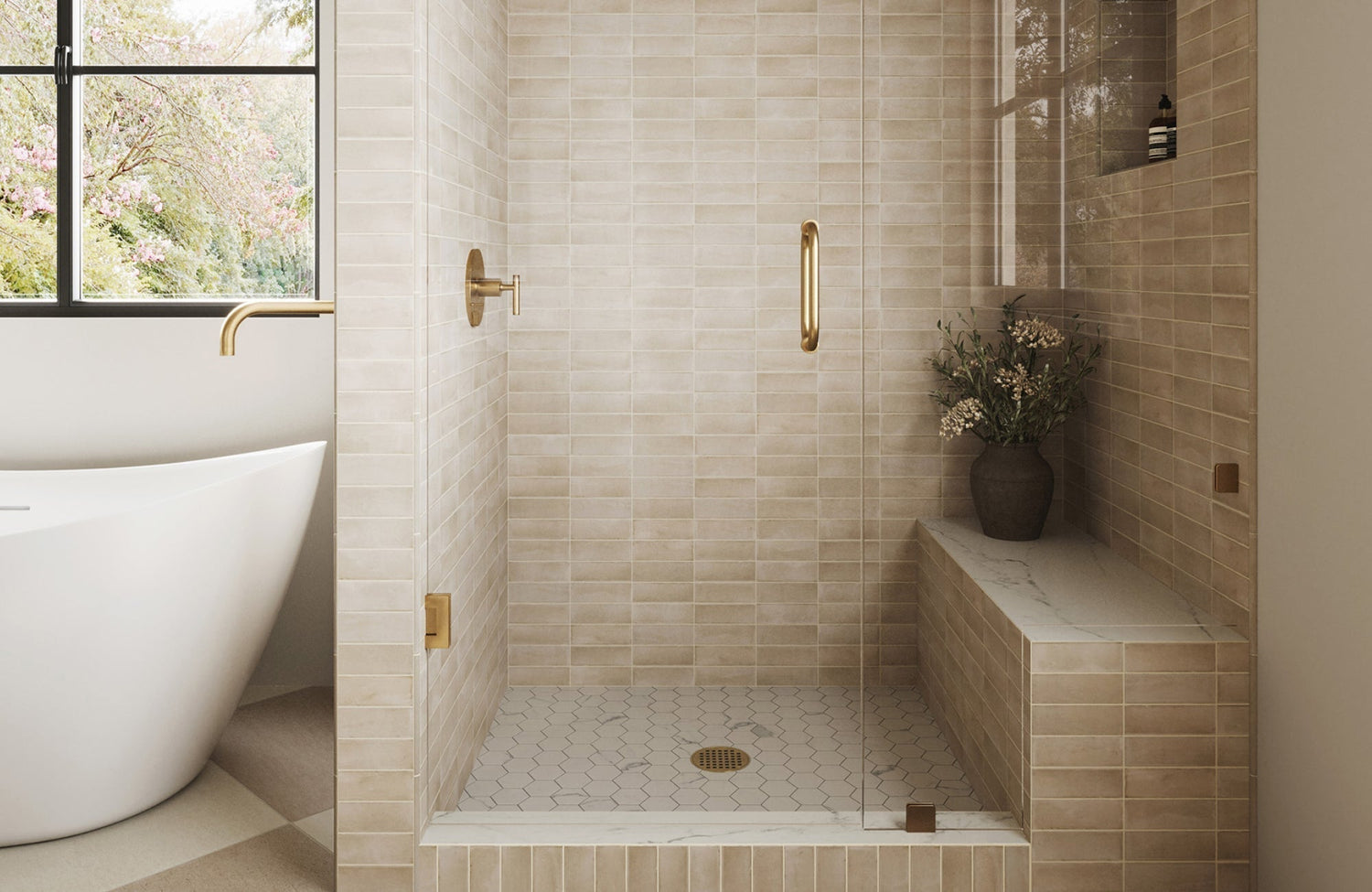
A good example of this versatility is Edward Martin’s Karina 5.5x5.5 Matte Porcelain Tile in Cotto, as featured in the photo above. Its slip-resistant matte finish and durable porcelain construction make it suitable for both floors and walls, offering a seamless look with practical benefits. Always double-check product specifications before installation to ensure your tile is appropriate for your intended use.
Overlooking Proper Slope Toward the Drain
One of the most common and easily overlooked mistakes when tiling a shower floor is failing to account for proper slope. Without the correct pitch, water can collect in low spots or corners, leading to standing moisture that encourages mold and mildew growth. Over time, this excess moisture can also deteriorate grout and compromise the integrity of the surface underneath. This issue becomes even more important when working with large-format tiles, which are less forgiving when it comes to contouring. Ensuring the floor is accurately sloped toward the drain is key to maintaining both cleanliness and long-term durability.
Choosing Smooth Finishes Without Considering Slip Risk
Although glossy tiles can create a sleek, polished look, they often become dangerously slippery when exposed to water, making them a risky choice for shower floors. This is especially important to consider in homes with children, older adults, or anyone who may be more vulnerable to falls. To maintain safety without compromising on style, opt for matte, honed, or textured finishes that offer better traction underfoot. These surfaces can provide the grip needed in wet environments while still supporting a clean, modern aesthetic.
Skipping Sealant on Porous Materials
Natural stone tiles such as marble or travertine bring elegance and character to a shower, but they come with added responsibility. Because these materials are naturally porous, they can absorb moisture if not properly sealed, leading to issues such as staining, discoloration, or mildew over time. Applying a high-quality sealant is also essential to protect the surface, and it’s not a one-and-done task. Depending on how often the shower is used and the type of stone, resealing may be needed every 6 to 12 months. Skipping this step can compromise both the appearance and performance of the tile, so it’s best to treat sealing as a regular part of care and maintenance.

Installation Tips That Make It Last
Even the highest-quality tile can underperform if it’s not installed with care. Factors like proper slope, grout application, and sealing all play a crucial role in how well your shower floor holds up over time. Getting these details right ensures not only better durability but also a safer, more functional space. For best results, it's always a good idea to consult with a qualified professional for your specific layout and tile choice.
Slope and Drainage First
Ensuring the shower floor has the right slope is essential for proper drainage and overall performance. When water doesn’t flow efficiently toward the drain, it can collect in low spots, increasing the risk of mold, mildew, and long-term moisture damage. Smaller tiles, such as mosaics or pebbles, are often easier to work with on sloped surfaces because they naturally conform to the gradient. In contrast, large-format tiles require more precise installation to achieve an even pitch. Any inconsistency can also lead to pooling, which compromises cleanliness and shortens the lifespan of both the tile and grout.
Grout Choices That Matter
Though grout might seem like an afterthought, it has a significant impact on the performance and appearance of your shower floor. The right grout enhances water resistance, simplifies cleaning, and elevates the overall look of your shower floor. For high-moisture areas, epoxy grout is often a smart choice; it’s waterproof, durable, and withstands regular scrubbing. Grout line width also plays a role: narrow joints can give the floor a cleaner, more modern look, but they may offer less traction compared to wider lines. It’s worth considering both the tile size and the desired level of slip resistance when selecting grout for your shower floor.
Know When to DIY or Call a Pro
Installing shower tile can appear straightforward, but the floor brings its own set of challenges. Navigating slopes, aligning drains, and handling tight angles all require accuracy, particularly when working with materials such as natural stone or large-format tiles. If you're unsure about tasks like cutting tile cleanly or applying sealant properly, bringing in a professional can make a significant difference. A correctly installed shower floor not only looks polished but also functions reliably and stands the test of time.
Shower Floor Tile That Works
Choosing the right shower floor tile goes beyond aesthetics; it’s about building a surface that supports your daily routine with comfort, safety, and durability. With versatile options like porcelain, mosaic, pebble, natural stone, and large-format tiles, you can design a shower that’s not only visually appealing but also long-lasting and practical. Focus on what matters most to you, whether that’s a softer feel underfoot, minimal upkeep, or a clean, modern style. By making thoughtful choices and asking the right questions, you’ll create a shower floor that performs beautifully for years to come.
To help you visualize your ideal space, try using our Augmented Reality (AR) tool to see how different tile styles will look in your shower before making a final decision. And if you're unsure where to start, our design services are here to guide you every step of the way, from material selection to layout recommendations. Let’s bring your vision to life with confidence!

FAQs
Choosing the right shower floor tile involves more than just style. To help you make informed decisions, we’ve answered some common questions about safety, materials, comfort, and maintenance. Whether you're in the planning phase or refining the details, these insights will guide you toward a smarter, more confident tile choice.
1. How do I know if a tile is rated for shower floors specifically?
To determine if a tile is suitable for shower floors, look for product specifications that indicate it's approved for floor use and wet areas. A key metric to check is the Dynamic Coefficient of Friction (DCOF). Tiles with a higher DCOF value offer better slip resistance in wet conditions. This rating also helps ensure the tile is both safe and durable for everyday use in a moisture-prone environment.
2. How do tile edges affect the overall feel and safety of the shower floor?
The shape of a tile’s edge plays a bigger role than many realize. Tiles with rounded, tumbled, or cushioned edges tend to feel softer underfoot and are less likely to cause discomfort or catch skin. They also minimize the risk of sharp corners, which is especially helpful in tight or frequently used showers, adding a subtle layer of comfort and safety.
3. Are there eco-friendly or sustainable tile options for shower floors?
Yes, there are several environmentally conscious choices available. Many tiles are made from recycled materials, such as post-consumer glass or reclaimed ceramic, while some natural stones are responsibly sourced through sustainable quarrying practices. To ensure you're choosing a greener product, look for certifications such as GreenGuard, LEED, or Environmental Product Declarations (EPDs), which indicate a tile’s environmental impact has been independently verified.
4. Do mosaic tiles require more maintenance because of the grout?
Mosaic tiles naturally come with more grout lines, which means more surface area to clean and maintain. However, using a high-quality, stain-resistant grout, such as epoxy or mold-resistant formulations, can significantly cut down on upkeep. Regular sealing, if required by the grout type, and routine cleaning also help keep mosaic installations both beautiful and low-maintenance over time.
5. Do pebble tiles feel uncomfortable?
Comfort with pebble tiles often comes down to personal preference. Most are made with smooth, rounded stones that are designed to feel pleasant underfoot, offering a gentle, spa-like massage effect. However, because the surface is uneven, some may find them less comfortable for long periods of standing. Testing a sample first can help you decide if the texture is right for your needs.