The right bedroom rug has the power to transform a simple space into a sanctuary of comfort and design harmony. Beyond its soft texture underfoot, a rug defines the proportions of the room, frames the bed as a focal point, and guides the natural circulation of the layout. Yet many interiors lose their sense of cohesion when mistakes in rug sizing, placement, or style overshadow the room’s architecture. Choosing wisely requires attention to detail—balancing dimensions, fiber composition, and tonal harmony with the furnishings and finishes around it. By avoiding common bedroom rug mistakes, homeowners can achieve interiors that feel timeless, balanced, and effortlessly refined.

Selecting the Wrong Rug Size
Rug dimensions determine how effectively the piece grounds the bed and balances the surrounding negative space. When the size is misjudged, the result is often awkward layouts, obstructed circulation, and a noticeable reduction in comfort.
Standard Rug-to-Bed Ratios
The most reliable way to avoid proportion errors is to follow established rug-to-bed size guidelines, which provide a strong foundation for visual harmony. For example, a queen-size bed is best complemented by an 8x10 rug, while a king-size bed typically requires at least a 9x12 for balanced extension. To achieve proper scale, the rug should extend 18–24 inches beyond the sides and foot of the bed, framing it with consistency.
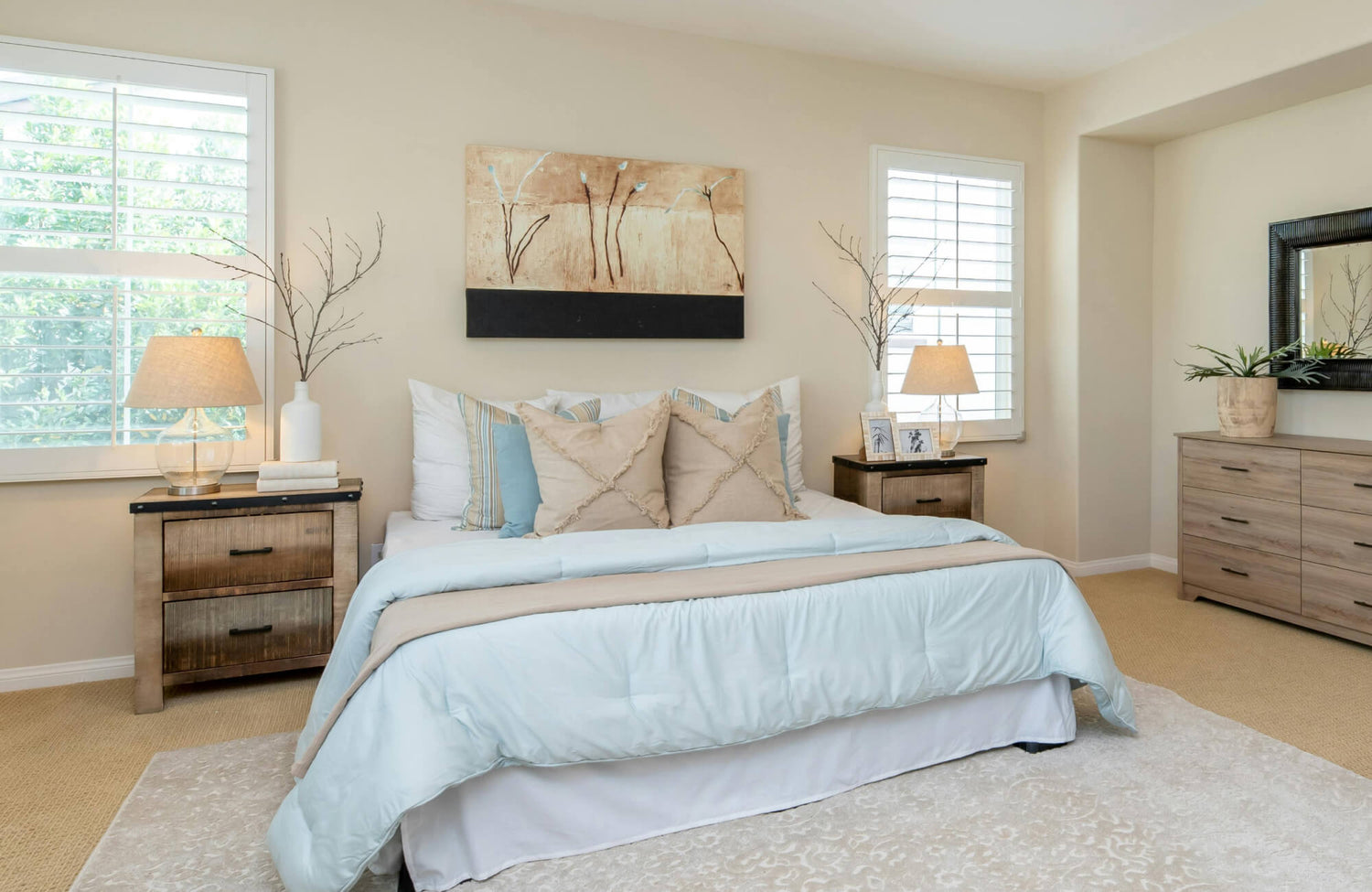
Smaller beds, such as full or twin size, can achieve proportional comfort with rugs that extend 12–18 inches beyond the frame. Without these extensions, rugs can appear disconnected from the bed, diminishing their role as a grounding element. A perfect example is Edward Martin’s Rollins Polyester Pile Rug in Cream / Rust, as shown in the photo above, anchoring a light, neutral-toned bedroom. The rug’s generous coverage not only follows standard size ratios but also enhances warmth, texture, and cohesion by tying together the soft bedding, natural wood furniture, and serene color palette. By respecting these ratios, the rug naturally reinforces the layout, creating cohesion and a well-scaled foundation.
Sizing for Small Bedrooms
In smaller bedrooms, rug sizing must be carefully chosen to balance proportion without overwhelming the footprint. A 5x8 rug, when placed under the lower two-thirds of the bed, provides essential warmth underfoot while preserving much-needed circulation space. Orienting rugs horizontally also helps distribute coverage evenly, making compact rooms feel more expansive. However, rugs that are too large can intrude into pathways and obstruct access to dressers or closets, while undersized rugs appear like floating mats that disrupt visual balance. By choosing a rug that maintains comfort zones while respecting the boundaries of the floor plan, small bedrooms feel more intentional and welcoming. The right size enhances both function and flow, preventing the space from feeling either cramped or fragmented.
Oversized Rugs and Circulation Flow
Although oversized rugs often convey luxury, they must be integrated thoughtfully into the floor plan. A 10x14 rug beneath a king bed, for instance, can easily engulf circulation zones and limit bedside access if not properly positioned. This imbalance forces furniture into unnatural alignments, disrupting the symmetry of the layout. When too much of the flooring is hidden, the absence of negative space makes the room feel heavy and overly crowded. Allowing small but deliberate sections of exposed flooring also prevents visual fatigue and restores balance. By respecting circulation flow, you can achieve the luxury of a large rug without compromising the openness and proportion of the bedroom.

Misplacing the Rug Under the Bed
Even when the rug size is correct, poor placement can undermine its effectiveness. Positioning the rug with balance and precision helps maintain symmetry, improve accessibility, and enhance the bed’s role as the focal point.
Anchoring for Balance
Anchoring the rug beneath the bed frame establishes a strong visual foundation that organizes the entire room. When equal margins of rug exposure are maintained on both sides, the design feels proportionate and evenly weighted. This arrangement also allows nightstands to sit naturally on bare flooring, keeping their lines clean and unobstructed. A great example is the Hutchinson Polyester Face Rug in Sage / Graphite, as displayed in the picture above, anchoring a neutral bedroom. The rug’s placement extends gracefully around the bed while leaving nightstands balanced on uncovered flooring. This thoughtful positioning highlights how a well-scaled rug grounds the bed without obstructing circulation, achieving both symmetry and cohesion. When placement is deliberate, the rug provides functional warmth while elevating the composition into a polished, harmonious design.
The Two-Thirds Rule
The two-thirds rule offers a simple yet effective strategy for creating balance without overwhelming the headboard area. By positioning the rug so that it extends under only the bottom two-thirds of the bed, nightstands remain stable on bare flooring, avoiding uneven leveling. This method also directs rug coverage to the areas where it is most functional, namely at the sides and foot of the bed. In medium-sized bedrooms, this placement reduces the need for oversized rugs, making the layout both efficient and cost-conscious. The resulting composition feels measured, with no sense of excess or imbalance. Through this approach, placement achieves a refined look that balances practicality with aesthetics.
Placement in Large Bedrooms
Large bedrooms benefit from full rug coverage beneath both the bed and nightstands, creating what designers often call an island effect. This approach unifies the sleeping area, distinguishing it clearly from the rest of the room’s furnishings. In addition to improving spatial definition, full coverage enhances acoustics by softening echoes and creating a more intimate atmosphere. Rugs in expansive spaces also help scale down the visual weight of the room, preventing it from feeling cold or disconnected. However, to preserve a sense of openness, at least 24 inches of exposed flooring should remain visible around the perimeter. With careful placement, oversized rooms feel structured, balanced, and inviting.

Ignoring Rug Layering and Proportion
Layering rugs can introduce depth and richness, but when scale is mismanaged, the effect becomes chaotic rather than cohesive. To achieve harmony, layering must carefully consider proportion, placement, and complementary textures.
Foundation Rugs
The foundation rug serves as the structural base upon which the design is built, giving shape and order to the furniture arrangement. Low-pile options in resilient fibers like wool or jute are ideal because they provide stability without unnecessary bulk. This foundational layer should also cover the main sleeping zone to ensure the bed feels anchored within the layout. Without a solid base, smaller accent rugs can appear isolated and disrupt the intended flow. By establishing continuity, the foundation rug creates a neutral canvas that enhances the impact of layered accents. Selecting a durable foundation rug ensures the design remains both visually consistent and functionally reliable over time.
Accent Rug Integration
Accent rugs add personality, color, and texture, but their scale and placement determine whether they elevate or disrupt the design. To maintain cohesion, accent rugs should cover at least one-third of the foundation rug, creating a sense of integration rather than separation. Subtle contrasts in pattern or texture also add dimension without competing for dominance, producing an effect that feels deliberate and layered. Moreover, positioning accent rugs slightly offset or angled introduces visual interest while maintaining alignment with the larger layout. Rugs that are too small or poorly aligned risk breaking the flow, diminishing the layered effect. When integrated with balance, accent rugs enrich the composition and lend the bedroom a curated, sophisticated aesthetic.
Seasonal Layering Strategies
Seasonal layering allows homeowners to adapt their rugs for both comfort and style throughout the year. Lightweight cotton or flatweave rugs, for example, work well in summer, adding breathability and maintaining a cool surface. During colder months, plush or high-pile accent rugs increase insulation and create a sense of cozy warmth. Rotating rugs seasonally not only prevents premature wear on foundation pieces but also refreshes the overall look of the room. This practice encourages experimentation with color, pattern, and texture without requiring a complete redesign. By adopting seasonal strategies, bedrooms remain visually dynamic and functionally adaptable year-round.

Overlooking Material and Pile Height
The fiber composition and pile construction of a rug directly affect its durability, comfort, and integration with surrounding furniture. Overlooking these technical details often leads to premature wear or functional inconvenience.
High-Pile vs. Low-Pile Rugs
High-pile rugs, such as shag, create luxurious softness but require more maintenance and tend to trap dust. Low-pile options, especially in wool or synthetic blends, offer resilience, clean lines, and easier vacuuming. Furniture also moves more smoothly across low-pile rugs, reducing dents and preserving the rug’s integrity. In contrast, high-pile rugs often flatten under heavy pieces, compromising both comfort and appearance. Bedrooms used daily typically benefit more from low-pile construction due to its balance of practicality and style. By weighing tactile comfort against functional performance, homeowners can select the pile height best suited for their lifestyle.
Fiber Considerations
Natural fibers like wool excel in regulating humidity, insulating sound, and withstanding wear, which makes them a premier choice for bedrooms seeking both comfort and longevity. By contrast, synthetic fibers such as nylon or polypropylene emphasize stain resistance and affordability, offering practical benefits that suit the demands of busy households. Blended fibers bridge the gap between the two, combining softness and durability to provide balance without sacrificing longevity. For those drawn to a more refined look, luxurious silk rugs bring unmatched sheen and elegance, though their delicate nature makes them better suited as accent pieces rather than everyday floor coverings. Each fiber type ultimately shapes not only the rug’s lifespan but also the overall ambiance it creates within a room.
A versatile example is the Hutchinson Polyester Face Rug in Graphite / Olive, which demonstrates how polyester delivers softness, resilience, and rich tonal depth—qualities that balance comfort with practicality for everyday bedroom use. With thoughtful fiber selection, homeowners align rug material with both functional requirements and design goals.
Compatibility with Heating Systems
In homes with radiant floor heating, rug backings become an essential factor to consider. Breathable woven backings, for instance, allow efficient heat transfer, ensuring consistent warmth and maintaining energy efficiency. Dense foam or latex backings, however, obstruct airflow, diminishing system performance and creating uneven heating. Over time, the wrong backing can even damage flooring materials, adding unnecessary costs. Selecting heating-compatible rugs, therefore, ensures the rug integrates seamlessly with the home’s mechanical systems. This compatibility allows comfort, energy efficiency, and design to work together without compromise.

Mismatching Rug Style with Bedroom Design Language
When rug style conflicts with the bedroom’s architectural or furnishing scheme, the space feels fragmented. Aligning style choices with the room’s broader design language preserves cohesion and visual harmony.
Pattern Scale and Proportion
Pattern scale should harmonize with both the room’s dimensions and the placement of furniture to achieve a sense of balance. In expansive spaces, large-scale motifs establish a bold presence that grounds the room, while in compact bedrooms, smaller-scale patterns create intimacy and subtle refinement. When oversized designs are forced into tight areas, they tend to overwhelm the eye and crowd the layout; conversely, patterns that are too small in a spacious room can fade into the background as visual noise. Achieving proportional balance also allows the rug to complement the architecture rather than compete with it, reinforcing the room’s natural rhythm. When thoughtfully selected, the right scale enhances the composition and strengthens the intended design narrative. In this way, the rug becomes a visual anchor that ties the space together rather than a distracting element.
Color Theory and Tonal Harmony
Rug color plays a pivotal role in shaping the mood and continuity of the bedroom. Neutral palettes such as taupe, ivory, and gray establish calm foundations that suit modern or minimalist settings, while jewel tones and richly patterned designs bring depth and character to traditional or eclectic spaces. Coordinating rug hues with wall finishes, bedding, and furniture ensures tonal harmony, allowing the room to feel cohesive and well-composed. When colors clash or lack alignment, the palette can fragment and disrupt visual flow, leaving the design unbalanced. A thoughtful example of tonal balance is Edward Martin’s Mallory Wool Pile Rug in Cream, whose soft neutral tones seamlessly connect light wood finishes with layered bedding palettes to create a warm, inviting atmosphere. With this kind of alignment, rugs not only reinforce the desired mood, whether serene, luxurious, or vibrant, but also unify the overall composition of the room.
Bridging Transitional Styles
Bedrooms often mix styles, and rugs must act as bridges between different design influences. For example, a Persian rug can harmonize with minimalist furniture when paired with neutral bedding and restrained accessories. Transitional features such as metallic finishes or layered textiles also help create a common thread across contrasting aesthetics. Without these connectors, the rug risks feeling like an afterthought, disrupting the space’s narrative. By carefully choosing transitional rugs, homeowners allow for stylistic flexibility without sacrificing elegance. This balance ensures the rug remains an integrated element even as design preferences evolve.
Creating Harmony with Bedroom Rugs
A thoughtfully chosen bedroom rug brings more than comfort—it anchors the furniture, enhances circulation, and elevates the room’s overall design language. When size, placement, material, and style are approached with care, the rug becomes a seamless extension of the bedroom’s architecture. Avoiding common mistakes also allows the rug to unify textures, tones, and proportions into a cohesive whole. The result is a space that feels balanced, inviting, and timeless in its elegance.
For homeowners seeking personalized guidance, Edward Martin’s design services offer tailored expertise to ensure every rug enhances both function and style. To bring harmony into your own bedroom, explore our curated collections and contact us to begin your design journey!