Slippery surfaces and splashing kids are a risky combination, especially around the pool. That’s why choosing the right outdoor tile isn’t just a design decision; it’s a safety priority. Non-slip tiles, designed with specialized textures and surface treatments, help reduce the risk of falls for wet-area flooring.
But safety is only part of the equation. Poolside tiles also need to resist fading, moisture damage, and chemical exposure, all while maintaining a polished, inviting look. With that in mind, this article will explore the top material options, essential safety features, and expert insights to help you select the best non-slip tiles for a kid-friendly pool environment.

Understanding Poolside Safety Risks for Kids
Kids naturally bring energy and unpredictability to poolside fun, but when you mix water with hard surfaces, the risks quickly multiply. To truly create a safe outdoor space, it’s important to understand how slips happen and the types of injuries most common around pools.
The Dynamics of Slips and Falls Around Water
Understanding the mechanics of slips and falls is a useful first step. Water significantly reduces surface traction, lowering the coefficient of friction (COF) between feet and tile. Factors like surface texture, porosity, and the presence of pool chemicals or algae can further increase slipperiness. Wet surfaces may drop below the 0.36 COF threshold for safe interior use, while outdoor areas like pool decks typically require a DCOF rating of 0.42 or higher.
Moreover, children are especially at risk due to their active movements, less developed coordination, and tendency to run or jump. These dynamic forces, combined with puddling or temperature shifts, can turn even textured surfaces hazardous. For this reason, selecting slip-resistant materials that maintain traction under wet, busy conditions is critical.
Common Poolside Injuries in Children
It's also important to understand the types of injuries that can occur when safety measures fall short. Slips and falls around pools are a leading cause of emergency visits during swim season. According to the CDC, drowning is the second leading cause of accidental death for children aged 1–14, but non-fatal injuries are widespread.
In many cases, falls result in abrasions, sprains, or fractures, particularly to wrists, elbows, and ankles. Head injuries are a serious concern due to hard landing surfaces, and sharp tile edges or poorly finished joints can cause cuts or punctures. Even minor incidents, like bruises or stubbed toes, can diminish a child’s confidence and overall enjoyment in the water.

Defining Slip Resistance
Choosing tiles that are truly safe for wet, active areas means looking beyond looks and focusing on function. To make the right call, it's helpful to understand what actually gives a tile its grip, both in terms of measurable ratings and physical surface design.
Understanding Coefficient of Friction (COF) Ratings
The Coefficient of Friction (COF) measures how much grip a surface provides. While Static COF (SCOF) gauges initial resistance to movement, the more commonly used Dynamic COF (DCOF) reflects real-world conditions, especially important for surfaces that see consistent footfall and moisture, like pool decks.
In the U.S., DCOF has become the industry standard. According to ANSI A137.1 guidelines, a tile must meet a minimum DCOF of 0.42 to be considered safe for wet, level interior surfaces; higher ratings are often necessary for outdoor or sloped areas. These values are determined through standardized methods such as the BOT-3000E tribometer, ensuring consistent and reliable data.
Therefore, it is always recommended to consult the manufacturer’s technical data to confirm a tile’s DCOF rating. While higher values generally indicate safer surfaces, it’s also important to consider other factors like durability and visual appeal, particularly in environments exposed to chlorine, UV rays, and fluctuating temperatures.
Surface Texture and Profile for Enhanced Grip
In addition to DCOF, surface texture is a key factor in how a tile performs underfoot. Specifically, micro- and macro-level irregularities increase traction by disrupting the thin water layer that can otherwise create a slipping hazard.
There are various methods manufacturers use to create these textures. Techniques like bush-hammering, flaming, brushing, and structured glazing can all enhance surface grip. However, it’s worth noting that not all textured tiles perform equally; some finishes are more visual than functional, offering limited slip resistance despite a rugged appearance.
Furthermore, the tile’s surface profile also contributes to drainage. Channels and shallow grooves can promote water runoff and reduce pooling, which enhances overall safety. Still, an overly aggressive texture can become uncomfortable for barefoot use, particularly for children, so finding the right balance is essential.
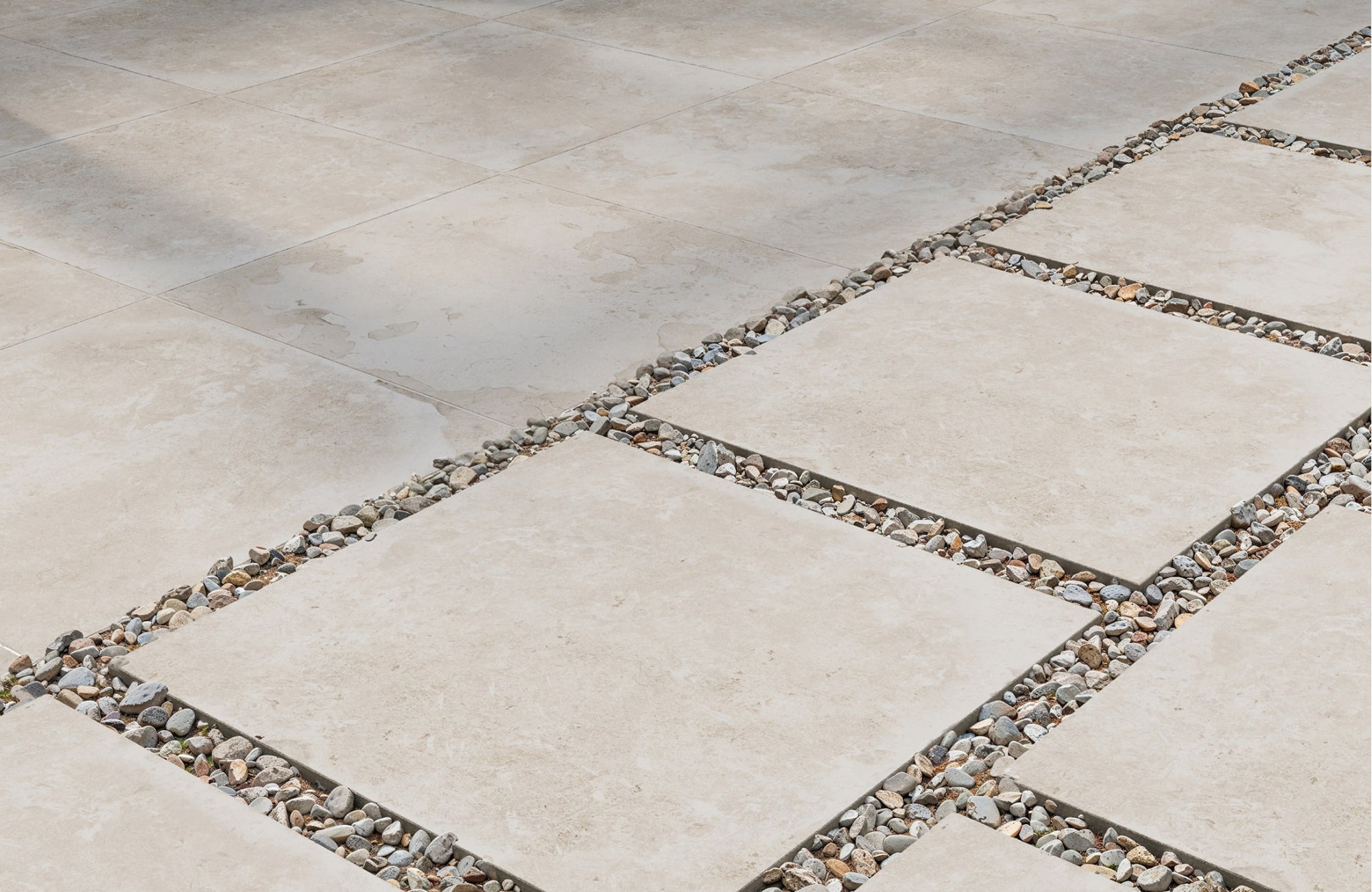
A strong example of this balance is Edward Martin’s Dawson 24x48 Grip Porcelain 2cm Paver Tile in Dune. Its thoughtfully structured surface, typically installed with tight joints for a seamless look, still provides ample grip and water management, making it a safe, stylish, and family-friendly option for poolside areas. The Dawson tile, as shown in the photo above, showcases an alternative spaced layout for visual variation.

Types of Non-Slip Tiles Ideal for Pool Areas
Not all non-slip tiles are created equal, and what works in one outdoor setting might not hold up in another. To find the best fit for your pool area, it helps to weigh the strengths of different materials, from engineered surfaces to natural finishes and specialized treatments.
Porcelain Tiles
Porcelain is widely regarded as a top choice for pool decks, thanks to its density, low porosity, and variety of slip-resistant finishes. Fired at high temperatures, it achieves a water absorption rate below 0.5%, making it nearly impervious to moisture, ideal for constant exposure near pools.
In addition, many porcelain tiles come with textured or grip-rated surfaces designed for wet areas, with DCOF ratings of 0.42 or higher and R11 or R12 slip classifications for added traction. Porcelain also resists UV fading, freeze-thaw damage, and chemical wear, making it a low-maintenance yet high-performance option for outdoor environments.
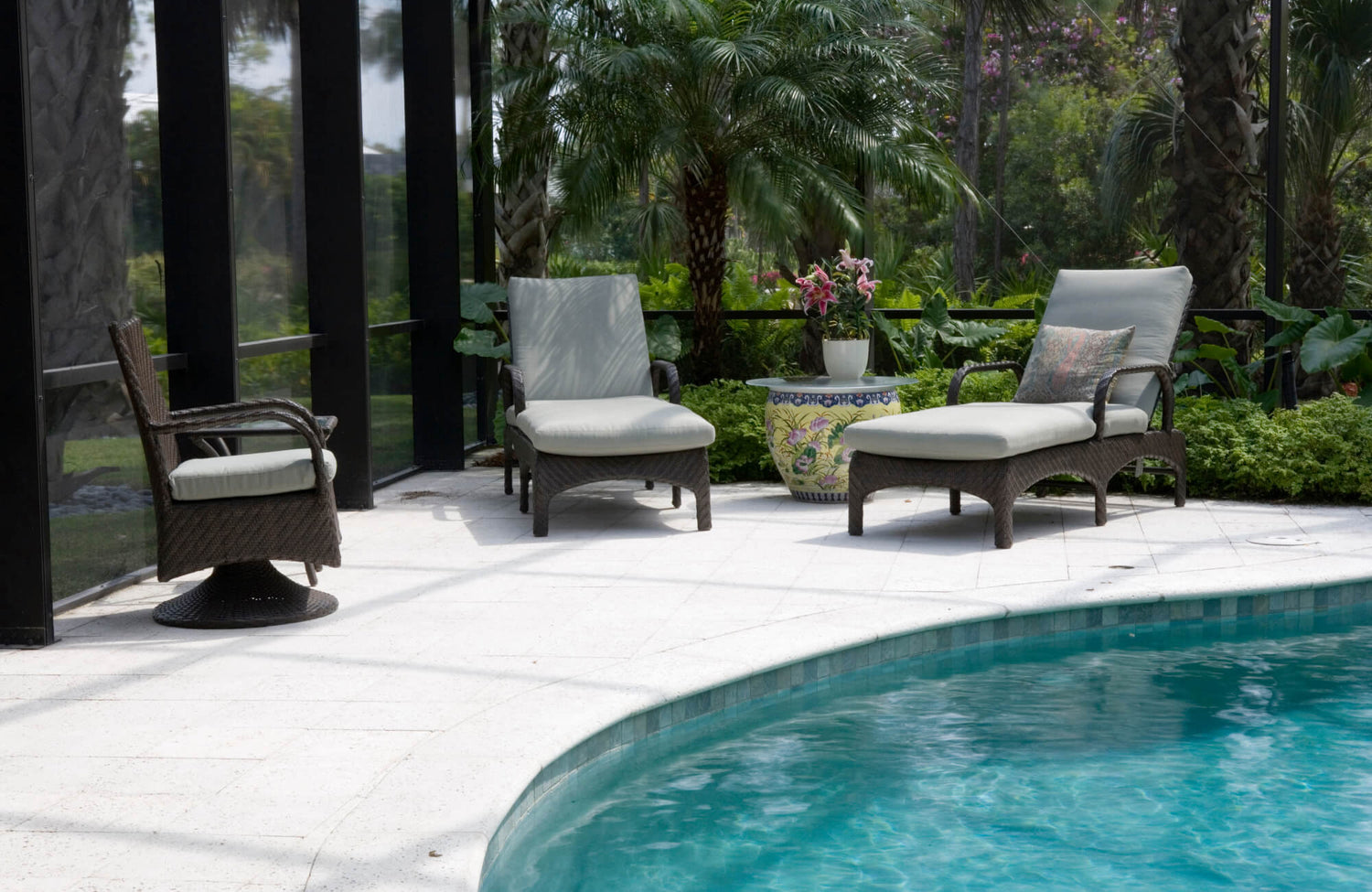
A great illustration of this is Edward Martin’s Bowden 24x24 Grip Porcelain 2cm Paver Tile in Canvas, as shown in the picture above. Its surface ensures safe footing, while the light, neutral tone reflects heat and complements a wide range of outdoor styles, all without the upkeep natural materials typically require.
Natural Stone Options
On the other hand, for those seeking a more organic look, natural stone tiles like travertine, granite, slate, and quartzite offer both beauty and texture. Their slip resistance depends heavily on the finish; flamed, tumbled, or brushed treatments enhance grip and barefoot comfort by creating irregular, traction-enhancing surfaces.
That said, stone does require regular maintenance. Sealing protects against staining and erosion from water and pool chemicals; however, wear can gradually polish the surface, reducing slip resistance. As a result, routine resealing and occasional refinishing are essential to maintain both performance and appearance.
Other Non-Slip Materials and Treatments
Beyond porcelain and stone, alternative materials like textured concrete pavers and stamped concrete tiles also provide strong slip resistance. These options not only mimic natural textures but often come pre-sealed with friction-enhancing additives, making them both functional and visually appealing.
While glass tiles are typically reserved for accents, they can be made safer with sandblasted or acid-etched finishes when used in shallow zones. They’re not recommended for large walking surfaces unless they’re specifically rated for slip resistance.
For already installed surfaces, post-installation solutions, such as anti-slip coatings and penetrating traction enhancers, can restore grip. These treatments subtly increase surface tension without changing the tile’s appearance, though they often require periodic reapplication to remain effective.
To streamline the decision-making process, Edward Martin offers an intuitive Augmented Reality (AR) Visualization Tool. With just a tap on “View in Your Space,” you can project tile styles directly onto your deck or patio using your smartphone or tablet. Once you find a match that suits your style and safety needs, you can even request real tile samples delivered to your door, bridging design and safety with confidence.

Key Considerations When Choosing Poolside Tiles
While slip resistance is key, it’s not the only factor that determines whether a tile will truly perform around a pool. Other elements, like how hot it gets in the sun, how it handles chemicals, and how much upkeep it needs, can make a big difference in both safety and long-term satisfaction.
Heat Absorption and Comfort Underfoot
In sunny climates, tile surface temperature can directly impact comfort and safety. Darker colors and dense materials tend to absorb more heat, which can make them uncomfortable, or even hazardous, for bare feet. Fortunately, the Solar Reflectance Index (SRI) provides a useful benchmark for this purpose. Materials with higher SRI values reflect more solar energy and generally stay cooler underfoot.
In particular, materials like travertine and light-colored porcelain perform well in this regard due to their higher reflectivity and lower thermal mass. While surface texture may slightly help disperse radiant heat, the tile’s composition remains the most significant factor in controlling temperature buildup.
A prime example of this thoughtful balance is Edward Martin’s Ramsey 24x48 Grip Porcelain 2cm Paver Tile in Putty. Featured in the photo above, its neutral tone and subtle texture help minimize surface heat, making it an excellent choice for exposed, barefoot-friendly zones. Additionally, its versatile aesthetic pairs seamlessly with a range of architectural styles.
Chemical Resistance and Durability
Chemical resistance is another critical consideration for poolside tile performance. Tiles in these areas must endure repeated exposure to chlorinated or saltwater systems, as well as acid-based cleaners and prolonged UV rays. Porcelain once again stands out; its vitrified, non-porous structure resists moisture penetration, fading, and chemical erosion.
Meanwhile, natural stones vary widely in durability. On one hand, quartzite and granite offer impressive resilience. On the other hand, softer stones like marble or limestone may stain or etch unless protected with regular sealing. For added protection, some engineered tiles feature advanced chemical- and UV-resistant glazes, offering both durability and ease of care.
Equally important is mechanical durability. To ensure long-term performance, choose outdoor-rated tiles that meet PEI wear classifications and ASTM C1026 standards for freeze-thaw resistance, especially in regions with seasonal temperature fluctuations.
Maintenance and Cleaning Requirements
Lastly, ease of maintenance can significantly affect a tile’s practicality in everyday use. Porcelain tiles offer a clear advantage here; their non-porous finish resists staining and usually requires nothing more than a pH-neutral cleaner to remove sunscreen, algae, or dirt buildup. They also don’t require sealing, reducing both cost and effort over time.
Conversely, natural stone demands more ongoing attention. In addition to regular sealing, it must be cleaned with stone-safe, non-acidic products to preserve its finish. Over time, wear and weather can diminish traction or visual appeal, so consistent upkeep is key. As for grout, epoxy or urethane-based varieties are recommended for outdoor applications. These formulations also resist water penetration and maintain their integrity far better than traditional cementitious options.

Installation and Maintenance Ensuring Long-Term Safety
Even the safest, most durable tile can fall short if it’s not installed and maintained correctly. From the way tiles are set to how grout is chosen and surfaces are maintained over time, every detail contributes to keeping your pool area secure and looking its best.
Professional Installation Best Practices
Accurate installation is essential for preventing common hazards such as lippage, water pooling, and tile failure. Specifically, outdoor areas require structurally sound substrates with a slope of approximately 1/4 inch per foot for proper drainage, along with a waterproofing membrane that complies with ANSI A118.10 standards. This combination helps guard against water infiltration and freeze-thaw damage.
Furthermore, installers should use polymer-modified thin-set mortars (meeting ANSI A118.4 or A118.15 standards) to achieve strong, flexible adhesion. Proper troweling methods and back-buttering are essential to eliminate moisture-trapping voids, while expansion joints, filled with UV-stable, flexible sealants, also allow for natural movement and help prevent cracking over time.
This level of precision becomes especially important when working with patterned tiles, such as Edward Martin’s Carter 24x24 Checkerboard Grip 2cm Porcelain Paver Tile in Fossil & Stone, as featured in the photo above. These tiles require careful alignment and even spacing to ensure both traction and visual consistency. For this reason, professional installation is strongly recommended to meet safety standards and maximize visual impact.
Grout Selection and Maintenance
Equally important is the grout, which influences both the structural integrity and surface safety of the installation. In poolside applications, epoxy grout stands out as the ideal choice thanks to its superior resistance to water, pool chemicals, and stains, along with its long-term flexibility and strength in wet environments.
Alternatively, when epoxy isn’t feasible, latex-modified cementitious grout can offer reasonable performance, though it typically requires sealing for ongoing protection. In either case, maintaining appropriate joint widths, generally between 1/8" and 3/16", allows for minor movement while preserving stability. To further prolong the life of your installation, regular inspections and prompt repairs are essential for preventing moisture intrusion and preserving slip resistance.
Ongoing Care and Inspection
In addition to proper installation and grouting, consistent care is necessary to maintain safety and appearance. Over time, debris like sunscreen, algae, and dirt can accumulate on surfaces and reduce traction. Therefore, it’s best to use pH-neutral, non-acidic cleaners formulated for outdoor tile care. While pressure washing may be used occasionally, it should be done with caution to avoid dislodging grout or damaging textured finishes.
As seasons change, it’s wise to conduct regular inspections to assess tile stability, grout integrity, and visible signs of wear such as efflorescence or surface polish. Where traction appears compromised, anti-slip treatments can be reapplied, and DCOF testing may be necessary for high-use zones.
In colder climates, winterization is equally critical. Draining water from grout lines and tile surfaces can help avoid freeze-thaw damage, while pool covers protect against debris buildup and UV fading during off-season months.
Lastly, for best results, always consult the manufacturer’s care guidelines. Doing so helps preserve the specific qualities of your tile selection and ensures safety performance remains intact over time.
Smart Surfaces for Safer Splash Zones
Non-slip tiles do more than complete a poolside look; they serve as a vital layer of safety, especially in areas where kids are actively playing. By prioritizing materials with high DCOF ratings, heat-mitigating finishes, and chemical resistance, you can create a surface that endures water exposure, wear, and the elements without compromising comfort or safety.
As you plan your outdoor oasis, keep in mind that the right tile can transform not only your space’s aesthetics but also its long-term safety. For guidance tailored to your needs, stop by Edward Martin’s showroom or consult with our tile specialists to explore slip-resistant options designed for real-life poolside living!