Subway tiles have long been a staple in kitchens and bathrooms, valued for their versatility and enduring appeal. But how well do they translate into today’s increasingly diverse design landscape? With easy maintenance and a broad spectrum of colors and finishes, they adapt seamlessly to a range of aesthetics. Still, the best results come from aligning the choice with your overall design vision and the practical needs of your space.
In this article, we’ll take a closer look at how subway tile performs in modern interiors, considering everything from its durability to its design versatility. Whether your aesthetic leans classic or contemporary, you’ll gain clarity on whether it suits your space, along with creative ways to interpret the look with a fresh perspective.

The Lasting Appeal of Subway Tiles
For decades, subway tiles have remained a favorite among homeowners and designers, due to their clean lines and timeless appeal. Their classic form brings understated elegance while adapting seamlessly to both traditional and contemporary interiors.
Versatile and Adaptable
One of the key reasons for subway tiles' enduring popularity is their versatility. They can be used to create a wide range of backsplash designs, from sleek and understated to bold and expressive. For a minimalist look, consider using white or light-colored subway tiles with minimal grout lines. To introduce more personality, incorporating color can instantly shift the mood and character of the space.
Edward Martin’s Cleo 2x6 Glossy Ceramic Tile in Sage, as featured in the photo above, illustrates this beautifully. Its soft green tone and vertically stacked layout add depth and subtle movement while maintaining the clean, structured lines that define the classic subway format. The glossy finish further enhances light reflection, bringing a fresh, refined quality to the bathroom setting.
Easy to Clean and Maintain
Beyond their aesthetic appeal, subway tiles offer practical benefits. Typically made from ceramic or porcelain, they feature a smooth, non-porous surface that makes everyday cleaning effortless—often requiring just a quick wipe with a damp cloth. They’re also resistant to moisture, heat, and everyday wear, making them well-suited for busy areas like kitchens and bathrooms. Unlike natural stone, they generally do not require sealing, helping to minimize ongoing maintenance.
For deeper cleaning, a mild detergent mixed with warm water and a soft cloth or sponge is usually sufficient. Stubborn marks can be addressed with non-abrasive cleaners, while harsh chemicals should be avoided to protect the surface. As with any installation, it’s important to follow the manufacturer’s care recommendations for both the tile and the grout to ensure long-term performance and appearance.
Durability
Whether crafted from ceramic or porcelain, subway tiles are known for their lasting durability. Their dense, non-porous composition makes them highly resistant to moisture, heat, and everyday wear. This strength allows them to perform well in demanding spaces such as kitchens and bathrooms, where splashes and temperature changes are common. With proper installation and care, a subway tile backsplash can maintain its appearance and structural integrity for many years.

Practical Considerations
When selecting a backsplash, performance is just as important as aesthetics. Aside from their core qualities, subway tiles provide practical advantages that make them a dependable and widely favored choice for everyday spaces.
Installation
Installing subway tiles can be a manageable project for experienced DIY enthusiasts, but it requires careful planning and attention to detail. Achieving clean lines and even spacing calls for precision in cutting, leveling, and grouting, as small missteps can affect the final finish.
That level of precision becomes even more important in feature walls like the one shown in the photo featured above. Edward Martin’s Jojo 2x6 Glossy Ceramic Tile in Ice highlights how careful alignment and consistent spacing contribute to a clean, symmetrical installation. The vertically stacked layout, paired with recessed niches and centered plumbing fixtures, demonstrates how thoughtful planning ensures balance and cohesion across the entire wall. The glossy surface further emphasizes uniformity, reflecting light evenly and drawing attention to the craftsmanship behind the placement.
For those seeking a seamless result, working with a professional installer offers added assurance. Experienced tile specialists bring the proper tools and technical expertise to execute layouts accurately, particularly in spaces that require custom cuts, niche detailing, or precise pattern alignment. They can also provide valuable guidance on tile selection, layout planning, and long-term care to help ensure a polished and lasting outcome.
Cost-Effective
Subway tiles are often more affordable than many other backsplash materials, making them an accessible option for a wide range of budgets. Pricing can vary based on size, material, and finish, with smaller formats sometimes costing more per square foot but offering greater layout flexibility and potentially less material waste.
Additionally, their durability and simple upkeep help keep long-term repair or replacement costs to a minimum. Their enduring aesthetic can also enhance your home’s overall appeal, making them a practical and value-driven choice.
Design Flexibility
One of the key practical advantages of subway tiles is their versatility in layout. While the classic horizontal brick pattern remains popular, it can also be arranged in herringbone, vertical stack, or offset designs to create a more contemporary look. Variations in grout color further influence the final effect, either emphasizing the pattern for visual contrast or blending seamlessly for a softer, cohesive finish.

Creative Subway Tile Ideas
While classic white remains a favorite, subway tiles offer far more design potential than their traditional look suggests. From distinctive layouts to unexpected colors and finishes, there are many creative ways to reinterpret this timeless style and elevate your space.
Color and Pattern Play
While classic white subway tiles remain timeless, exploring color and pattern can give your space a more distinctive character. Rich, saturated hues introduce depth and drama, while softer, muted tones create a calm and understated backdrop. Patterned options, ranging from subtle geometric designs to expressive motifs, can serve as a focal point or layered accent. By thoughtfully combining color and pattern, you can transform a simple backsplash into a refined design statement.
Ditching the Traditional Stack
Although the classic brick layout remains popular, experimenting with alternative patterns can give your backsplash a fresh perspective. For example, a herringbone arrangement introduces movement and dimension, whereas a chevron layout delivers a sharper, more contemporary edge. In contrast, a basketweave pattern adds visual texture through its woven effect, creating an eye-catching focal point.
This approach is beautifully illustrated in the photo featured above, where Edward Martin’s Natasha 2x6 Matte Porcelain Tile in Ice is arranged in a basketweave pattern. The soft blue tone and matte finish lend a calm, tailored feel, while the intricate layout adds depth and architectural interest to the shower surround. Meanwhile, even a simple vertical stack can feel modern and refined, subtly elongating the space and redefining the overall look.
Playing with Grout
Grout color plays a defining role in the overall look of a subway tile backsplash. Traditionally selected to blend with the tile for a clean, understated finish, grout can also be used more intentionally to shape the design impact. A contrasting shade highlights the tile layout and introduces a bold, graphic quality, particularly effective with patterns like herringbone or chevron. In contrast, a closely matched grout creates a softer, more seamless effect, allowing the surface to read as cohesive and expansive.
When selecting grout, consider the broader design direction of your space. High-contrast pairings often complement modern interiors, while tonal or subtly off-white grout tends to suit more classic, timeless settings.
Mixing and Matching
Incorporating decorative accents such as borders, listellos, or mosaic insets can add depth and refinement to a subway tile backsplash. A thoughtfully placed border, whether a subtle band of contrasting color or a more intricate mosaic detail, introduces definition and visual interest. Listellos, with their narrow profile, can be used to create clean horizontal or vertical lines that break up expanses of tile and guide the eye. Meanwhile, mosaic elements offer texture and pattern, making them ideal for accent areas or focal points that elevate the overall design.
To better visualize these creative combinations in your own space, explore our AR visualization tool. Viewing different colors, layouts, and grout contrasts in real time can help you refine your choices and move forward with greater confidence.

Alternatives to Subway Tiles
If you're considering a look beyond the classic rectangular format, several materials and styles offer a distinct aesthetic and performance profile. Below are alternative backsplash options to explore beyond traditional subway tile.
Large Format Tiles
For a clean, contemporary look, large-format tiles offer a sleek and sophisticated alternative. Typically measuring 12x24 inches or larger, these oversized tiles reduce the number of grout lines, resulting in a cleaner, more streamlined appearance. Their expansive surface can also help smaller spaces feel more open and visually uninterrupted. Available in a wide range of materials, colors, and finishes, large-format tiles provide ample flexibility to tailor the backsplash to your design vision.
This effect is clearly illustrated in the photo featured above, where Edward Martin’s Giselle 24x24 Polished Porcelain Tile in Shell creates a refined, cohesive backsplash. The generous scale and polished finish minimize visual breaks, allowing the soft, stone-inspired surface to read as continuous and elevated. By minimizing grout lines and emphasizing a continuous surface, the tile enhances the kitchen’s airy, modern feel while maintaining a quiet sense of sophistication.
Mosaic Tiles
Mosaic tiles open the door to highly personalized backsplash designs. Composed of small individual pieces, they can be arranged in a wide range of patterns, colors, and materials to create anything from classic geometric layouts to more contemporary, artistic compositions. Their intricate scale naturally adds texture and visual interest, making them well-suited for statement walls or accent areas. Often made from ceramic or porcelain, mosaic tiles are durable and well-suited to handle the demands of daily use.
Natural Stone Tiles
Natural stone tiles, such as marble or granite, introduce a sense of luxury and timeless character to kitchens and bathrooms. Their distinctive veining and organic variations ensure that no two installations are exactly alike, adding depth and visual richness to the space. Although highly durable, natural stone typically comes at a higher price point and requires more attentive care. Because it is naturally porous, regular sealing is recommended to help protect against stains and moisture over time.
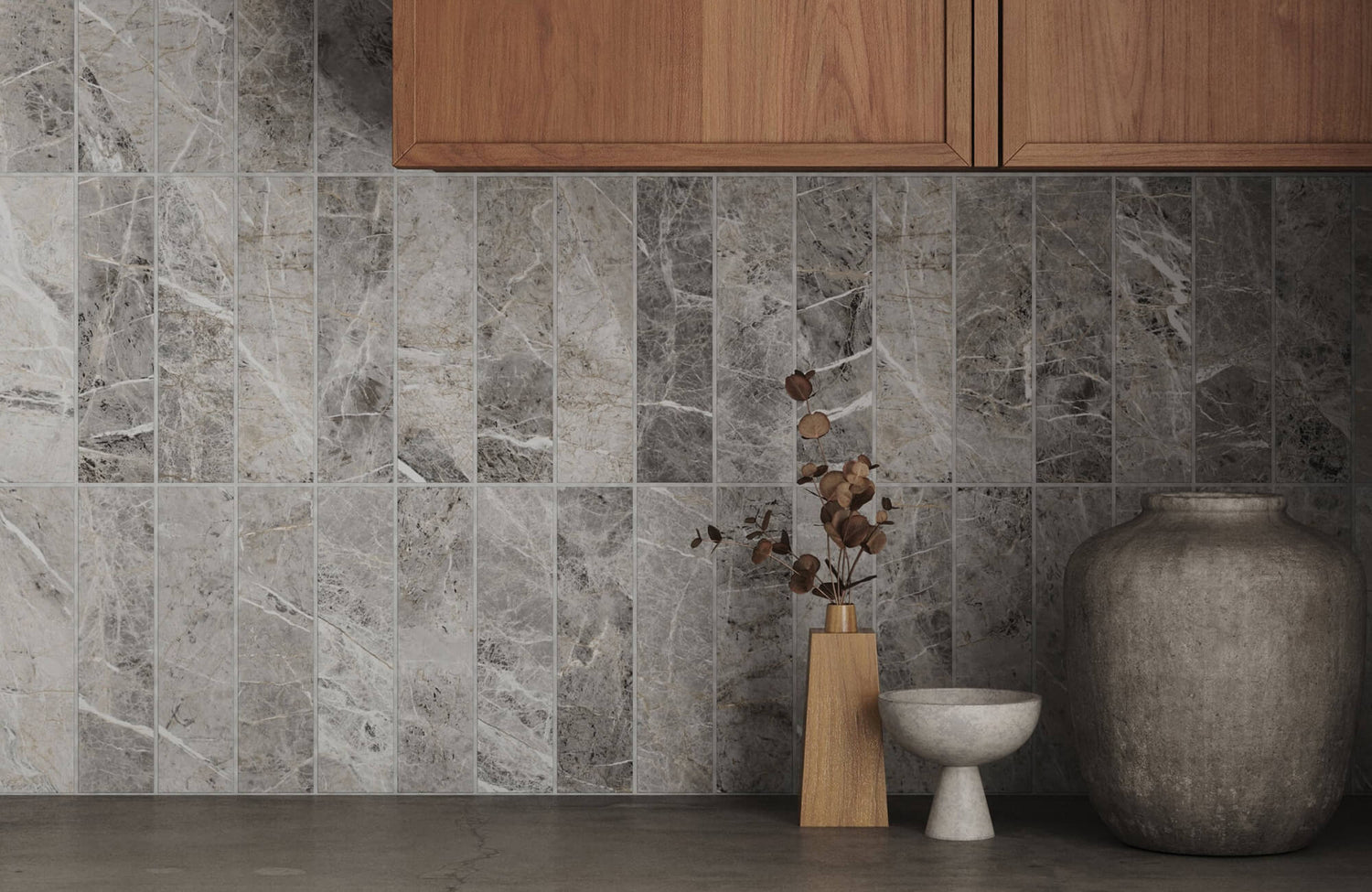
For those who appreciate the beauty of marble but prefer a more practical solution, stone-look ceramic or porcelain tiles offer a compelling alternative. Edward Martin’s Julianna 4x12 Polished Ceramic Tile in Carrara, for example, captures the elegant veining of natural marble while providing a smoother, lower-maintenance surface. Designed to replicate the movement and character of stone, it delivers a refined aesthetic with enhanced durability and easier upkeep.

Making the Right Choice
With so many tile options available, choosing the right backsplash can feel overwhelming. To make a confident, well-informed decision, it helps to weigh a few key factors.
Assess Your Budget
Establishing a clear budget is an essential step when selecting a backsplash. Ceramic and porcelain options are typically more accessible, while natural stone materials such as marble or granite often come at a higher price point. Installation costs should also be factored in, as they can vary depending on design complexity and local labor rates.
Setting realistic expectations from the outset helps narrow your choices and ensures a smoother decision-making process. For personalized guidance on balancing aesthetics, quality, and cost, consulting with a professional design team can provide valuable insight and help you make the most of your investment.
Think Long-Term
When selecting subway tiles for your backsplash, it’s worth considering how the material will hold up over time and what level of upkeep it will require. Ceramic and porcelain options are durable and resistant to moisture, heat, and scratches. Natural stone varieties, such as marble or granite, offer lasting strength and character but typically need regular sealing to help protect against stains and water exposure. Grout lines also require attention, as they can collect dirt over time—routine cleaning and sealing, when recommended, will help preserve a fresh, finished look.
Finding Your Ideal Backsplash with Subway Tiles
Subway tiles remain a relevant and versatile choice for backsplashes, balancing timeless elegance with the potential for contemporary flair. Their adaptability in both design and functionality makes them a favorite for kitchens and bathrooms alike. They’re also durable, low maintenance, and versatile enough to complement design styles ranging from classic to contemporary.
Ultimately, the best tile choice depends on your unique preferences and the specific aesthetic of your space. By experimenting with colors, layouts, and finishes, subway tiles can transform into a stunning, personalized feature in your home. Whether you lean toward classic simplicity or bold patterns, there’s room to craft a stylish and enduring backsplash that suits your vision.