Marble look checkered tiles bring together timeless elegance, visual contrast, durability, versatility, and practicality, making them an increasingly popular choice in modern kitchen design. Their ability to balance classic charm with contemporary appeal allows homeowners to create spaces that feel both refined and inviting. While their aesthetic impact is undeniable, it’s equally important to consider how they perform in everyday use. Understanding both their design value and functional benefits will help determine whether they are truly the right fit for your kitchen.

The Enduring Appeal of Marble Look Checkered Tiles
Checkered patterns have a rich history, dating back to ancient civilizations like the Romans and Greeks. These geometric designs were often used to adorn floors, walls, and even clothing. The timeless appeal of this pattern lies in its clarity and order, creating a sense of balance that feels inherently structured yet visually engaging. Because the design relies on repetition rather than ornamentation, it also maintains relevance regardless of shifting trends.
In recent years, the marble look trend has taken the design world by storm. When combined with the classic checkered pattern, it introduces layered depth to what would otherwise be a simple two-tone layout. The natural-inspired veining softens the rigid geometry of the checkerboard, resulting in a composition that feels dynamic rather than flat. This subtle movement also prevents the pattern from appearing overly graphic, giving it a more elevated and architectural presence.
Marble look checkered tiles offer a luxurious and elegant aesthetic without the unpredictability of natural stone variation. Advances in digital printing technology allow manufacturers to replicate nuanced veining patterns with remarkable precision, creating tiles that feel authentic while remaining consistent from piece to piece. This balance between realism and control gives homeowners the ability to achieve a curated look that feels intentional rather than random.
Another reason for their enduring appeal is their ability to act as both a focal point and a foundation. Depending on the surrounding finishes, the pattern can either command attention or quietly anchor the room. This duality also allows it to evolve alongside future design updates, ensuring it remains visually relevant even as cabinetry, hardware, or decor elements change over time.

Understanding Porcelain and Ceramic Variants
Marble look checkered tiles are available in both porcelain and ceramic options to suit different needs and budgets. While both materials can achieve the same striking appearance on a kitchen floor or backsplash, their internal composition and production methods create important distinctions in performance and structure.
Porcelain marble look checkered tiles, for instance, are known for their exceptional durability and low maintenance. Fired at high temperatures, they develop a dense, vitrified body that enhances strength and dimensional stability. This density also allows the tiles to maintain crisp edges and consistent sizing, which is especially important in checkered layouts where precise alignment across the kitchen floors contributes to a polished, seamless result. Their refined manufacturing process also supports highly detailed veining patterns that remain sharp and defined.
On the other hand, ceramic marble look checkered tiles offer a more affordable alternative while still providing a stylish and practical solution for kitchens. Although ceramic is slightly less dense than porcelain, it remains a reliable option for achieving the checkerboard aesthetic with clarity and visual impact. Its lighter composition can make handling and layout adjustments more manageable, particularly in projects where flexibility during installation is beneficial.
Ultimately, both porcelain and ceramic variants are capable of delivering the signature marble look, checkered design. By understanding how their composition influences structure and finish quality, homeowners can select the material that best supports their vision while ensuring long-term performance on surfaces such as the kitchen floor.

Choosing the Right Tile Size
Selecting the appropriate tile size is crucial in achieving your desired kitchen aesthetic. Let's explore how different tile sizes can impact the overall look and feel of your culinary space.
Mid-Sized Tiles
Mid-sized marble look checkered tiles can add a touch of elegance and sophistication to any kitchen. Their balanced proportions allow the checkerboard pattern to feel defined without overwhelming the space, making them especially effective on a kitchen floor where visual clarity matters. In smaller kitchens, 12x12 tiles are particularly impactful, as their scale helps maintain proportion while still showcasing the beauty of the alternating tones.
Because mid-sized tiles create a steady visual rhythm, they also offer enough surface area to highlight marble-inspired veining while preserving the crisp geometry of the checkerboard layout. This balance results in a design that feels structured yet refined, allowing the pattern to enhance the space rather than dominate it. A beautiful example is Edward Martin’s Leona 12x12 Checkerboard Matte Porcelain Tile in Calacatta and Marfil, which pairs soft white marble veining with warm neutral tones to achieve a timeless and harmonious look, as displayed in the photo above. The matte finish further softens the contrast, making it an ideal choice for kitchens that aim for understated elegance.
Additionally, mid-sized tiles can be arranged to create subtle borders or framed sections within the kitchen floor, offering design flexibility without shifting into larger-format minimalism. Their adaptability makes them a dependable option for homeowners seeking a classic checkerboard effect that feels intentional, balanced, and visually cohesive.
Large Format Tiles
Marble look checkered tiles in large formats, such as 24x24 tiles, can make a dramatic statement in spacious kitchens. Their expanded surface area allows the marble-inspired veining to appear more fluid and uninterrupted, giving the kitchen floor a refined, gallery-like presence. With fewer grout lines breaking up the pattern, the checkerboard layout feels more expansive and visually streamlined.
This reduction in visual segmentation also enhances spatial continuity, allowing the eye to move effortlessly across the room. In open-concept kitchens, large format checkered tiles can help unify adjoining areas by creating a cohesive foundation that anchors the entire layout. The scale of the tiles also amplifies the contrast between alternating tones, resulting in a bold yet sophisticated geometric impact.
However, it's important to consider the proportions of your kitchen when choosing large format tiles. In smaller spaces, their scale may feel visually dominant, while in larger kitchens, they contribute to a sense of architectural balance and intentional design. When thoughtfully selected, large format marble look checkered tiles elevate the kitchen floor from a functional surface to a defining design feature.
Finding the Perfect Fit for Your Kitchen
When selecting the right tile size for your kitchen, consider factors such as room size, desired aesthetic, and layout. As previously highlighted, smaller kitchens may benefit from smaller tiles to avoid overwhelming the space, while larger kitchens can accommodate larger tiles for a bold, modern look. The size of your tiles can also help to achieve your desired aesthetic, whether it's a classic, traditional look or a contemporary, minimalist design.
Additionally, consider the specific areas where you plan to use these marble look checkered tiles. For example, a backsplash may require smaller tiles for intricate patterns, while a floor may benefit from larger tiles for a clean, minimalist look. By carefully considering these factors, you can choose the perfect tile size to enhance the beauty and functionality of your kitchen.

Practical Considerations
Before diving into the details, it's important to consider practical factors in using marble look checkered tiles in your kitchen. These factors will influence the overall success of your project, from the initial planning stages to long-term maintenance.
Installation
Proper tile installation is essential for achieving a polished and durable finish in your kitchen. Because marble look checkered tiles rely on precise alignment to maintain clean lines and symmetrical balance, even minor miscalculations can disrupt the entire pattern. For this reason, working with a professional installer is highly recommended, especially for kitchen floor applications where accuracy and structural integrity are critical.
A skilled tile installer understands how to properly prepare the subfloor, ensure level placement, and maintain consistent spacing throughout the checkerboard layout. They can also anticipate potential challenges, such as uneven surfaces or layout adjustments around cabinetry and islands, preventing costly corrections later. Their expertise helps preserve the visual impact of the design while ensuring long-term performance.
Alternatively, installing marble look checkered tiles yourself can be a cost-effective option, but it demands patience, advanced measuring precision, and close attention to detail. DIY installations carry the risk of uneven tiles, misaligned patterns, or improper adhesion, which may compromise both appearance and durability. Ultimately, investing in a professional installer provides peace of mind and ensures that your kitchen floor achieves the refined, seamless finish this classic pattern deserves.
Maintenance
Proper maintenance is also essential to keep your kitchen tiles looking their best. Marble look checkered tiles crafted from ceramic or porcelain are low-maintenance options, only requiring regular cleaning with mild detergent and warm water to remove dirt and grime. For tougher stains, non-abrasive cleaners can be used. Just remember to follow the manufacturer’s recommendations for cleaning and avoid harsh chemicals or abrasive scrubbers, as these can damage the tile surface. Periodic sealing may also help protect the grout from stains and water damage.
Natural stone tiles like marble and granite, on the other hand, require more frequent upkeep due to their porous nature. Regular sealing is crucial to protect these surfaces from staining and etching while maintaining their luxurious appearance. Understanding these factors ensures you choose a tile that fits both your lifestyle and design preferences.
Cost-Effectiveness
The cost-effectiveness of a tile project depends on both the initial investment and long-term maintenance, with the type of tile playing a major role in overall expenses. Ceramic marble look checkered tiles are often the most affordable option, ranging from $1 to $5 per square foot. They are versatile and available in various designs, making them a budget-friendly choice for walls and lightly used areas. However, they may require occasional replacement in high-use spaces due to their susceptibility to chipping. Porcelain marble look checkered tiles, priced between $3 and $12 per square foot, are slightly more expensive but offer superior durability and water resistance, making them an excellent choice for busy areas like kitchen floors and backsplashes. Their higher upfront cost is often offset by reduced maintenance and greater longevity.
Potential Drawbacks
Marble look checkered tiles, while practical and stylish, do come with a few considerations to keep in mind. However, with thoughtful planning and the right product selection, these factors can be easily managed without compromising the overall design impact.
Slippery When Wet
Like many hard-surface materials, tiles used on a kitchen floor can become slippery when wet, particularly if they feature a glossy or polished finish. That said, selecting a matte finish can significantly improve traction while still maintaining the elegance of the checkerboard pattern. Matte marble look checkered tiles offer a softer, more natural appearance and are often a practical choice for households prioritizing both safety and style.
Grout Maintenance
Grout lines are an essential part of any tiled surface and may require occasional attention to keep them looking clean and fresh. Choosing a complementary grout color and applying proper sealing can help minimize staining or discoloration over time. With routine care, grout can maintain a crisp appearance that enhances the definition of the checkerboard layout rather than detracting from it. Using the appropriate cleaning products and techniques will help extend the lifespan and appearance of your grout.
Visual Boldness
The distinctive contrast of a checkered pattern naturally draws the eye, which may feel bold in certain spaces. However, this visual energy is also what gives the design its timeless character. Balancing the kitchen floor with neutral cabinetry, subtle textures, or cohesive finishes allows the pattern to feel intentional and well-integrated rather than overwhelming.
Potential for Water Damage
As with any tiled installation, proper subfloor preparation and waterproofing are important to prevent moisture-related issues. When professionally installed and appropriately sealed, marble look checkered tiles perform reliably in kitchen environments, offering both durability and long-term stability.
By understanding these considerations in advance, homeowners can confidently incorporate marble look checkered tiles while ensuring the kitchen floor remains both beautiful and functional for years to come.

Color Coordination
Choosing the right color palette for your kitchen can significantly impact its overall mood and style. Here are some color combination ideas for your marble look checkered tiles to help you create your dream kitchen:
Classic Whites and Creams
Light-colored checkered tiles are a timeless and versatile choice for kitchens, especially in smaller spaces where they can visually expand the area by reflecting light and creating a sense of openness. Neutral tones like white, cream, and light gray are excellent options for achieving a clean, airy atmosphere that complements a variety of kitchen styles.
White marble look tiles, particularly when paired with soft gray or beige counterparts, create a refined and understated elegance. The gentle contrast also keeps the checkerboard pattern defined without feeling stark, allowing the kitchen floor to serve as a graceful foundation rather than the dominant feature. Cream-based combinations, meanwhile, introduce subtle warmth that pairs beautifully with natural wood cabinetry, brushed brass hardware, or warm stone countertops.
This palette works especially well in transitional or classic interiors, where continuity and softness are prioritized. By keeping contrasts muted, the overall effect feels polished and enduring, ensuring the design remains relevant over time.
Warm and Refined
For kitchens that lean into warmth and understated luxury, bronze-infused neutrals and creamy marble tones offer a beautifully balanced approach. Rather than relying on stark contrast, this palette creates depth through tonal layering, allowing the checkerboard pattern to feel elegant and composed.
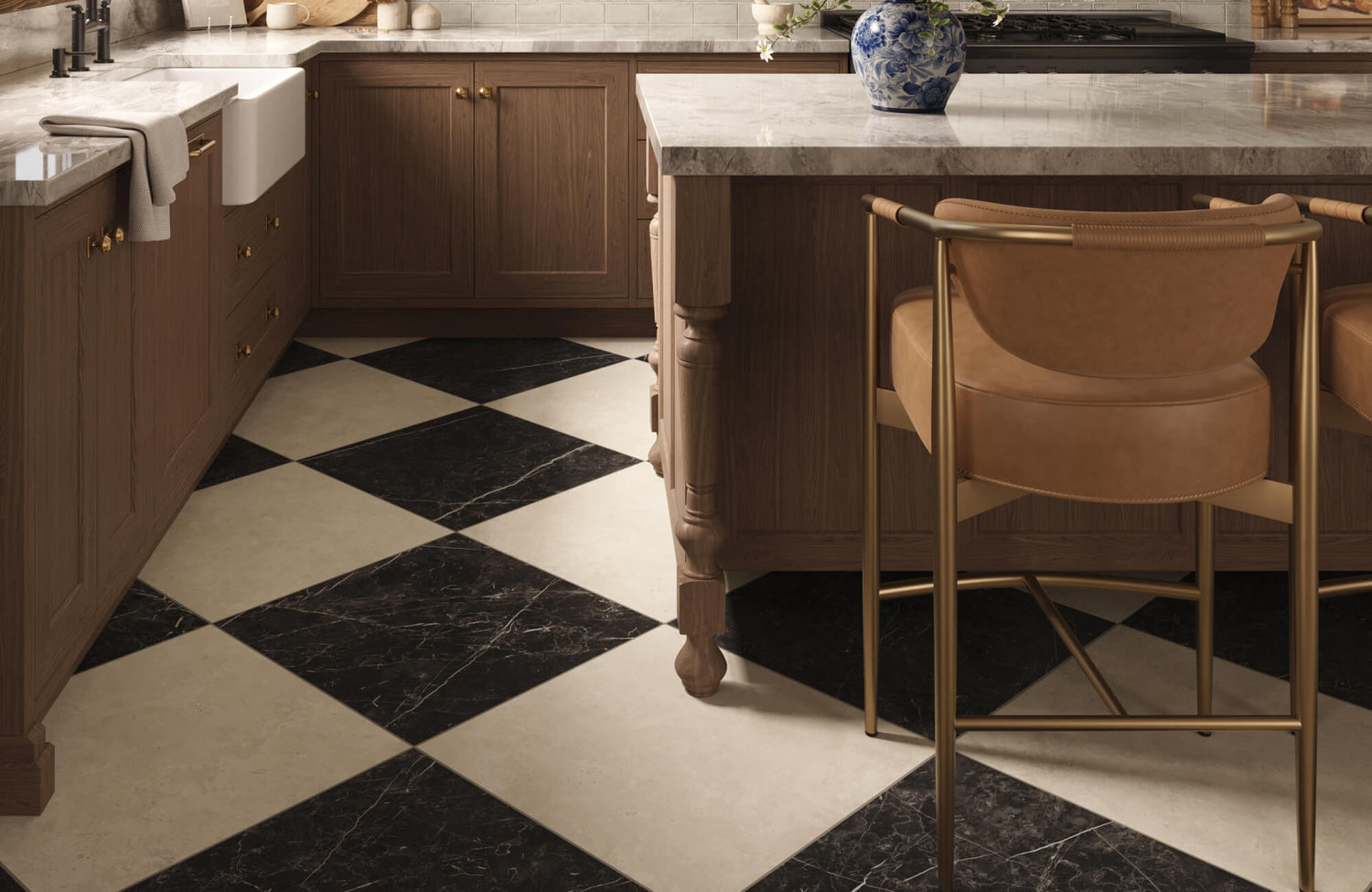
As shown in the picture above, Leona 12x12 Checkerboard Polished Porcelain Tile in Calacatta and Amani Bronze exemplifies this refined warmth. Its luminous white marble veining is grounded by rich bronze undertones, while the polished finish enhances light reflection across the kitchen floor. When paired with brass fixtures, sculptural seating, and warm wood cabinetry, the result is a space that feels curated and architecturally intentional.
This approach works particularly well in dining-integrated kitchens or open-concept layouts, where the flooring contributes to a cohesive, elevated atmosphere. Instead of dominating the room, the checkerboard pattern becomes a sophisticated foundation that quietly enhances the overall design narrative.
Soft and Serene
For a calmer and more relaxed atmosphere, softer color combinations offer an inviting alternative. Subtle pairings such as muted taupe and off-white, pale gray and ivory, or even gentle pastel interpretations can create a tranquil kitchen environment while still preserving the visual interest of the checkerboard pattern.
Pairing these tones with light grout and matte finishes further enhances the softness, reducing contrast and allowing the pattern to blend seamlessly into the overall design. This approach works beautifully in kitchens that prioritize natural light, organic textures, and minimalist styling.
Rather than commanding attention, a soft and serene palette allows the kitchen floor to quietly support the space. The result is a harmonious environment where pattern, color, and material coexist effortlessly, creating a sense of balance that feels both modern and timeless.
For a seamless design experience, use Edward Martin's AR tool to visualize how different checkered tile colors and styles will look in your kitchen. This ensures your chosen palette perfectly aligns with your vision before committing to the final design.

Design Ideas in Incorporating Marble Look Checkered Tiles
Now that you've explored the pros, cons, and practical considerations of marble look checkered tiles, let's dive into some inspiring design ideas to help you incorporate this timeless pattern into your kitchen.
Floor Applications
The checkerboard pattern offers timeless versatility, especially when applied across a kitchen floor where it can define the entire atmosphere of the space. A large-format layout creates a sense of openness while allowing the marble-inspired veining to feel expansive and fluid. This approach works particularly well in kitchens with generous natural light, as the alternating tones subtly reflect brightness while maintaining visual structure.
A refined example is our Leona 24x24 Checkerboard Matte Porcelain Tile in Calacatta and Marfil, which pairs soft white marble veining with warm beige undertones. In a kitchen like the one shown above—featuring light wood cabinetry, brass fixtures, and creamy countertops—the matte finish enhances the organic warmth of the space while preventing excessive glare. The 24x24 scale reduces grout interruption, allowing the checkerboard pattern to feel balanced and harmonious rather than busy.
Beyond aesthetics, large format checkered tiles can also visually anchor an island or seating area, helping to organize open-concept layouts without the need for additional materials. The alternating tones subtly guide the eye across the room, reinforcing symmetry and spatial flow. When thoughtfully styled with warm woods and metallic accents, this type of kitchen floor achieves a timeless yet contemporary elegance.
Wall Applications
A marble look checkered tile backsplash, accent wall, or feature niche can transform your kitchen into a visually striking and personalized space. A backsplash in a classic black-and-white checkered pattern adds timeless appeal, drawing attention to the countertop and cooking area. Alternatively, earthy tones or other neutral colors can create a modern yet understated aesthetic. For a more dramatic statement, a marble look checkered accent wall serves as a bold backdrop, perfect for highlighting areas like the stove or dining space. To maintain balance, using a subtle color palette or a smaller-scale pattern is recommended. Additionally, incorporating these tiles in a feature niche can create both a functional and decorative focal point. Whether used for displaying cookbooks, small appliances, or decor, a contrasting color or pattern in the niche enhances its visual appeal while adding practical charm to your kitchen.
To visualize how different checkerboard layouts and finishes will look in your own space, explore Edward Martin’s augmented reality (AR) tool. It allows you to preview marble look checkered tiles directly in your kitchen before making a final decision.
Crafting a Timeless Kitchen with Marble Look Checkered Tiles
Marble look checkered tiles are a timeless and versatile choice that blends classic elegance with modern functionality. Their adaptability to various kitchen styles, from traditional to contemporary, ensures they can suit any aesthetic vision. Choosing the right material, such as durable porcelain or cost-effective ceramic, along with careful selection of tile size and color, is essential to achieving your desired look while balancing practicality and budget. Whether opting for bold, dramatic patterns or classic monochromatic designs, these tiles offer a unique opportunity to personalize your culinary space.
For a more confident design decision, explore Edward Martin’s sample tile program to experience the look and finish firsthand. Seeing the marble look checkered tiles in your own space ensures the final selection feels cohesive, intentional, and perfectly aligned with your vision!