Black tiles exude a quiet confidence—bold yet refined, modern yet timeless. Their deep, saturated tone creates a striking canvas that transforms ordinary surfaces into architectural statements. When rendered in ceramic, they achieve a perfect balance between aesthetic depth and technical resilience. From moody spa-like bathrooms to sleek urban kitchens and gallery-inspired hallways, black ceramic tiles lend an air of understated luxury. But beneath their dramatic allure lies a world of material performance, environmental behavior, and design strategy that deserves thoughtful exploration.
This comprehensive guide uncovers the form and function of black ceramic tiles, revealing how they elevate spaces both visually and practically.

Visual Functionality and Interior Impact
The visual presence of black ceramic tiles extends beyond mere color. It influences spatial perception, emotional tone, and overall design coherence. Whether used sparingly or extensively, they are often chosen to add depth and boldness to spaces, though their impact depends on layout, finish, and lighting.
Contrast Control and Balance
The intensity of black tiles naturally generates high visual contrast, which must be balanced thoughtfully within a space. In a minimalist environment, black tile flooring can ground lighter architectural elements and add a sense of structural weight. When placed alongside materials like brass, marble, or walnut, black ceramic tiles act as a visual anchor without overwhelming the scene. Designers often pair them with soft neutrals to maintain visual harmony, as too much contrast without relief can cause visual fatigue. With well-planned ambient textures and lighting, the final result feels deliberate, not chaotic.
Format Versatility and Spatial Framing
The shape and size of black ceramic tiles significantly influence their impact on spatial dimensions. Large-format black tiles, for instance, reduce grout lines, visually expanding narrow rooms, and creating a continuous surface aesthetic. In contrast, small or mosaic-style black tiles add texture and dimension, though they can result in a busier look. Rectified edges then refine the aesthetic further by allowing minimal grout spacing—popular in sleek, contemporary designs. Additionally, black tiles are often used to frame architectural features such as kitchen islands or walk-in showers, drawing the eye and defining zones within open-concept plans.
Emotional Tone and Psychological Atmosphere
Black ceramic tiles contribute significantly to the emotional temperature of a space by evoking feelings of calm, strength, and intimacy. Their dark surfaces absorb excess visual noise, which helps to create a serene and grounded atmosphere. In wellness environments such as spas or quiet reading nooks, black tiles promote a sense of retreat and focused stillness. When paired with soft lighting and tactile finishes like natural stone or wood, the result is a space that feels deeply personal and restorative. Their presence can also communicate formality or sophistication, lending gravity to dining rooms or entry foyers. Thoughtfully applied, black ceramic tiles do not just frame space—they set the emotional stage.
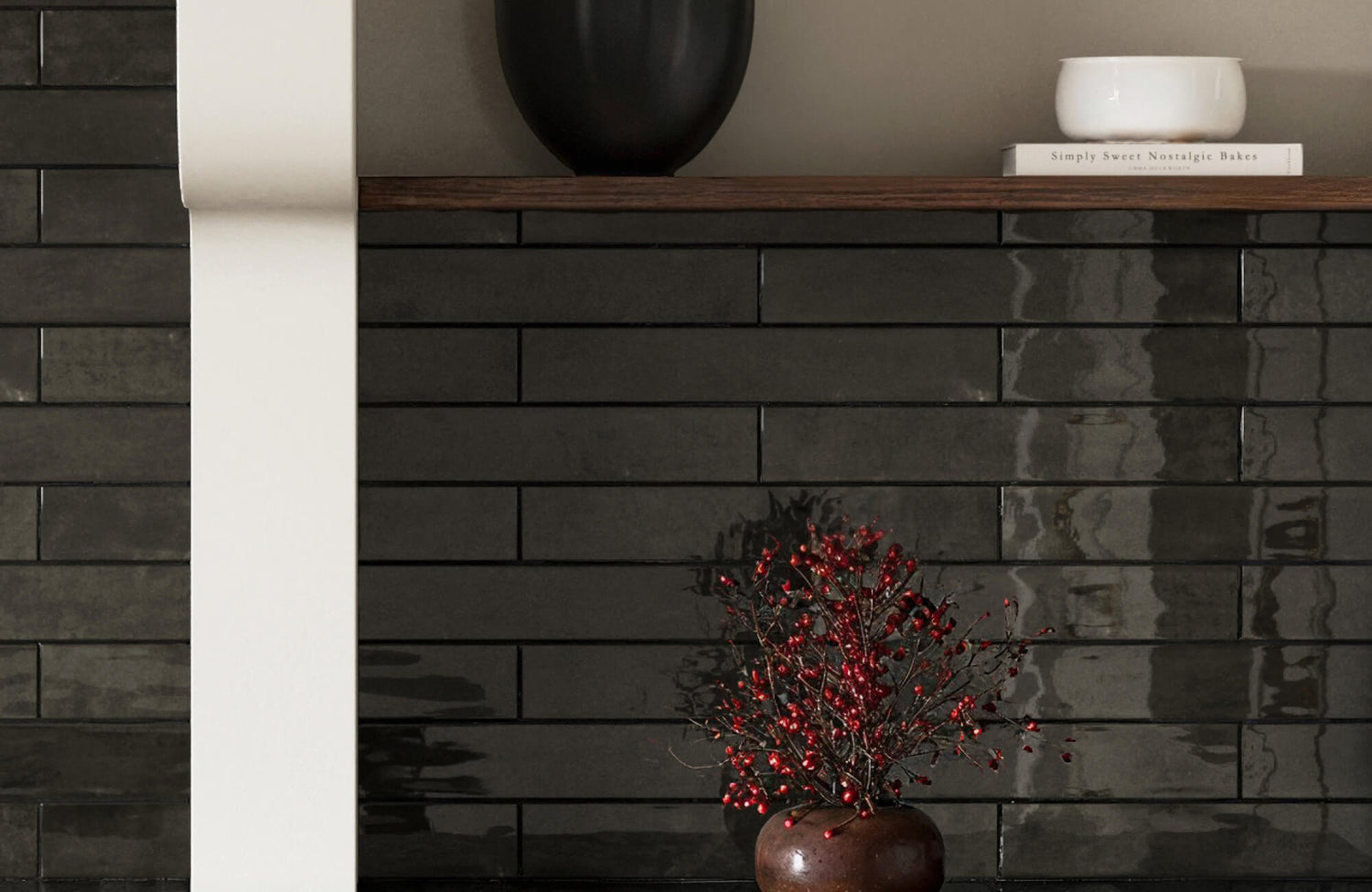
In kitchens, black ceramic tiles introduce a grounded sense of refinement, balancing the vibrancy of cabinetry, metals, and lighting with a rich, tactile foundation. A perfect example is the use of Jaden 2.5x16 Glossy Ceramic Tile in Ink, which features a deep, reflective surface that adds dramatic texture without overwhelming the space. As shown in the photo above, its elongated silhouette enhances vertical dimension while the glossy finish reflects ambient light in subtle, elegant layers. This creates a visually rich backdrop that amplifies the room’s character and warmth. In bathrooms, the same tile offers a sleek, spa-like quality that elevates even the simplest palette. Across spaces like kitchens, baths, and entryways, tiles like Jaden in black infuse understated sophistication while supporting a cohesive, emotionally resonant interior.
To fully grasp the mood-setting power of black ceramic tiles like Jaden in black, explore them using Edward Martin’s augmented reality (AR) tool. Instantly preview how they transform your space, bringing depth, drama, and emotional resonance, before making a single commitment.

Structural Performance and Surface Endurance
Black ceramic tiles offer impressive longevity, but their finish and wear visibility must align with intended usage patterns. Their strength lies not only in resistance to stress but also in the precision of their manufactured surface characteristics. Understanding these properties is essential when evaluating performance in busy or structurally sensitive spaces.
Abrasion Resistance and Surface Integrity
Ceramic tiles, regardless of color, are known for high abrasion resistance due to their dense composition and hard glaze. Specifically, black ceramic tiles with high PEI (Porcelain Enamel Institute) ratings are well-suited for commercial floors and heavy-use zones. However, polished black finishes can visibly reveal micro-abrasions and scuffing over time, especially in entryways or kitchens. To mitigate this, matte or textured finishes are preferred in busy areas where surface integrity is paramount. These finishes also better conceal minor imperfections that naturally accumulate with regular use. Selecting tiles rated for the appropriate wear class ensures sustained performance without aesthetic compromise.
Impact Load and Crack Resistance
While ceramic is rigid and not inherently flexible, high-quality black ceramic tiles exhibit excellent resistance to impact loads when installed on stable subfloors. Variations in substrate conditions, such as deflection or unevenness, can compromise their longevity. To address this, anti-fracture membranes are often installed beneath floor tiles, absorbing movement and preventing cracking before it reaches the visible surface. Using rectified black ceramic tiles further enhances this system: the precision-cut edges allow for tighter joints and more even force distribution across the tile field. Together, these measures improve both the structural stability and long-term appearance of the installation.
When paired with proper subfloor preparation and ANSI-compliant installation, black ceramic tiles—where manufacturers approve floor use—also perform reliably across a range of indoor floor conditions.
Dimensional Stability and Tile Calibration
Precision in tile sizing is critical for maintaining alignment and structural uniformity during and after installation. To achieve this, high-quality black ceramic tiles undergo strict calibration processes to ensure consistent thickness, edge squareness, and surface flatness. This dimensional stability reduces lippage, which is especially important for large-format tiles where even minor variations can result in uneven surfaces.
Moreover, accurate calibration allows installers to use tighter joint spacing, supporting a cleaner, more refined visual outcome. Over time, stable tile dimensions contribute to even load distribution, helping prevent localized stress that could lead to cracking or delamination. Ultimately, this level of manufacturing control is essential for achieving both technical reliability and aesthetic precision.

Thermal Dynamics and Environmental Behavior
Black ceramic tiles are not neutral in their interaction with heat and light. Their thermal properties influence energy efficiency, comfort, and even lighting strategy within interior spaces. These qualities can either enhance or challenge a space depending on its exposure and intended use.
Heat Retention and Radiant Compatibility
Due to their low solar reflectance, black ceramic tiles absorb and retain heat more effectively than lighter options. This makes them ideal for use in colder climates or homes equipped with radiant floor heating systems. Their thermal mass also enables gradual and even heat dispersion, enhancing energy efficiency. However, in sun-exposed areas, such as patios or rooms with large south-facing windows, the tiles can become uncomfortably warm underfoot. Designers must consider window orientation, shading devices, and HVAC systems to manage indoor temperature fluctuations. Correct usage turns this thermal trait into an advantage rather than a drawback.
Reflectivity and Spatial Illumination
Black tiles inherently absorb more ambient light, which can alter the perception of interior brightness. In dimly lit or compact rooms, this absorptiveness may contribute to a sense of enclosure unless offset by artificial lighting. To address this, integrated lighting systems, such as recessed ceiling LEDs or under-cabinet strips, are often specified. Glossy black ceramic tiles can offer limited reflectivity, but only when paired with high-lumen fixtures. This nuanced lighting plan ensures that aesthetic intent doesn't compromise visual comfort. Effective illumination also enhances tile texture, emphasizing the elegance of matte, satin, or metallic-flecked surfaces.
An excellent example is the Madilyn 3x12 Glossy Ceramic Tile in Midnight, which brings depth and radiance to even the most compact powder rooms. As displayed in the picture above, its sleek, mirror-like finish subtly reflects the warm glow of wall sconces, giving the space a polished yet intimate ambiance. The elongated 3x12 format also draws the eye upward, enhancing verticality and creating a sense of architectural height.
These tiles amplify light without overpowering the palette, striking a balance between moody and luminous. Their reflective surface pairs beautifully with metallic accents and crisp white basins, achieving a refined interplay of contrast. In spaces where illumination is key, tiles like Madilyn in Midnight prove that darkness can glow when handled with intention.

Maintenance Dynamics and Grout Management
While ceramic tiles are inherently low-maintenance, the dark pigment of black tiles introduces unique cleaning and care considerations. Grout visibility, residue accumulation, and cleaning technique must all be tailored to maintain a pristine finish. A proactive approach to upkeep ensures lasting beauty and function.
Surface Residue and Finish Clarity
On black ceramic tiles, surface residues like dust, mineral buildup, and soap scum are more visibly pronounced than on lighter tones. In bathrooms and kitchens, especially, water droplets can leave pale marks if not dried promptly, particularly on polished finishes. Therefore, routine cleaning with microfiber cloths and pH‑neutral cleaners prevents buildup without damaging the glaze. Abrasive scrubbing pads should be avoided, as they can dull the finish over time.
For added protection, anti‑streak agents or nano‑coating sprays may be applied to maintain a consistent surface sheen. By establishing a regular maintenance schedule, you preserve clarity and elevate the long‑term aesthetic. For best results, it’s always advisable to follow the manufacturer’s recommendations regarding cleaning methods, compatible products, and surface care routines to maintain both the appearance and performance of the tile.
Grout Tone and Alignment Precision
Grout color and layout are critical with black ceramic tiles, as contrast can either accentuate or disrupt your design intent. Light-colored grout not only discolors quickly but also highlights alignment inconsistencies, making it less suitable. Instead, dark or color‑matched grout, such as anthracite or charcoal, maintains cohesion and resists visible staining. Additionally, epoxy grout formulations offer superior water resistance and durability. Rectified tiles further enhance the result by enabling narrow, uniform joint spacing and improving alignment. This attention to detail creates a seamless finish that reinforces design continuity.

Performance Readiness and Installation Precision Across Applications
Black ceramic tiles serve both aesthetic and technical roles, making their performance highly dependent on where and how they are used. From safety compliance in commercial settings to installation accuracy in residential interiors, success lies in pairing the right specification with expert execution. Each application demands attention to both regulation and craftsmanship to ensure lasting impact.
Installation Techniques and Best Practices
The installation of black ceramic tiles demands heightened precision, as even slight alignment or surface imperfections become more visible. Therefore, proper substrate preparation is essential, using leveling compounds or self-leveling underlayments to eliminate irregularities. Before fixing, dry-laying tiles for both wall and floor layouts, ensure pattern alignment and minimize visual breaks.
Additionally, a tile leveling system is valuable for preventing lippage, which is particularly noticeable on dark, reflective surfaces. Joint spacing should also be consistent and minimal, especially with rectified tiles, to maintain a seamless finish. Finally, selecting the right adhesive and allowing proper curing time secures structural integrity and long-lasting bond performance.
Slip Resistance and Code Compliance
In floor applications, especially in wet environments like bathrooms or hospitality lobbies, slip resistance is a safety imperative. Black ceramic tiles come in various slip-rated finishes, with DIN R‑ratings or ANSI DCOF values indicating compliance. For wet zones, a minimum DCOF of 0.42 is typically required under the U.S. code, with textured finishes providing added traction. Designers often choose matte or structured surfaces that balance visual appeal and regulatory requirements. Additionally, slip-resistant sealers can be applied post-installation for extra protection, without compromising the tile’s appearance, structural integrity, or long‑lasting bond.
However, for wall applications where slip ratings are not a concern, finishes like satin offer the perfect middle ground between glossy and matte. Edward Martin’s Estelle 12x12 Satin Ceramic Tile in Deco 2 Black Gold is a prime example. Its soft sheen, intricate pattern, and smooth touch lend a luxe, refined character to vertical surfaces. Satin tiles like Estelle are favored in accent walls, powder rooms, and shower surrounds, where the focus is on visual richness and surface elegance rather than traction. This also makes them an ideal choice for designers looking to elevate wall applications while staying mindful of performance in adjacent floor zones.
Sector-Specific Use and Performance Modifiers
In commercial and healthcare environments, tile performance must meet enhanced hygienic and mechanical standards. Consequently, black ceramic tiles with antimicrobial glazes are often specified in hospitals, clinics, or restaurants to support sanitation protocols. These tiles resist microbial colonization effectively without the need for harsh chemical cleaning. Moreover, nanoparticle coatings are available to improve stain resistance in high-use areas. Additionally, large-format black tiles reduce grout exposure, minimizing dirt traps and easing janitorial routines. Overall, these sector-specific modifiers enable black ceramic tiles to meet rigorous performance benchmarks.
Black Tiles Elevated with Purpose and Precision
Black tiles embody a sense of quiet luxury that draws the eye without asking for attention. Their depth of tone adds structure and atmosphere, giving every surface they touch a confident presence. In ceramic form, they combine lasting strength with refined detail and are celebrated for their balance of form and function. Whether used in sleek kitchens, spa-inspired bathrooms, or contemporary entryways, they bring a curated sensibility to any interior. This guide reveals the design versatility, technical resilience, and environmental performance of black ceramic tiles with clarity and precision.
To support design exploration, Edward Martin provides high-quality 4"×4" samples that reflect the true color, finish, and texture of each tile. These samples offer an elevated, tactile preview of how black ceramic tiles can transform both residential and commercial spaces.