Mirrors are essential elements in home décor—not just for practical use, but also for their transformative effect on any space. When mirrors are positioned thoughtfully throughout the home, they amplify both light and space, creating interiors that feel larger and more inviting.
Take this for example: placing a mirror directly across from a window allows it to reflect natural light, instantly brightening the room and enhancing its sense of openness. Mirrors can also act as stunning focal points. A full-length mirror on a blank wall doesn’t just serve a purpose; it injects visual interest. Choosing an antique mirror adds timeless charm, while a frame in a bold color brings a lively accent to the room.
Whether opting for a minimalist round mirror or a decorative piece with intricate details, mirrors offer an easy and stylish way to customize your living spaces. With that said, let’s dive into a comprehensive guide to optimizing mirror placement in every corner of your home.

Deciding the Rooms
Several rooms in homes benefit significantly from well-placed mirrors. The most obvious starting point is the bathroom—a mirror here is essential for daily grooming and personal care. But beyond this practical function, mirrors can elevate the aesthetic and spatial dynamics in multiple areas throughout the home, including:
- Bedrooms
- Living rooms
- Dining rooms
- Hallway and entryway
- Kitchen

Mirror Placement by Room
There’s no universal formula for mirror placement—it all depends on the room’s dimensions, layout, and personal style preferences. However, keeping a few strategic principles in mind can help you achieve both functionality and aesthetic harmony in every space.
Bathroom Vanity
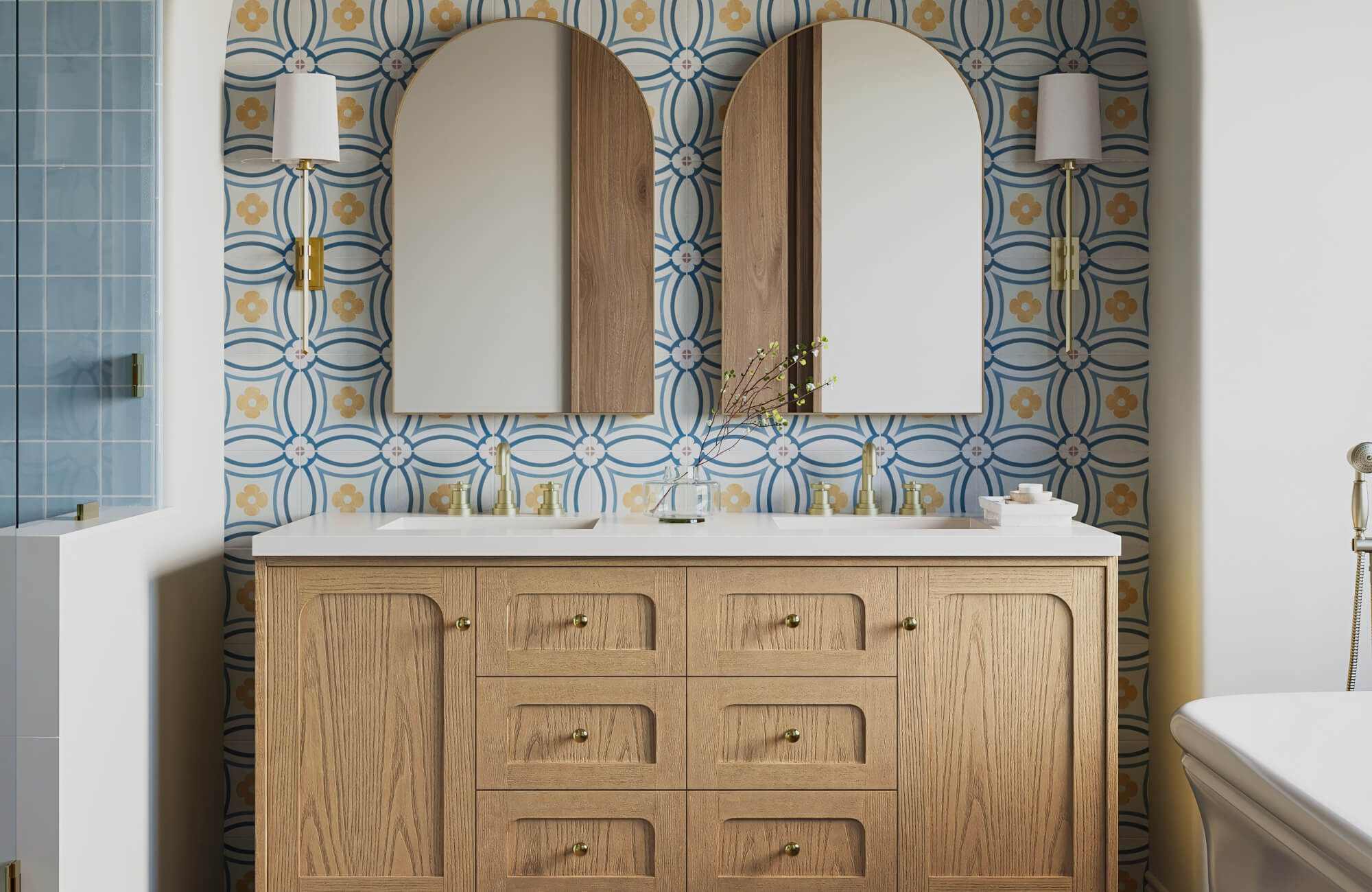
A vanity mirror is a non-negotiable element in any bathroom. Typically installed above the sink, it’s essential for daily routines like grooming, shaving, and applying makeup. In smaller bathrooms, opt for a compact, wall-mounted mirror to save space, such as the Rory Mirror in Antique Brass Iron from Edward Martin, which combines a warm metallic tone with a minimalist profile ideal for tight spaces.
For larger bathrooms, incorporating a floor-length mirror or even multiple reflective surfaces can enhance both convenience and visual appeal. Adding accents like the Esmeralda Small Mirror in Polished Brass, shown in the photo above, offers not only practical reflections but also a touch of elegance, making the space feel more open and styled with intention.
You can even install an adjustable wall-mounted mirror across from the main vanity mirror to gain a clear view of the back of your head—no more fumbling with handhelds! Consider these tips for optimal placement:
1. Mount the mirror approximately 60 inches from the floor, or at eye level, ensuring full visibility while standing. If a tall faucet is involved, place the mirror 2–3 inches above its highest point.
2. Good lighting is key. Position the mirror where it benefits from balanced illumination—either flanked by vanity lights or under overhead lighting to eliminate shadows on the face.
3. In busy bathrooms, selecting shatterproof or coated mirrors is a smart move for added durability and safety.
Bedroom
Mirrors in the bedroom serve more than just a functional role—they can elevate your décor and enhance spatial perception. Whether it’s a large mirror over a dresser or a sleek round mirror in an empty corner, the right placement adds depth and charm to the room.
1. Mount a mirror above the vanity or dresser to create a convenient spot for final outfit checks.
2. Avoid placing mirrors directly across from the bed to maintain a sense of calm and reduce nighttime discomfort.
3. If you have a dressing area, installing a mirror near the closet or even on the closet door itself (using strong adhesive tape) can streamline your morning routine. For a more integrated look, mirrored closet doors offer both utility and style.
Living Room
Mirrors in the living room can dramatically influence both the feel and function of the space. By reflecting natural light and showcasing architectural details, they make the room appear larger, brighter, and more welcoming. One of the most effective placements is above a mantel or fireplace, where a mirror can serve as a striking focal point. A piece like the Esmeralda Wide Mirror in Iron Matte Black adds a bold, architectural touch, offering both presence and practicality for modern or industrial-inspired interiors.
Integrating mirrors into a gallery wall or placing them beside artwork also helps reflect decorative elements and add visual interest. When positioning mirrors opposite windows, it's important to angle them thoughtfully to bring in outdoor views without causing excessive glare. In smaller living rooms, frameless or custom-sized mirrors are ideal for enhancing openness while maintaining harmony with your existing décor.
Dining Room
In the dining room, mirror placement plays a key role in setting the tone and enhancing the overall atmosphere. A strategically positioned mirror can help brighten the space and elevate the mood, particularly during evening gatherings when ambient lighting creates a cozy environment. Ideally, we want to place the mirror so it reflects both the dining table and a primary light source, such as a chandelier or wall sconce, to create a sense of balance and warmth.
Choosing a mirror that aligns with your existing décor is just as important—ornate frames introduce a touch of classic elegance, while minimalist designs offer a clean, contemporary appeal. Beyond aesthetics, mirrors in the dining room also provide practical benefits, offering a quick glance for appearance checks and giving the illusion of a larger, more open space.
Kitchen
Mirrors may not be the first element we consider in kitchen design, but they can have a surprisingly powerful impact when it comes to enhancing both light and space. Installing a mirror above the stove allows you to monitor food from various angles, which is especially useful in open-concept layouts where visibility matters. Placing a mirror near the sink or incorporating it into the backsplash can brighten the entire room while introducing a sleek, modern aesthetic.
For compact kitchens, smaller round or oval mirrors provide a subtle yet effective touch without overwhelming the space. In contrast, larger rectangular mirrors work beautifully in more spacious kitchens, making a bold visual statement while amplifying natural light and creating a more open feel.
Hallway
Mirrors are an excellent addition to hallways, offering a stylish way to enhance both light and space. Depending on the hallway’s dimensions, you can use mirrors to create a sense of depth, widen narrow paths, or simply add an elegant visual touch. In long, narrow hallways, placing a mirror at the far end draws the eye forward and makes the space feel more expansive.
For shorter, wider hallways, mounting a mirror on one of the side walls introduces depth and prevents the area from appearing too enclosed. However, it’s best to avoid placing mirrors directly across from each other, as this can produce a disorienting, infinite reflection that disrupts the flow and balance of the space.

Tips for the Best Wall Mirror Placement in Your Home
When it comes to decorating with mirrors, thoughtful placement can make all the difference. A strategically positioned mirror has the power to brighten a room, enhance natural light, and give the illusion of a larger, more open space. But just as a well-placed mirror can transform a room, a poorly positioned one can have the opposite effect, making the space feel cluttered, awkward, or visually unbalanced. So, how do we ensure our mirrors are working with our interiors and not against them? Here are a few essential guidelines to help us get it right.
Consider the Function
Before hanging any mirror, we need to think about its primary purpose. If you’re outfitting a dressing room, a full-length mirror placed at a distance that captures your entire reflection is ideal, allowing you to check outfits with ease. In contrast, mirrors in bathrooms serve a more focused function—helping you with tasks like shaving, applying makeup, or brushing teeth—so it’s crucial to position them at a comfortable height above the sink. Whether it’s about getting ready efficiently or enhancing a room’s design, the function of the mirror should always guide its placement.
Consider the Height at Which the Mirror Will Be Hung
Height plays a major role in how a mirror affects a room's ambiance and proportions. Hanging a mirror too high may elongate the walls but can leave the mirror feeling disconnected from the room’s elements, while placing it too low might make the space appear shorter or out of proportion. The general rule of thumb is to hang mirrors so that the center of the glass is at eye level when we’re standing in front of it. This height typically ensures visual balance and allows the mirror to interact naturally with the room’s furniture and lighting.
A great example is our Esmeralda Wide Mirror in Polished Brass, as seen in the photo above, which, with its elegant profile and horizontal orientation, effortlessly anchors itself to furniture pieces like consoles or vanities when hung at the right height. Its polished brass frame adds a sophisticated warmth, making it ideal for rooms where refined accents enhance the overall aesthetic.
That said, there are exceptions where breaking the rules can work in our favor. In smaller rooms, positioning a mirror higher on the wall can enhance vertical space and create an airy effect. In contrast, hanging a mirror slightly lower in a larger room can foster a more intimate, cozy atmosphere. The key is to experiment—sometimes moving a mirror just a few inches up or down can completely shift the mood of a space. Ultimately, mirror placement is both an art and a science, and with a little trial and error, you can find the sweet spot that complements your home beautifully.
Consider What It Reflects
When placing mirrors in your home, it’s not just about where you hang them—it’s also about what they reflect. A well-placed mirror can double the impact of light and create the illusion of a more spacious room, while a poorly positioned one can amplify visual clutter and disrupt the flow. For instance, if you hang a mirror in front of a messy or crowded area, you’re essentially doubling that chaos in your line of sight. Instead, you should aim to reflect something beautiful—whether it’s a favorite piece of artwork, an eye-catching plant, or a well-styled corner of the room. This approach not only enhances the space aesthetically but also creates a more uplifting and inspiring atmosphere.
One of the most effective strategies for mirror placement is considering its relationship to windows. If your goal is to brighten a dim space, placing a mirror directly across from a window allows it to bounce sunlight throughout the room, making everything feel fresher and more vibrant. This is especially useful in living rooms, entryways, and small nooks that struggle with natural light.
On the other hand, if you’re working with a compact room that needs to feel more expansive, positioning the mirror adjacent to a window is often more beneficial. This setup captures glimpses of the outdoors and gives the impression of a broader horizon, effectively blurring the line between inside and out. For rooms without sufficient daylight, we can replicate this technique using well-placed artificial lighting—mirrors will reflect the glow from lamps or wall sconces, spreading warmth and brightness where it’s needed most. Whether reflecting natural light or a curated view, the placement of your mirrors should always work in harmony with the surrounding elements to enhance both beauty and function.
Consider a Grouping
One of the most stylish and effective ways you can incorporate mirrors into your home décor is by creating a curated grouping. Arranging several mirrors together on a single wall allows you to reflect more light, add dimension, and express your design personality in a creative, eye-catching way. Whether you’re going for bold and eclectic or sleek and symmetrical, mirror groupings can act as stunning statement pieces that elevate the entire room.
When selecting mirrors for a grouping, it’s important to consider the balance between shape and scale. Mixing round and square mirrors can add dynamic visual interest and give the arrangement an artistic feel, while using mirrors of the same size and shape provides a clean, cohesive look that's more structured. Once you’ve chosen the right mirrors, proper spacing becomes key. Crowding them too closely can make the wall feel cluttered, so aim to leave about six inches of space between each mirror. This spacing helps each piece breathe while still maintaining the sense of unity that ties the whole composition together. Whether hung above a console table, along a hallway, or over a sofa, a well-thought-out mirror grouping can completely transform the atmosphere of a room.

Choosing the Right Mirror
When it comes to mirrors, the design goes far beyond aesthetics—choosing the right shape and style can significantly influence the energy and harmony of living spaces. Not all mirrors are created equal, and understanding their visual and energetic impact helps you make more intentional choices that support both function and atmosphere in your home.
Square and rectangular mirrors are often considered the most balanced and stable options. With their clean lines and defined corners, these shapes naturally promote a sense of order, symmetry, and groundedness. They distribute energy evenly across a space, helping to reinforce structure and clarity in the rooms where they’re placed. Whether mounted above a fireplace, behind a console table, or as part of a vanity setup, rectangular and square mirrors—like the Clancy Small Mirror in Antique Brass, displayed in the photo above—convey reliability and calm. With its timeless shape and warm metallic finish, this Clancy mirror adds refined elegance to compact spaces while supporting a harmonious and polished aesthetic.
While circular and oval mirrors certainly have visual appeal and a soft, flowing elegance, they tend to encourage a more fluid and less anchored energy. These rounded shapes can be great for creating a gentle, relaxed ambiance in certain rooms, but in spaces where you crave focus and stability, such as entryways, offices, or dining rooms, square or rectangular mirrors are generally more effective. Round mirrors can still be a wonderful addition when used thoughtfully, especially in designs where you want to soften sharp edges or introduce contrast to straight architectural lines.
The key is to align the mirror’s form with the purpose of the space. For example, a rectangular mirror in the bedroom helps define the room and mirrors the restful, organized energy you want in a sleep space. In contrast, a round mirror in a guest bathroom or hallway nook might introduce a sense of whimsy or softness without overwhelming the room’s core function. By choosing mirror shapes with intention, you can better manage the energy flow in your home while ensuring your décor feels cohesive and well-balanced.

Bringing Balance and Brilliance Through Thoughtful Mirror Placement
Placing mirrors strategically throughout your home is about more than just decoration—it’s about enhancing light, expanding space, and creating visual harmony that supports both function and style. As we've explored, the right mirror in the right place can make a room feel larger, brighter, and more balanced, while also reflecting the beauty and energy you want to highlight.
From selecting shapes that ground a space to positioning mirrors near windows or artful groupings that act as focal points, every choice adds to the overall character of your interiors. The key is to approach each mirror placement with intention, considering the layout, the lighting, the purpose, and what the mirror reflects. Whether you're working with a narrow hallway, a cozy bedroom, or an open-plan kitchen, there are endless ways to use mirrors to transform and elevate your space.
With a thoughtful eye and strategic approach, mirrors become more than reflective surfaces—they become tools for design, atmosphere, and flow. Let your mirrors work with your home, not just in it, and watch your space come to life with clarity, elegance, and purpose.

Frequently Asked Questions
Mirrors can do more than just reflect our image—they can shape the mood, layout, and energy of a home. Below are some commonly asked questions that might help you make even more informed and confident decisions about how to use mirrors in your space.
1. Can mirrors really make a small room look bigger?
Yes, mirrors create the illusion of depth by reflecting both space and light. Placing a mirror opposite a window or adjacent to a light source helps open up a room visually, making it feel larger than it actually is.
2. Is it bad feng shui to have a mirror facing the bed?
According to feng shui principles, mirrors facing the bed can disrupt sleep and create restlessness. If you’re mindful of energy flow, it’s usually better to position bedroom mirrors so they don’t directly face where you sleep.
3. What type of mirror works best in low-light spaces?
In dim areas, opt for large, high-gloss mirrors or those with metallic frames that can better bounce and amplify available light. Placing them near lamps or artificial lighting also boosts brightness.
4. How do I clean a decorative mirror without damaging the frame?
Use a soft, lint-free cloth and a gentle glass cleaner for the surface. For ornate or antique frames, lightly dust with a microfiber cloth or use a small brush to get into crevices—avoid spraying cleaner directly onto the frame.
5. Can I use mirrors outdoors on patios or garden walls?
Absolutely! Outdoor mirrors can add depth and interest to gardens or patios. Just be sure to choose mirrors made with weather-resistant materials like treated wood, metal, or sealed glass to withstand the elements.