Bathrooms are among the most moisture-intensive environments in both residential and commercial interiors, where constant exposure to humidity, condensation, and water splashes can compromise poorly chosen materials. Tile surfaces in these spaces must resist water absorption, mold growth, surface degradation, and thermal movement while maintaining their visual appeal over time.
This article explores 25 bathroom tile ideas that stay beautiful in high-moisture spaces, focusing on material performance, finishes, formats, and installation strategies engineered for durability. Each section introduces a unique approach to moisture-resistant tile design, supported by technical considerations and real-world functionality. Together, these insights provide a comprehensive framework for designing bathrooms that are both aesthetically refined and structurally resilient.

1. Porcelain Tile
Porcelain tile is widely recognized as one of the most reliable materials for high-moisture bathroom environments due to its dense composition and low water absorption rate. Manufactured from refined clays and fired at extremely high temperatures, porcelain absorbs less than 0.5 percent moisture, making it highly resistant to swelling and staining. This structural density allows porcelain tiles like Edward Martin’s Leona 24x24 Checkerboard Matte Porcelain Tile in Calacatta and Nero Marquina (featured in the photo above) to perform consistently on bathroom floors, shower walls, and other wet room installations. Its durability also protects against cracking caused by temperature fluctuations and frequent cleaning. As a result, porcelain tile remains visually stable and mechanically sound even under prolonged exposure to humidity.

2. Matte Finish Tiles
Matte finish bathroom tiles strike a thoughtful balance between visual refinement and practical safety, making them well-suited for moisture-prone environments. Because their surface diffuses light rather than reflecting it, matte tiles naturally create more friction underfoot, which helps reduce slip risk when floors are wet. This quality makes them especially effective for bathroom floors, shower entrances, and curbless wet zones where water exposure is frequent. Advances in glaze technology have also improved their resistance to soap film and mineral buildup, allowing the surface to retain consistent color and texture. Over time, matte tiles maintain both their functional performance and understated elegance in high-humidity spaces.

3. Mosaic Tiles
Mosaic tiles like the Quinn 12x12 Matte Porcelain 1x1 Hexagon Mosaic Tile in Black & White Flower, as displayed in the photo above, are particularly well-suited for shower floors because their small format allows installers to create precise slopes that guide water efficiently toward floor drains. This flexibility improves drainage performance and helps prevent standing water, which can otherwise lead to surface saturation and premature wear. The increased number of grout joints also contributes to better traction, offering added safety in consistently wet areas. When combined with moisture-resistant or epoxy grout, mosaic tile installations form a durable system that withstands prolonged exposure to water. At the same time, mosaics introduce texture and visual interest without compromising moisture management.

4. Rectified Tiles
Rectified bathroom tiles are manufactured with mechanically cut edges, allowing for highly precise installation and significantly narrower grout joints. By reducing the overall amount of grout, these tiles limit common moisture entry points where water and mildew tend to accumulate. This makes rectified tiles particularly effective for shower walls and expansive bathroom surfaces that require long-term moisture control. Their clean alignment also creates a seamless, modern aesthetic that enhances visual continuity throughout the space. From both a maintenance and performance perspective, rectified tiles support a more hygienic and moisture-resistant bathroom environment.

5. Glazed Ceramic Tiles
Glazed ceramic tiles perform best in bathroom areas where water exposure is present but not constant, such as feature walls, backsplashes, and upper shower zones. During manufacturing, a vitreous glaze is fused to the tile surface, forming a protective barrier that resists moisture penetration and staining. Although ceramic tiles are inherently more porous than porcelain, proper installation over waterproof substrates ensures dependable performance in humid conditions. Their lighter weight and broad design range also make them especially appealing for decorative wall applications. Additionally, the smooth glazed surface allows for easy cleaning, helping maintain a fresh appearance despite ongoing moisture exposure.

6. Stone Look Porcelain Tiles
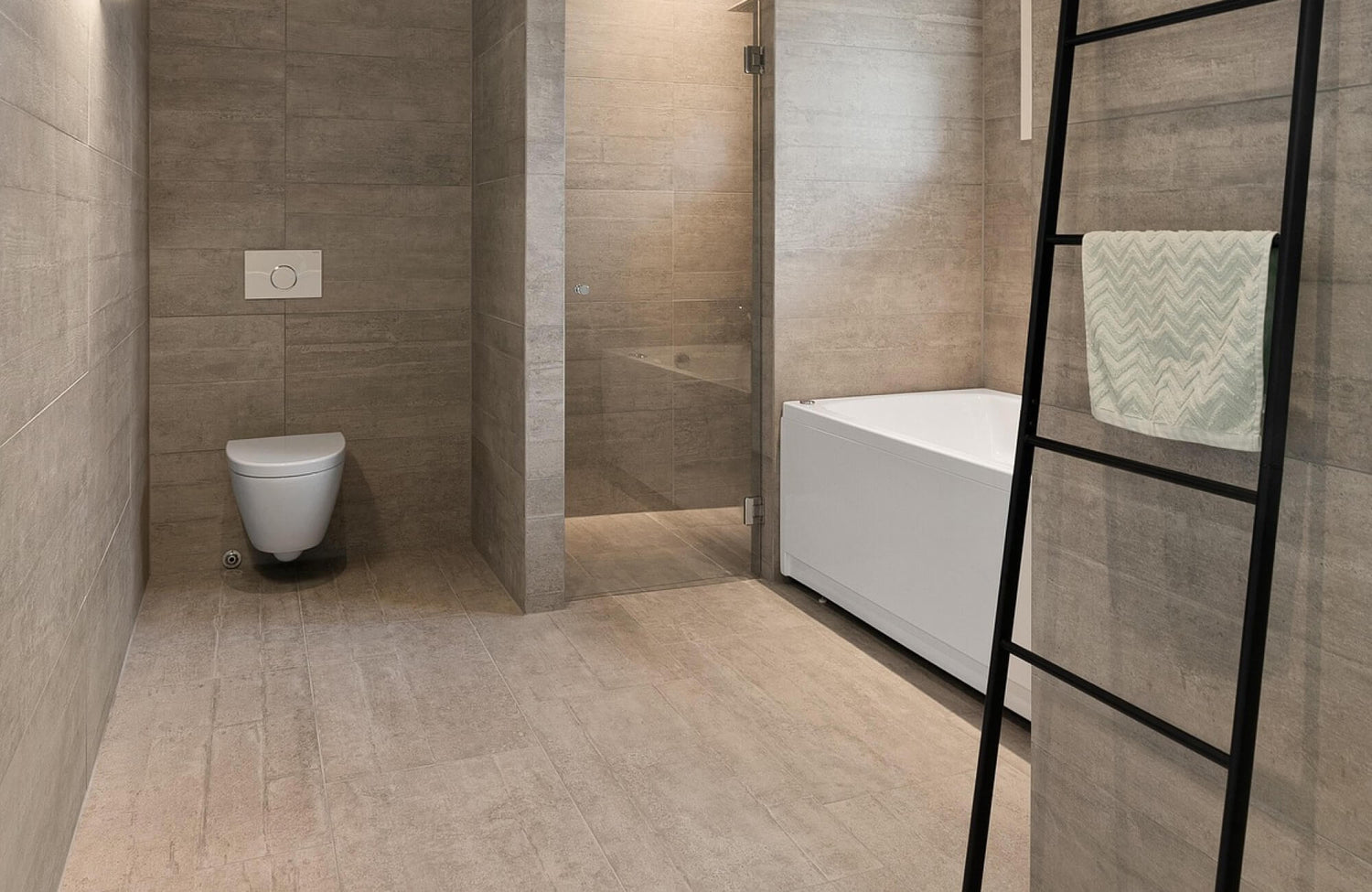
Stone look porcelain tiles capture the visual depth and variation of marble, limestone, and travertine while eliminating the moisture sensitivity associated with natural stone surfaces. Through advanced digital printing and surface texturing, these tiles achieve realistic veining and tonal consistency that remains stable over time. Because porcelain is inherently non-porous, it does not require sealing or specialized maintenance to protect against humidity. Its dense composition also resists water absorption, staining, and surface etching in high-moisture bathroom environments. This combination of aesthetic authenticity and technical resilience makes stone look porcelain like the Leona 24x24 Matte Porcelain Tile in Amani Grey (shown in the photo above) an ideal solution for achieving organic elegance with long-term durability.
Edward Martin’s augmented reality (AR) tool enhances the selection of stone look porcelain tiles by allowing you to visualize how veining, scale, and tone will appear within their actual bathroom space. This immersive experience helps ensure the chosen tile complements lighting conditions and surrounding finishes, reinforcing the natural appeal while maintaining moisture-resistant performance.

7. Textured Tiles
Textured bathroom tiles are designed to improve traction by introducing subtle surface variation that performs reliably in wet conditions. Rather than allowing water to sit on the surface, these textures help disperse moisture and reduce the risk of slipping underfoot. In showers and wet rooms, textured finishes provide added stability without relying solely on grout joints for grip. Many options are also engineered to meet wet-area slip resistance standards, ensuring both safety and compliance. At the same time, texture enhances visual depth and tactile interest, adding character to contemporary and minimalist bathroom designs.

8. Epoxy Grout
Epoxy grout provides a high-performance joint solution for bathroom tile installations exposed to constant moisture and humidity. Unlike traditional cement-based grout, epoxy is non-porous, preventing water absorption, staining, and chemical breakdown over time. This impermeable structure significantly reduces the risk of mold growth and discoloration in showers and wet areas. While epoxy grout requires more precise installation techniques, its long-term durability and low maintenance demands outweigh the added effort. As a result, epoxy grout plays a critical role in extending the hygiene, performance, and lifespan of tiled bathroom surfaces.

9. Large Format Tiles
Large format bathroom tiles significantly reduce the number of grout joints, which are often the most vulnerable areas for moisture penetration. By minimizing seams, these tiles limit opportunities for water infiltration and mildew development, contributing to a more hygienic surface over time. The expansive format also creates a sleek, uninterrupted appearance that enhances contemporary bathroom design. As featured in the picture above, the Shea 24×48 Matte Porcelain Tile in Dune illustrates this effect beautifully, where its broad proportions and soft neutral tone establish a calm, continuous visual flow throughout the space. When installed with properly integrated waterproofing systems beneath the surface, large format porcelain tiles like this perform exceptionally well in high-moisture environments while remaining easy to maintain.

10. Glass Tiles
Glass tiles offer a completely non-absorbent surface, making them inherently resistant to water, stains, and odors in moisture-heavy bathrooms. This quality makes them particularly effective for shower walls, backsplashes, and decorative accent areas where constant exposure to humidity is expected. In addition to their performance benefits, glass tiles also reflect light naturally, helping smaller bathrooms feel brighter and more spacious. Proper installation with compatible thinset adhesives and grout systems is essential to ensure long-term structural stability in humid conditions. When installed correctly, glass tiles deliver a refined, modern aesthetic alongside exceptional moisture resistance.

11. Cement Look Porcelain Tile
Cement look porcelain tiles capture the raw, industrial aesthetic of concrete while eliminating the material’s inherent vulnerability to moisture. Unlike traditional cement surfaces that readily absorb water and require frequent sealing, porcelain alternatives remain unaffected by humidity and temperature changes. These tiles offer consistent coloration and structural stability, even in bathrooms exposed to regular moisture. Their durability also makes them suitable for both bathroom floors and walls without the risk of surface degradation. As a result, cement look porcelain tiles provide a modern industrial appearance paired with long-term performance.

12. Subway Tiles
Subway tiles remain a classic bathroom choice, particularly when they are integrated with contemporary waterproofing systems designed for high-moisture environments. Their glazed surfaces naturally repel water and soap residue, allowing walls to stay bright and easy to clean without sacrificing durability. Our Claire 3×12 Glossy Ceramic Tile in Eggshell, as featured in the photo above, exemplifies this performance, where its soft, light-reflective finish enhances the bathtub surround while maintaining a clean, timeless look. When installed over waterproof backer boards or membrane systems and paired with mildew-resistant grout, subway tiles effectively prevent moisture migration behind the surface. Together, these modern upgrades allow subway tile installations to deliver lasting beauty while meeting today’s moisture-control standards.

13. Satin Finish Tiles
Satin finish tiles offer a soft, low-luster surface that sits between matte and polished, making them ideal for bathroom wall applications. Its subtle sheen gently reflects light, adding brightness and dimension without the glare associated with glossy finishes. Satin ceramic and porcelain tiles are commonly used for shower walls, backsplashes, and decorative features due to their balanced combination of elegance and practicality. Their smoother surface also allows for easier cleaning while still minimizing the appearance of water spots and streaking. As a result, satin finish tiles provide a refined, durable wall solution that performs well in humid and wet bathroom environments.

14. Hexagon Tiles
Hexagon tiles naturally interlock to create structurally stable floor installations, with their geometric form distributing weight evenly across the surface and reducing stress points in wet areas. When used in smaller formats, the increased grout contact enhances traction underfoot, making them particularly well-suited for shower floors and bathroom transitions. This combination of structural integrity and slip resistance allows hexagon tiles to perform reliably in high-moisture environments. At the same time, their distinctive shape introduces subtle visual movement that breaks up flat surfaces. The result is a floor design that delivers both functional performance and enduring visual character.

15. Drainage-Optimized Tile Layouts
Drainage-optimized tile layouts are specifically designed to manage water flow efficiently in high-moisture bathroom environments. By incorporating subtle slopes, directional tile placement, and strategic grout line orientation, these layouts guide water toward drains rather than allowing it to pool on the surface. This approach is especially effective in walk-in showers, wet rooms, and curbless installations where water exposure is constant. When paired with appropriately sized tiles and compatible grout systems, drainage-conscious layouts also help surfaces dry more quickly and reduce long-term moisture stress. As a result, thoughtful tile layout planning plays a critical role in preserving both surface appearance and structural performance over time.

16. Wood Look Porcelain Tiles
Wood look porcelain tiles deliver the visual warmth of hardwood while eliminating the moisture-related risks associated with natural wood. Because porcelain does not swell, warp, or decay in humid conditions, it performs reliably in bathrooms where moisture exposure is constant. As displayed in the picture above, Edward Martin’s Jameson 8×48 Matte Porcelain Tile in Camel exemplifies this balance, offering elongated planks and a warm, natural tone that brings a grounded, organic feel to bathroom floors and walls. Advanced texturing techniques also replicate authentic wood grain while maintaining the slip resistance required for wet environments. The result is a spa-inspired bathroom aesthetic that combines inviting warmth with long-lasting, moisture-resistant performance.

17. Slip-Rated Tile
Slip-rated tiles are tested to meet established traction standards for wet environments, ensuring they perform safely under real bathroom conditions. Selecting tiles with appropriate DCOF ratings improves stability on bathroom floors and in shower areas where water is frequently present. These ratings also indicate how reliably a surface maintains grip when wet, helping to reduce the likelihood of slips. By prioritizing safety-focused tile selection, designers can significantly lower accident risks without sacrificing visual appeal. Performance-rated materials ultimately support bathroom spaces that are both aesthetically refined and responsibly designed.

18. Vertical Tile Layouts
Vertical tile layouts reduce the number of horizontal grout lines where water typically accumulates, allowing moisture to run off more efficiently along the surface. This improved runoff promotes faster drying on shower walls, which in turn helps limit prolonged moisture exposure. As surfaces dry more quickly, soap residue and mineral buildup are less likely to develop or discolor grout over time. Beyond performance, the vertical orientation naturally draws the eye upward, subtly enhancing the perceived height of the space. Together, these functional and visual benefits make vertical tile layouts a smart choice for effective moisture management.

19. Dark-Toned Tiles
Dark-toned bathroom tiles are especially effective at concealing water spots, mineral deposits, and soap residue, allowing surfaces to maintain a polished appearance between routine cleanings. Deeper hues paired with matte finishes help diffuse light and minimize glare, which reduces the visibility of surface marks caused by frequent moisture exposure. A large format option like our Marlow 24x48 Matte Porcelain Tile in Titanium, as featured in the photo above, enhances this effect by limiting grout lines while introducing subtle movement and tonal variation that adds visual depth rather than flat darkness. Its stone look texture and dark metallic gray color create a grounded, spa-like atmosphere that feels rich without becoming heavy. When balanced with warm lighting and refined fixtures, dark porcelain tiles deliver a sophisticated, low-maintenance solution that performs beautifully in high-humidity bathroom environments.

20. Antimicrobial Tile Glazes
Antimicrobial tile glazes are engineered to inhibit bacterial and mold growth on tile surfaces, making them particularly valuable in high-humidity bathroom environments. By actively resisting microbial buildup, these treatments enhance overall hygiene without altering the tile’s appearance, color, or surface texture. This invisible layer of protection helps maintain cleaner surfaces between routine cleanings. Over time, antimicrobial tiles like Edward Martin’s Nora 8x48 Matte Porcelain Mosaic Tile in Macchiato, as shown in the photo above, contribute to healthier indoor environments by reducing the conditions that promote mold and mildew. When paired with moisture-resistant materials, they provide an added layer of long-term performance and durability.

21. Porcelain Slabs
Porcelain slabs create expansive bathroom surfaces with minimal grout lines, resulting in a cleaner, more seamless appearance. By reducing the number of joints, they limit potential moisture intrusion points while also simplifying long-term cleaning and maintenance. These large format slabs are commonly applied to shower walls, where they deliver a sleek, architectural aesthetic with fewer visual interruptions. Their dense, low-porosity composition ensures consistent durability even under constant humidity and direct water exposure. Because of their size and precision requirements, professional installation is essential to guarantee proper handling, alignment, and long-term performance.

22. Neutral Tile Palettes
Neutral bathroom tile colors remain visually relevant even as design trends evolve, offering a dependable foundation for long-term interiors. Shades such as warm gray, beige, and soft taupe seamlessly complement a wide range of fixtures, finishes, and architectural styles. Rather than relying on bold color saturation, neutral palettes highlight surface texture, material quality, and finish variation. These tones also enhance light reflection in moisture-heavy spaces, helping bathrooms feel brighter and more open. Together, these qualities make neutral tile selections a timeless strategy that supports lasting design flexibility without visual fatigue.

23. Tiled Shower Niches with Proper Sealing
Shower niches must be fully waterproofed to prevent moisture intrusion behind wall assemblies, where hidden water exposure can lead to structural damage. Pre-formed niche systems streamline this process by integrating waterproofing components while maintaining proper slopes for efficient drainage. Careful tile alignment also ensures visual continuity across shower surfaces, preventing the niche from appearing visually disconnected. Thorough sealing at all edges and corners eliminates areas where standing water and mold can develop. When executed correctly, tiled shower niches deliver both functional storage and long-term durability within high-moisture environments.

24. Sustainable Tiles with Moisture Stability
Eco-friendly bathroom tiles are increasingly engineered to meet strict moisture resistance standards without compromising performance or durability. Many modern porcelain tiles incorporate recycled content while retaining the dense structure needed to withstand prolonged humidity and direct water exposure. These materials also resist water absorption, surface degradation, and staining even in high-moisture environments. In addition to material performance, sustainable manufacturing processes help reduce environmental impact throughout production. Together, a moisture-stable composition and responsible sourcing support long-term tile longevity, aligning with sustainable design goals.

25. Professional Installation for Lasting Results
Even the highest-quality bathroom tiles rely on proper installation techniques to perform as intended in high-moisture environments. From correct thinset selection to the integration of movement joints and continuous waterproofing systems, each step plays a critical role in managing moisture and preventing long-term failure. Certified installers also apply industry standards to ensure tiles accommodate structural movement and environmental stress over time. This level of professional execution significantly reduces issues caused by improper substrate preparation or moisture migration. Ultimately, expert installation safeguards both the visual integrity and structural durability of the entire bathroom tile system.
Designing Bathrooms That Endure Moisture and Time
Choosing the right bathroom tile is essential for creating spaces that withstand constant humidity while maintaining lasting beauty. Moisture-resistant materials, slip-rated finishes, and proper waterproofing systems work together to prevent long-term damage. Thoughtful tile selection also reduces maintenance demands and improves safety in wet environments. When paired with professional installation, high-performance tiles deliver durability without compromising design. Investing in bathroom tile solutions engineered for high-moisture spaces ensures functional elegance for years to come.
Edward Martin’s request tile sample service allows you to experience tile texture, finish, and scale firsthand before finalizing a bathroom design. This step supports more confident material selection, ensuring moisture-resistant tiles perform as beautifully in real life as they do in concept.