Checkered floors have long held a special place in kitchen design, evoking a timeless charm that transcends fleeting trends. This classic pattern, with its simple yet striking visual impact, has captivated homeowners and designers for centuries. The reasons behind this enduring popularity are multifaceted, intertwining historical significance with practical considerations and a timeless aesthetic appeal. From their origins in ancient civilizations to their modern-day resurgence, checkered floors have evolved while maintaining their distinctive character.
This article explores the various facets of this enduring design choice, delving into its historical roots, practical advantages, diverse stylistic interpretations, and the enduring allure that continues to make checkered floors a beloved feature in kitchens worldwide.

The Timeless Classic of Checkered Floors
Checkered floors have been celebrated for centuries as a design choice that seamlessly blends tradition with modern appeal. Their iconic pattern exudes both elegance and versatility, making them a popular option for diverse spaces and styles. More than just a decorative element, checkered floors tell a story of enduring charm and cultural adaptability. This pattern has stood the test of time, proving its relevance in both classic and contemporary design.
Beyond their aesthetic appeal, the iconic black-and-white or multi-colored tiles have a functional role, creating spaces that feel vibrant and dynamic. To fully appreciate the relevance of checkered floors today, it’s important to explore their origins, psychological impact, and the various cultural styles they have influenced.
The Roots of Checkered Floors
The history of checkered floors stretches back centuries, with evidence of their use in ancient civilizations. Roman mosaics often incorporated geometric patterns, including checkered designs, to enhance the elegance of their public and private spaces. These patterns symbolized order and symmetry, reflecting the Roman fascination with balance in architecture.
In medieval Europe, checkered floors became a common feature in monasteries, castles, and other significant buildings. Crafted from durable materials like terracotta and stone, these floors not only offered practical durability but also conveyed a sense of grandeur and authority. During the Renaissance, the revival of classical aesthetics led to the resurgence of checkered floors in Italian villas and palazzos. Their symmetrical designs mirrored the artistic and architectural innovations of the time.
Checkered Floors Across Cultures and Styles
From historical roots to modern contexts, checkered floors have transcended geographical boundaries and cultural contexts, adapting to a wide array of architectural styles. In Spanish colonial architecture, for instance, checkered tiles reflect Moorish design influences. These tiles were often paired with vibrant colors to create interiors that balanced energy and tradition.
In modern kitchens, checkered floors have found expression in materials such as porcelain and vinyl. This versatility allows homeowners to adapt the classic pattern to different styles, from rustic farmhouses to sleek, contemporary interiors. Each cultural interpretation reflects a unique aesthetic, yet all celebrate the enduring allure of the checkered design.
The Psychology of Checkered Floors
Checkered floors are more than just a visual feature—they exert a subtle yet powerful psychological influence. The alternating squares create a dynamic rhythm that makes spaces feel larger and more expansive, an effect particularly beneficial in smaller kitchens. The interplay of light and shadow enhances this optical illusion, lending a sense of openness to compact areas.
Moreover, the bold contrast of checkered patterns injects energy and vitality into a room. Kitchens are often the heart of a home, and this dynamic environment can enhance productivity and creativity during culinary activities. The vibrant visual impact of checkered floors contributes to their timeless appeal, making them a favored choice for homeowners seeking both practicality and style.

Practicality Meets Aesthetics
While checkered floors are undeniably stylish, their popularity extends beyond aesthetics. This design choice also offers practical advantages, such as masking imperfections, ensuring durability, and creating clearly defined zones within a kitchen.
Camouflaging Dirt and Spills
One of the practical advantages of checkered floors is their ability to mask dirt and spills, making them an ideal choice for busy areas like kitchens. The alternating squares of color create a visual pattern that can effectively camouflage minor imperfections, making it easier to maintain a clean and tidy appearance even in busy households.
Durability and Maintenance
Checkered floors are renowned for their durability and ease of maintenance. The tiles used in these floors are often made from high-quality materials, such as porcelain or natural stone, which are resistant to wear and tear, scratches, and stains. This durability ensures that checkered floors can withstand the rigors of daily use, maintaining their appearance for years to come.
In addition to their durability, checkered floors are relatively easy to clean. The grout lines between the tiles can be cleaned with a simple solution of water and mild detergent, while the tiles themselves can be mopped or swept. For best results, it is advisable to follow the manufacturer’s recommendations for cleaning and maintenance, as specific materials may have unique requirements. This low-maintenance nature makes checkered floors a practical choice for busy households.
Defining Zones
Checkered floors can effectively define different zones within a kitchen, such as cooking, dining, and preparation areas, creating both visual interest and functional separation. Designers often achieve this by varying the color, size, or pattern of tiles in each zone. For instance, darker tones like the Leona 12x12 Checkerboard Matte Porcelain Tile in Marfil and Nero Marquina, as shown in the photo above, can anchor the cooking area, providing a bold and grounded look, while lighter options such as the Leona 24x24 Checkerboard Matte Porcelain Tile in Calacatta and Amani Grey add an airy and refined touch to the dining space. This strategic use of tile variations enhances the kitchen's overall aesthetics and practicality, delivering a cohesive yet distinct design.

Playing with Patterns
Checkered floors offer endless possibilities for creativity. From color combinations to tile sizes and unconventional layouts, homeowners can customize their floors to suit their personal style.
Reimagining the Classic Checkerboard
While the traditional checkerboard pattern is instantly recognizable, modern kitchens often reinterpret it in subtle yet impactful ways. Instead of relying solely on stark contrasts, designers increasingly experiment with softer tonal pairings or natural stone variations that introduce depth without overwhelming the space. Shades such as warm beige and cream, muted charcoal and gray, or marble-inspired tones create a more refined interpretation of the classic pattern while still preserving its geometric rhythm.
These nuanced combinations allow the checkered design to feel more integrated with contemporary interiors. Rather than dominating the room, the floor becomes a layered design element that complements cabinetry, countertops, and surrounding finishes. The result is a balanced aesthetic where the pattern retains its iconic character while adapting gracefully to modern sensibilities.
Playing with Scale and Layout
Beyond color choices, the scale and orientation of the tiles can significantly transform how a checkered floor interacts with the surrounding space. Larger tiles often create a more open and streamlined appearance, allowing the pattern to read as bold but uncluttered. This approach is particularly effective in kitchens where designers want the checkerboard to feel sophisticated rather than overly busy.
Large format options such as Edward Martin’s Brody 24x24 Checkerboard Matte Porcelain Tile in Dune and Cliff highlight how scale can elevate the classic pattern. Featuring warm beige and dark brownish-gray squares arranged in generous 24x24 tiles, the design emphasizes the checkerboard layout while maintaining a balanced presence in the room. The larger tile format allows the pattern to stand out without overwhelming surrounding elements like cabinetry or countertops, making it especially well-suited for open kitchens or spaces that benefit from a more expansive visual flow.
Layout variations further expand the design possibilities. Rotating the checkerboard on a diagonal introduces movement and visual energy, guiding the eye across the room and subtly shifting how the kitchen’s proportions are perceived. In more contemporary spaces, designers sometimes extend the pattern into adjacent areas or align it with architectural features, allowing the floor to quietly reinforce the overall flow and structure of the space.
Introducing Subtle Variations and Modern Twists
Today’s interpretations of checkered floors also explore creative deviations from the strict alternating-square format. Instead of using sharply contrasting tiles, designers may alternate different finishes, textures, or shades within the same color family. This approach preserves the recognizable structure of the checkerboard while creating a softer and more sophisticated visual effect.
Some kitchens take this experimentation further by blending geometric influences into the layout. Slightly varied shapes, elongated rectangles, or softly veined natural stones can reinterpret the pattern without losing its sense of order. These contemporary twists allow homeowners to embrace the timeless appeal of checkered flooring while tailoring the design to reflect a more personalized and modern aesthetic.

Design Inspiration with Checkered Floors
There are many ways to incorporate checkered floors into a kitchen, whether through modern interpretations, nostalgic influences, or creative design combinations. Because of its recognizable geometry, the pattern naturally anchors a room while still allowing surrounding materials, textures, and finishes to shape the overall style.
Contemporary Kitchen Pairings
In modern kitchens, checkered floors often serve as a visual counterbalance to streamlined cabinetry and minimalist finishes. Clean-lined cabinets, integrated appliances, and simple hardware create a calm backdrop where the geometric rhythm of the floor can quietly introduce movement and contrast. Rather than overwhelming the space, the pattern adds structure that complements the intentional simplicity of contemporary interiors.
Neutral palettes are also especially effective in this context. Soft gray, beige, or natural stone-inspired tiles allow the checkerboard design to remain visually interesting while maintaining the understated elegance often associated with modern kitchens. When paired with materials like quartz countertops, matte cabinetry, or brushed metal fixtures, the floor becomes a subtle design feature that reinforces the room’s overall harmony.
Retro-Inspired Kitchen Spaces
Checkered floors are also closely associated with retro kitchen design, where their bold geometry reflects the charm of mid-century diners and vintage homes. In these spaces, the classic black-and-white checkerboard often takes center stage, immediately evoking a sense of nostalgia and character.
To enhance this atmosphere, designers frequently incorporate retro elements such as pastel cabinetry, chrome hardware, rounded-edge furniture, and patterned textiles. Warm lighting and decorative accents further reinforce the vintage mood, allowing the checkered floor to anchor the design while the surrounding details build a cohesive throwback aesthetic.
Eclectic Kitchen Expressions
For homeowners who enjoy mixing styles and influences, checkered floors provide a versatile base for eclectic kitchen design. Because the pattern is both structured and visually distinctive, it can unify a wide variety of materials, colors, and decorative elements without making the space feel disorganized.
In eclectic kitchens, checkered floors often coexist with open shelving, bold wall colors, or textured backsplashes. Vintage pieces may also sit alongside contemporary fixtures, creating a layered environment that reflects personality and creativity. The checkerboard pattern helps maintain visual balance, grounding the room even as different design influences come together.
Blending Checkered Floors with Natural Materials
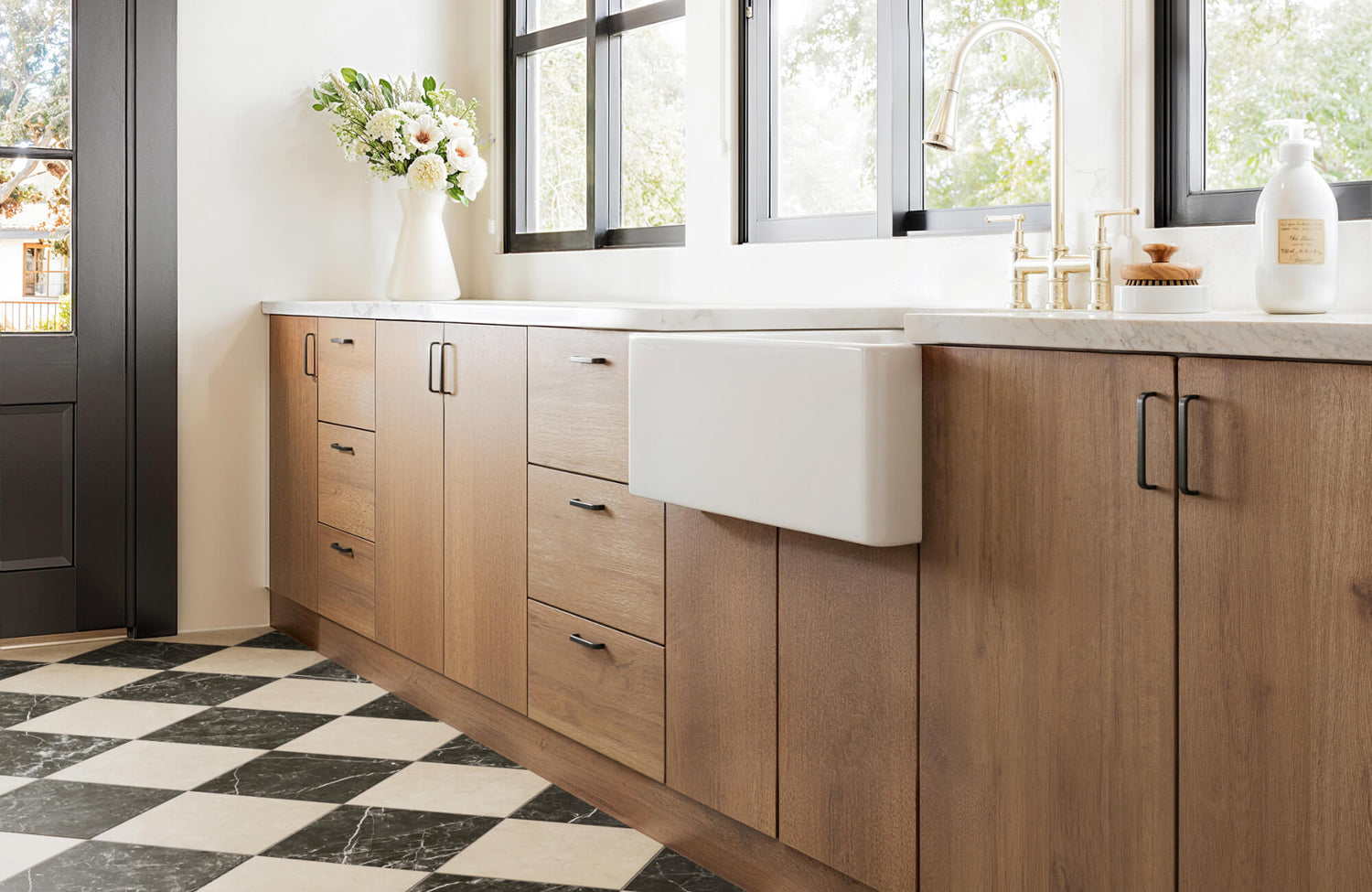
Another effective way to incorporate checkered floors is by pairing them with natural materials that soften the geometric pattern. Wood cabinetry, stone countertops, and woven textures introduce warmth and organic character that contrast beautifully with the floor’s structured layout. This balance allows the pattern to feel inviting rather than overly formal, making the kitchen comfortable and visually layered.
Tile floors like our Leona 24x24 Checkerboard Matte Porcelain Tile in Calacatta and Marfil illustrate this approach particularly well. Featuring white marble look tiles paired with beige squares in a generous 24x24 format, the checkerboard pattern adds visual rhythm while remaining calm and refined. As featured in the kitchen photo above, the soft tones blend naturally with light wood finishes, neutral cabinetry, and stone surfaces, allowing the floor to complement the surrounding materials instead of overpowering them.
This combination of structured geometry and organic textures creates a balanced environment where the checkered pattern provides visual interest while natural elements maintain warmth and cohesion throughout the kitchen.
Edward Martin also offers an augmented reality (AR) tool that lets you preview checkerboard tiles directly in your kitchen before making a decision. Simply use your device to visualize how different patterns and colors will look in your own space.
Coordinating Checkered Floors with Kitchen Features
Thoughtful coordination with surrounding architectural elements can further elevate the impact of checkered flooring. Designers often align the pattern with kitchen islands, dining areas, or cabinetry layouts to create a sense of visual continuity throughout the room.
For example, extending the checkerboard beneath a central island or breakfast nook can subtly define these areas while maintaining an open and cohesive floor plan. Similarly, selecting complementary finishes for countertops, backsplashes, or lighting fixtures also allows the floor pattern to integrate seamlessly into the broader design. Through these intentional connections, checkered floors become an integral part of the kitchen’s overall composition rather than a standalone decorative feature.

Making a Statement with Checkered Floors
Checkered floors are more than just a functional flooring option; they are a design feature that can elevate a kitchen’s overall character. Because of their distinctive geometry, they naturally draw attention while still providing a structured foundation for the surrounding design elements.
Letting the Floor Anchor the Design
In many kitchens, the checkered floor acts as a visual anchor that grounds the entire space. Its repeating pattern establishes a clear sense of structure, allowing other design elements, such as cabinetry, lighting, and decorative accents, to build upon a cohesive foundation. Rather than competing with surrounding features, the floor quietly organizes the room’s visual composition.
When paired with balanced materials and a complementary palette, the checkerboard layout can also unify the kitchen without dominating it. The eye naturally follows the alternating pattern across the room, creating a sense of order that supports the overall design while still maintaining a distinctive presence.
Framing Key Kitchen Areas
Checkered floors can also be used to highlight specific architectural features within the kitchen. By extending the pattern beneath an island, breakfast nook, or central preparation area, designers can subtly emphasize these spaces while keeping the room visually connected.
This approach works particularly well in open-plan kitchens, where flooring helps guide movement and spatial flow. Instead of relying on walls or partitions, the patterned floor provides a gentle visual cue that defines areas of activity while maintaining an open and cohesive environment.
Balancing Bold Patterns with Subtle Surroundings
Because a checkerboard floor naturally draws attention, surrounding design choices often focus on creating balance. Neutral cabinetry, understated countertops, and soft lighting help temper the boldness of the pattern, allowing the floor to stand out without overwhelming the kitchen. This approach also ensures that the pattern remains visually engaging while still supporting a calm and cohesive atmosphere.
Tiles such as our Leona 12x12 Checkerboard Matte Porcelain Tile in Marfil and Amani Grey demonstrate how softer color pairings can achieve this balance. With beige and gray squares arranged in a classic checkerboard format, the pattern introduces contrast while maintaining a refined, understated look. As shown in the kitchen photo above, the muted tones integrate smoothly with darker cabinetry, light wall finishes, and natural wood accents, allowing the floor to add structure and visual interest without dominating the overall design.
When the surrounding palette remains restrained, the checkered floor becomes a thoughtful design feature rather than a competing focal point. The result is a kitchen that feels both dynamic and harmonious, where pattern and materials work together to create a polished and inviting space.
Creating Visual Continuity Throughout the Space
Another way checkered floors make a statement is by reinforcing visual continuity across the kitchen. The repeating pattern naturally guides the eye through the space, helping connect different areas such as cooking zones, seating areas, and walkways.
When aligned thoughtfully with cabinetry lines or architectural features, the checkerboard layout becomes part of the room’s structural rhythm. This subtle coordination also enhances the overall sense of flow, allowing the floor to function not only as a decorative element but also as a unifying design feature that ties the entire kitchen together.
The Lasting Appeal of Checkered Floors
The timeless quality of checkered floors has solidified its place as a beloved feature in kitchen design, effortlessly adapting to both traditional and modern aesthetics. Unlike fleeting trends, this classic pattern has remained relevant across generations, offering a unique blend of elegance and versatility. Whether paired with rustic farmhouse elements or sleek contemporary designs, checkered floors continue to captivate homeowners and designers alike with their ability to blend aesthetics and functionality seamlessly.
For those considering incorporating checkered floors into their kitchen, consulting with a design professional can provide valuable insights into color schemes, tile materials, and layout options that best suit your space. Personalized guidance ensures the design aligns with your vision and enhances the overall appeal of your kitchen. With expert advice, you can confidently bring your ideas to life, creating a space that harmonizes timeless charm with modern practicality.