Checkered flooring has stood the test of time, gracing everything from grand European palaces to retro diners and modern minimalist homes. Its striking contrast and geometric precision create an instantly recognizable pattern that blends nostalgia with contemporary style. But beyond its visual appeal, checkered flooring offers practical benefits like durability, easy maintenance, and the ability to enhance spatial perception.
Whether you’re aiming for a bold statement or a timeless style, checkered flooring is a design choice that balances aesthetics with function. In this article, we’ll explore the key reasons why checkerboard remains a smart and versatile choice for modern interiors.

A Timeless and Versatile Design Choice
Checkered flooring remains a popular choice for its ability to balance classic appeal with modern adaptability. Its clean geometry and contrasting pattern make it easy to integrate into a wide range of interior styles, whether as a focal point or a subtle foundation.
The Appeal of Classic Patterns
The checkered pattern carries a sense of familiarity and timeless appeal, making it a dependable choice that remains relevant across changing trends. High-contrast combinations like black and white can create a bold visual statement, while softer palettes such as beige and gray offer a more refined, understated look. Its clean, geometric simplicity allows it to function effortlessly as either a focal point or a subtle design foundation.
Works Across Multiple Interior Styles
Checkered flooring transitions seamlessly across a range of interior styles, from traditional and vintage to modern and minimalist spaces. Its versatility comes from how easily it can be adapted through color, material, and scale, allowing it to stand out or blend naturally into the space. This adaptability makes checkered flooring a practical and design-forward choice for a variety of settings.
A refined example can be seen with Edward Martin’s Leona 12x12 Checkerboard Matte Porcelain Tile in Calacatta and Nero Marquina, as shown in the photo featured above, where the classic black-and-white palette is reinterpreted within a warm, modern farmhouse setting—balancing crisp contrast with natural wood tones and soft neutrals for a cohesive, updated look.

Enhancing Space and Visual Flow
Beyond its visual appeal, checkered flooring can shape how a space is perceived and experienced. With thoughtful use of scale, color, and layout, it can guide movement, define areas, and create a more open, balanced feel throughout the space.
Creating Visual Interest and Focal Points
The bold, geometric nature of checkered flooring naturally draws the eye, making it an effective way to anchor a room. Its structured pattern creates a clear visual foundation that helps organize the overall layout. In open-plan spaces, it can define zones without walls or partitions, subtly guiding how the space flows and functions. It also works well to highlight key areas such as dining spaces, entryways, or living rooms. By adding contrast and rhythm, checkered flooring enhances visual interest while maintaining a sense of order and cohesion.
Expanding the Perception of Space
Lighter color combinations, such as white and beige or soft gray tones, paired with larger tile formats, can make a room feel more open and expansive. These softer contrasts reflect more light, helping brighten the space and reduce visual weight. Diagonal layouts further enhance this effect by drawing the eye along longer sightlines, making narrow areas appear wider. In smaller rooms, this approach can create a more airy and comfortable atmosphere. Altogether, these design choices make checkered flooring a practical solution for improving spatial perception in compact or challenging layouts.
Adding Depth and Balancing Proportions
Darker tones and high-contrast combinations, such as black and white or dark gray and white, introduce depth and dimension, helping larger spaces feel more grounded and defined. At the same time, these bold contrasts create a strong visual framework that anchors the room and adds a sense of structure. In larger or more open areas, they can break up expansive surfaces, making the space feel more intimate and visually balanced. Additionally, the pattern helps guide the eye across the room, which can be especially useful in spaces with irregular layouts or uneven proportions. As a result, by establishing a clear visual rhythm, checkered flooring makes it easier to achieve a cohesive and well-proportioned interior.
This effect is clearly illustrated with Edward Martin’s Leona 24x24 Checkerboard Matte Porcelain Tile in Calacatta and Nero Marquina, as shown in the photo featured above, where the bold contrast and large-format layout ground the open bathroom while adding structure and visual balance to the overall design.

Practical Benefits for Everyday Use
Checkered flooring is valued not only for its design but also for its everyday functionality. Its durability, ease of maintenance, and adaptability make it a practical choice for spaces that see regular use.
Durable Material Options
Checkered flooring is available in a range of materials, including porcelain, ceramic, vinyl, and natural stone, each offering distinct performance benefits. Porcelain and ceramic are among the most popular choices due to their strength, moisture resistance, and ability to withstand daily wear. These materials are particularly well-suited for busy areas, where long-term durability is essential. Choosing the right material ensures the flooring not only looks good but also performs reliably over time.
A well-balanced example is shown in the photo above with Edward Martin’s Palmer 12x12 Checkerboard Matte Porcelain Tile in White and Grey. Its durable porcelain construction supports everyday use, while the soft contrast creates a clean, refined look suited for kitchen spaces.
Easy Maintenance and Longevity
One of the key advantages of checkered flooring is its low-maintenance nature. The alternating pattern helps conceal everyday dirt, scuffs, and minor imperfections, making upkeep more manageable compared to solid-color floors. Regular cleaning is typically sufficient to maintain its appearance, especially with durable materials like porcelain or ceramic. With proper care, checkered flooring can retain its visual appeal and functionality for many years.
Performance in Busy and Functional Spaces
Checkered flooring performs exceptionally well in areas that experience frequent use, such as kitchens, bathrooms, entryways, and even commercial settings. Its resistance to moisture, stains, and wear makes it a practical solution for spaces where durability is a priority. In addition, slip-resistant finishes and textured surfaces can enhance safety, particularly in wet or busy environments. This combination of resilience and functionality makes it a dependable choice for everyday use.
A piece like our Blair 24x24 Checkerboard Polished Porcelain Tile in Oniciata Grey and Volakas White is a great example. Made from durable porcelain with balanced contrast that offers long-lasting performance while maintaining a refined look suited for frequently used areas.
Comfort and Temperature Adaptability
Aside from durability, checkered flooring also offers flexibility in terms of comfort and temperature. Materials like porcelain tile and stone naturally stay cool, making them ideal for warmer climates or sunlit spaces. In cooler environments, they can also be paired with underfloor heating to provide consistent warmth. This adaptability allows checkered flooring to maintain comfort across different conditions while continuing to meet practical needs.

Flexible Design and Application Options
Checkered flooring offers a high level of design flexibility, allowing it to adapt to different layouts, styles, and functional needs. Its customizable patterns and wide range of applications make it easy to tailor the look to suit both aesthetic preferences and practical requirements.
Customizable Layouts and Tile Sizes
Checkered flooring can be easily customized through tile size, layout direction, and color combinations. Larger tiles can create a bold, modern statement with a more streamlined look, while smaller patterns offer a finer, more classic detail. Layout choices, such as straight or diagonal placement, further influence how the pattern interacts with the space. This level of flexibility allows the design to be tailored to both the room’s scale and the desired visual effect.
Suitable for Various Spaces
Checkered flooring adapts well to a wide range of environments, including kitchens, bathrooms, hallways, and living areas. Its structured pattern provides consistency, making it easy to carry the design across multiple rooms. In open-plan layouts, it can help create a sense of continuity while still defining individual zones. This adaptability makes it a cohesive choice for both single-room updates and whole-home designs.
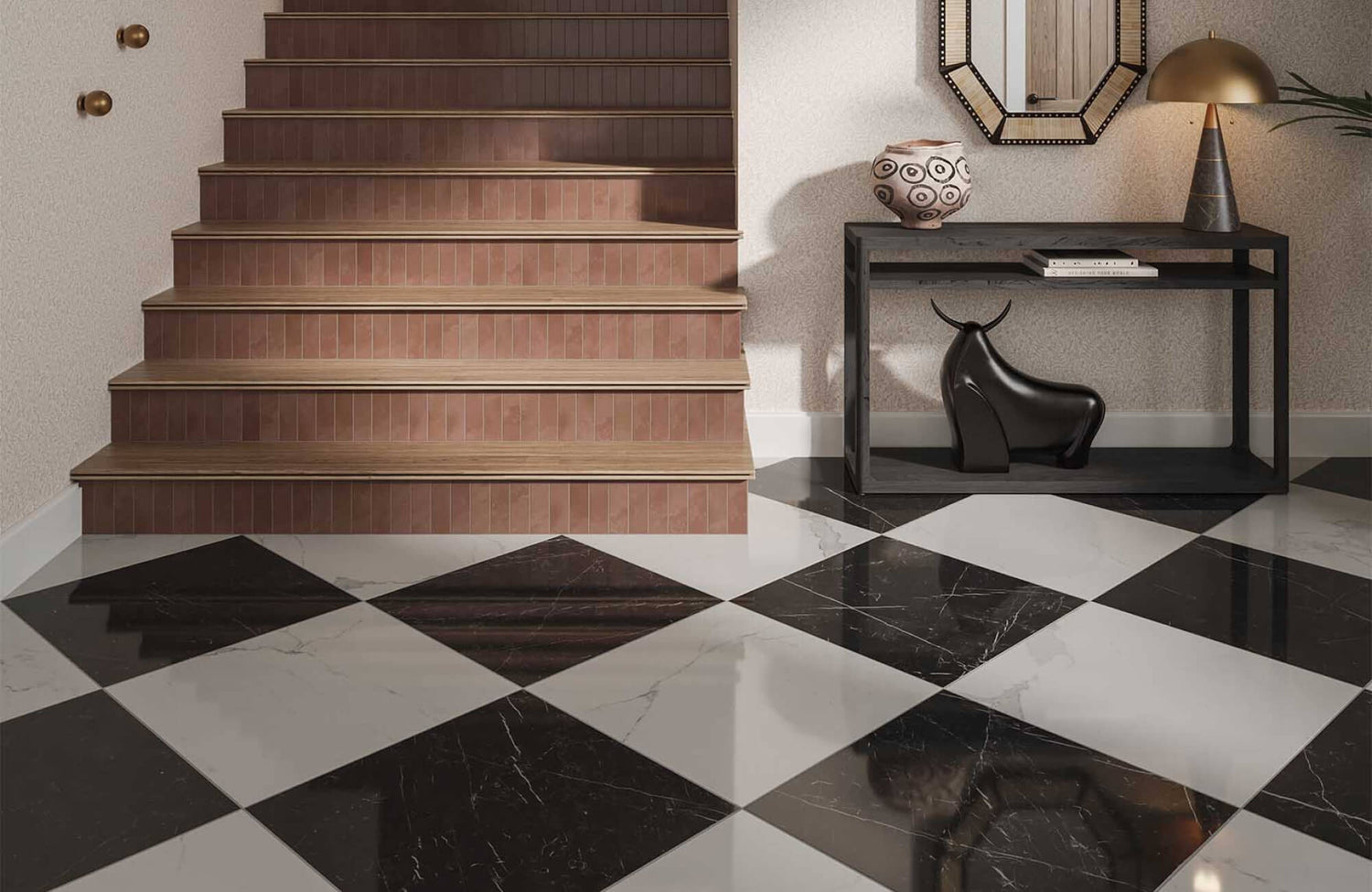
A refined example can be seen with Edward Martin’s Leona 24x24 Checkerboard Matte Porcelain Tile in Marfil and Amani Bronze, as shown in the photo featured above, where its warm, neutral tones complement the architectural setting while seamlessly connecting the entryway and seating area into a cohesive, well-balanced space.
Blending Style with Function
Aside from its visual appeal, checkered flooring effectively combines style with everyday functionality. The pattern can be used to highlight architectural features, define specific areas, or guide movement within a space. At the same time, it maintains a clean and organized look without relying on additional design elements. This balance makes it a practical solution that enhances both the appearance and usability of a room.
The Benefits of Choosing Checkered Flooring
Checkered flooring is a strong choice for any space because of its timeless design and practical performance. Its versatility across styles, ability to enhance spatial perception, and durable material options make it suitable for both aesthetic and everyday needs. Whether you’re updating a single room or designing an entire home, checkered flooring offers a balanced solution that brings visual interest, functionality, and long-term value to your space.
If you’re ready to explore your options, you can try our AR tool to visualize different checkered flooring styles in your own space or contact us for personalized guidance tailored to your project.