Bathroom trends may shift over time, but one design decision continues to spark debate: should you choose glossy or matte tiles? While both finishes offer distinct advantages, the right choice depends on how you want your bathroom to look, feel, and perform on a daily basis.
Glossy tiles are often associated with brightness and polish, reflecting light to create a luminous, upscale effect. Matte tiles, on the other hand, offer a softer, more grounded aesthetic that prioritizes subtlety and slip resistance. Beyond visual appeal, practical considerations such as maintenance, moisture exposure, and lifestyle needs are equally important in the decision-making process. In this guide, we compare glossy and matte bathroom tiles across aesthetics, durability, safety, and upkeep to help you determine which finish best suits your space.

Aesthetic Appeal
The finish you select has an immediate impact on your bathroom’s atmosphere. Glossy and matte surfaces interact with light differently, shaping how spacious, dramatic, or calming the room feels.
Creating a Modern Minimalist Look
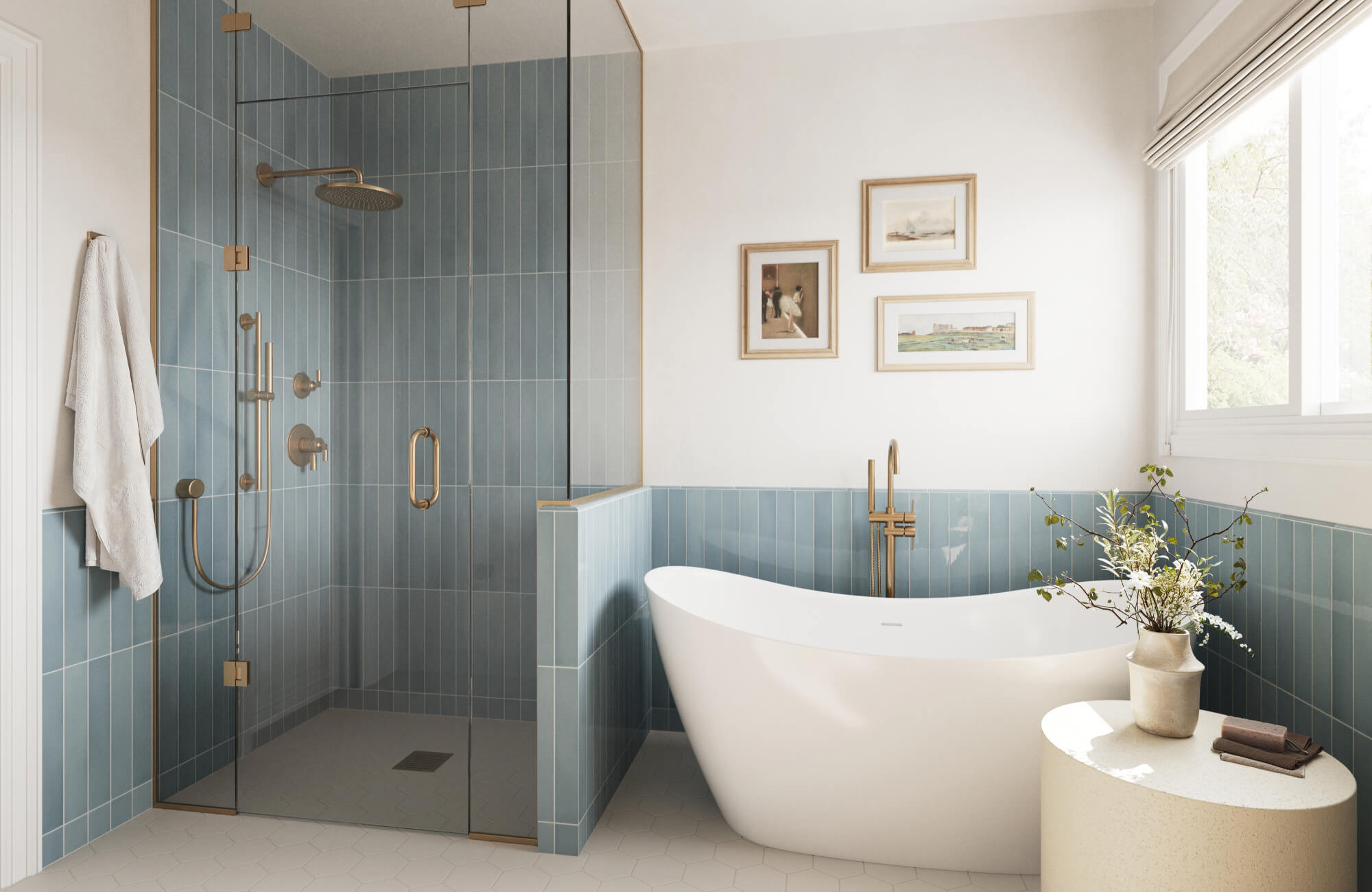
For bathrooms that lean toward clean lines and visual openness, glossy tiles enhance brightness by reflecting both natural and artificial light. This quality makes them especially effective in smaller bathrooms where light amplification creates a more expansive feel. Edward Martin’s Teagan 3x12 Glossy Ceramic Tile in Pearl, shown in the image above, demonstrates how a softly reflective surface and elongated format can emphasize linear simplicity while maintaining warmth and refinement on bathroom walls.
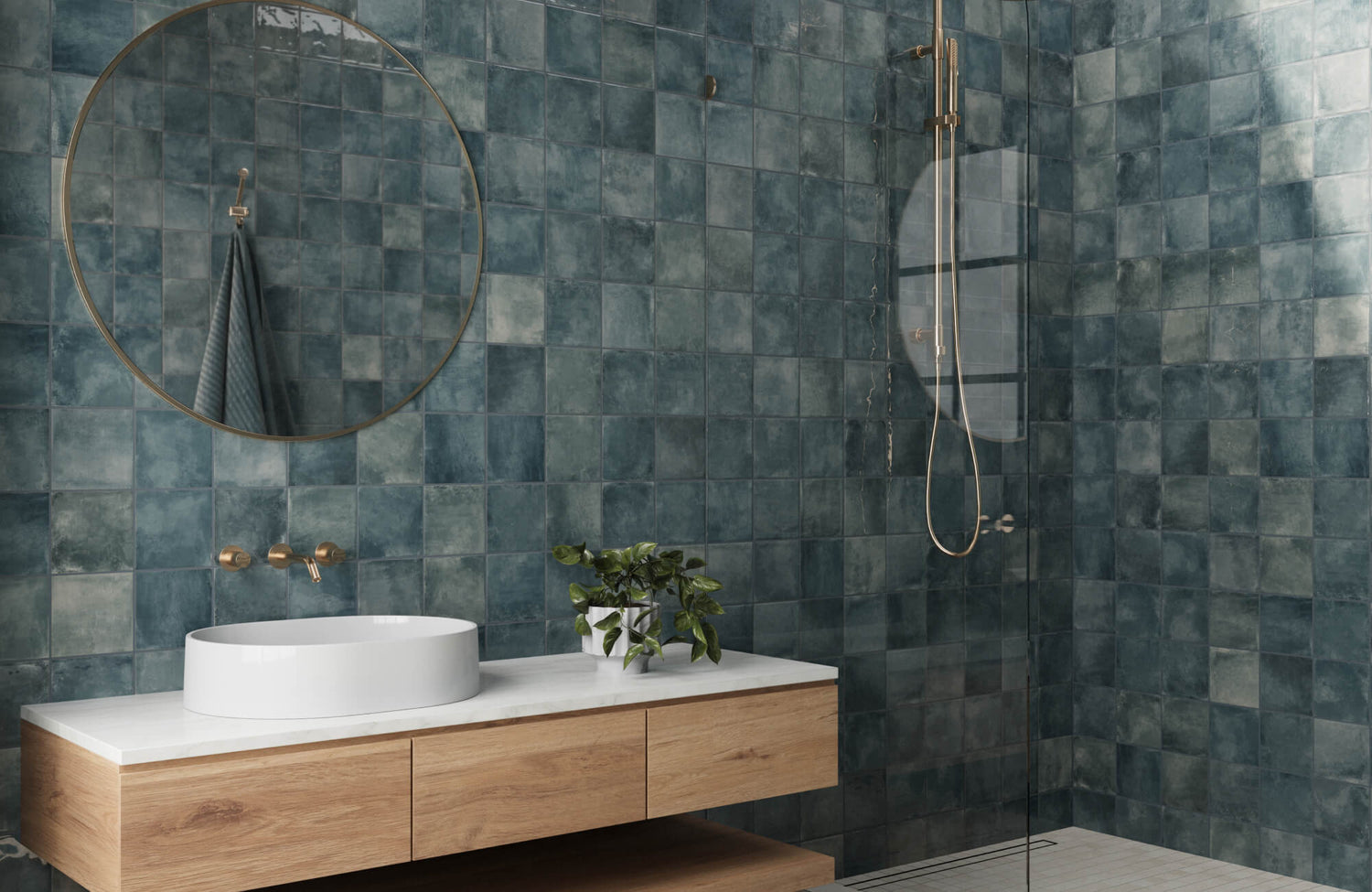
Matte finishes offer a more subdued interpretation of minimalism. Rather than bouncing light, they diffuse it, creating a calm, architectural atmosphere. Edward Martin’s Wren 24x48 Matte Porcelain Tile in Charcoal, featured in the image above, illustrates this beautifully, its large-scale format and velvety surface establish depth and quiet sophistication, ideal for contemporary spaces that favor restraint over shine.
Adding a Touch of Luxury
Luxury does not belong exclusively to glossy finishes. While polished tiles contribute to a dramatic, high-shine effect that elevates feature walls and vanity backdrops, matte and textured tiles deliver sophistication through depth and tactile detail.
Textured matte surfaces create dimension without overwhelming the room. Used on floors or accent walls, they lend quiet refinement, particularly when paired with statement fixtures such as freestanding tubs or sculptural lighting. The choice ultimately depends on whether your vision of luxury emphasizes luminous glamour or subtle architectural depth.
Playing with Patterns and Colors
Tile finish significantly influences how patterns and colors are perceived within a bathroom. Glossy surfaces intensify bold hues and sharpen contrast, making geometric layouts or saturated tones feel more dynamic and expressive. Light reflects across the surface, enhancing depth and movement, which can turn even a simple pattern into a striking focal point.
Matte finishes, on the other hand, soften contrast and diffuse light for a more grounded, timeless effect. Without glare, intricate patterns feel calmer and more architectural, allowing texture and form to take precedence over shine. This makes matte tiles particularly well suited for layered, neutral palettes or spaces where subtle sophistication is the goal.
To better understand how each finish will interact with your lighting and layout, Edward Martin’s Augmented Reality (AR) Visualization Tool allows you to preview tile selections directly within your own bathroom. After narrowing down your options digitally, ordering tile samples lets you evaluate color accuracy, surface texture, and sheen in person, ensuring the pattern and finish you choose feel just as compelling in reality as they do on screen.

Practical Considerations
While aesthetics shape the visual narrative, performance determines long-term satisfaction. Bathrooms demand materials that handle moisture, daily use, and routine cleaning with ease.
Durability and Longevity
Both glossy and matte ceramic or porcelain tiles offer impressive durability, but porcelain stands out for its density and low water absorption. This makes it especially well suited for bathroom floors, walls, and wet zones where long-term performance matters.
Glossy finishes are easy to wipe clean thanks to their smooth surface, though they are typically better reserved for walls or lighter-use areas where impact is minimal. Matte porcelain, on the other hand, balances strength with improved traction and reduced glare. For those seeking the elegance of natural stone without the maintenance demands, Edward Martin’s Tatum 24x48 Matte Porcelain Tile in Cross-Cut Sand, shown in the image above, offers a stone-inspired aesthetic with the resilience and easy upkeep of porcelain. While natural stone remains visually compelling, its porous structure requires ongoing sealing to ensure performance in moisture-prone environments.
Water Resistance and Slip Prevention
Moisture management is critical in bathrooms. Ceramic and porcelain tiles, whether glossy or matte, are inherently water-resistant. However, finish affects traction.
Glossy tiles can become slippery when wet, making them better suited for walls or low-activity floors. Matte or textured finishes offer greater slip resistance, particularly in showers and frequently wet zones. Mosaic tiles, with their increased grout lines, further improve grip underfoot. Always verify water absorption ratings and follow manufacturer guidelines to ensure the tile meets safety standards for bathroom applications.
Maintenance and Cleaning
Maintenance varies subtly between finishes. Glossy tiles repel dirt and residue more visibly, often requiring only mild detergent and water for routine cleaning. Their smooth surface discourages buildup, though water spots may appear more easily.
Matte tiles can better conceal smudges and minor residue but may require slightly more attention in textured varieties. Gentle, non-abrasive cleaners help preserve the finish, and following manufacturer care recommendations supports long-term performance for both tile and grout. For best results, it is always advisable to refer to the specific manufacturer’s maintenance guidelines, as cleaning methods and product compatibility can vary by material and finish.

Choosing the Right Tile for Your Bathroom
With aesthetic and practical factors in mind, the final decision often comes down to lifestyle and personal priorities.
Consider Your Lifestyle
Busy family bathrooms benefit from finishes that disguise wear while enhancing safety underfoot. Edward Martin’s Leona 24x24 Matte Porcelain Tile in Marfil, featured in the image above, provides a balanced foundation with its soft tone and forgiving matte surface, making it suitable for both walls and floors in busy spaces.
For areas that demand additional slip resistance, such as shower floors or wet zones, smaller-format mosaics can improve grip through increased grout lines. Edward Martin’s Tatum 1x3 Matte Porcelain Mosaic Tile in Vein-Cut Ash offers subtle texture and visual movement, making it a practical yet refined choice for spa-like environments where safety and style must work together seamlessly.
In more design-forward guest bathrooms, glossy wall applications may still be introduced strategically to enhance light and create contrast without compromising functionality where it matters most.
Budgeting for Your Bathroom Remodel
Tile costs can vary widely depending on material, size, finish, and overall design complexity. Large-format tiles often come with a higher upfront price but may reduce installation time and grout lines, creating a more streamlined appearance. Smaller formats and mosaics can add visual interest but may increase labor costs due to more intricate installation.
The choice of material is another key factor that influences your overall budget. Natural stone typically carries a premium price and requires ongoing maintenance, while porcelain and ceramic offer a practical balance of durability, water resistance, and long-term value. Factoring in installation, waterproofing, and maintenance needs alongside material cost ensures a more accurate and realistic remodeling budget.
Finding the Perfect Finish for Your Bathroom
There is no single “best” tile finish, only the one that best supports how your bathroom looks, feels, and functions. Glossy tiles enhance light and create a sense of openness, making them ideal for bright, contemporary spaces. Matte finishes provide subtle depth, improved traction, and a softer visual presence that suits both modern and classic interiors.
The right choice ultimately depends on how your bathroom is used each day. Consider factors such as moisture exposure, foot flow, maintenance preferences, and the atmosphere you want to create. By balancing aesthetic goals with practical needs, you can select a tile finish that delivers both lasting performance and a cohesive, thoughtfully designed space.