Wood flooring is loved for the warmth and character it brings to a home, and it can easily elevate many interior spaces. However, not every room offers the right conditions for natural wood to perform well over time. Areas with frequent moisture, humidity, or heavy appliance use can gradually affect the stability and appearance of wood floors. Knowing where wood flooring works best and where it may struggle helps homeowners avoid preventable damage and unnecessary maintenance. In this blog, we’ll explore the rooms where wood flooring may not perform as well and introduce wood-look tiles as a durable alternative that preserves the natural appeal of wood.

Factors to Consider in High-Moisture Areas
Before installing wood floors, it helps to think about how moisture behaves in different parts of the home. Some rooms naturally hold more humidity or deal with regular water exposure, which can affect how well wood flooring performs over time. Knowing how various wood flooring types respond to these conditions makes it easier to avoid future problems. A little planning here can help homeowners protect both the appearance and lifespan of their floors.
Solid hardwood, for example, is admired for its durability and the ability to refinish it multiple times. However, it reacts quickly to moisture and humidity changes. When exposed to consistent dampness, the boards can expand, warp, or even develop gaps as conditions shift. Because of this, spaces like bathrooms and basements often present challenges for solid hardwood installations.
Engineered wood offers a bit more flexibility in areas where moisture levels fluctuate. Its layered construction helps it stay more stable than solid hardwood when humidity rises or falls. That stability can make it a better option for spaces like kitchens or well-sealed basements, though it still requires care. Even with improved resistance, too much moisture can lead to issues such as mold growth, swelling, or surface damage, so choosing the right location remains an important part of protecting your flooring investment.

Rooms to Avoid Using Wood Floors
Wood flooring can bring warmth, character, and long-lasting appeal to many parts of a home. However, certain rooms create conditions that make wood much harder to maintain over time. Spaces with frequent moisture, humidity, or heavy appliance use can gradually affect the stability of natural wood flooring.
Bathrooms
Bathrooms are one of the most challenging places to install wood floors. Between steamy showers, splashing water, and daily humidity, the environment constantly exposes flooring to moisture. Over time, this moisture can seep into the wood, causing boards to expand, warp, or develop gaps as conditions change. Even small amounts of standing water from sinks, tubs, or spills can gradually weaken the surface and affect its finish. While sealing can offer some protection, it often requires ongoing maintenance to keep moisture from penetrating the material. Because of these factors, many homeowners turn to alternatives like wood-look tiles, which capture the warmth of wood while handling moisture much more effectively.
Laundry Rooms
Laundry rooms present a different kind of challenge for wood flooring. Water leaks from washing machines, loose hoses, or detergent spills can quickly reach the floor and soak into the wood. Once moisture enters the boards, swelling and warping can begin, which may lead to uneven surfaces or long-term structural issues. In addition to water exposure, the weight and vibration of washing machines and dryers can gradually leave dents or surface damage. Over time, repeated appliance movement can also stress the floorboards beneath the machines. For these reasons, many homeowners choose flooring materials designed to handle both moisture and heavy appliance use more comfortably.
Basements
Basements naturally hold more moisture than most other areas of a home. Being located below ground level means these spaces often deal with humidity from surrounding soil, along with occasional water intrusion during storms or plumbing issues. Without strong ventilation, that moisture tends to linger in the air and slowly affect flooring materials. Wood flooring can react to these conditions by expanding, contracting, or developing surface damage as humidity levels shift. Even engineered wood may struggle in basements if moisture levels remain high for long periods. Because of this, flooring options like porcelain tile, engineered vinyl, or sealed concrete are often better suited for basement environments.
Entryways and Mudrooms
Entryways and mudrooms also deserve careful consideration when choosing wood flooring. These areas regularly collect moisture from wet shoes, umbrellas, and outdoor debris brought in from outside. Rain, snow, and dirt can quickly wear down the protective finish on wood floors, leaving them more vulnerable to staining or water damage. Over time, repeated exposure to moisture and grit can dull the surface and cause small scratches that accumulate. Even with rugs or mats, these high-contact zones can be difficult to protect consistently. Many homeowners prefer more resilient flooring materials in these spaces, especially ones designed to handle moisture and frequent cleaning.

Wood-Look Tiles as a Practical Alternative
If you love the warmth of wood floors but worry about moisture or long-term upkeep, wood-look tiles offer a smart alternative. These tiles capture the natural character of real wood while providing the durability many homeowners need in busy areas of the home. With modern manufacturing techniques, they can deliver both visual appeal and everyday practicality in spaces where traditional wood might struggle.
Realistic Wood Appearance
Wood-look tiles are carefully designed to mimic the natural grain, color variation, and texture of real hardwood. Advances in digital printing technology allow manufacturers to recreate subtle knots, patterns, and tonal shifts that give wood its character. Because of this, many homeowners find it difficult to distinguish between real wood and high-quality wood-look tile at first glance. These tiles can complement both traditional and contemporary interiors, working well in kitchens, bathrooms, living areas, and even entryways. For homeowners who want the visual warmth of wood without the same environmental limitations, this option provides a convincing and versatile solution.
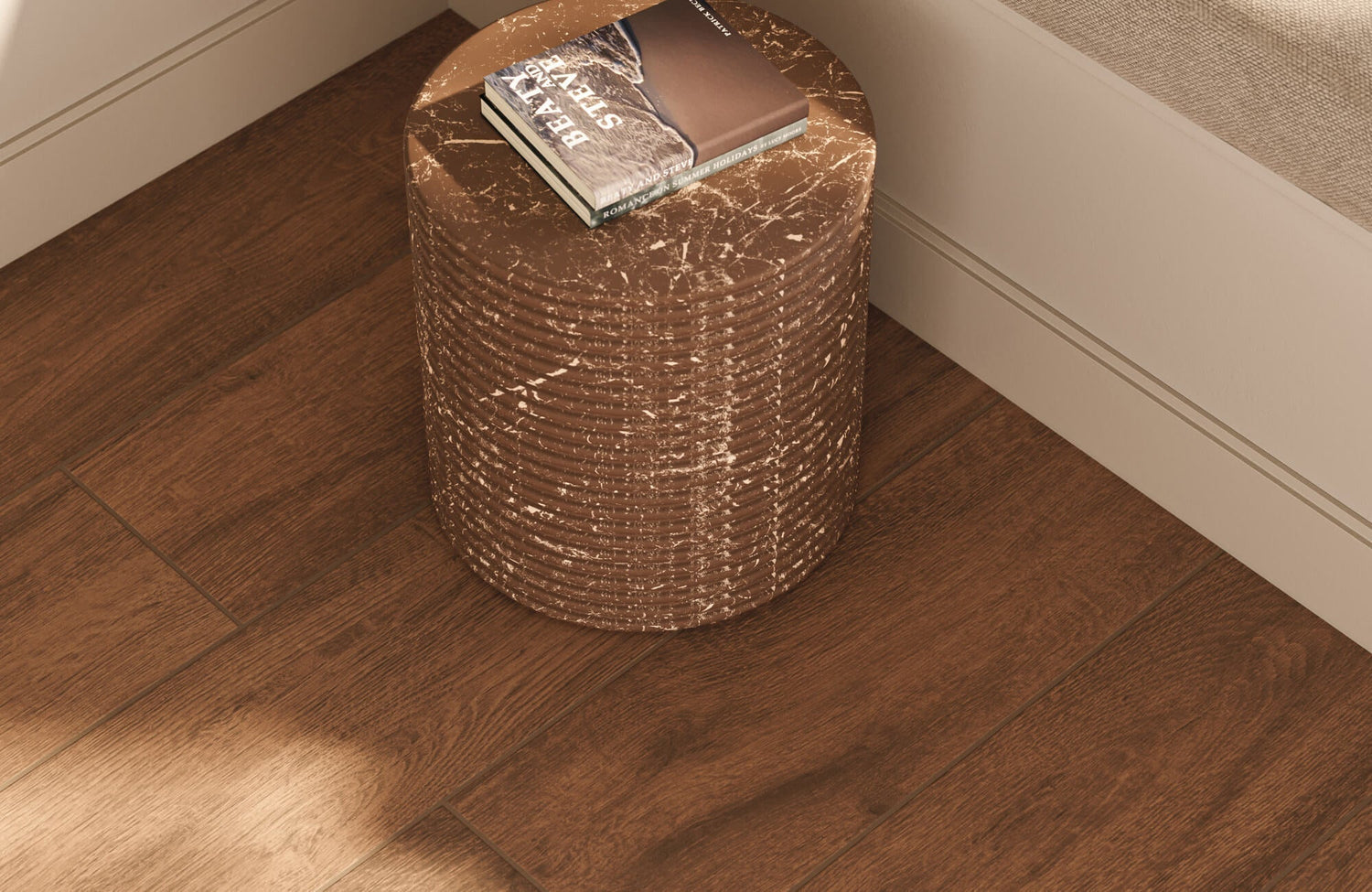
In the kitchen shown above, our Nora 8x48 Matte Porcelain Tile in Macchiato demonstrates how wood-look tiles can deliver the warmth of hardwood while offering the resilience of porcelain. Its rich brown tones and soft grain variation reflect the character of European oak, giving the floor a natural and grounded appearance. The elongated plank format creates clean, tidy joints that work beautifully in both classic linear layouts and more decorative herringbone patterns. Built for everyday use, it allows homeowners to enjoy the look of wood in busy spaces like kitchens without worrying about moisture or long-term wear.
Exceptional Durability
One of the biggest advantages of wood-look tiles is their ability to handle everyday wear. Unlike natural wood, porcelain or ceramic tiles resist water, stains, and scratches far more effectively. This makes them especially suitable for areas where spills, humidity, or frequent cleaning are common. Kitchens, bathrooms, laundry rooms, and mudrooms all benefit from flooring that can stand up to moisture without warping or swelling. With this level of durability, homeowners can enjoy the look of wood while worrying far less about long-term damage.
Low Maintenance and Easy Care
Another reason wood-look tiles have become increasingly popular is how simple they are to maintain. Many options, including Edward Martin’s wood-look tile collections, are designed so they do not require sealing like natural wood flooring often does. Regular sweeping and occasional mopping are usually enough to keep the surface clean and looking fresh. Because the material does not absorb moisture easily, stains are less likely to penetrate the surface. Over time, this ease of maintenance can make a noticeable difference for homeowners who want beautiful floors without constant upkeep.
Flexible Design for Different Spaces
Wood-look tiles also give homeowners more flexibility when designing different rooms. They can be installed in places where traditional wood floors may not perform well, such as bathrooms, basements, and laundry areas. Many collections come in plank sizes that resemble classic hardwood boards, allowing for layouts that feel familiar and natural. At the same time, tile installations can handle underfloor heating systems, outdoor patios, and other environments where wood may struggle. This versatility allows homeowners to maintain a consistent wood-inspired look throughout the home while choosing materials better suited for each space.
Choosing the Right Flooring for Every Room
Wood flooring can bring warmth, character, and long-lasting beauty to many parts of a home, but choosing the right location makes all the difference. Areas that deal with constant moisture, humidity, or heavy appliance use often require materials that can handle those conditions more comfortably. Bathrooms, laundry rooms, and basements, for instance, tend to expose flooring to water and shifting humidity levels that natural wood may struggle with over time. By recognizing these limitations early, homeowners can protect their investment while still achieving the look and atmosphere they want throughout the home.
If you love the appearance of wood but want something more resilient in challenging spaces, wood-look tiles offer a practical and stylish solution. They provide the warmth and texture of wood while standing up to moisture, everyday wear, and changing conditions in busy areas of the house. If you're deciding which flooring works best for each room, Edward Martin’s Personalized Design Consultation can help guide the process. Our team works closely with homeowners to explore materials, finishes, and layouts that bring both durability and thoughtful design into every space.