When you’re choosing a rug for your dining room, placement matters just as much as size or material. A rug may seem like a purely decorative layer, but in a dining space, it does important structural work. It anchors the table, supports how chairs slide in and out, and shapes how the room feels when you gather to eat. Many people are unsure where a dining room rug should start and end. In this article, we’ll walk through it together, step by step, so you can choose a setup that feels natural, looks polished, and fits your everyday routine.

Dining Table Alignment and Rug Placement Basics
Before considering room size or overall layout, begin with the table itself. The dining table anchors the space, and the rug’s role is to support it both visually and practically. When the rug is aligned properly with the table, the entire dining area feels more balanced, and the rest of the layout becomes easier to refine.
Centering the Rug Under the Table
The rug should sit directly beneath the dining table, centered so it appears intentional rather than accidental. As you position it, it helps to imagine a line running through the center of the table from end to end. The midpoint of the rug should align with that line so the table feels stable instead of subtly pulled to one side. This alignment becomes especially important in rooms where the dining area is visible from several viewpoints, such as from an entryway or adjoining living space.
To achieve this, it is best to rely on measurements rather than visual guesswork. Even slight shifts can become noticeable once chairs are in place and the table is in use. A well-centered rug, such as Edward Martin’s Sweeney Rug in Khaki, as shown in the photo above, demonstrates how precise alignment anchors the table and creates a calm, cohesive feel throughout the dining area.
Allowing Space for Chair Movement
One of the most common placement issues occurs when the rug is too small to accommodate the chairs. As dining chairs are pulled back, their back legs can slide off the rug and catch along the edge, making movement less smooth and less comfortable. To prevent this, the rug should extend beyond the table on all sides so the chairs remain fully supported when someone sits down or stands up.
It helps to think about how the table is used day to day. If chairs are frequently pulled out, the rug needs to allow for that motion without interruption. When both the table and chairs stay on the rug throughout use, the dining area feels unified and easy to move within, rather than broken into separate parts.
Matching Rug Shape to Table Shape
The shape of the dining table should inform the shape of the rug beneath it. Rectangular tables work best with rectangular rugs because their aligned edges create a clear, well-ordered look. Round tables, on the other hand, tend to feel more balanced on round rugs, where the curved outlines naturally complement each other.
Mixing shapes can work in specific situations, but without a clear reason, it often looks unintentional. For example, placing a round rug under a rectangular table can feel functional rather than considered. When the table and rug share a similar shape, the arrangement feels fragmented, and the rug supports the table rather than competing for attention.

Rug Placement Based on Dining Room Size
A single placement approach does not suit every dining space. The proportions of the room influence how much floor should remain visible and how defined or open the dining area feels within its surroundings.
Small Dining Rooms and Compact Layouts
In smaller dining rooms, restraint plays an important role. The goal is for the rug to define the dining area without overpowering the space. Leaving a visible strip of flooring between the rug and the walls helps the room feel more open and thoughtfully arranged. When a rug is too close to the walls, the space can start to feel cramped rather than welcoming.
Compact layouts also require careful attention to doorways and walk paths. The rug should allow doors to open and close freely without catching or crowding the space. When placed with these details in mind, a rug in a small dining room supports the table and seating while remaining visually understated.
Medium-Sized Rooms With Defined Dining Zones
Medium-sized dining rooms offer the most flexibility in rug placement. In these spaces, a rug can clearly define the dining area while still allowing space for nearby furniture or an open floor. The aim is to choose a rug that comfortably frames the table and chairs without overwhelming the room.
When this balance is achieved, the dining area feels clearly defined without feeling enclosed. Edward Martin’s Quinton Rug in Ash, as shown in the photo featured above, demonstrates this approach by grounding the dining set while preserving a generous border of visible flooring around it. This placement allows the rug to sit naturally within the room’s overall footprint, helping the space feel orderly, approachable, and easy to use.
Large Dining Rooms and Oversized Rugs
In larger dining rooms, a rug that is too small can leave the table feeling disconnected from the rest of the space. In these cases, choosing a larger rug than you might initially expect often creates a better sense of balance. A generously sized rug helps ground the dining set and gives it a strong presence in the room.
Even so, the rug does not need to extend from wall to wall. Leaving a border of exposed flooring around the edges helps preserve structure and proportion. The goal is to help the dining area feel grounded and intentional while still respecting the overall room size.

Rug Placement in Open Concept and Shared Spaces
Dining rooms are often part of larger, open layouts rather than enclosed rooms. When the dining area shares space with a kitchen or living room, rug placement becomes a practical way to bring visual order and clarity, rather than serving as solely decoration.
Creating Visual Boundaries Without Walls
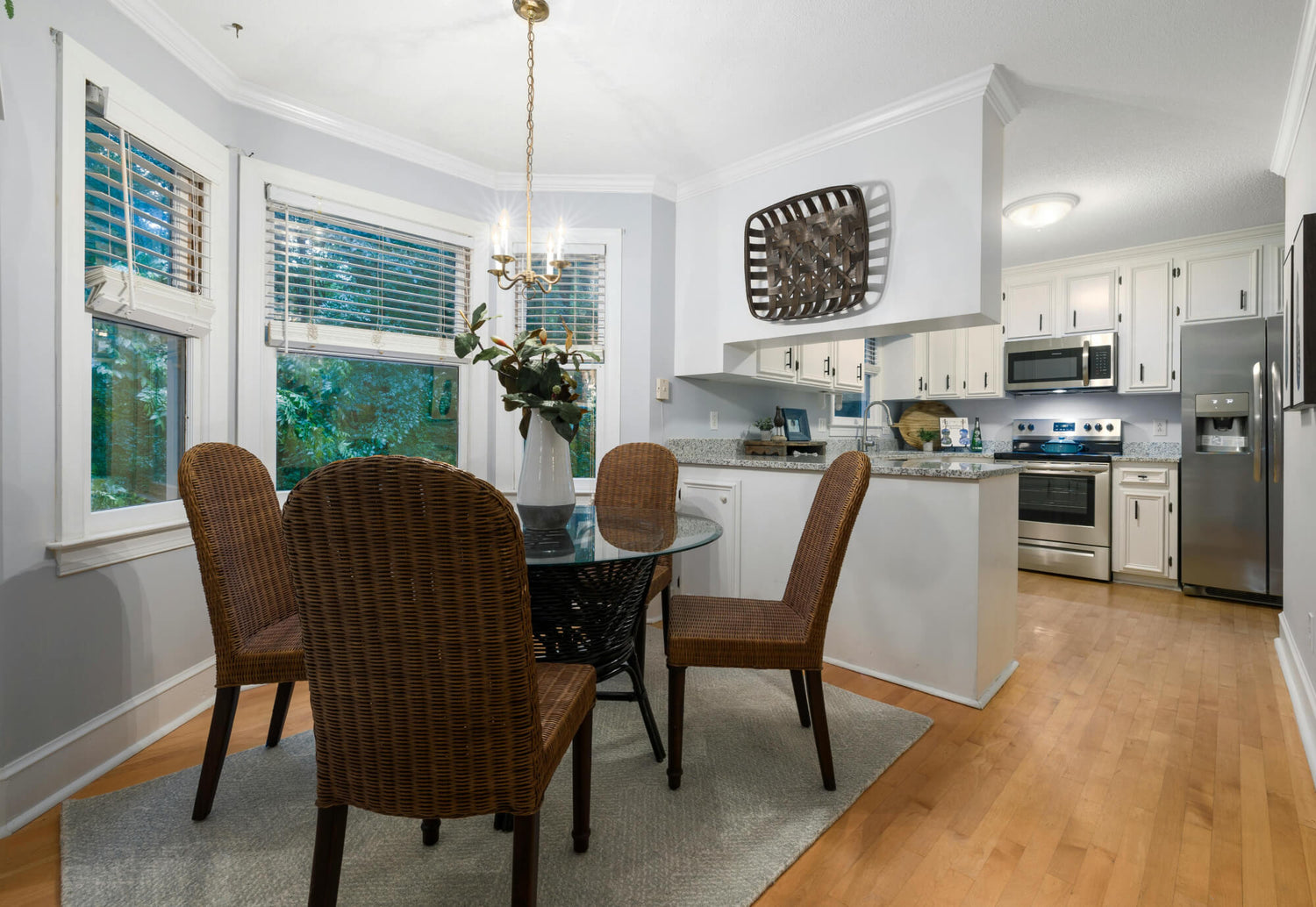
In an open layout, a rug serves as a subtle boundary that defines the dining area without relying on walls. Placing the rug fully beneath the table and chairs helps clarify where the dining space begins and ends, adding structure to a shared room. This approach is illustrated in the photo featured above, where Edward Martin’s McGowan Rug in Moss / Sand visually separates the dining area from the surrounding kitchen while still maintaining an open, connected feel. When the dining rug is placed in relation to surrounding areas, the entire open space feels more cohesive and well-organized.
Coordinating With Nearby Rugs and Flooring
When multiple rugs are used within an open space, their placement should feel intentional rather than scattered. Aligning rugs so their edges do not meet awkwardly or overlap helps maintain a clean, orderly look. In many cases, leaving a narrow strip of exposed flooring between rugs creates a clearer separation than placing them directly against each other.
The direction of the flooring also plays a role. Positioning the dining rug to follow the natural lines of the floor helps the space feel more connected and visually settled.
Aligning Rug Placement With Sightlines
In open spaces, the dining area is often visible from several directions, so it helps to consider how the rug appears from the kitchen, an entryway, or a nearby seating area. A rug that looks centered from one angle but slightly off from another can quietly disrupt the balance of the space. By making small adjustments and reviewing the placement from multiple viewpoints, the rug can be positioned intentionally and visually consistent throughout the room.

Furniture and Layout Considerations Beyond the Table
While the dining table is the central element, other furniture in the room also affects where the rug should be placed. Taking these pieces into account helps the space feel cohesive, whereas overlooking them can make the layout feel disconnected.
Buffets, Sideboards, and Storage Pieces
When a dining room includes a buffet or sideboard, it is generally best to position it just outside the rug rather than partially on top of it. This approach allows the dining set to stand on its own and helps prevent the rug from appearing undersized or visually crowded. At the same time, when a storage piece sits close to the table, leaving adequate space helps prevent the rug from feeling compressed between furniture.
This relationship is clearly illustrated with Edward Martin’s Davies Rug in Ash / Sand paired with the Julian Sideboard in Black, as shown in the photo featured above. The rug remains dedicated to the dining table and chairs, while the sideboard sits comfortably beyond the edge, creating a clear visual boundary between functions. By maintaining this sense of separation and breathing room, the overall layout feels more intentional, balanced, and easy to take in at a glance.
Benches vs. Chairs
Benches influence rug placement differently from chairs because they tend to slide back farther when someone stands up. As a result, the rug often needs more depth on the bench side of the table to allow for that movement comfortably. When benches and chairs are used together, the rug placement should account for the side with the most movement. Making this adjustment helps maintain comfort while keeping the overall layout balanced and cohesive.
Extending Placement for Expandable Tables
When a dining table can expand, it is best to plan rug placement around its largest configuration rather than its everyday size. A rug that only fits when the table is closed can quickly become impractical during larger gatherings. By accounting for the expanded size from the beginning, the rug remains functional and comfortable regardless of how the table is arranged.

Practical Lifestyle Factors That Affect Placement
A dining room is designed for everyday use, not just for appearance. Because of that, the way you live and move through the space should play a clear role in deciding where the rug is placed.
Walk Paths Around the Dining Area
It is important to consider how people naturally move around the table. The rug should support that movement rather than interrupt it with edges that are repeatedly stepped over. When the paths around the dining area remain clear and unobstructed, the room feels more intuitive and comfortable to use. This becomes especially noticeable during daily routines, such as setting the table or moving between seating and nearby rooms.
Kids, Pets, and Everyday Messes
In households with kids or pets, rug placement becomes an especially practical consideration. Keeping the rug fully beneath the table helps contain spills and crumbs within a defined area rather than allowing them to spread across exposed flooring. For added ease, placing the rug that’s easy to clean can make everyday upkeep feel more manageable.
Protecting Floors Without Overcoverage
A dining rug helps protect the floor beneath the table, particularly in areas where chairs are moved often. At the same time, it is important not to cover more flooring than necessary, especially when the floor itself is a feature of the room. Choosing a rug that extends just beyond the table and chairs helps strike that balance. With thoughtful sizing and placement, the rug shields the most used portion of the dining area while still allowing the surrounding flooring to remain visible and appreciated.

Visual Balance and Styling Through Placement
Once the practical needs of the dining area are addressed, rug placement becomes a simple styling choice that helps shape how the room looks and feels. Small adjustments in position and scale can change the overall sense of balance, making the space feel more refined and intentional.
Framing the Dining Set Visually
The rug acts as a visual frame for the table and chairs, helping the dining set feel intentional and complete. Keeping even spacing between the edges of the rug and the furniture creates a sense of balance that is easy on the eye. When one side of the rug extends much farther than another, the table can appear off-center even if it is technically aligned. Paying attention to these proportions further helps the dining area feel composed and well considered.
Aligning With Lighting and Ceiling Features
Aligning the rug with overhead lighting helps create a stronger sense of symmetry in the dining area. When the rug, table, and light fixture share a common center, the room feels calm and visually ordered. This alignment becomes especially important with pendant lights or chandeliers that draw the eye downward, as any misalignment is more noticeable. Taking a moment to check this relationship can significantly improve the overall balance of the space.
Using Placement to Emphasize or Minimize Scale
A larger rug can make a small table feel more substantial, while a slightly smaller rug can help a large table feel less imposing. By adjusting both placement and size, the rug can subtly influence how the room’s proportions are perceived. This approach allows the dining area to feel balanced without changing the furniture itself, offering flexibility as the room evolves.
Choosing the Right Rug Placement for Your Dining Room
Deciding where to place a rug in a dining room is less about following strict rules and more about how the space is used, how it is laid out, and the mood you want to set. When the rug is centered, properly sized, and thoughtfully positioned, it adds structure and comfort to the dining area. By taking into account alignment, room size, surrounding furniture, and everyday habits, you can settle on a placement that feels natural and continues to work well over time.
If you would like a second opinion or need help working through layout details, our design team is always happy to help. You can contact us to discuss your space or explore our design services for guidance tailored to your dining room and how you live in it every day.