Mirrors do more than reflect; they also influence how bright a living room feels, how spacious it appears, and how the overall style comes together. The right placement can make a room feel open and inviting, while the wrong spot may create imbalance or distraction. Knowing where to position a mirror helps you take full advantage of light, space, and design details, ensuring it works as both a functional and decorative element. Let’s explore six essential aspects to help you decide where your mirror belongs.

Considering Natural Light and Brightness
Mirrors are powerful tools for shaping how daylight flows through a living room. Their placement can maximize brightness, soften harsh rays, or even extend the feeling of openness outdoors. To make the most of this effect, you need to pay attention to where your windows and doors are located.
Across From a Window
Placing a mirror directly opposite a window allows you to double the impact of natural light. Instead of relying only on what enters through the glass, the mirror bounces light deeper into the room. This position can also give you a borrowed view, reflecting trees, sky, or garden landscapes. For smaller living rooms, this creates an airy, expansive feel without any structural changes.
In the photo shown above, Edward Martin’s Raelynn Mantel Mirror in Polished Brass demonstrates this effect beautifully, reflecting both daylight and outdoor scenery to brighten the entire space while enhancing the fireplace as a focal point.
Next to a Window
Positioning a mirror to the side of a window offers a subtler form of brightness. Instead of flooding the room with direct light, this placement creates a softer, more diffused glow. It’s a great option if you prefer a calmer atmosphere, where the room feels lit but not overexposed. This works especially well in living rooms where you want comfort without the glare of full sunlight.
Avoiding Harsh Glare
Not all light is flattering. When mirrors sit opposite windows that face the strong sun, the reflection can feel uncomfortable and distracting. To solve this, you can angle the mirror slightly or pair it with curtains and shades to control intensity. The goal is to enjoy the benefits of reflected light without creating strain.

Enhancing Room Size and Depth
Mirrors also play a key role in shaping how large or small a room feels. By carefully considering scale and perspective, you can use them to visually stretch walls, extend ceilings, or add dimension where space is tight.
Behind a Sofa
A large mirror hung behind a sofa can give the impression of an extended wall. The reflection adds depth, making even compact living rooms feel more generous. This technique works especially well if your sofa sits against a solid wall without windows, since the mirror creates a sense of openness where there was none.
Along a Narrow Wall
When you have a narrow wall, it can sometimes make the room feel boxed in. A tall, vertical mirror, like our Esmeralda Floor Mirror in Iron Matte Black, helps break that feeling by drawing the eye upward. This trick lengthens proportions and especially helps balance out uneven room shapes. Instead of just being decorative, the mirror becomes a practical tool for correcting visual imbalance.
Creating a Focal Extension
Mirrors don’t only reflect space; they can also highlight architectural charm. Placing one so that it captures archways, ceiling beams, or decorative moldings extends their visual impact. It’s a way of doubling design features you already love, while also giving the impression of greater height or width.

Highlighting Key Features and Decor
Aside from size and light, mirrors are also excellent for directing focus. Where you place them can draw attention to your favorite elements and give the living room more personality.
Above a Fireplace
A mirror above the fireplace is a timeless choice. It reinforces the fireplace as the room’s natural focal point and adds balance by anchoring the wall. At the same time, it disperses light, which prevents the area from feeling heavy or overly dominant. Choosing a mirror that complements the scale of the mantel ensures the arrangement feels intentional rather than overpowering. This placement works equally well in both traditional and modern living rooms, offering a versatile solution that blends style with function.
In the photo displayed above, Edward Martin’s Esmeralda Wide Mirror in Iron Matte Black illustrates how a well-proportioned mirror enhances symmetry while introducing a refined, contemporary edge to the fireplace setting.
Reflecting Art or Statement Pieces
If you own a piece of art, a sculpture, or a striking chandelier, placing a mirror where it reflects that object multiplies its presence. Instead of being confined to one part of the room, the artwork becomes visible from multiple angles. This is an easy way to give special items more visibility without adding clutter. It also allows you to enjoy your favorite pieces from different perspectives, making them a more integral part of the overall design. For best results, position the mirror so the reflection feels deliberate, not accidental.
Creating Layered Styling
Mirrors also shine when combined with other décor. Pairing them with shelves, framed photos, or lighting creates a layered, gallery-like effect. This approach is ideal for those who want their walls to feel thoughtfully curated rather than flat or empty. When styled carefully, the mirror ties the elements together, giving the wall dimension and character. It’s an especially useful technique in living rooms where you want to showcase personal style while maintaining cohesion in the design.

Balancing Proportion and Placement Height
Choosing where a mirror goes is not only about the wall; it’s also about size and height. Getting these proportions right is essential for a cohesive look.
Matching Mirror Size to Furniture
If you hang a mirror above a piece of furniture, size matters. A mirror that’s too wide will overwhelm, while one that’s too small will look lost. A reliable guideline is to select a mirror about two-thirds the width of the furniture below it. This keeps proportions balanced and visually pleasing. You can further play with shape; round or arched mirrors can soften the look of angular furniture, while rectangular designs emphasize clean, structured lines.
Considering Eye Level
The height at which you hang a mirror determines how practical and stylish it feels. Mirrors placed around average eye level can create a natural flow, making it easy for you to use them while ensuring they look balanced. Hanging them too high or too low disrupts the sense of harmony on the wall. If your living room has varied seating heights, consider the primary perspective; whether it’s from a sofa or standing, so the mirror remains both useful and well-placed.
Using Oversized or Full-Length Mirrors
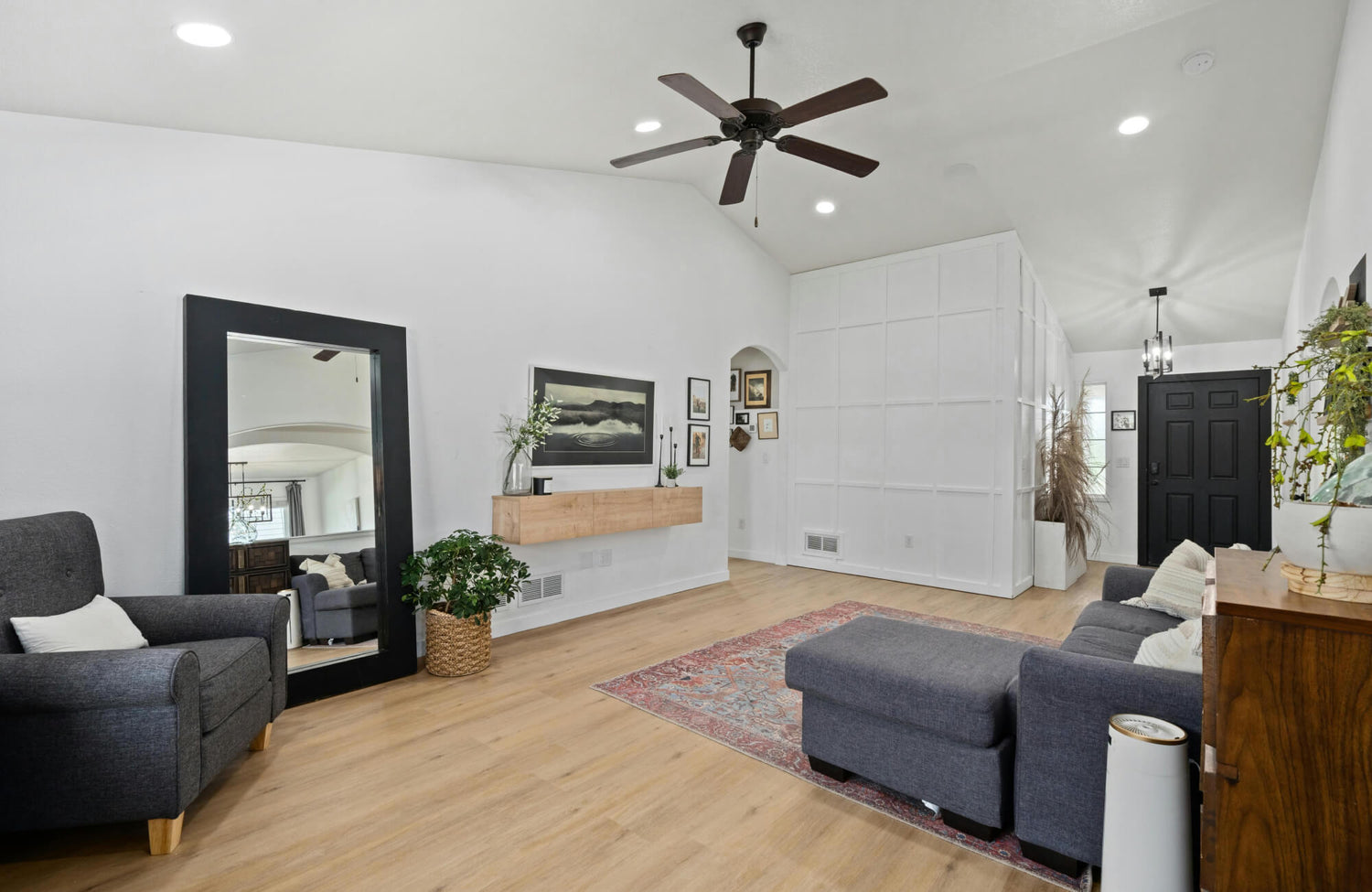
Leaning a tall, oversized mirror against the wall is another impactful choice. It not only adds vertical emphasis but also creates a dramatic, contemporary touch. This option suits living rooms with higher ceilings or open layouts, where large-scale elements won’t feel overpowering. To keep the look intentional, position the mirror so it reflects a pleasing view, such as a seating area or architectural feature, rather than a doorway or plain wall.
A design like our Tristan Square Mirror in Polished Brass demonstrates how a full-sized piece can bring presence and height to a space, with its clean lines and refined metallic frame ensuring the effect feels bold yet balanced.

Functional and Practical Considerations
While style is important, mirrors should also work well for daily life. A thoughtful placement ensures they add beauty without creating unnecessary distractions or risks.
Avoiding Cluttered Reflections
Mirrors have the power to multiply what they reflect. If they face areas filled with storage bins, stacks of magazines, or open shelving, they can exaggerate the sense of clutter. It’s best to position them where they reflect organized or intentional parts of the room. A mirror angled toward a window, a plant, or a neatly arranged seating area will create a sense of calm and order, reinforcing the overall design instead of highlighting distractions.
Considering Movement Patterns
If a mirror constantly reflects people moving past it, the effect can feel restless. Place mirrors where they offer a calm, stable reflection, such as a seating area or fireplace wall, instead of busy walkways. This helps the mirror act as a steady visual anchor in the space rather than a source of distraction. Thinking about how you and your guests typically use the room also makes it easier to choose a placement that feels both natural and relaxing.
Safety and Stability
For leaning mirrors, safety is critical. Always secure them to the wall with brackets or anchors to prevent tipping. In homes with children or pets, this precaution ensures both safety and peace of mind. Even for mounted mirrors, using proper hardware for the wall type is essential, since larger mirrors are heavy and need reliable support. Taking time to install them correctly not only protects your household but also preserves the mirror as a lasting feature of your living room.

Style and Personality Through Placement
Mirrors don’t just enhance light and space; they further help express your style. Where you position them can align with different design personalities, from minimalist to traditional.
Minimalist Simplicity
If you prefer a clean, uncluttered aesthetic, one large mirror can make a quiet yet striking statement. Positioned with precision, it enhances the sense of order and calm that defines minimalist interiors. Choosing a simple frame or even a frameless design allows the mirror to blend seamlessly with the surroundings, ensuring it supports the room’s simplicity rather than distracting from it. When paired with neutral colors and sleek furniture, the mirror becomes an elegant focal point without overwhelming the space.
Eclectic Layering
For a more creative approach, try grouping mirrors of different shapes and sizes on one wall. This gallery-style arrangement brings variety and energy, especially in bohemian or artistic spaces. Placement becomes less about rules and more about playfulness. Mixing vintage pieces with contemporary designs, or alternating between ornate and minimal frames, also adds character while keeping the wall visually engaging. The result feels curated and personal, making the mirrors part of a story rather than just functional décor.
A piece like Edward Martin’s Shirley Large Mirror in Antique Brass Iron works beautifully in this type of display, as its organic form and warm frame contrast well with other shapes, adding depth and individuality to the arrangement.
Traditional Symmetry
Placing two mirrors on either side of a central element, such as a window or console table, creates a balanced and timeless look. This arrangement is perfect for more classic or formal living rooms, where symmetry adds refinement. The repetition of mirrors not only establishes order but also enhances the sense of proportion in the room. When paired with traditional furniture or architectural details, this placement reinforces a polished, harmonious style that never feels outdated.
Finding the Right Placement for Your Living Room Mirror
The best placement for a mirror in a living room depends on the effect you want to create. A mirror can sit opposite or beside a window to enhance natural light, behind furniture to add depth, above a fireplace to highlight a focal point, or in a spot that complements your overall style. By paying attention to light, proportion, function, and personality, you can choose a location that feels intentional and balanced. A well-placed mirror doesn’t just reflect your space; it also transforms how you experience it.
If you’re unsure where to start, our design team is here to help. Contact us today to explore personalized mirror placement ideas and design services tailored to your living room!