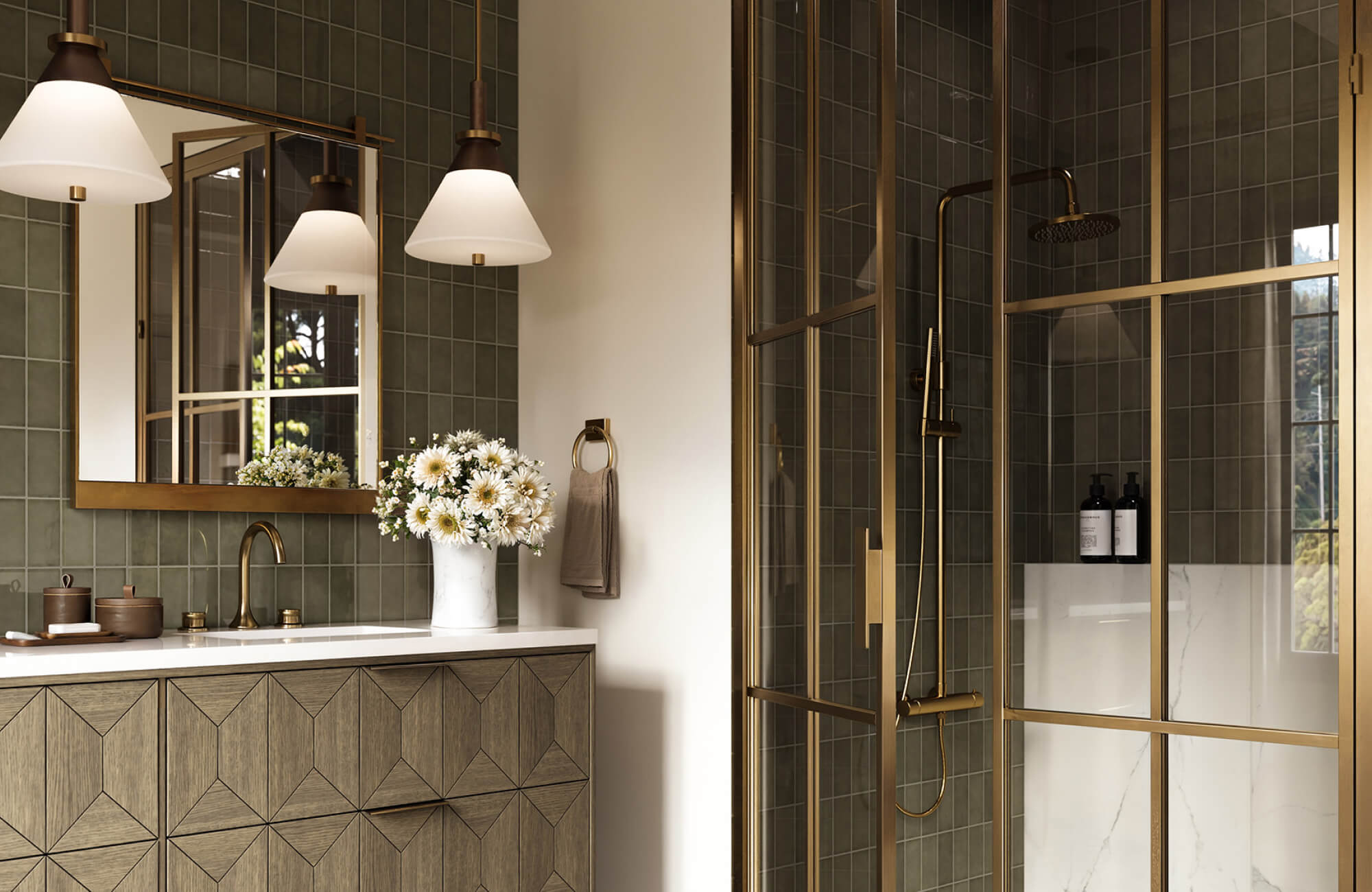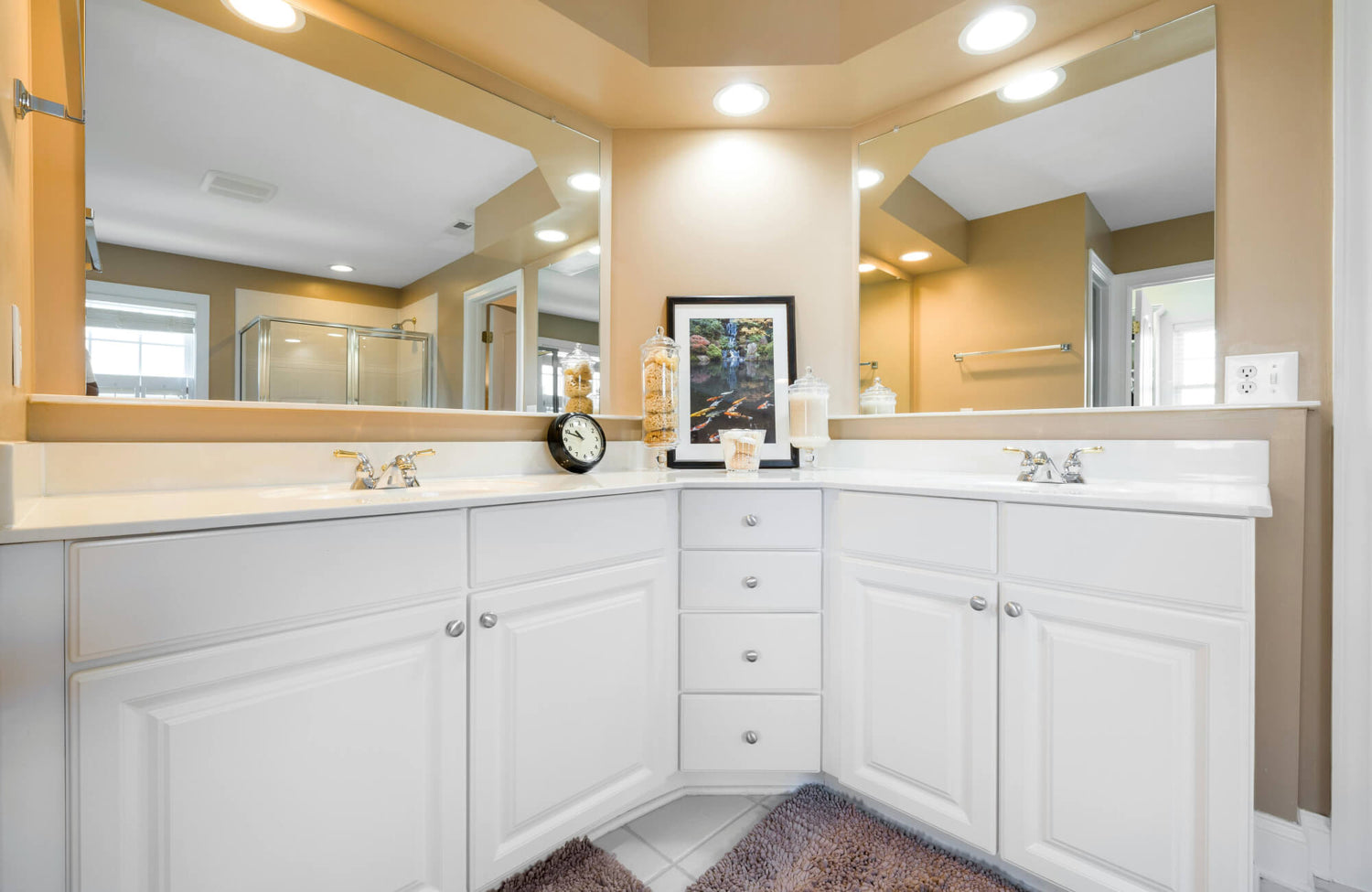
In a small bathroom, even a few inches can change how the space feels and functions. Layout choices affect everything from how easily you move around to whether the room feels open or crowded during daily routines. Corner vanities are often suggested as a space-saving solution, but they don’t work the same way in every layout. In this blog, we’ll take a closer look at when a corner vanity makes sense for a small bathroom, how it impacts flow, storage, and usability, and when another vanity layout may be the better choice.

Why a Corner Vanity Can Be the Smartest Layout Move
In a small bathroom, layout decisions tend to matter more than finishes because they directly affect how the space feels and functions day to day. A corner vanity often solves multiple layout challenges at once by using space that would otherwise sit idle, while keeping the room feeling open and easier to move through. When every inch counts, that subtle shift in placement can make the bathroom feel calmer, more balanced, and noticeably more comfortable to use.
Turning Unused Corners Into Functional Zones
Corners are often overlooked in bathroom layouts, yet they quietly take up valuable square footage that could be put to better use. By placing the vanity in the corner, that dead zone becomes a functional anchor rather than wasted space. This approach works especially well in narrow or irregularly shaped bathrooms, where straight wall space is already limited. It also helps consolidate key functions, like washing and storage, into one efficient area. Because the vanity sits where two walls meet, the rest of the room often feels less crowded as well. In practice, this makes the bathroom feel more intentional and thoughtfully planned.
Improving Walk Paths in Tight Bathroom Layouts
Small bathrooms can feel cramped when walk paths are interrupted by bulky fixtures placed along main walls. A corner vanity helps clear those paths by pulling the largest fixture out of the direct line of movement. As a result, it’s often easier to enter the room, turn around, and access other elements like the toilet or shower. This improved flow matters more than it seems, especially in bathrooms used daily. For example, even a few extra inches of open floor can make the space feel less restrictive. Over time, that smoother circulation adds to a more comfortable everyday experience.
Reducing Visual Bulk Along Main Walls
Straight wall runs tend to draw the eye, which means anything placed there feels more prominent. When a vanity sits along a main wall in a small bathroom, it can dominate the room visually, even if the piece itself is modest in size. Moving the vanity into the corner softens that effect because it breaks up long sightlines. This placement allows the main walls to feel lighter and less cluttered. It also gives the eye more room to travel, which subtly makes the space feel larger. Because of this, corner vanities often create a calmer visual rhythm in compact bathrooms.
Supporting Better Door and Drawer Clearance
Door swings and drawer clearance are common problem areas in small bathrooms, especially when fixtures are tightly packed. A corner vanity can help reduce these conflicts by keeping moving parts out of busy zones. For instance, cabinet doors are less likely to clash with entry doors or block walkways when opened. This makes everyday tasks feel less awkward and more fluid. It also helps prevent the need for constant adjustments or half-open drawers. Over time, those small conveniences contribute to a more user-friendly layout.
When Corner Placement Improves Overall Balance
Balance in a small bathroom isn’t just about symmetry; it’s about how evenly the space functions and feels. A corner vanity can help distribute visual and physical weight more evenly across the room. This is especially useful in layouts where one wall already carries a lot of visual elements, like mirrors or storage. By shifting the vanity into the corner, the room often feels less lopsided and more cohesive. The layout tends to feel settled rather than crowded or improvised. In many cases, that sense of balance is what makes a small bathroom feel well-designed rather than simply squeezed together.

Single Sink vs Double Sink Corner Vanities
In a small bathroom, sink count plays a bigger role than many people expect because it directly affects how the space functions day to day. With a corner vanity, the choice between one sink and two can influence comfort, usable counter space, and how smoothly the bathroom supports daily routines.
Why Single Sink Corner Vanities Work Best in Small Bathrooms
Single sink corner vanities tend to be the most practical choice for small bathrooms because they leave more room for movement and storage. With only one basin to accommodate, the surrounding counter can be better proportioned, making everyday tasks feel less cramped. This setup also simplifies morning and evening routines, especially when the bathroom is used by one person most of the time. Because space is already limited, a single sink helps avoid visual and physical crowding. It also makes the vanity feel more balanced within the corner rather than oversized. In many cases, that simplicity translates to a more comfortable daily experience.
A great real-world example of this approach is our Abigail 36" Single Vanity in Light Natural Oak with 3 cm White Zeus Quartz Top above. While it isn’t designed specifically as a corner vanity, its compact 36-inch width and clean proportions allow it to work comfortably when placed in a corner layout. The integrated sinktop keeps the surface streamlined, and the combination of a concealed cabinet with stacked drawers supports daily routines without adding visual clutter. In smaller bathrooms, this kind of single-sink vanity shows how thoughtful sizing and placement can achieve the openness and balance people often look for in corner setups.
When a Double Sink Corner Vanity Still Makes Sense
Although less common, a double sink corner vanity can work in certain small-bathroom scenarios. For instance, shared bathrooms with overlapping schedules may benefit from two basins, even if the space is compact. This setup can reduce waiting time and friction during busy mornings. However, it tends to work best in layouts where the room has enough width to support the added fixtures without compromising circulation. Careful planning becomes more important here because the corner placement needs to feel intentional rather than forced. When those conditions are met, a double sink can still function smoothly in a smaller footprint.
Counter Space Trade-Offs Between One and Two Basins
Counter space is often the first thing affected when adding a second sink to a corner vanity. With two basins, the available landing area for everyday items like soap, skincare, or grooming tools is usually reduced. This can make the surface feel busy, especially in bathrooms where storage is already limited. By contrast, a single sink often allows for more continuous counter space, which feels easier to use and maintain. That extra surface can make a noticeable difference in how organized the bathroom feels. Over time, the balance between basin count and usable counter area becomes a key factor in overall comfort.
How Shared Use Changes Sink Priorities
Shared bathrooms introduce different priorities compared to single-user spaces. In these cases, the need for efficiency and reduced waiting time may outweigh the desire for extra counter space. A double sink corner vanity can help support simultaneous use, which can ease daily routines for couples or families. That said, it’s still important to consider how often both sinks will actually be used at the same time. If overlap is occasional rather than constant, a single sink with more counters and storage may still be the better fit. Ultimately, understanding real usage patterns is what leads to the most satisfying choice.

Choosing a Corner Vanity by Type
Once you’ve settled on a corner vanity, the next big question is how it should sit in the space. Whether the vanity is freestanding or floating changes how open the bathroom feels, how easy it is to clean, and even how the room flows visually. In a small bathroom, those differences tend to stand out more than you might expect.
Freestanding Corner Vanities and Visual Weight
Freestanding corner vanities bring a grounded, built-in feel to the bathroom because they sit directly on the floor. This can be a good thing if the space feels a bit bare or needs more visual structure. That said, in tighter bathrooms, the solid base can sometimes make the room feel fuller than planned. Because of this, finishes and proportions matter more than ever. When chosen thoughtfully, a freestanding vanity can feel stable and intentional without overwhelming the room.
A fitting example here is our Maxine 36" Single Vanity in Washed Natural Veneer with Carrara Marble Top above, which shows how a freestanding design can feel grounded without overwhelming a small bathroom when thoughtfully positioned in a corner. The wire-brushed oak veneer adds depth and warmth, while the clean, compact silhouette keeps the visual weight in check. Its mix of drawers and an open lower shelf provides structure without closing off the space. In a corner placement, this balance helps the vanity feel intentional and well-scaled rather than heavy.
Floating Corner Vanities for a More Open Feel
Floating corner vanities are often the go-to choice when the goal is to keep a small bathroom feeling light and open. By lifting the vanity off the floor, you create visible breathing room that helps the space feel less boxed in. This can be especially helpful in narrow layouts or bathrooms without much natural light. Floating designs also tend to make the room feel a bit taller, which is a nice bonus. For many small bathrooms, that subtle lift makes everyday use feel easier.
How Vanity Type Affects Floor Visibility
How much floor you can see has a bigger impact on space than most people realize. Floating vanities naturally show more of the floor, which helps the room feel less cramped. Freestanding options, on the other hand, cover more ground and can visually shrink the space if the layout is already tight. This doesn’t make them a bad choice, but it does change the overall feel. Paying attention to floor visibility can help you avoid a layout that feels heavier than expected.
Cleaning and Maintenance Differences by Type
Cleaning is another practical detail that often gets overlooked during planning. Floating vanities make it easier to sweep or mop underneath, which can be a real advantage in a small bathroom. Freestanding vanities usually require a bit more care around the base, especially where corners meet the wall. Some people don’t mind this at all, while others prefer the easier access floating designs provide. Thinking about your cleaning habits early can save frustration later.
Storage Feel in Floating vs Freestanding Designs
Storage doesn’t just come down to capacity, but also to how it feels in the room. Freestanding corner vanities often feel more substantial, which can make storage seem more generous. Floating vanities feel lighter and less imposing, even if they offer fewer drawers. The key is deciding which feeling suits your bathroom better. In a small space, that balance between storage and openness can shape how comfortable the room feels every day.

Choosing a Corner Vanity by Size
Size is one of the biggest factors in whether a corner vanity feels like a smart solution or a tight squeeze. In small bathrooms, the right size supports daily comfort without crowding the room or limiting movement. Looking at common size ranges helps match the vanity to how the space is actually used, not just how it looks on paper.
20"–24" Corner Vanities for Powder Rooms and Guest Baths
Corner vanities in the 20"–24" range are best suited for powder rooms and guest bathrooms where use is occasional. These compact sizes keep the footprint minimal, which helps preserve open floor space in tight layouts. They’re ideal when the goal is to provide basic functionality without overwhelming the room. Because storage is limited, they work best in spaces that don’t need to hold many everyday items. For example, a guest bath used mainly by visitors can stay comfortable with a smaller vanity. In these situations, simplicity often works in your favor.
30"–36" as the Most Versatile Small Bathroom Size
The 30"–36" range is often considered the sweet spot for small bathrooms that see daily use. This size provides enough counter space and storage to support regular routines without making the room feel crowded. It’s a practical option for primary bathrooms that are limited in size but still need to function smoothly. Because the vanity isn’t overly compact, it allows for better organization and easier access. At the same time, it doesn’t dominate the layout. For many homes, this size strikes the right balance between comfort and efficiency.
48"–55" Corner Vanities for Shared Use
Corner vanities in the 48"–55" range are typically chosen for shared bathrooms where storage and counter space are higher priorities. These sizes can better support multiple users by offering more surface area and cabinet space. However, they require careful placement to avoid making the room feel tight. In smaller bathrooms, this size works best when the layout allows for clear walk paths and comfortable movement. When planned well, the extra width can improve daily routines. Without proper planning, though, it can quickly feel oversized.
60"–72" Corner Vanities and When They Still Work
Larger corner vanities, ranging from 60"–72", are less common in small bathrooms but can still work in specific layouts. These sizes tend to fit best in bathrooms that are compact in one direction but longer or wider in another. They’re often chosen when storage needs are high, and the room can support the added scale. Because of their size, they demand thoughtful spacing around doors, walk paths, and other fixtures. When the proportions align, a large corner vanity can feel intentional rather than excessive. It all comes down to how the room is shaped.
Why Layout Often Matters More Than Size Alone
While size is important, layout often has a greater impact on how a corner vanity performs. The shape of the room, wall lengths, and fixture placement can make a smaller vanity feel spacious or a larger one feel cramped. For instance, a well-placed 48" vanity can feel more comfortable than a poorly placed 36" option. This is why focusing only on measurements can be misleading. Looking at how everything works together usually leads to a better outcome. In small bathrooms, especially, layout decisions tend to matter just as much as dimensions.

How Corner Vanities Change Storage and Counter Space
Corner vanities don’t just change where storage sits in the bathroom; they also change how that storage is used day to day. Because the cabinets and counters follow an angled layout, access and usability can feel different compared to straight-wall vanities. Understanding these shifts helps set realistic expectations and avoid surprises once the bathroom is in daily use.
Angled Cabinet Storage Limitations
Angled cabinets naturally create deeper and narrower storage areas, which can affect how easily items are accessed. While the space may look generous from the outside, reaching items at the back sometimes requires a bit more effort. This makes corner vanities better suited for storing everyday essentials rather than rarely used items. At the same time, the angled design can prevent wasted space that would otherwise sit unused. For example, storing taller bottles or bulkier items often works well in these cabinets. Knowing how you plan to use the storage helps determine whether the layout feels practical.
Sink Placement and Daily Counter Usability
Where the sink sits in a corner vanity has a direct impact on how much counter space is actually usable. In many cases, the basin takes up the central area, leaving smaller landing zones on either side. This can be perfectly workable for daily routines, especially if clutter is kept to a minimum. However, it does mean countertop habits matter more in small bathrooms. For instance, keeping only essential items on the counter helps prevent the space from feeling crowded. With a thoughtful setup, counter usability can still feel comfortable.
Balancing Storage Without Overwhelming the Room
Storage is important, but in a small bathroom, too much cabinetry can quickly feel heavy. Corner vanities help balance this by tucking storage into areas that don’t interrupt main sightlines. This allows the bathroom to feel organized without appearing crowded. It’s a subtle shift, but it often makes the room feel calmer overall. Choosing a layout that supports storage while preserving openness is key. When done right, the space feels functional without feeling full.
When Corner Storage Feels More Efficient Than It Looks
One of the surprising benefits of corner vanities is how efficient they can feel once in use. Even though the shape is different, the storage often holds more than expected because it makes use of otherwise awkward areas. This is especially true in bathrooms where straight-wall storage would limit movement or block access. Over time, that efficiency becomes more noticeable in daily routines. What initially looks unconventional can end up feeling intuitive. In many cases, the layout simply works better than it appears on paper.

When a Corner Vanity Is Not the Right Choice
While corner vanities solve many small-bathroom challenges, they are not the right fit for every layout. In some cases, placing the vanity in the corner can create new issues rather than fixing existing ones. Knowing when a corner setup works against the space helps avoid a layout that feels awkward or difficult to use.
Door Swings That Clash With Corner Placement
Door swings are one of the most common reasons a corner vanity doesn’t work as planned. In small bathrooms, entry doors, shower doors, or cabinet doors can easily interfere with a corner placement. When doors overlap or block access to the sink, the layout quickly becomes frustrating. This is especially noticeable in bathrooms with inward-opening doors. Even if the vanity technically fits, daily use can feel cramped. In these situations, a different placement often results in a smoother experience.
Mirror and Lighting Alignment Challenges
Corner vanities can make it harder to center mirrors and lighting in a way that feels balanced. Because the sink isn’t positioned along a straight wall, standard mirror and lighting layouts may feel slightly off. This can affect both function and comfort, especially when tasks like grooming rely on even lighting. For example, wall-mounted lights may cast uneven shadows if not carefully positioned. Over time, these small inconveniences can become more noticeable. In bathrooms where symmetry matters, a corner vanity may feel limiting.
Narrow Rooms Where Corners Create Congestion
In very narrow bathrooms, corners are often part of the main circulation path. Placing a vanity there can reduce usable floor space and make movement feel restricted. Instead of opening up the room, the corner placement may create a bottleneck. This is especially true when the room lacks width to absorb the angled footprint. Even a compact corner vanity can feel intrusive in these layouts. In such cases, keeping fixtures aligned along one wall can improve flow.
Layouts That Benefit From Centered Sightlines
Some bathroom layouts rely on centered sightlines to feel calm and intentional. When the vanity sits directly across from the door, it often creates a clear focal point. A corner vanity can disrupt this balance by shifting attention to one side of the room. This isn’t always a problem, but in highly symmetrical layouts, it can feel slightly off. For instance, small bathrooms with strong architectural lines often benefit from centered elements. In these cases, a corner vanity may feel out of place rather than helpful.
Our Gemma 36" Single Vanity in Washed Blonde Oak Veneer above works beautifully in bathrooms that benefit from strong, centered sightlines, while still offering flexibility for well-planned corner placement. Its balanced proportions, rounded detailing, and spindle legs allow it to anchor the room when placed straight across from the door, creating a calm and intentional focal point. At the same time, when positioned properly in a corner, those same details help the vanity feel composed rather than tucked away. This versatility makes it a reliable choice for layouts where visual balance matters just as much as efficient use of space.
Deciding If a Corner Vanity Truly Fits Your Bathroom
Choosing a corner vanity ultimately comes down to how well it supports your bathroom’s layout, daily routines, and overall comfort. In many small bathrooms, it works because it reclaims unused space, improves movement, and keeps visual clutter under control. At the same time, it’s not a universal solution, especially in layouts where doors, lighting, or narrow proportions create challenges. Looking beyond measurements and focusing on how the space is actually used leads to better long-term decisions.
If you’re still weighing your options, our design consultation can help bring clarity to the process. Talking through your layout, storage needs, and sightlines often reveals solutions that aren’t obvious at first glance. For example, small adjustments in placement or vanity size can significantly improve comfort and flow. Our design consultation makes it easier to move forward with confidence, knowing your bathroom layout truly works for the way you live.