
)
)
)
)
)
)
)
)
What's The Art Of Placing Mirrors To Maximize Light?
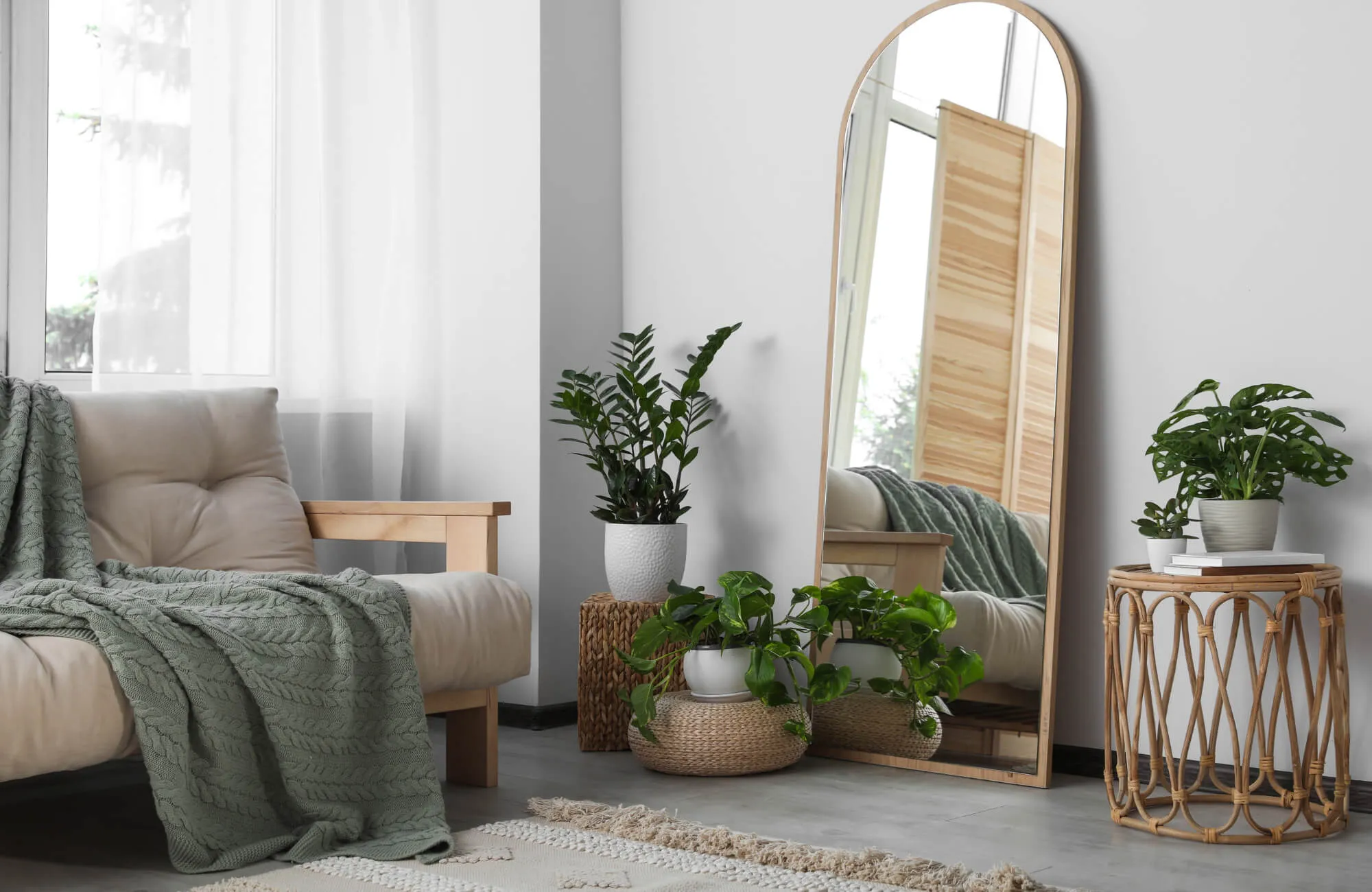
Harnessing natural light is one of the most impactful ways to elevate a space, and few tools do it better than a well-placed mirror. More than decorative accents, mirrors function as light amplifiers, redirecting sunlight and ambient illumination to brighten interiors, open up confined areas, and reduce dependence on artificial lighting.
But the effectiveness of mirrors depends on more than their placement; it’s also about precision and intent. When done right, mirrors become visual anchors, enhancing both energy efficiency and architectural appeal. In this blog, we’ll break down the art and strategy of using mirrors to maximize light, offering expert guidance for homeowners, designers, and industry professionals alike.
The Science of Light and Reflection
To use mirrors effectively in any space, it’s important to first understand the science behind how they interact with light. From the way light travels and reflects to how various mirror types influence reflection, and even how brightness affects our mood, each factor shapes how mirrors can truly transform a space.
How Light Behaves
Light, at its most basic, travels in straight lines and reflects according to the Law of Reflection: the angle of incidence equals the angle of reflection. In interior settings, maximizing light involves using mirrors to redirect the reflection toward darker or less accessible areas.
In practice, mirrors should be positioned relative to a light source, like a window or lamp, to direct light effectively across the room. Moreover, factors such as distance, obstruction, and wall color influence how much light is retained or lost. While matte surfaces scatter light through diffuse reflection, mirrors produce specular reflection, preserving clarity and direction.
Types of Mirrors and Their Reflective Qualities
Building on that foundation, the effectiveness of a mirror in redistributing light also depends on its shape, backing, and surface quality. Plane mirrors, flat and undistorted, are ideal for interiors. Convex mirrors disperse light more broadly and are often used in safety or commercial settings, while concave mirrors concentrate light, making them better suited for task lighting or decorative purposes.
Additionally, most mirrors are backed with either aluminum or silver. Silver offers higher reflectivity, up to 95%, but is less resistant to corrosion. In contrast, aluminum mirrors perform better in humid environments like bathrooms. Further variables, such as glass thickness, imperfections, and tint, can subtly impact performance, making higher-grade materials worth the investment for both brightness and accuracy.
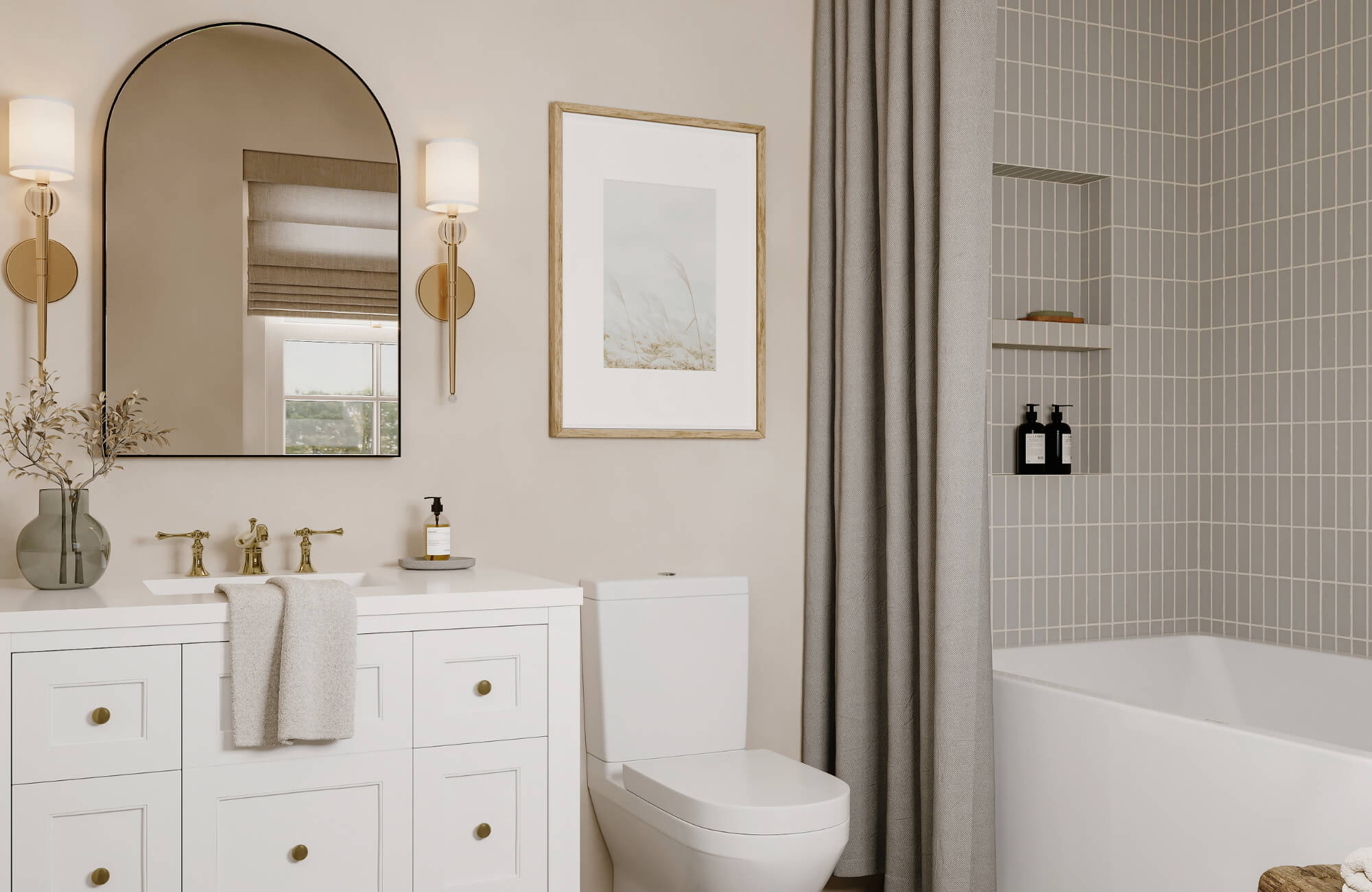
To illustrate, consider Edward Martin’s Esmeralda Small Mirror in Iron Matte Black. As featured above, its clean, arched silhouette and minimalist frame deliver both visual elegance and vertical light enhancement, especially valuable in moisture-prone areas where durability and reflection quality matter most.
The Psychology of Brightness and Space
Shifting from science to perception, light doesn’t just illuminate, it also shapes how we experience a space emotionally. Bright rooms often feel more open, clean, and energizing. This psychological effect, known as spatial amplification, occurs when evenly distributed light enhances the perceived volume of a room.
Importantly, mirrors extend this effect by reflecting windows and doorways, which the brain interprets as spatial continuations. This strategy works particularly well in narrow, dim spaces like hallways and basements. In addition, increased exposure to brightness can stimulate serotonin production, contributing to mental clarity and a sense of well-being. As a result, strategic mirror placement becomes just as much about emotional comfort as visual function.
Strategic Placement for Natural Light Amplification
Getting the most from natural light isn't just about having windows; it's about where and how you position mirrors around them. With a bit of strategic thinking, mirrors can catch, redirect, and soften daylight in ways that make a space feel brighter, more open, and better balanced throughout the day.
Opposite Windows
Among the most effective techniques is placing mirrors directly opposite windows. This setup takes full advantage of specular reflection, bouncing natural light across the room in a consistent, directional manner, often doubling perceived brightness.
To optimize this approach, align the mirror with the window’s centerline to capture both direct and ambient light. In particular, large, minimally beveled mirrors with high reflectance help amplify this effect and visually extend the room by connecting it with the outdoor view. As a result, this strategy works especially well in spaces with a single natural light source or in urban settings where daylight is limited.
Adjacent to Windows
Alternatively, mounting mirrors on walls perpendicular to windows delivers a different yet equally impactful benefit: lateral light distribution and spatial expansion. This placement captures oblique rays and channels them deeper into the room, helping reduce shadows and brighten overlooked corners.
This method is particularly effective in softly lit, north-facing rooms, where direct sunlight is minimal. In addition to improving brightness, it broadens the visual field by reflecting side views of the outdoors, reinforcing biophilic design principles, and making the space feel more connected to nature. For best results, frameless or slim-framed mirrors maintain visual continuity and avoid drawing unnecessary attention to the edges.
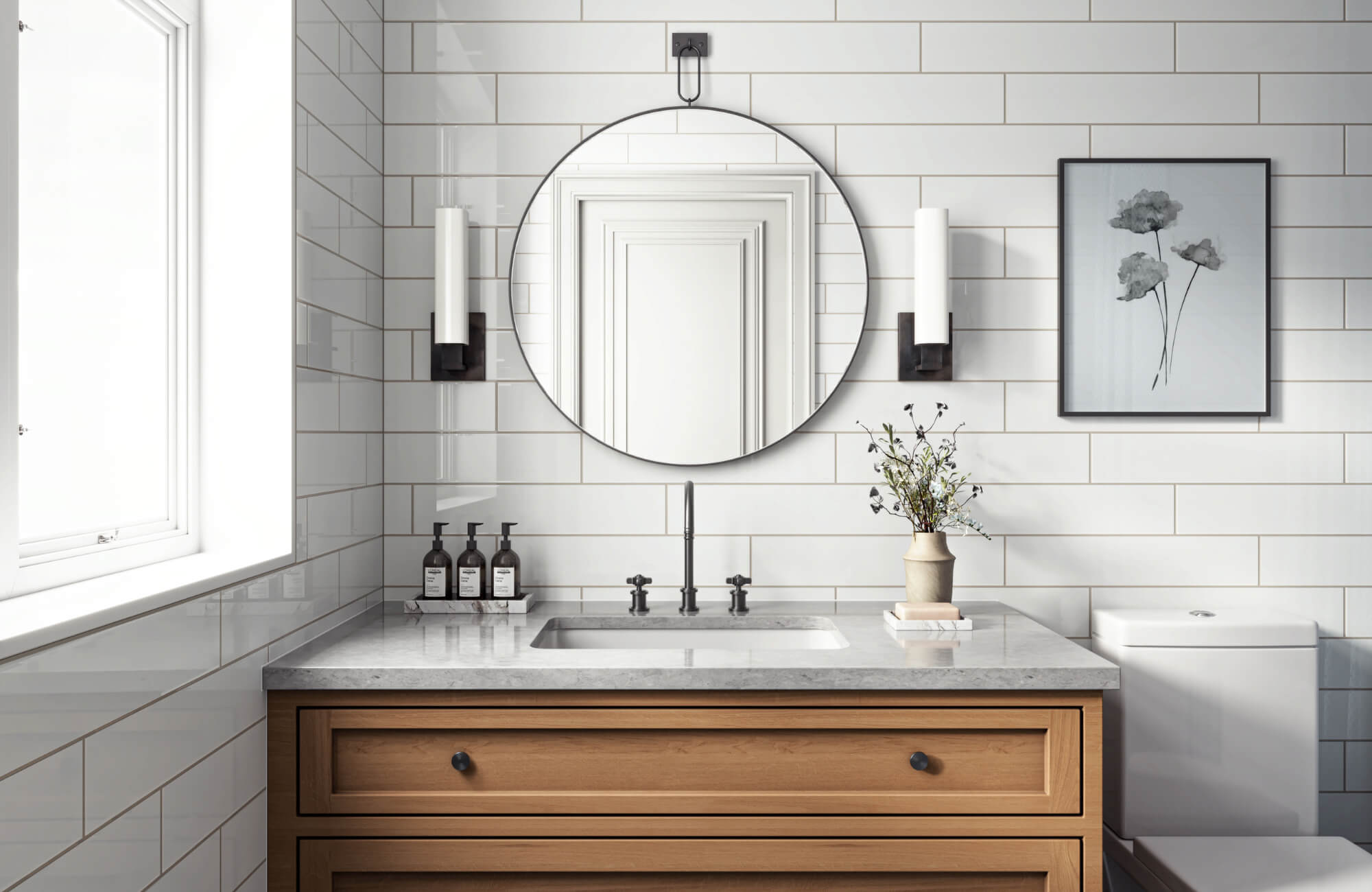
For instance, Edward Martin’s Fitz Mirror in Antiqued Iron demonstrates how strategic adjacent placement can elevate a room. As seen above, its round shape and subtle contrast reflect natural light beautifully without overwhelming the wall, enhancing ambient brightness and unifying the overall design.
Corner Placements
Lastly, corner-mounted mirrors, often underestimated, offer a unique opportunity for diffused, multi-angle light distribution. When positioned near or opposite a window, they scatter natural light throughout the space, softening harsh shadows and adding a gentle warmth.
This approach works through multi-surface reflection, where light bounces between the window and the mirror before dispersing across the room. It’s an especially effective solution in compact or underlit areas such as foyers, powder rooms, or reading nooks. Moreover, rounded or faceted mirrors are ideal in these scenarios, as they diffuse light in softer, more organic patterns while minimizing glare.
Elevating Artificial Light Sources with Mirrors
While natural light has its limits, especially after sundown, mirrors can just as effectively enhance artificial lighting. By thoughtfully pairing mirrors with fixtures like lamps, sconces, and overhead lights, you can amplify brightness, improve distribution, and create a more dynamic, layered atmosphere.
Behind Lamps and Sconces
One effective strategy is placing mirrors behind table lamps, floor lamps, or wall sconces to significantly boost perceived brightness by bouncing light back into the room. This approach creates the illusion of an additional light source, making it particularly valuable in dimly lit spaces or rooms with dark surfaces that absorb rather than reflect light.
To maximize this technique, opt for high-lumen bulbs paired with translucent shades that diffuse rather than obstruct light. In the case of sconces, consider designs with integrated backplate mirrors, which help radiate light outward and reduce harsh shadows. Furthermore, clarity is essential—silver-backed or low-iron mirrors offer superior reflectivity, ensuring that brightness and color remain accurate and undistorted.
Reflecting Overhead Lighting for Even Distribution
In addition to enhancing localized fixtures, mirrors can address the challenges posed by ceiling-mounted lighting. Fixtures like chandeliers, pendants, or flush-mounts often direct light downward, leaving peripheral zones in shadow. Strategically placed mirrors help redistribute this vertical light horizontally and laterally, resulting in more even illumination.
This is particularly advantageous in rooms with tall ceilings, where downward light may not reach lower areas effectively. For instance, a mirror installed opposite a chandelier can bounce light toward seating areas, architectural details, or wall decor. When combined with semi-gloss or satin wall finishes, this approach elevates the room’s overall reflectance index, minimizing the need for additional fixtures and supporting energy-efficient layered lighting strategies.
Creating Light Zones and Ambiance
Finally, beyond their functional uses, mirrors are powerful tools for shaping ambiance and delineating zones within a space. By reflecting specific light sources, such as dimmable sconces, LED strips, or color-adjustable smart bulbs, mirrors help define mood and purpose without the need for physical partitions.
For example, a mirror reflecting a warm-toned lamp can create a cozy, inviting atmosphere in a living room, while cooler-toned reflections in a workspace can boost alertness and focus. Additionally, mirrors enhance architectural lighting features, such as recessed or cove lighting, by extending their glow and emphasizing structural lines or rhythms.
To fine-tune the effect, consider mirror finishes that diffuse light gently, such as antiqued or smoked glass. Beveled edges and sculptural silhouettes also introduce texture and subtle refractive highlights, contributing to a more immersive lighting experience.
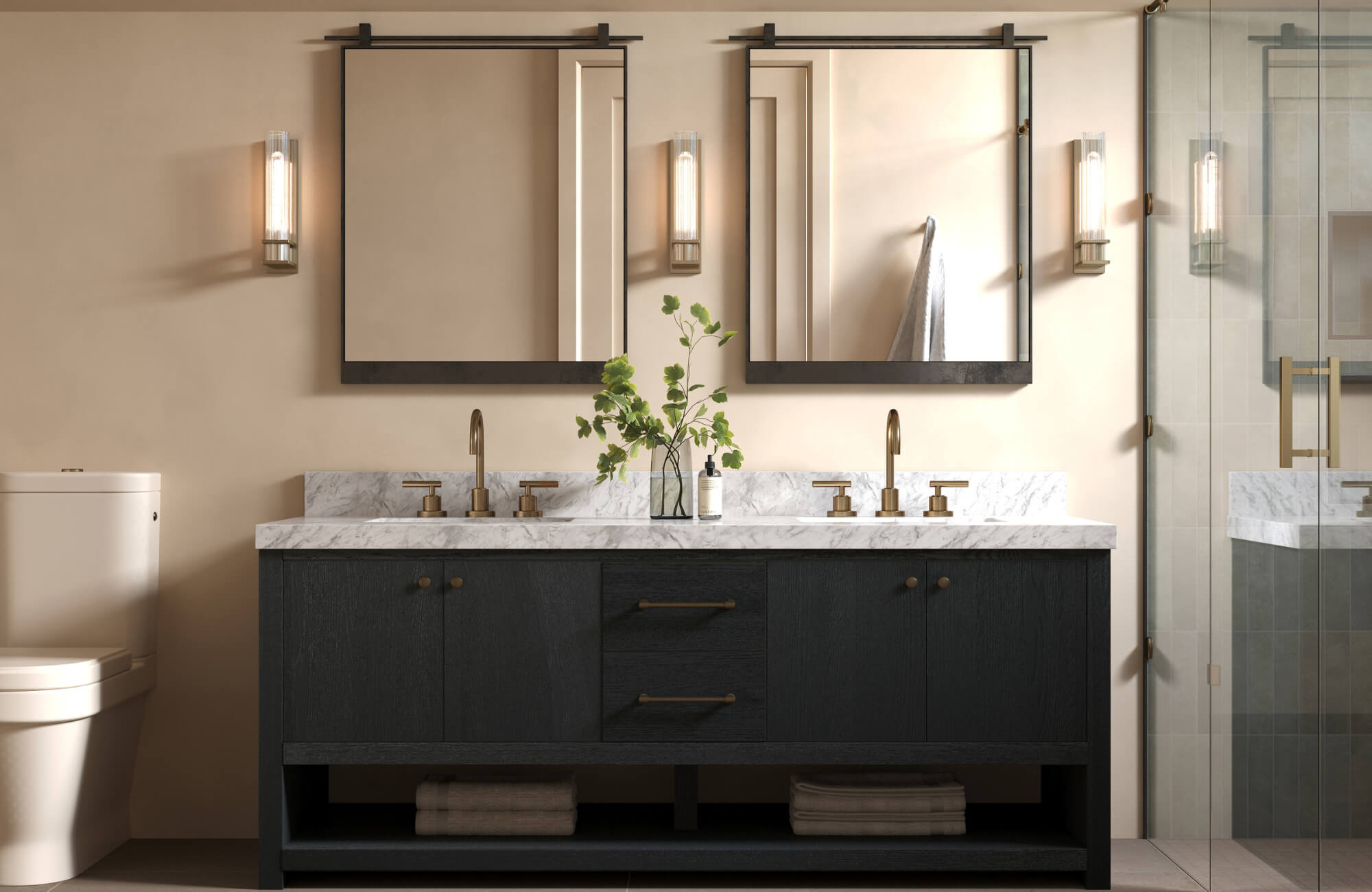
One particularly effective application of these principles is Edward Martin’s Clancy Small Mirror in Antiqued Iron, featured in the double vanity setting above. Its bold square form and suspended bar detail reflect the warm glow of adjacent sconces, anchoring the lighting scheme while reinforcing vertical symmetry. The mirror’s clean lines and proportional balance make it ideal for creating visually distinct yet harmonious light zones.
Beyond Function Creative Mirror Applications
Mirrors aren't limited to walls or vanities; they can be woven into a space in far more creative and unexpected ways. Whether used as functional furniture accents, decorative wall compositions, or outdoor design features, these reflective elements add depth, interest, and a fresh layer of dimension to any setting.
Mirrored Furniture and Surfaces
At its core, mirrored furniture transforms practical pieces into visual highlights. Coffee tables, consoles, and cabinetry doors not only serve a functional purpose but also reflect the surrounding light and color. This quality makes them especially effective in compact or dim environments, where reducing visual bulk is essential. Consequently, these pieces enhance spatial flow and create an illusion of openness, often referred to as visual permeability.
From a technical perspective, these items are crafted using tempered or annealed glass backed with silver or aluminum to ensure strength and high reflectivity. Additionally, features like beveled edges, mitered corners, and safety backing contribute to durability and safety, especially in busy areas. To add character without visual overload, designers frequently opt for antiqued, smoked, or tinted finishes. Moreover, mirrored surfaces reflect nearby decor elements, reinforcing symmetry and cohesion within the room.
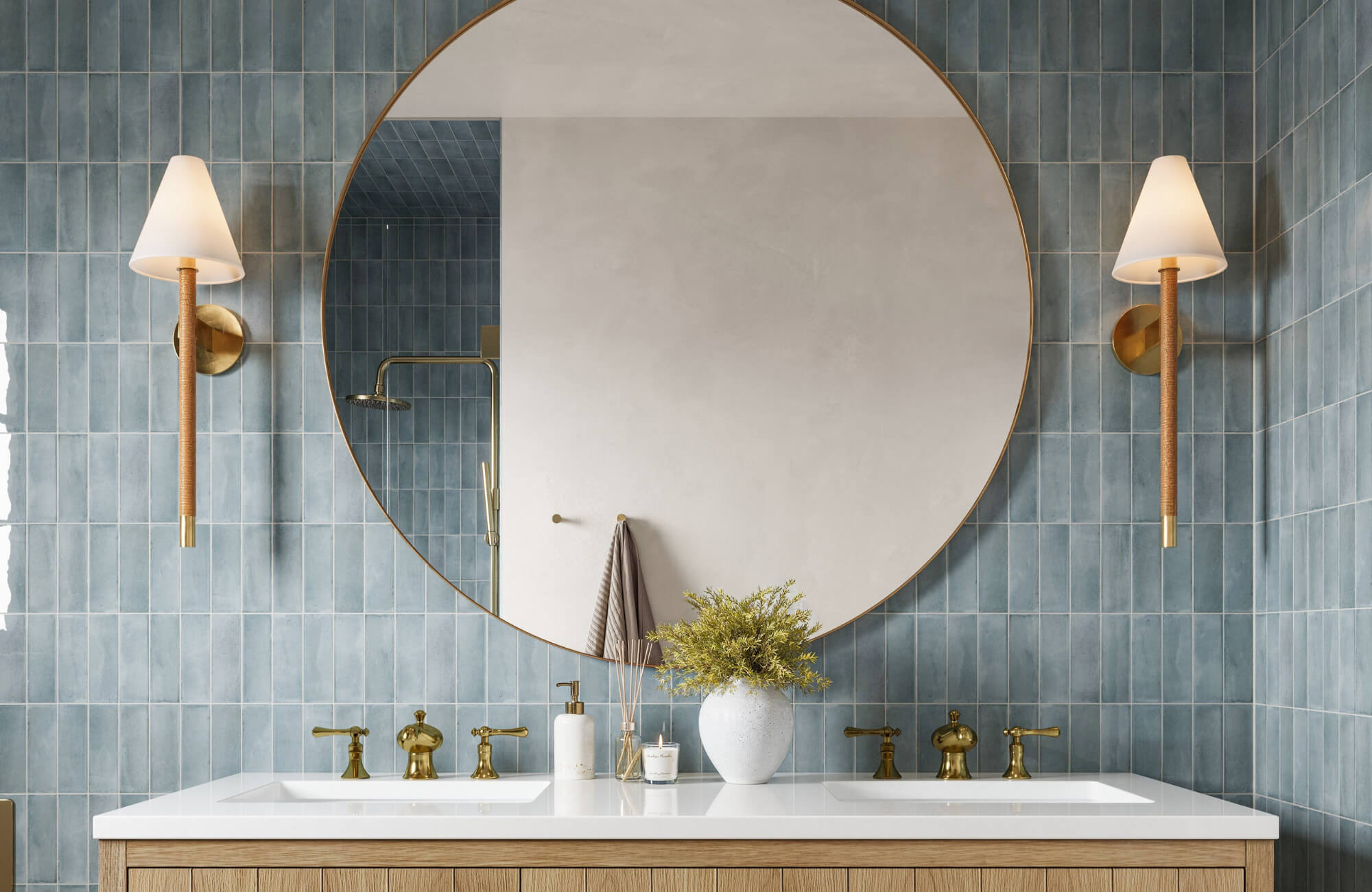
For a refined example, look at Edward Martin’s Tristan Round Mirror in Polished Brass, whose clean lines and warm metallic frame lend softness and luminosity. As shown in the photo above, when placed atop a tiled or angular element, it acts as a radiant focal point, elegantly anchoring the space while subtly enhancing light distribution.
Gallery Walls and Mirror Groupings
In addition to stand-alone pieces, mirrors can be artfully arranged as wall compositions. Gallery walls featuring an array of mirror shapes and finishes offer a dimensional alternative to framed artwork. Not only do these groupings reflect light from multiple angles, but they also introduce visual rhythm, making them especially effective in transitional spaces like stairwells, hallways, or entryways that often lack natural illumination.
To achieve balance, designers frequently curate a mix of convex, concave, and flat mirrors, unified by consistent frame materials, shapes, or spacing. This sculptural layering brings a tactile quality to vertical surfaces. When paired with sconces or spotlights, the shifting reflections throughout the day infuse the space with subtle movement and depth.
Outdoor Mirrors and Garden Reflections
Extending mirror use outdoors adds yet another layer of spatial enhancement. With weather-resistant construction, including sealed edges, anti-corrosion backing, and UV protection, outdoor mirrors can be mounted on fences, trellises, or stone walls. In doing so, they reflect greenery, sky, and water elements, effectively “borrowing views” to create the illusion of expanded landscapes.
This technique is especially impactful in narrow patios or enclosed courtyards, where space is limited but atmosphere is essential. Depending on the desired effect, designers might incorporate convex mirrors for playful distortion or select antiqued finishes for a more rustic, organic touch. As day turns to night, these mirrors reflect candlelight, string lights, or lanterns, enhancing the outdoor ambiance with a warm, immersive glow.
Common Mirror Placement Mistakes and Solutions
Even the most beautiful mirror can fall flat, or worse, disrupt a space, if it’s placed without intention. From what it reflects to how much space it occupies and where it sits on the wall, small missteps in mirror placement can quickly undermine both form and function.
Reflecting Undesirable Views
One common mistake is placing a mirror where it reflects something distracting, like clutter, vents, or appliances. Because mirrors duplicate whatever’s in their sightline, these reflections can unintentionally pull focus from your intended design elements.
To address this, apply the principle of intentional framing: treat the mirror’s reflection as a curated visual composition. View it from multiple angles before installation to ensure it enhances rather than detracts. If relocation isn’t feasible, creative workarounds like frosted film, tall décor, or screens can help obscure less appealing reflections. Additionally, in open plans, avoid positioning mirrors where they might reflect TVs, kitchen appliances, or doorways; these break visual flow and add unnecessary noise.
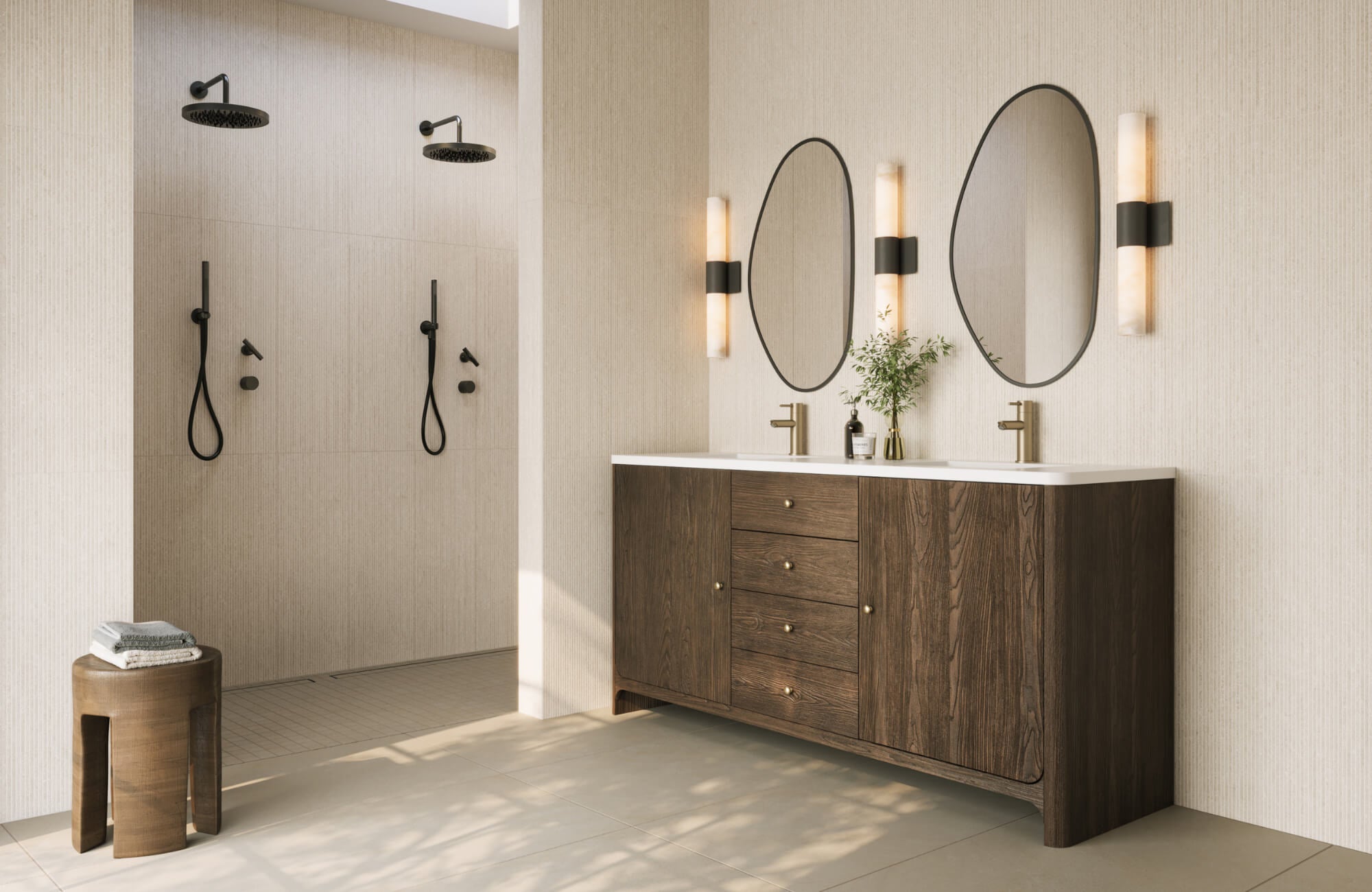
A well-designed mirror can also assist in this effort. The Rory Mirror in Matte Black from Edward Martin exemplifies purposeful design. As featured above, its organic shape and minimalist frame soften harsh lines and guide the eye toward intentional focal points, offering control over both reflection and mood.
Overcrowding and Visual Clutter
While mirrors can expand space visually, overuse, or selecting pieces that are too ornate or numerous, can backfire. Overcrowding introduces glare, visual noise, and a fragmented sense of space, especially in smaller rooms.
To counter this, adopt a restrained, function-first approach. Choose mirrors that fulfill a specific role: whether it’s enhancing light, creating balance, or providing practical utility. Styles should align with your overall design language, frameless for clean modernity, or detailed frames for classic warmth. Also, be cautious with placing mirrors on opposing walls unless you’re intentionally going for a dramatic effect; infinite reflections can feel dizzying rather than elegant.
Incorrect Height and Angle
Another frequent misstep lies in improper height or tilt. Hanging a mirror too high, or at the wrong angle, can result in glare or an unusable reflection. Ideally, the mirror’s center should align with average eye level, typically 57 to 63 inches from the floor.
For functional results, tools like digital levels or inclinometers ensure mirrors are aligned for optimal effect. In bathrooms, position vanity mirrors 5–10 inches above the sink. For full-length mirrors, a slight forward tilt improves the viewing angle and reduces visual distortion. Throughout the day, changing light conditions and viewer positions should also factor into final placement decisions.
To make this process easier, Edward Martin’s design consultation service offers one-on-one support, from conceptual advice to material pairing. Whether you’re perfecting mirror placement or coordinating it with tiles, rugs, or furniture, our dedicated team ensures your layout is both intentional and refined.
Moreover, if you need fast assistance or tailored product guidance, the Edward Martin Contact Us page is always open. Our experts can help with measurements, finishes, or product combinations, so your final design reflects both clarity and cohesion.
Reflections That Illuminate
Ultimately, elevating a space with mirrors goes far beyond decoration. It’s about balancing optics, scale, and design intent in a way that feels both impactful and effortless.
By avoiding common missteps and leaning into purposeful placement, mirrors become more than reflective surfaces; they become essential tools of light, depth, and ambiance. At Edward Martin, we invite you to explore how thoughtful mirror choices can transform your space with brilliance and intention.
Follow us on Instagram
@EDWARD.MARTIN
)
)
)
)
)
)
)
)
)
)
)
)
)
)
)
)