



Mid century modern interiors continue to captivate global audiences for their clean lines, sculptural furniture, and effortless balance between form and function. Defined by an optimism rooted in postwar innovation, this aesthetic celebrates geometry, organic silhouettes, and a seamless connection between indoors and out. While furniture often takes center stage in mid century spaces, wallpaper serves an equally impactful function, shaping atmosphere and reinforcing architectural rhythm.
Selecting the right wallpaper patterns for a mid century modern aesthetic requires more than choosing something retro. It calls for an understanding of proportion, materiality, and color harmony. The most successful interiors pair iconic teak and walnut furniture with thoughtfully curated wall treatments that amplify, rather than overpower, the room’s design language. From atomic geometry to textured grasscloth, the following guide explores how to integrate wallpaper into a refined, contemporary interpretation of mid century modern style.

Embracing The Geometry Of The Atomic Age
Geometry is foundational to mid century modern design. Inspired by space exploration, molecular science, and forward-thinking architecture, patterns from this era carry both precision and playfulness. When used strategically, geometric wallpaper becomes a dynamic backdrop that reinforces the era’s sense of movement and innovation.
The Resurgence Of The Starburst Motif
Few patterns are as synonymous with mid century modern decor as the starburst. Originally seen in clocks, textiles, and architectural detailing, the motif evokes the optimism of the atomic age. As a wallpaper pattern, starbursts introduce energy through radiating lines and rhythmic repetition.
In contemporary interiors, the key to using starburst wallpaper successfully lies in restraint. Opt for tonal variations such as brass on cream, charcoal on warm white, or muted gold on soft taupe. These combinations echo vintage palettes while maintaining a polished, modern sensibility. When paired with low-slung sofas, sculptural lounge chairs, and tapered wood legs, the pattern enhances rather than overwhelms.
Scale also matters. A larger, more open starburst print can create visual drama in a living room or entryway, while smaller repeats work well in intimate spaces such as reading nooks or home offices. The goal is to let the pattern breathe, ensuring it complements the architecture and furniture rather than competing with them.
Interlocking Grids And Architectural Lines
Beyond playful bursts, mid century design often leaned into structured geometry. Interlocking grids, linear repeats, and architectural linework reflect the era’s fascination with modernist buildings and urban planning. These wallpaper patterns echo the precision found in iconic homes by architects such as Richard Neutra and Joseph Eichler. Edward Martin’s Essex Wallpaper in Black II, 52" x 132", as shown in the image above, captures this spirit through its subtle checkerboard grid, offering a refined backdrop that feels both graphic and understated.
Grid-based wallpaper works particularly well in rooms with strong horizontal elements, such as credenzas, floating media consoles, and long sectional sofas. The repetition reinforces spatial order and creates subtle movement along the walls. Choosing muted colorways like olive and cream, slate and ivory, or camel and charcoal keeps the look refined.
Architectural line patterns also serve as a bridge between minimalist furniture and expressive decor. In a dining room with a sculptural pendant light and molded plastic chairs, a linear wallpaper can anchor the space without distracting from statement pieces. It provides structure, allowing other design elements to shine.
Balancing High Contrast Scale With Minimalist Furniture
While mid century modern interiors often embrace bold contrast, balance remains essential. High contrast wallpaper patterns in black and white, deep navy and cream, or burnt orange and beige can feel striking, but they require thoughtful pairing with streamlined furnishings.
Minimalist silhouettes help ground dramatic walls. A simple platform sofa upholstered in textured neutral fabric allows geometric wallpaper to become the focal point. Similarly, a walnut credenza with clean lines offsets the intensity of a large-scale pattern.
Negative space is essential to maintaining this balance. Avoid overcrowding walls with art when the wallpaper itself acts as visual art. Instead, allow the pattern to establish rhythm and movement. This approach maintains the airy, uncluttered feel that defines mid century modern interiors while still embracing bold design choices.

Introducing Organic Modernism Through Botanical Prints
While geometry defines one side of mid century style, organic modernism defines the other. Designers of the era sought harmony with nature, incorporating natural materials and fluid forms into interiors. Botanical wallpaper patterns capture this softer dimension, introducing movement and warmth.
Abstract Palm And Monstera Leaf Patterns
Large-scale botanical prints featuring palms, monstera leaves, or stylized fronds echo the indoor-outdoor philosophy central to mid century architecture. These patterns reference tropical landscapes without veering into overtly contemporary motifs.
Abstract interpretations are especially effective. Instead of photorealistic prints, look for simplified silhouettes and graphic outlines. Deep greens layered against off-white, warm sand, or muted clay tones evoke vintage palettes while remaining sophisticated.
In living areas with floor-to-ceiling windows or sliding glass doors, botanical wallpaper reinforces the connection to nature. Paired with leather lounge chairs, ceramic planters, and woven area rugs, the space feels cohesive and immersive. The wallpaper becomes an extension of the landscape beyond the glass.
The Scandinavian Influence On Retro Florals
Scandinavian design significantly influenced mid century modern interiors, particularly through its emphasis on simplicity and natural motifs. Retro floral wallpaper inspired by Nordic patterns tends to feature stylized blooms, restrained color palettes, and generous negative space.
These florals work beautifully in bedrooms and dining rooms, where a softer atmosphere is desired. Muted blues, dusty rose, and olive green create visual interest without overwhelming the room. When combined with pale oak furniture and linen textiles, the result feels serene yet distinctly mid century.
The success of retro florals lies in proportion. Larger, spaced-out blooms maintain the modern character of the space, while overly dense prints can feel traditional. By selecting patterns that prioritize clean outlines and breathable layouts, you can introduce subtle romance while preserving architectural clarity.
Using Earthy Greens And Mustards For Natural Warmth
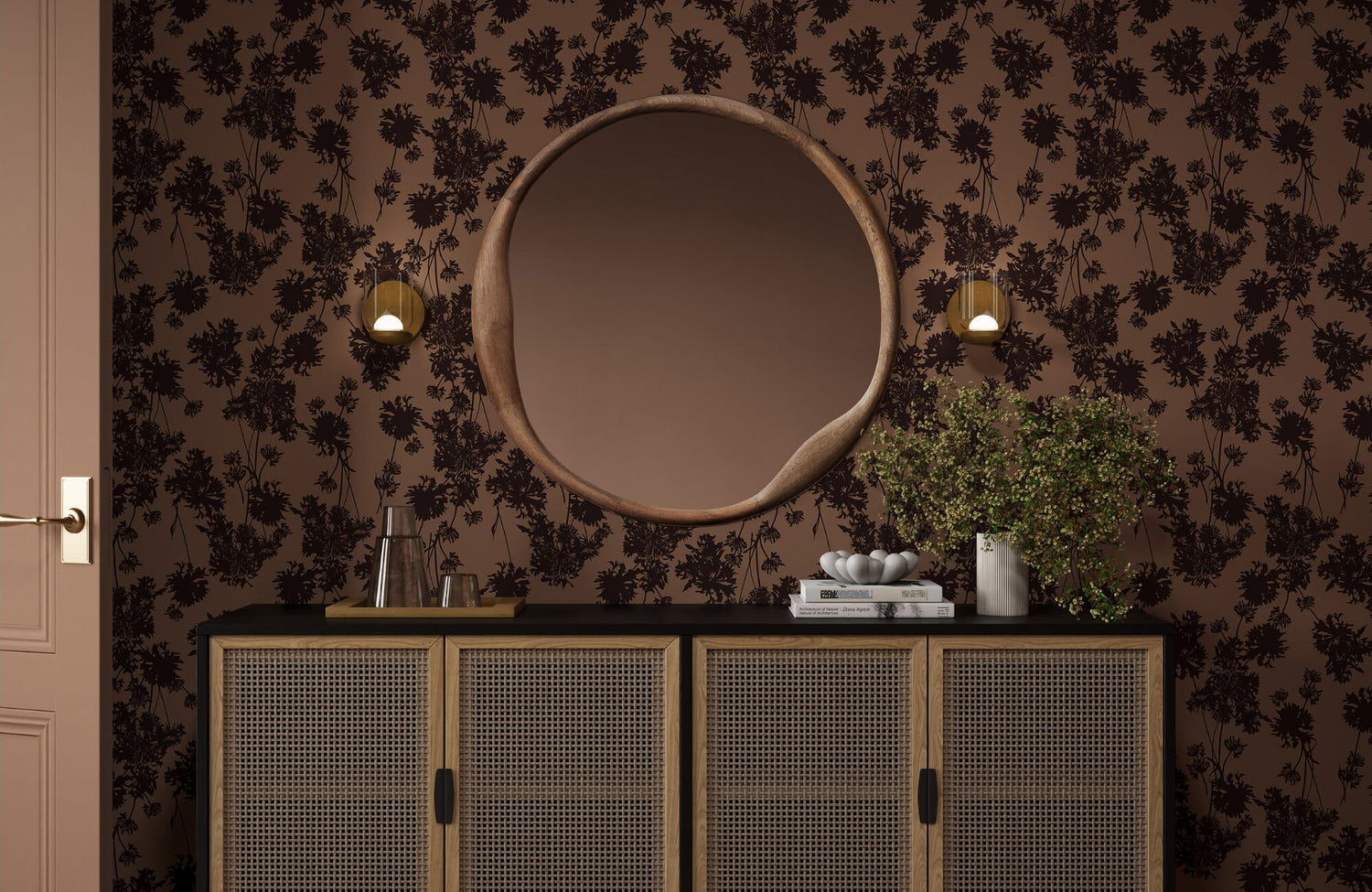
Color is as important as pattern when selecting wallpaper for a mid century modern aesthetic. Earthy greens, warm mustards, burnt sienna, and rich ochre define the era’s signature palette. These tones reference natural materials such as teak, walnut, and leather. Edward Martin’s Greensward Wallpaper in Terracotta I, 52" x 132", featured in the image above, illustrates how a warm terracotta ground paired with delicate botanical detailing can infuse a space with depth while maintaining mid century restraint.
Wallpaper patterns in these hues create a sense of grounded warmth. A mustard geometric print behind a walnut sideboard intensifies the richness of the wood. Olive botanical wallpaper complements brass lighting fixtures and cream upholstery.
When working with saturated colors, consider the room’s natural light. Spaces with abundant daylight can support deeper tones, while dimmer rooms may benefit from lighter variations of the same palette. This thoughtful calibration ensures the wallpaper enhances the room’s ambiance rather than darkening it.

Utilizing Texture To Ground The Room
Pattern is only one dimension of wallpaper selection. Texture introduces tactile depth, adding subtle sophistication that aligns beautifully with mid century modern principles. The era’s emphasis on natural materials makes textured wallpaper particularly relevant.
The Timeless Appeal Of Authentic Grasscloth
Grasscloth wallpaper offers organic texture through woven fibers, creating gentle tonal variation across the wall. Its imperfect surface reflects light differently throughout the day, adding movement without overt pattern.
In mid century interiors, grasscloth pairs effortlessly with wood paneling, stone fireplaces, and leather furnishings. The natural weave complements iconic pieces such as Eames lounge chairs and sculptural coffee tables, enhancing their material richness.
Neutral shades such as warm beige, soft taupe, and muted olive are especially effective. They provide depth while maintaining the clean, understated character central to modernist design. Grasscloth is ideal for living rooms and bedrooms where calm sophistication is desired.
Faux Wood Panel And Veneer Wallpaper Options
Wood paneling defined many mid century interiors, particularly in family rooms and studies. For those seeking a similar aesthetic without full renovation, faux wood panel or veneer wallpaper offers a practical alternative.
High-quality options replicate the grain and tone of walnut, teak, or oak, creating visual warmth across expansive walls. When used thoughtfully, this type of wallpaper can evoke vintage charm while integrating seamlessly with modern lighting and decor.
The key is authenticity. Choose patterns with realistic grain variation and subtle color shifts. Pairing faux wood wallpaper with streamlined furniture and metallic accents prevents the space from feeling dated. Instead, it reads as a deliberate nod to mid century heritage.
Pairing Woven Textures With Teak And Walnut Furniture
Teak and walnut furniture serve as cornerstones of mid century modern interiors. Their rich tones and sculptural forms demand complementary backdrops. Woven or textured wallpaper enhances these pieces by introducing depth without distraction.
A softly textured wall behind a floating walnut credenza creates contrast through material interplay rather than bold pattern. Similarly, a woven wallpaper in a dining room frames a teak table, highlighting its craftsmanship.
This layered approach emphasizes quality and authenticity, qualities that resonate strongly with design-conscious homeowners worldwide. Rather than relying solely on graphic statements, texture allows the room’s architecture and furniture to speak with quiet confidence.

Strategic Placement For Maximum Visual Impact
Even the most beautifully designed wallpaper can fall flat if applied without intention. Strategic placement ensures patterns enhance spatial flow and highlight architectural features.
The Rules For A Mid Century Accent Wall
Accent walls are a natural fit for mid century modern interiors, where clean lines and open layouts benefit from focused moments of interest. A geometric or botanical wallpaper placed behind a sofa or bed establishes a focal point without overwhelming the entire room.
When creating an accent wall, align the pattern with the room’s architectural axis. Center it behind key furniture pieces and maintain symmetry whenever possible. This reinforces the era’s appreciation for balance and proportion.
Color continuity is equally important. Pull tones from the wallpaper into cushions, rugs, or artwork to create cohesion. The result feels curated rather than arbitrary, enhancing the overall design narrative.
Creating An Immersive Powder Room Experience
Powder rooms offer an opportunity for bolder expression. Because of their smaller scale, they can support dramatic wallpaper patterns that might feel overpowering in larger spaces. Edward Martin’s Bower Wallpaper in Taupe I, 52" x 132", visible in the image above, demonstrates how a repeating palm motif in soft taupe can envelop the walls with elegance while still aligning with mid century organic influences.
A saturated botanical motif wrapping every wall transforms the room into a jewel box. Paired with a floating vanity, globe lighting, and warm metal fixtures, the pattern feels distinctly mid century yet contemporary. The organic rhythm of the leaves softens architectural lines and enhances the intimacy of the space.
Wrapping all walls in the same pattern creates immersion. The absence of visual interruption allows the wallpaper to define the room’s character fully, making even a compact powder room feel curated and memorable.
Wrapping The Dining Room For Vintage Glamour
The dining room presents another ideal canvas for wallpaper in a mid century modern home. This space often features iconic furniture silhouettes and sculptural lighting, making it a natural stage for expressive walls.
Wrapping the entire dining room in a refined geometric or textured wallpaper introduces vintage glamour. Brass chandeliers, upholstered dining chairs, and a statement credenza gain added presence against a patterned backdrop.
To maintain sophistication, balance bold walls with restrained decor. Let the wallpaper provide visual rhythm while furniture and lighting supply sculptural contrast. This synergy captures the spirit of mid century entertaining, where elegance and innovation coexist.
Bridging The Past And Present
Mid century modern design endures because it balances nostalgia with forward thinking. The right wallpaper patterns reinforce this duality, honoring the atomic age’s geometry and organic modernism while adapting seamlessly to contemporary living.
Whether through starburst motifs, architectural grids, botanical abstractions, or textured grasscloth, wallpaper deepens the character of a space. When paired thoughtfully with teak furniture and warm finishes, it becomes a defining design element. For tailored guidance across wallpaper, tile, rugs, or furniture selections, Edward Martin’s design consultation service offers personalized recommendations to suit your project. If you need further assistance with product details or specifications, simply contact Edward Martin for expert support.


