Wall art above a bed tends to look deceptively simple until you actually try to choose the right piece for your own space. Something that feels beautiful on its own can suddenly look undersized, overly heavy, visually distracting, or simply out of place once it sits above one of the largest focal points in the room. Because bedrooms ask for a different balance between style and comfort, this decision usually requires more thought than filling a blank wall elsewhere in the home. In this blog, we will walk through what wall art works best above a bed so you can create a bedroom that feels balanced, intentional, and genuinely restful.

Why Above-Bed Wall Art Needs A Different Approach
Choosing wall art above a bed usually comes with a different set of decisions than filling a blank wall in a hallway, living room, or entryway. Because the bed already acts as one of the largest visual anchors in the room, whatever you place above it has a much stronger effect on balance, atmosphere, and how restful the entire bedroom feels.
Why The Bed Naturally Controls The Entire Visual Composition
The bed naturally becomes the dominant feature in most bedrooms, which means the wall art above it is rarely treated as an isolated decorative moment. Unlike smaller walls where artwork can stand more independently, above-bed placement immediately becomes part of the room’s central composition because your eye reads the bed, headboard, bedding, lighting, and wall decor together. That makes the proportion feel much more noticeable here, even if you cannot immediately explain why something feels off. A piece that works beautifully elsewhere may suddenly feel awkward simply because it is competing with such a large visual anchor. If you want the room to feel balanced, the artwork needs to support that central composition instead of disrupting it.
How Bedroom Atmosphere Should Influence Artwork Choices
Bedrooms ask for a different emotional response than most other rooms, which should absolutely influence the kind of artwork you place above the bed. A piece that feels energetic, visually aggressive, or overly stimulating may work well in a dining room or hallway but feel much less appropriate in a space meant for rest. This does not mean your bedroom artwork needs to be bland or overly quiet, but it should still align with the atmosphere you actually want to come home to at the end of the day. If your goal is to create a calm, layered retreat, the artwork should support that mood instead of pulling against it. Thinking about how the room should feel, not just how the artwork looks on its own, usually leads to much stronger decisions.
Why Not Every Wall Art Style Translates Well Above A Bed
Some wall art styles simply perform better in other parts of the home because above-bed placement comes with different visual demands. Highly cluttered gallery arrangements, overly heavy statement pieces, or artwork with intense visual movement can sometimes make the bed wall feel busier than intended, especially in smaller bedrooms. What feels exciting in a larger open-concept living area may feel overwhelming when positioned directly above where you sleep every night. The goal is not to limit your style, but to recognize that placement changes how artwork is experienced. Choosing with that context in mind helps you avoid creating a bedroom that feels visually louder than you actually want.

Getting The Scale Right Before You Choose Anything Else
Before you start thinking about artwork style, color palette, or framing details, it helps to get the proportions right first. One of the quickest ways above-bed wall art can feel off is when the size looks disconnected from the bed itself, even if you genuinely love the piece on its own.
Matching Artwork Width To The Size Of Your Bed
If the artwork above your bed feels too narrow, the entire setup can start to look visually disconnected, no matter how beautiful the piece is. Because your bed already takes up so much visual space, the wall art needs enough presence to feel like part of the same composition instead of floating awkwardly above it. Larger beds naturally ask for artwork that can hold more visual weight, while smaller beds usually benefit from slightly more restraint. The goal is not perfectly matching widths, but making sure the relationship feels intentional when you step back and look at the full wall. If the piece feels like it belongs somewhere much smaller, your eye will usually pick up on that immediately.
How Headboards Change What Looks Balanced
Your headboard changes the visual balance more than you might expect because it already adds height, shape, texture, and personality to the bed wall. If you have a taller upholstered headboard or something more architecturally prominent, the artwork above may not need to work as hard to create presence. On the other hand, if your headboard is lower-profile or visually minimal, the wall art may need to take on more of that focal-point role. This is why the same artwork can look beautifully balanced in one bedroom and strangely awkward in another. Looking at your bed wall as one complete composition usually leads to much better decisions than judging the artwork in isolation.
When Oversized Art Creates A Stronger Bedroom Focal Point
If your bedroom has a larger bed, higher ceilings, or a relatively clean design direction, oversized wall art can often create a much stronger result than smaller alternatives. A larger piece tends to feel more confident and visually grounded, which helps the bed wall look intentionally designed instead of cautiously pieced together. It can also create a calmer focal point because your eye settles into one clear visual statement rather than bouncing between multiple smaller elements. If you want the bedroom to feel more cohesive without introducing unnecessary visual clutter, going larger can sometimes be the cleaner move. Bigger is not automatically better, but when the room can support it, the difference is usually noticeable.
Why Smaller Pieces Often Feel Lost Above Larger Beds
A smaller piece of artwork can easily feel underwhelming above a larger bed, even if you genuinely love the design itself. Queen and king beds already carry so much visual weight that modestly sized artwork can start to look temporary, misplaced, or simply too timid for the wall. This becomes even more obvious if you have wider nightstands, larger lamps, or a substantial headboard, adding even more presence below. That does not mean smaller artwork is automatically wrong, but it usually needs stronger grouping or a more deliberate arrangement to feel convincing. Otherwise, the wall can end up looking unfinished instead of thoughtfully styled.
When Leaving More Negative Space Actually Works Better
You do not always need to fill every inch above the bed just because the wall is available. In some bedrooms, especially if your style leans cleaner or more minimal, allowing more breathing room can actually make the space feel calmer and much more intentional. Trying to force visual fullness simply to avoid empty space often creates more tension than the blank wall ever would. A thoughtfully placed piece with room around it can sometimes feel far more sophisticated than an arrangement that tries too hard to occupy the entire area. If your bedroom is meant to feel restful, restraint can sometimes be the smarter design decision.
Negative space tends to work best when the artwork itself brings enough quiet presence to hold attention without demanding too much from the room. Our Greyward Vale Wall Art, shown above, does that naturally through its softly woven gradient and horizon-like composition, which feels calming rather than visually busy. In a bedroom, that kind of restraint can often feel far more appropriate than filling the wall simply because the space is available, especially if the goal is creating something that feels restful instead of overly styled.

Choosing The Right Wall Art Format For Your Bedroom Layout
Once you have a better sense of scale, the next decision is choosing the actual wall art format that makes the most sense for your bedroom layout. The way artwork is arranged above the bed can completely change how the room feels, whether you want something calm and minimal, more structured and symmetrical, or layered with a bit more personality.
Single Statement Artwork For A Cleaner, Calmer Look
If you want your bedroom to feel visually quieter, a single statement piece is often one of the easiest formats to work with. Because your eye lands on one clear focal point instead of moving between multiple pieces, the overall effect tends to feel calmer and more grounded. This can work especially well if your bedroom already includes layered bedding, patterned textiles, or surrounding furniture that adds enough visual detail on its own. A single piece also makes the wall feel more intentional because the composition looks decisive rather than pieced together over time. If you are drawn to cleaner bedrooms that feel restful rather than heavily styled, this format often aligns naturally with that goal.
This approach can be especially helpful if your bed sits against a straightforward wall without architectural interruptions like windows, shelving, or awkward vertical breaks. A strong statement piece tends to create visual clarity in layouts where too many separate elements could start competing with the room’s main focal point. It can also make the styling process feel less overwhelming because you are making one confident decision instead of managing multiple moving parts. That said, the artwork still needs enough presence to feel appropriate for the wall. Simplicity works best when it feels intentional, not when it looks like the room is still waiting to be finished.
Multi-Panel Artwork For Better Width And Symmetry
If you like a more structured look but do not necessarily want one oversized piece, multi-panel artwork can create a strong middle ground. Diptychs and triptychs naturally introduce width across the bed wall, which helps the composition feel balanced without relying on one dominant object. This format often works especially well in bedrooms where symmetry already plays a role through matching nightstands, bedside lighting, or a centered headboard arrangement. Because the artwork is broken into separate sections, the wall can still feel visually substantial without becoming too heavy. If you want a bedroom that feels polished and organized, this approach often supports that direction beautifully.
Multi-panel arrangements also give you a little more flexibility in how the visual weight is distributed across the wall. In rooms where one large framed piece might feel too imposing, separating the composition into coordinated panels can create breathing room while still maintaining cohesion. The key is making sure the panels feel intentionally related rather than loosely grouped because uneven spacing or mismatched proportions can make the arrangement feel more distracting than balanced. If your bedroom layout naturally leans structured, this format often feels like a very comfortable fit. It gives you presence without sacrificing order.
Gallery Walls For A More Personal, Layered Feel
If your bedroom feels more collected, expressive, or less formally styled, a gallery wall can create a much more personal look above the bed. This format works well when you want the wall to reflect personality, storytelling, or a layered design approach rather than functioning as one singular focal point. Mixing artwork, photography, sketches, or smaller framed pieces can make the bedroom feel much more lived-in and individual. If done thoughtfully, the arrangement can add warmth and visual interest without making the room feel overly staged. This tends to appeal more to homeowners who enjoy a curated, evolving aesthetic rather than something highly restrained.
That said, gallery walls above a bed usually require more discipline than they do in hallways or living rooms because bedrooms can feel visually cluttered much faster. Too many pieces, inconsistent spacing, or highly contrasting frames can create unnecessary noise in a room that is supposed to feel restorative. If you choose this route, it helps to think about the gallery wall as one complete composition rather than a collection of unrelated additions. The layout should still feel cohesive when viewed from the bed or across the room. Personality works best here when it still respects the quieter atmosphere that bedrooms usually need.
Sculptural Wall Decor That Adds Dimension Without Feeling Heavy
If you want something beyond traditional framed artwork, sculptural wall decor can introduce depth in a way that feels softer and more tactile. Pieces with texture, carved details, woven materials, or dimensional forms can make the bed wall feel more layered without relying entirely on printed imagery. This often works especially well in bedrooms where you want the design to feel warmer, more organic, or less conventionally styled. Because the interest comes from shape and material rather than only color or artwork itself, the effect can feel visually rich without becoming overstimulating. If your bedroom already leans toward texture-led design, this can be a very natural extension.
The biggest advantage here is that sculptural wall decor often creates presence without the sharper visual formality that framed artwork sometimes introduces. A dimensional woven piece, carved panel, or softer sculptural composition can help the wall feel intentional while keeping the room approachable and relaxed. Still, not every sculptural piece works equally well above a bed, especially if the design feels overly bulky or visually aggressive. The goal is to add depth, not make the wall feel physically heavy or awkwardly dominant. When chosen well, this format can make the bedroom feel layered in a way that feels both thoughtful and easy to live with.
A piece does not need bold color or oversized scale to create presence when texture is doing the work for you. Our Borrowed Dawn Wall Art, visible above, brings that kind of dimension through its layered wool and jute composition, where tightly structured coils contrast with looser flowing fibers to create something far more tactile than a traditional framed print. Against the darker patterned wall, that softer handcrafted texture keeps the composition feeling warm and grounded rather than visually rigid, which is exactly why sculptural wall art can feel so compelling in bedrooms that benefit from a little more material depth.

Wall Art Materials That Actually Make Sense Above A Bed
The artwork itself matters, but the material it is made from can completely change how it feels in a bedroom. Because this is a space meant for rest, comfort, and visual ease, factors like glare, texture, softness, and overall visual weight tend to matter much more here than they might in a hallway, dining room, or entryway.
Canvas For A Softer And Less Reflective Presence
If you want wall art above your bed to feel visually calm, canvas is often one of the easiest materials to work with. Because canvas has a softer surface that absorbs light rather than sharply reflecting it, the artwork tends to feel gentler within the room, especially if your bedroom gets natural daylight or nearby bedside lighting. That softer interaction with light can make the space feel less visually harsh, which matters in a room where comfort usually takes priority over dramatic presentation. Canvas also tends to feel less formal than heavily framed artwork, making it a natural fit if your bedroom leans relaxed or approachable in its styling. If your goal is to create an atmosphere without introducing something that feels visually demanding, canvas often works beautifully.
Framed Artwork For A More Tailored Or Architectural Look
If your bedroom has a cleaner, more structured, or more tailored design direction, framed artwork can create a stronger sense of polish above the bed. The defined edges and clearer visual boundaries naturally make the artwork feel more intentional, which can work especially well in bedrooms with symmetrical layouts or more architectural styling. If you have matching nightstands, structured lighting, or furniture with stronger lines, framed art often reinforces that same visual language naturally. It tends to create a sharper presentation than softer materials, which can be exactly what some bedrooms need. If you want the bed wall to feel crisp and composed, framed artwork often supports that beautifully.
At the same time, framed pieces require a little more awareness because reflectivity can affect how the artwork behaves in the room. Glass or acrylic fronts may look beautifully polished during the day but become more visually active depending on lighting placement, windows, or evening lamp glare. That does not make framed art a poor choice, but it does mean the bedroom environment matters more than people sometimes expect. If your room already has a lot of reflective finishes, adding more shine overhead may not always feel as restful as intended.
Textile Wall Art For Added Warmth And Texture
If your bedroom is meant to feel softer, warmer, or more layered, textile wall art can be one of the most natural choices above a bed. Woven pieces, fabric-based compositions, stitched artwork, and other fiber-driven designs introduce texture in a way that feels inherently approachable rather than visually rigid. Because the material itself already carries softness, the artwork tends to contribute warmth without needing bold imagery or heavy contrast to create presence. This can work especially well if your bedroom already includes upholstered furniture, layered bedding, softer rugs, or other tactile materials. If comfort is a major part of your design goal, textile wall art often feels very intuitive here.
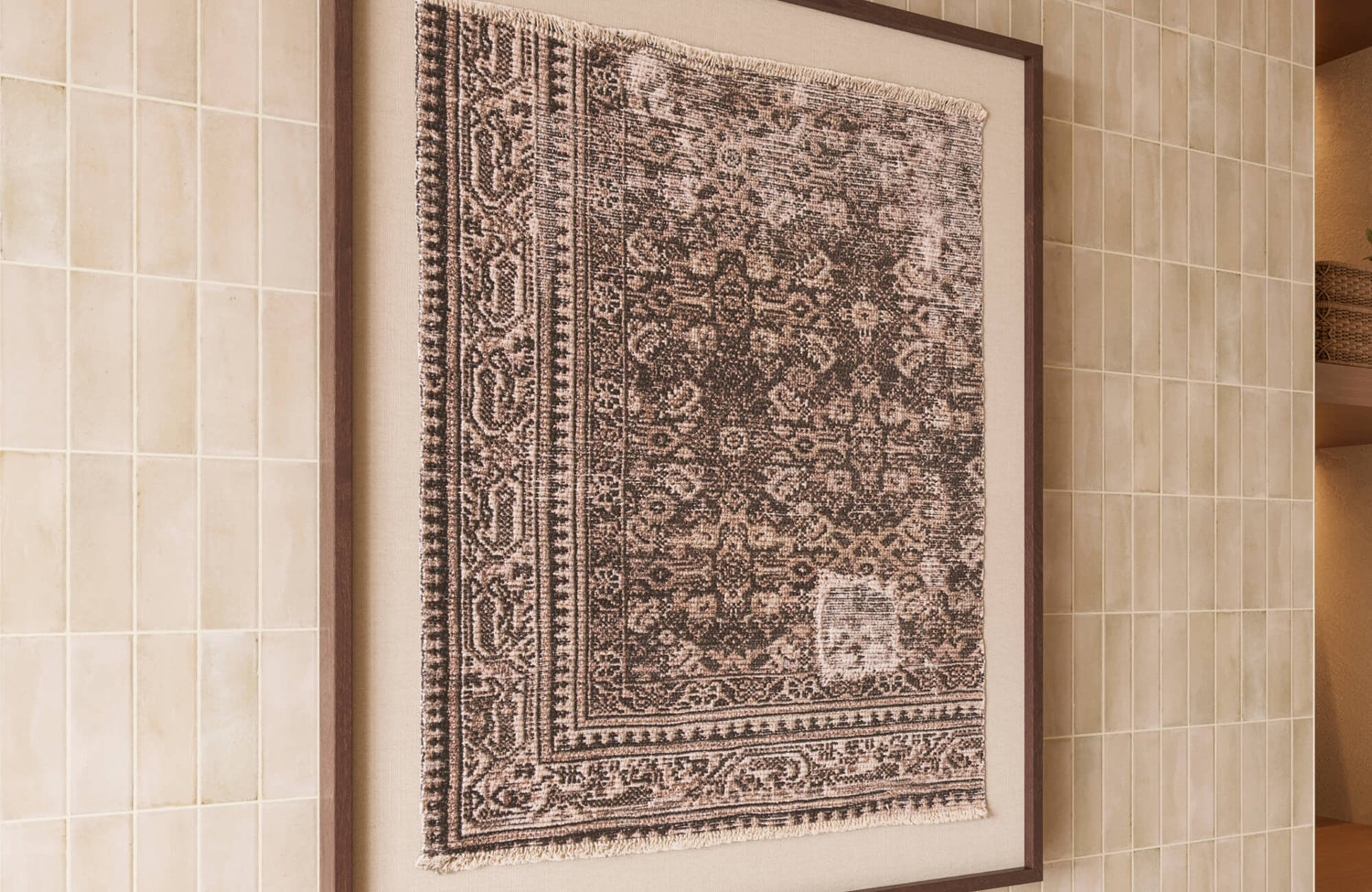
Some materials naturally make a bedroom feel softer the moment you bring them in, which is exactly why textile wall art often feels so at home in these spaces. Our Golden Drift Wall Art, shown above, leans into that beautifully through its hand-formed wool and jute knots, layered earthy tones, and elongated fringe that add dimension without introducing anything visually harsh. Instead of relying on bold imagery or sharper contrast to create presence, it brings warmth through texture alone, which can feel especially fitting above a bed where the atmosphere usually benefits from something that feels tactile, relaxed, and easy on the eye.
Mixed-Material Pieces For Bedrooms That Need More Depth
If your bedroom feels visually flat or lacks enough texture, mixed-material wall art can create a much richer result above the bed. Pieces that combine wood, fabric, metal, carved elements, or layered construction tend to create stronger depth because your eye responds differently to each material surface. This can be especially useful in bedrooms with simpler color palettes where the room needs more dimension without relying on loud artwork or overly dramatic styling. Mixed-material pieces often feel more substantial than traditional prints, which helps if the bed wall needs a stronger presence. If your bedroom feels clean but slightly one-dimensional, this format can create much more visual interest.
That said, mixed-material artwork usually works best when the surrounding room is not already overloaded with competing textures. If you already have patterned bedding, textured headboards, layered drapery, and multiple decorative materials happening at once, adding an equally complex wall piece can make the room feel busier than intended. The goal is creating depth, not visual competition. When chosen thoughtfully, mixed-material artwork can make a bedroom feel far more designed and layered without losing its sense of comfort. It works best when the complexity feels balanced rather than overwhelming.
Bringing The Entire Bed Wall Together With Confidence
The best wall art above a bed is rarely about finding the most beautiful piece in isolation. It is about choosing something that feels proportionate to the bed, supports the atmosphere you want in the bedroom, and works with the surrounding materials, layout, and overall design personality you have already created. Once you start looking at the bed wall as one complete composition instead of a blank space that simply needs filling, the right decision usually becomes much easier to recognize. Thoughtful restraint often leads to a stronger result than trying to make the artwork do everything at once.
If you are narrowing down wall art ideas but still are not sure what will feel most balanced in your space, our Personalized Design Consultation can help you bring the bigger picture into focus. Whether you are coordinating artwork with bedding, textures, lighting, or the broader design direction of your bedroom, an experienced perspective can make the decision feel much less uncertain. Sometimes what transforms a room is not choosing a bolder piece, but choosing the one that fits everything around it more naturally.