
)
)
)
)
)
)
)
)
What Vanity Size Is Best For A Powder Room?
Choosing the right vanity size for a powder room is one of the most important decisions in shaping how the space looks and functions. Because powder rooms are compact and often in plain view, vanity size plays a direct role in comfort, ease of movement, storage efficiency, and overall visual balance. In this article, we’ll guide you through evaluating size, layout, and practical considerations to confidently select a vanity that fits your space and supports everyday use without compromise.
Powder Room Spatial Limits and Proportions
When working with a powder room, available space becomes the defining factor in every design decision. Since these rooms are often located off hallways, adjacent to living areas, or beneath staircases, evaluating proportion and layout is far more effective than relying on standard bathroom sizing.
Measuring Clearances Correctly
Before considering vanity style or finish, it is important to evaluate clearances. The goal is to allow the door to open fully, provide comfortable standing room at the sink, and ensure easy movement through the space without obstruction. Maintaining adequate walking space in front of the vanity helps the room feel functional rather than confined. By measuring wall-to-wall width and accounting for door swing early, you avoid selecting a vanity that fits on paper but feels restrictive once in place.
Balancing Vanity Scale With Room Size
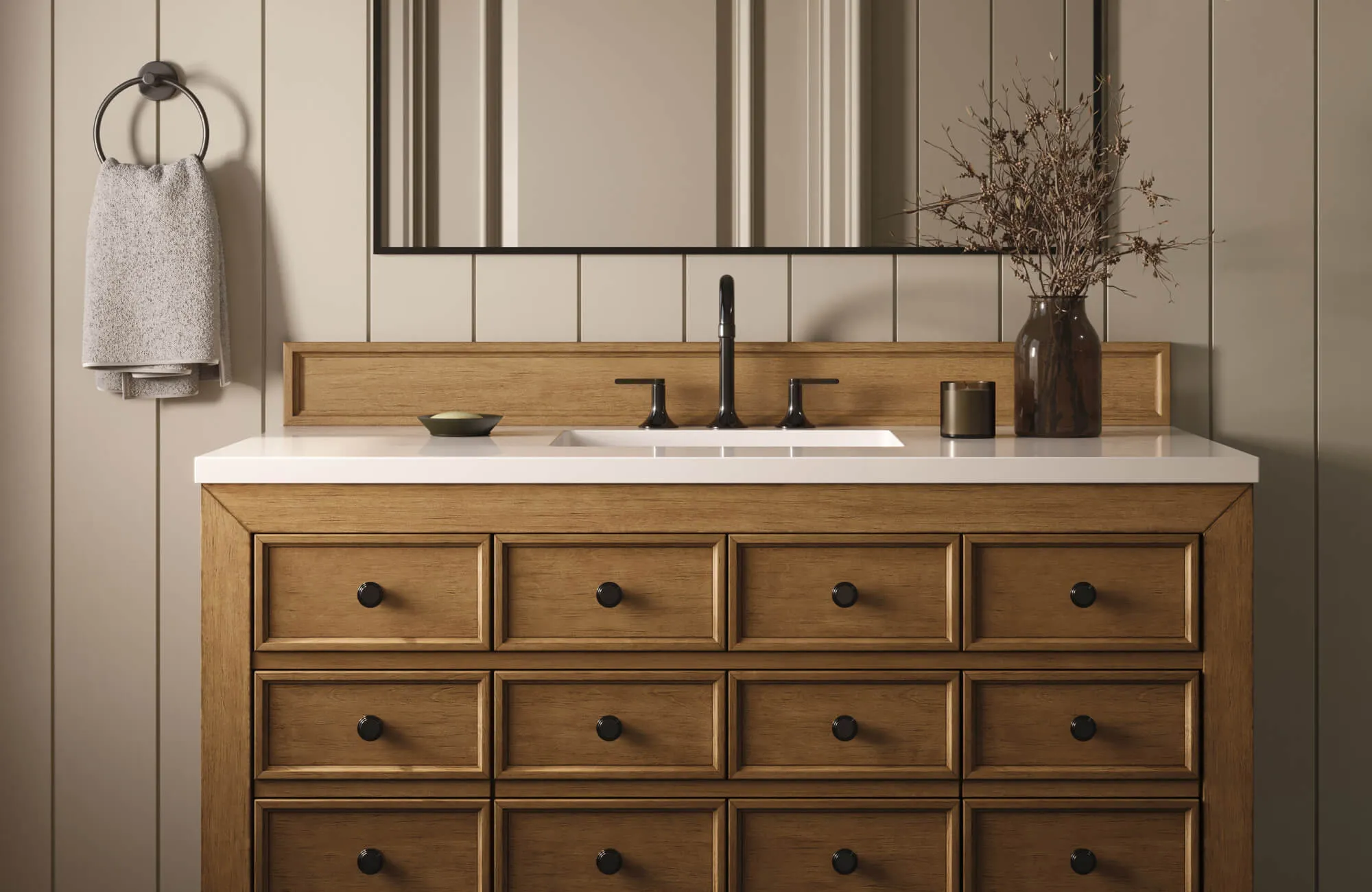
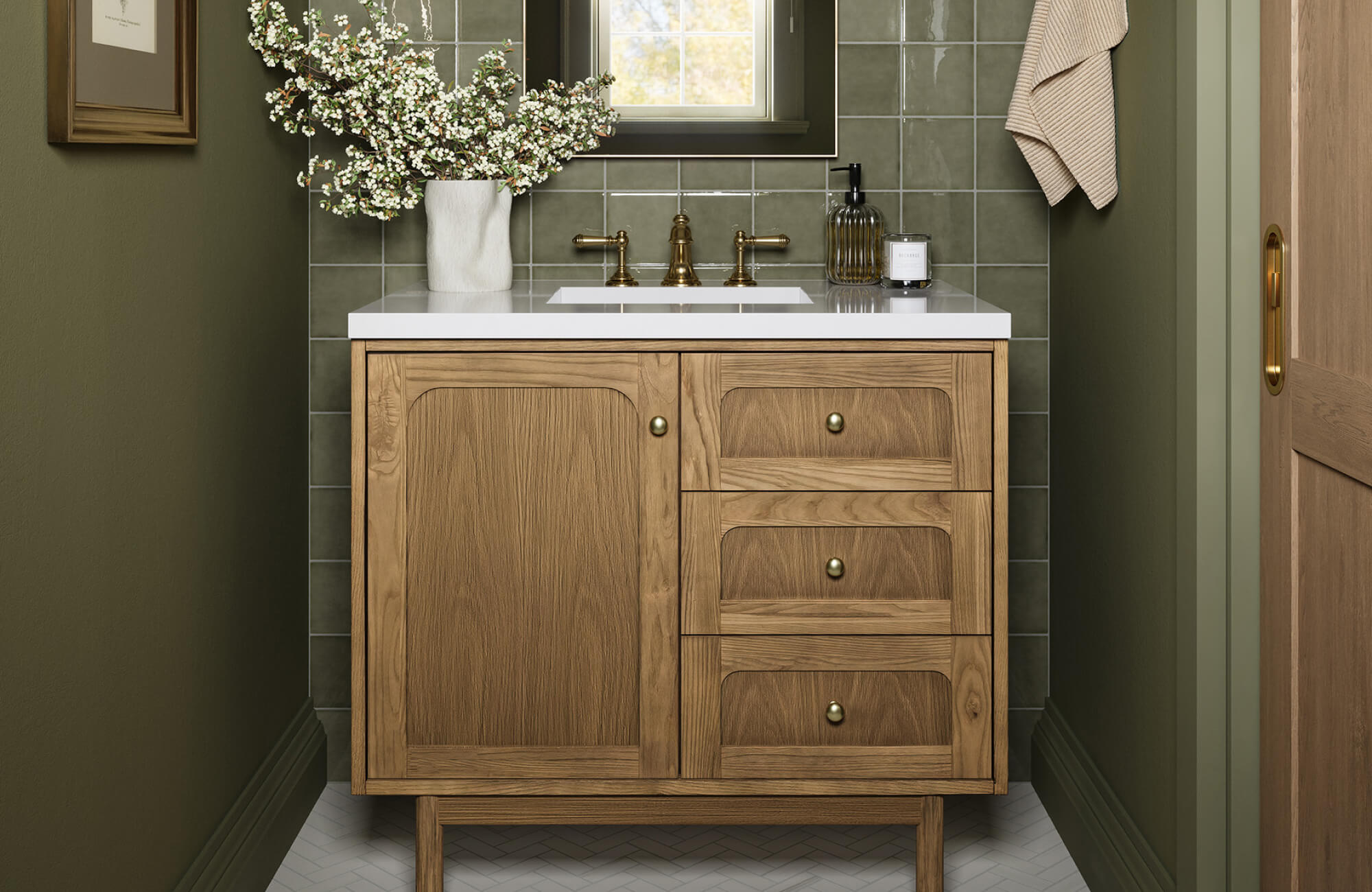
Scale reflects how the vanity visually relates to the room, not just its dimensions. In a compact powder room, an overly wide vanity can overpower the space and make it feel enclosed, while one that is too narrow may appear undersized or incidental. The goal is to choose a width that anchors the wall comfortably without pressing too close to surrounding walls or fixtures, allowing the room to feel balanced rather than crowded. A good example of this approach is Edward Martin’s Royce 48" Single Vanity in Chestnut with a 3 cm White Zeus Quartz Top, as featured in the photo above, where the vanity fills the alcove cleanly without overwhelming it. Paying attention to how the vanity aligns with mirror size and surrounding wall space, as seen here, further helps create a cohesive, well-proportioned look.
Standard Size Ranges for Powder Rooms
Most powder room vanities typically measure between 18 and 36 inches in width, with depths generally ranging from 14 to 18 inches. Narrower options are well-suited to compact layouts, while wider vanities work best in rooms that offer more clearance. In many cases, depth has a greater impact than width, as a shallower vanity can maintain comfortable use while preserving valuable floor space. These ranges provide a helpful starting point, but the final choice should always reflect the room’s specific layout and constraints.
Choosing Vanity Width Based on User Needs
Once the spatial parameters are established, attention turns to how the powder room is used in everyday situations. As a guest-facing space, its functional priorities differ from those of a primary bathroom, making vanity width a decision guided more by comfort and practicality than routine use.
Single User Functionality
For most powder rooms, a single-sink vanity between 18 and 30 inches wide is more than sufficient. Since the space is designed for individual use, the priority shifts from accommodating multiple users to ensuring comfortable access to the sink. When the basin is centered and clearances are respected, even a compact vanity provides everything needed while keeping the room open and easy to navigate. This size range often answers the question directly by offering balance without excess.
Accommodating Frequent Guests
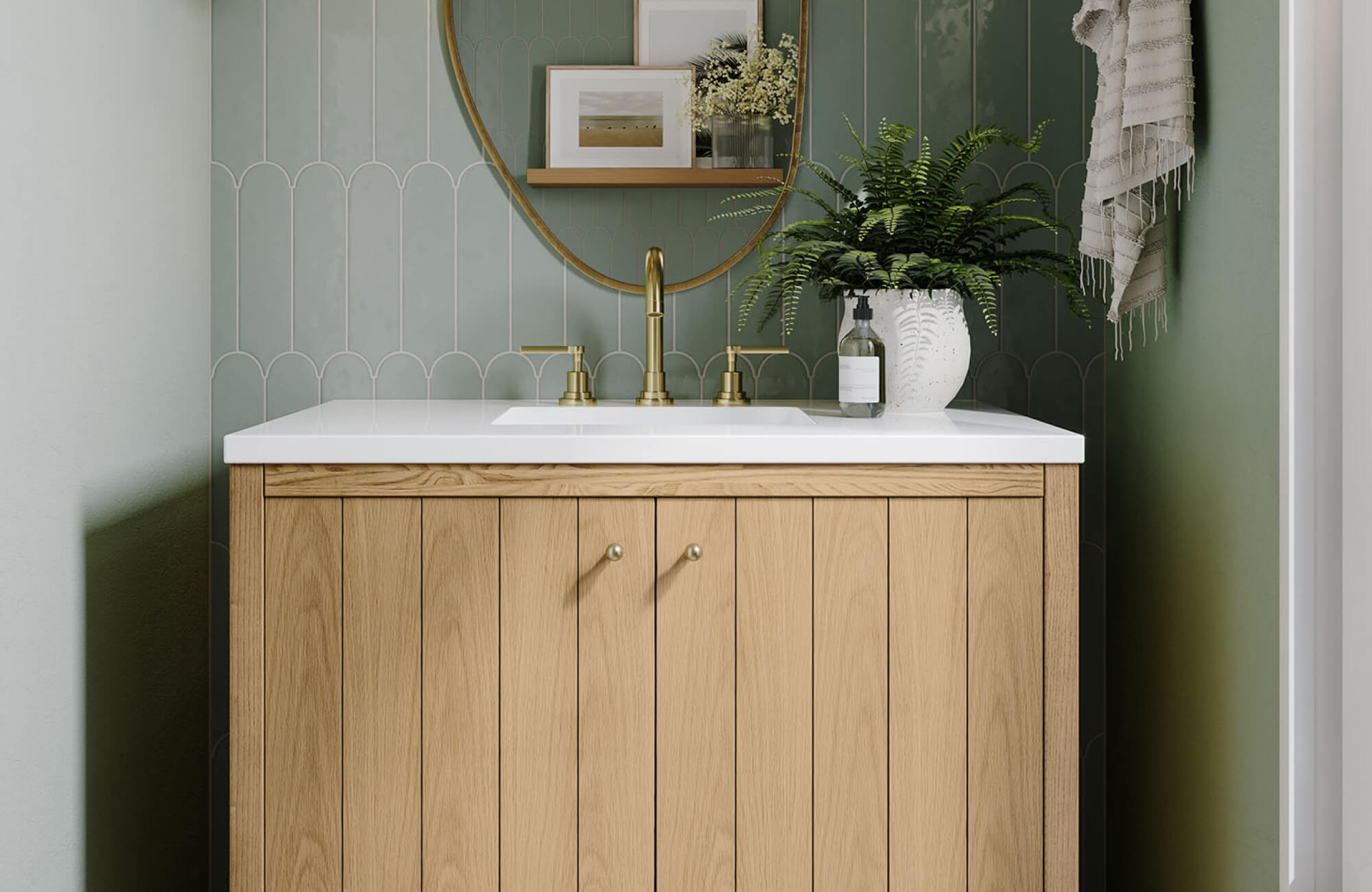
If your powder room sees frequent use during gatherings, a vanity closer to the upper end of the range can be a better fit. A width of around 30 to 36 inches allows for extra counter space, giving guests a convenient place to set down personal items while using the sink. This balance is illustrated by Edward Martin’s Gabriella 36" Single Vanity in Light Natural Oak with a 3 cm White Zeus Quartz Top, as featured in the photo above, where the added surface area improves usability without overwhelming the narrow footprint of the room. In these situations, the best vanity size is one that enhances comfort and function while maintaining clean proportions and an inviting feel.
When Narrow Vanities Work Best
In very tight powder rooms, the best vanity size is often narrower than expected. Vanities under 24 inches wide work well where door swings, corners, or nearby fixtures limit available space. Paired with a shallow depth, a well-scaled sink, and a wall-mounted faucet, narrow vanities feel purposeful rather than compromised. By minimizing width, these vanities preserve circulation and make compact powder rooms feel more comfortable and functional overall.
Vanity Depth and Its Impact on Comfort
Depth is one of the most overlooked factors in vanity selection, yet it has a direct impact on how comfortable the powder room feels to use. In a space where ease of movement is essential, selecting the right vanity depth can determine whether the room feels open and comfortable or tight and restrictive.
Standard vs Reduced Depth Options
Standard bathroom vanities are often deeper than necessary for a powder room, which can make the space feel tight. For most powder rooms, a reduced-depth vanity in the range of 14 to 18 inches offers a better balance between function and comfort. This shallower profile preserves floor space while still allowing comfortable handwashing, making it a practical choice for smaller powder rooms.
Sink Placement and Usability
Depth and sink design work together to determine comfort. In shallow vanities, integrated sinks, smaller basins, or offset placements allow the vanity to remain compact without limiting usability. These choices keep the sink easy to reach and comfortable to use, making the vanity well-suited and appropriately sized rather than undersized or awkward.
Avoiding Tight Walkways
A vanity that extends too far into the room can restrict movement and interfere with door operation. The best vanity size for a powder room maintains clear circulation space in front of the sink, allowing users to stand comfortably and move through the room with ease. This is especially important in powder rooms located along hallways or between rooms, where maintaining smooth movement helps the space feel functional rather than cramped.
Storage Needs vs. Visual Lightness
Storage in a powder room should support everyday convenience without introducing unnecessary bulk. Since storage requirements are typically minimal, vanity size and design become key factors in maintaining a light, open visual feel.
Drawer and Cabinet Priorities
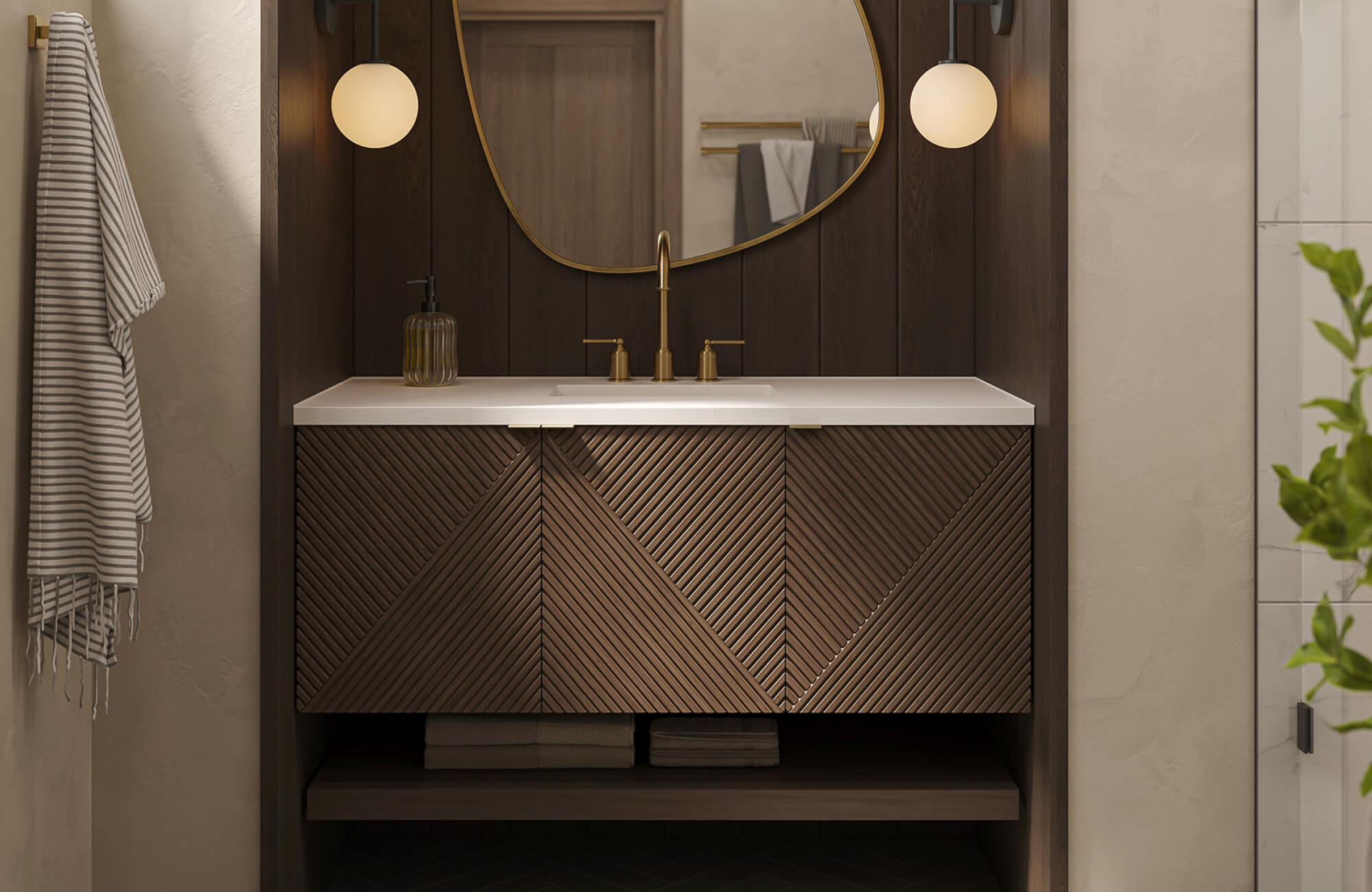
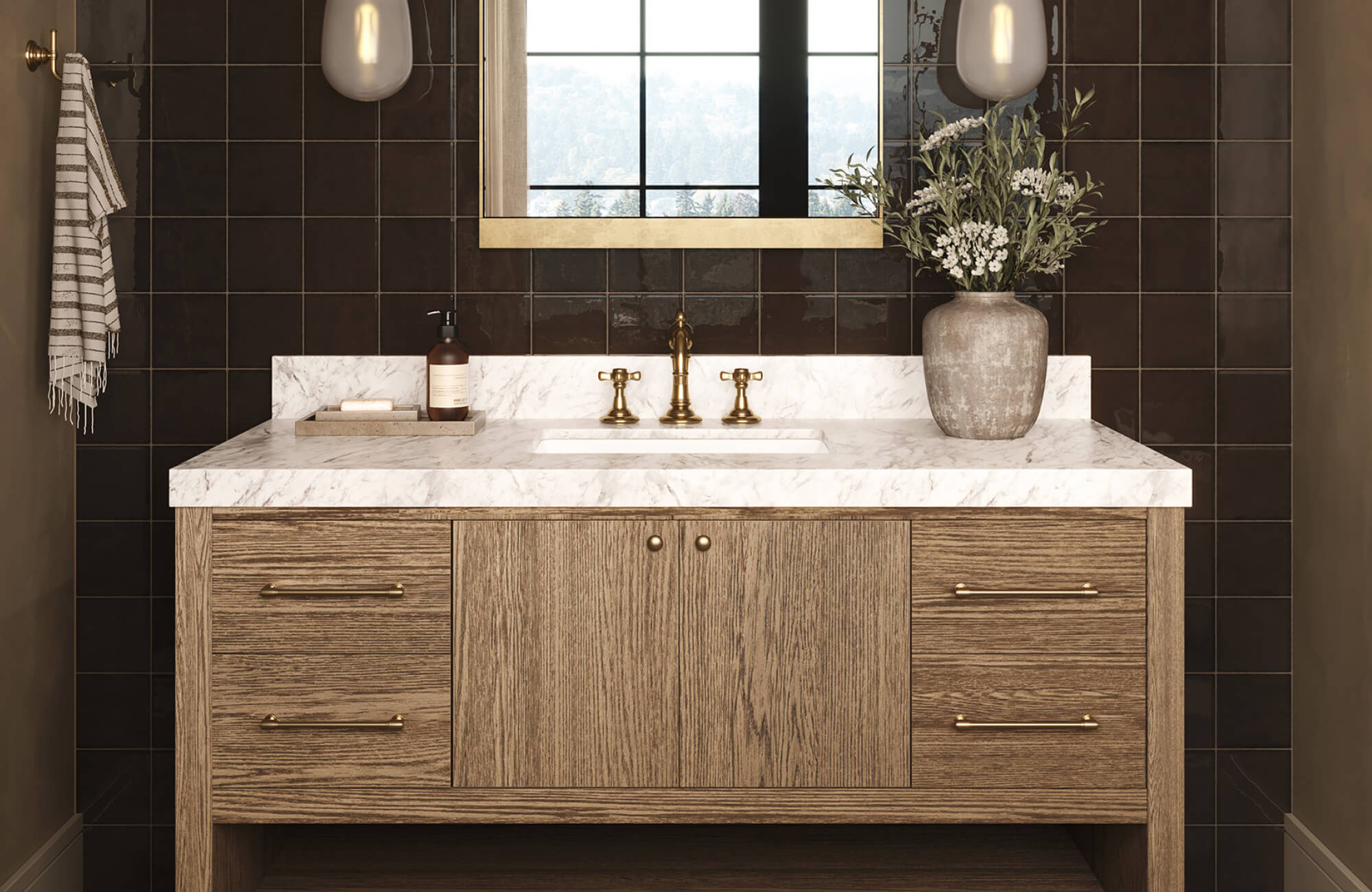
Most powder rooms only need space for soap, extra hand towels, and cleaning essentials. One or two drawers or a small cabinet are often enough, since oversized storage can add unnecessary visual weight. This balance is clearly demonstrated by Edward Martin’s Maxine 55" Single Vanity in Washed Natural Veneer with a Carrara Marble Top, as featured in the photo above, where streamlined drawers and restrained cabinetry provide practical storage without overwhelming the room. By focusing on right-sized storage, the vanity remains functional while allowing the powder room to feel open, composed, and uncluttered.
Open and Floating Vanity Options
Floating vanities and open-bottom designs help the room feel larger by exposing more floor area. These options are especially effective in small powder rooms where visual openness matters more than concealed storage. By allowing light to move freely across the floor, they reduce visual interruption and make the space feel less confined. They also make cleaning easier, which can be a practical benefit in frequently used guest areas.
When a Console Style Makes Sense
Console-style vanities can provide surface area without enclosing the space. They work well when you want the vanity to feel light and furniture-like rather than built-in. This approach suits powder rooms where style and openness take priority over hidden storage. Console designs can also help visually connect the vanity to adjacent furnishings, creating a more cohesive look.
Matching Vanity Size to Design Style
Vanity size should reinforce the overall design direction of the powder room rather than compete with it. When proportions align with the chosen style, the vanity feels intentional and helps the space read as cohesive rather than visually crowded.
Modern and Minimal Interiors
In modern powder rooms, compact vanities with clean lines feel most appropriate. Slim profiles reinforce the design language while helping the space feel deliberate and uncluttered. Choosing a restrained width helps highlight simplicity and allows other elements, such as mirrors or wall finishes, to stand out. A well-scaled vanity also reinforces the sense of order that defines minimalist interiors.
Traditional and Decorative Spaces
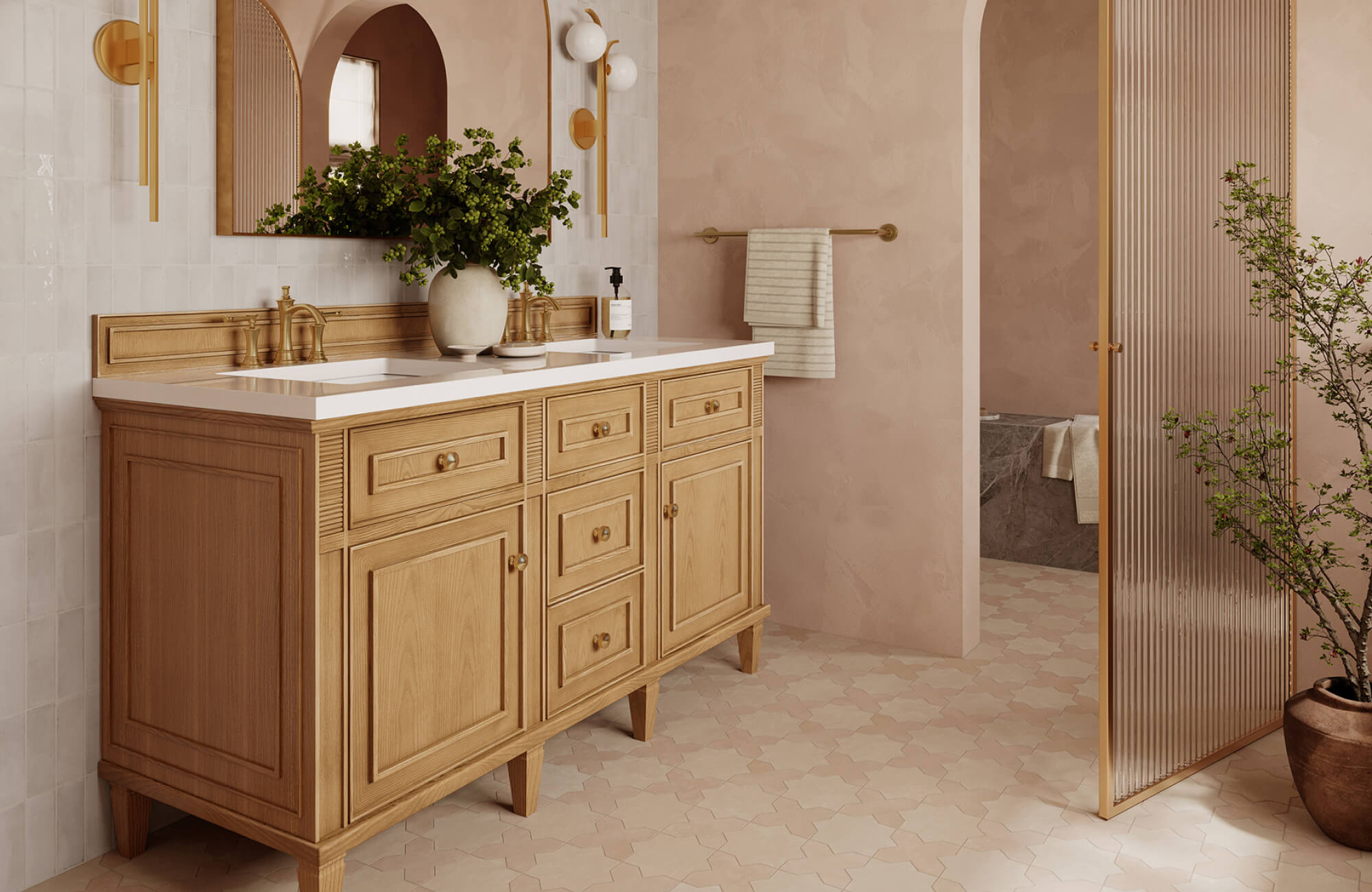
More traditional powder rooms can support slightly wider or furniture-inspired vanities. These styles benefit from grounded proportions, as long as the room offers sufficient space to accommodate them comfortably. A good illustration of this approach is Edward Martin’s Elodie 60" Double Vanity in Light Natural Oak with a 3 cm White Zeus Quartz Top, as shown in the photo above, where the added width allows paneling and detailing to read clearly. When scaled properly, vanities like this add character and presence without overwhelming the room, helping the space feel refined and well-composed.
Statement Vanities in Small Rooms
A bold vanity can work in a small powder room when its size is carefully controlled. The key is choosing a statement piece that fits within the room’s proportions so it feels deliberate rather than overwhelming. Limiting width or depth helps the vanity stand out through design rather than scale alone. This balance allows the piece to stand out as a focal point without sacrificing comfort or ease of movement.
Installation Constraints and Long-Term Flexibility
Aside from design and comfort, practical considerations often determine the best vanity size. Factors such as plumbing placement, access requirements, and future adaptability ensure the vanity choice remains functional over time.
Plumbing Location Limitations
Existing plumbing locations can limit how wide or deep a vanity can be without requiring costly modifications. Working within these constraints usually leads to more efficient decisions and smoother installations. Aligning the vanity size with existing supply and drain locations helps reduce installation complexity and potential delays. It also allows the project to focus on fit and finish rather than structural adjustments.
Accessibility and Future Adaptability
Vanity height and knee clearance matter more than many people expect. Choosing a size that accommodates a range of users supports long-term adaptability without the need for future modifications. A slightly increased clearance can make the vanity easier to use for guests with different mobility needs. Planning for adaptability early helps the powder room remain functional as household needs change over time.
Ease of Maintenance and Replacement
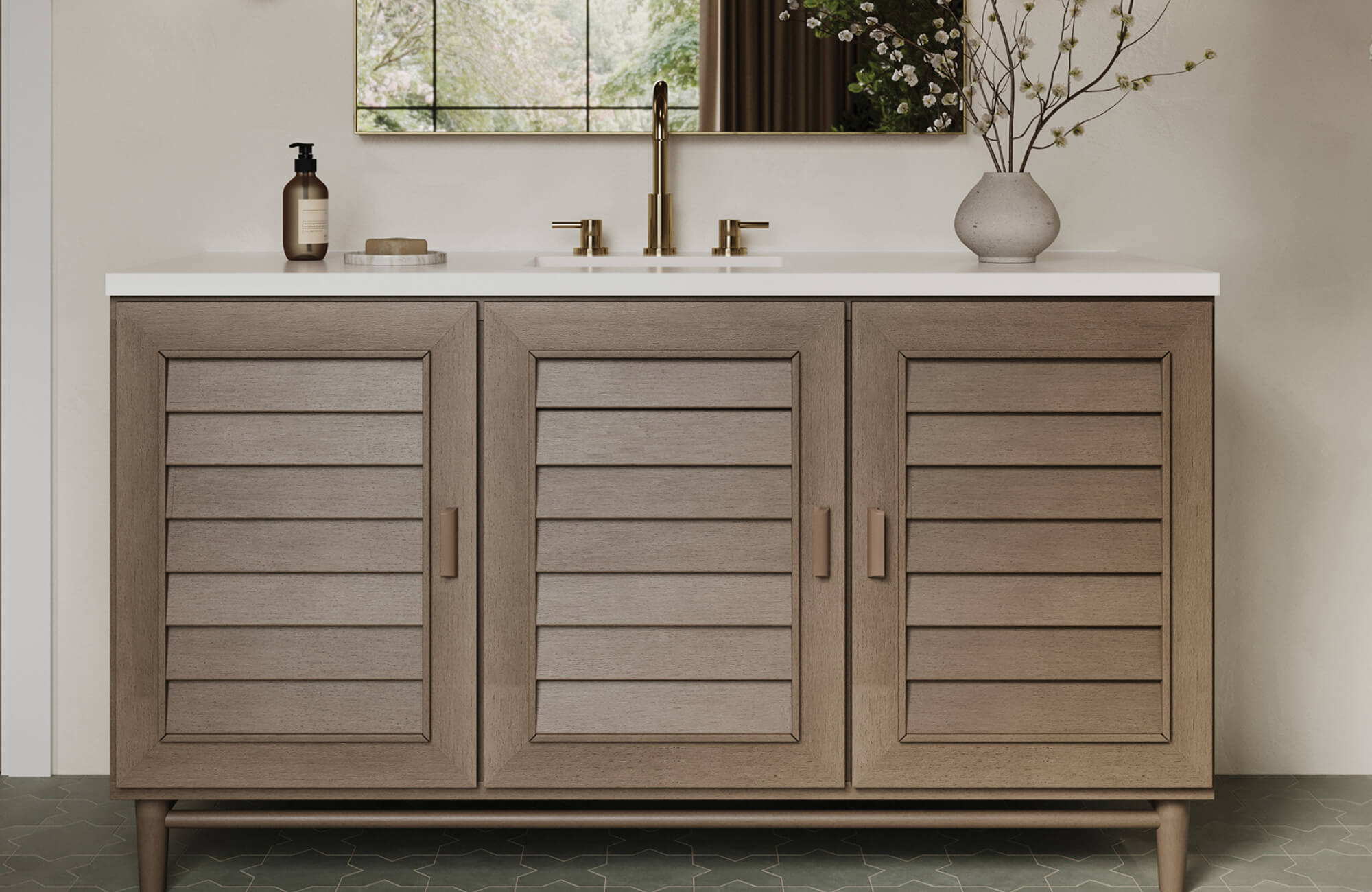
Selecting a vanity size that aligns with common dimensions makes future updates easier. Standardized sizes are simpler to replace if tastes change or maintenance is needed years down the line, and they offer greater flexibility when selecting compatible sinks, countertops, or hardware. This practicality is reinforced by Edward Martin’s Trisha 60" Single Vanity in Whitewashed Walnut with a 3 cm White Zeus Quartz Top, as shown in the photo featured above, where the integrated quartz-based sinktop is easy to clean and resists stains and mildew. Premium interior and exterior coatings enhance long-term durability, reduce maintenance needs, and help the vanity remain functional and visually consistent through future renovations.
Making a Confident Vanity Size Decision
Choosing the best vanity size for a powder room requires a thoughtful balance of space, comfort, and intent. When proportions, usage patterns, and practical constraints are considered together, the powder room feels comfortable to use and visually well resolved. The right vanity size blends seamlessly into the space, supporting both function and appearance without drawing unnecessary attention.
If you would like help evaluating vanity sizes or layout options for your powder room, contact us to explore personalized design support tailored to your space, needs, and long-term goals.
Follow us on Instagram
@EDWARD.MARTIN
)
)
)
)
)
)
)
)
)
)
)
)
)
)
)
)