Wood floors can bring warmth, character, and timeless appeal to a kitchen. Many homeowners love the natural look of kitchen wood floors because they create a welcoming atmosphere and pair well with both traditional and modern designs. However, kitchens are also one of the most demanding areas in a home. Frequent spills, humidity, and heavy foot fall can quickly affect natural wood surfaces.
Because of these conditions, choosing the best wood flooring for a kitchen requires careful consideration. While hardwood remains a popular choice, not every wood floor performs well in a moisture-prone environment. Understanding the advantages, limitations, and alternatives can help you find the best wood floor for a kitchen that balances beauty with durability.

The Pros and Cons of Wood Floors in Kitchens
Installing wood floors in a kitchen can create a warm and cohesive design throughout the home, especially in open-concept spaces. However, before choosing kitchen hardwood flooring, it's important to understand both its benefits and its potential drawbacks.
Pros
One of the biggest advantages of wood flooring for kitchens is its timeless aesthetic. Natural wood grain patterns add texture and warmth that few materials can replicate. Whether used in a rustic farmhouse kitchen or a contemporary space, hardwood flooring can elevate the overall design.
In addition to its beauty, hardwood flooring can be long-lasting when properly maintained. Many of the best hardwood floors for kitchens, such as oak or maple, are known for their durability and resistance to everyday wear. With proper care, hardwood flooring can last for decades and can even be refinished to restore its original appearance.
Another advantage is its ability to complement other areas of the home. Using kitchen wood floors that match adjacent living spaces creates visual continuity and helps make open floor plans feel larger and more cohesive. While hardwood planks offer a traditional look, homeowners seeking a similar visual effect with fewer grout lines sometimes explore large format tiles that mimic wood, which can create a similarly seamless appearance across open kitchen and living areas.
Cons
Despite its appeal, hardwood flooring in kitchens comes with certain challenges. One of the biggest concerns is moisture exposure. Kitchens experience frequent spills, steam, and humidity, all of which can affect natural wood. Excess moisture can cause hardwood floors to warp, cup, or swell over time.
Scratches and dents are another consideration. Heavy cookware, dropped utensils, and moving chairs can damage the surface of kitchen hardwood flooring, especially with softer wood species. While refinishing can help restore the floor’s appearance, it requires time and maintenance.
Because of these factors, homeowners often carefully evaluate whether traditional hardwood is truly the best wood flooring for a kitchen, or if alternative materials may offer greater durability.

Factors to Consider When Choosing Wood Flooring for a Kitchen
If you’re considering wood flooring for your kitchen, several key factors can affect its long-term performance. Evaluating these elements can help determine the best hardwood for a kitchen floor based on your lifestyle and design goals.
Wood Species
The species of wood significantly influences durability, appearance, and cost. Some woods are naturally harder and more resistant to dents, making them better suited for busy kitchens.
Popular options for kitchen hardwood flooring include oak, maple, and hickory. These species offer a strong balance of durability and visual appeal. Exotic woods such as Brazilian cherry or walnut provide unique color variations and dramatic grain patterns, though some may require more careful maintenance.
Choosing the right species is an important step in finding the best wood floor for a kitchen that will maintain its appearance over time.
Wood Hardness
Hardness is typically measured using the Janka hardness scale, which indicates a wood’s resistance to dents and scratches. Higher ratings generally mean better durability for busy spaces.
For households with children, pets, or frequent cooking activity, selecting one of the best hardwood floors for kitchens often means choosing species with higher Janka ratings. Harder woods are better equipped to withstand dropped utensils, shifting furniture, and everyday foot fall.
Finish
The finish applied to a hardwood floor protects the surface from wear and enhances its appearance. Oil-based finishes provide a rich, traditional look but typically require more maintenance. Water-based polyurethane finishes dry quickly and are more environmentally friendly while still offering good protection.
A high-quality finish can significantly extend the life of kitchen wood floors, helping protect them from scratches, stains, and everyday use.
Installation Method
Installation methods also influence how well hardwood flooring performs in a kitchen. Solid hardwood planks are typically nailed or stapled to a subfloor and are more susceptible to expansion when exposed to moisture.
Engineered hardwood flooring offers greater dimensional stability due to its layered construction. Because of this, engineered products are often considered a more practical option for kitchen hardwood flooring, as they can better handle minor fluctuations in humidity. Since installation conditions can vary depending on subfloor type, moisture levels, and product specifications, consulting a professional installer is recommended before starting a flooring project.

Best Hardwood Species for Kitchen Floors
When selecting the best hardwood floor for a kitchen, choosing the right species is essential. Some hardwoods perform better in kitchens due to their strength, stability, and resistance to daily wear.
Oak
Oak remains one of the most popular choices for kitchen wood floors thanks to its durability and distinctive grain patterns. It is widely available in various finishes and colors, making it adaptable to many design styles.
Maple
Maple is known for its smooth, consistent grain and excellent hardness. Its resistance to dents and scratches makes it one of the best hardwood options for kitchen flooring, particularly in modern or contemporary kitchens.
Hickory
Hickory is one of the hardest domestic wood species available. Its bold grain patterns and warm tones give kitchens a natural, rustic character while offering strong resistance to wear and tear.
Exotic Options
Exotic hardwoods such as Brazilian cherry or walnut provide dramatic color variations and rich tones that can add luxury to a kitchen design. However, some exotic woods require more careful maintenance, particularly in moisture-prone environments.
Bamboo is another alternative often considered when exploring the best wood flooring for kitchens. As a rapidly renewable resource, bamboo offers sustainability along with impressive durability.

Maintenance Tips for Kitchen Wood Floors
Maintaining wood floors in a kitchen requires consistent care to preserve their appearance and longevity. Because kitchens are exposed to moisture, grease, and frequent foot movement, regular maintenance is essential.
Daily Care
Sweeping or vacuuming regularly helps remove dirt and grit that could scratch the floor’s surface. Using a damp mop with a cleaner specifically designed for hardwood floors can help maintain cleanliness without exposing the wood to excessive moisture.
Avoid using too much water, as prolonged exposure can damage kitchen hardwood flooring.
Periodic Maintenance
Over time, hardwood floors may show signs of wear such as scratches or dullness. Refinishing can restore the original beauty of the floor by sanding away the old finish and applying a fresh protective coating.
Minor scratches can often be repaired using wood fillers or touch-up pens, while deeper damage may require professional refinishing.
Preventive Measures
Preventive steps can significantly extend the lifespan of wood flooring for kitchens. Placing rugs or mats in high-use areas, such as near sinks or entrances, can help protect the floor from spills and dirt.
Using felt pads under furniture legs can prevent dents and scratches, while maintaining proper ventilation helps control humidity levels that could affect wood flooring. For best results, always follow the manufacturer’s care guidelines and consult a flooring professional for maintenance recommendations specific to your flooring material.

Alternative Flooring Options for Kitchens
While many homeowners love the look of kitchen hardwood flooring, natural wood is not the only option. Several modern materials offer the appearance of wood while providing greater durability and moisture resistance.
Wood Look Porcelain Tile
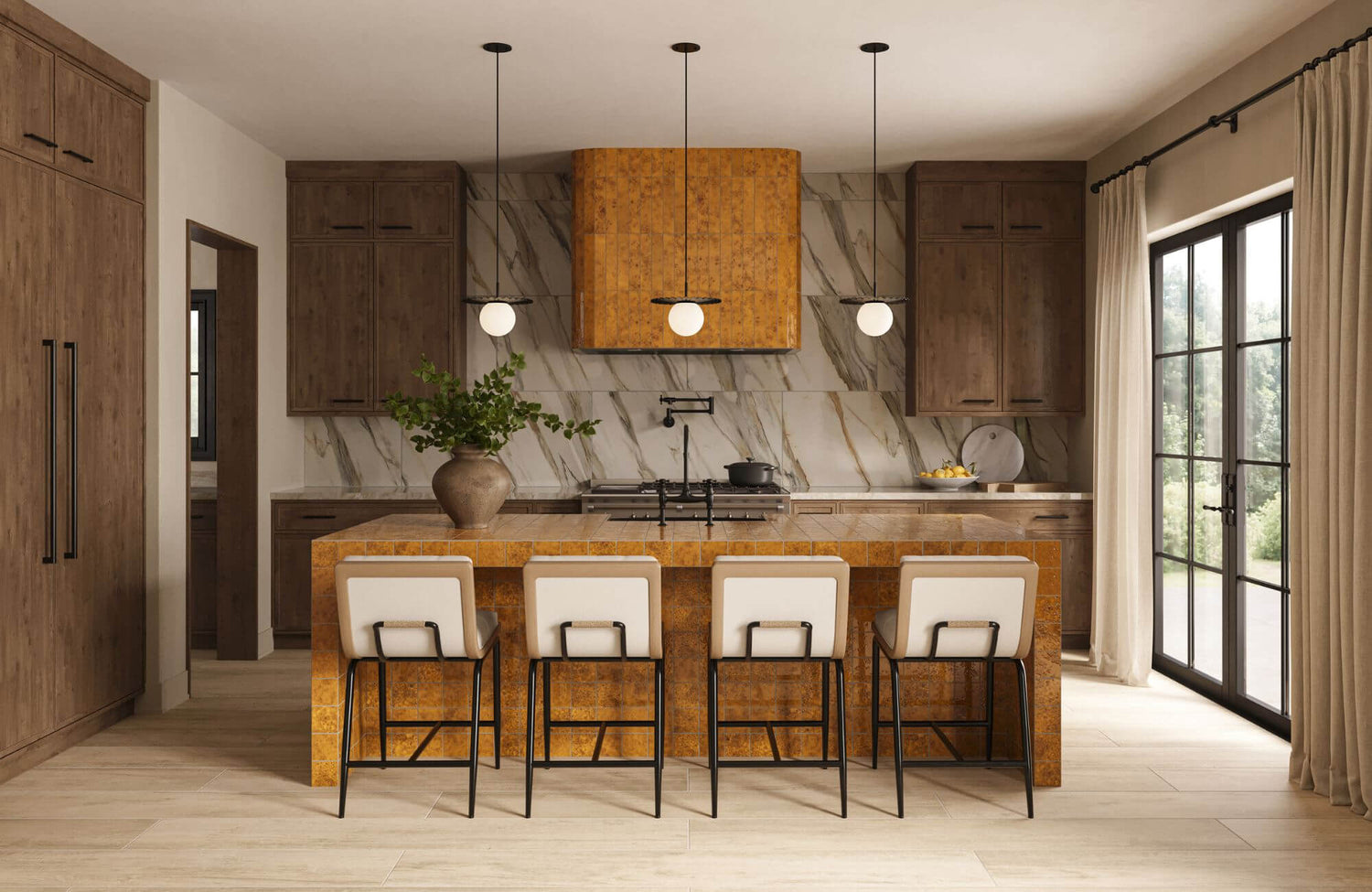
One of the most popular alternatives to hardwood is wood look porcelain tile flooring. These tiles are designed to replicate the natural grain patterns and textures of real wood while offering the durability of porcelain. A great example is Edward Martin’s Preston 8x48 Matte Porcelain Tile in Chestnut, which, as seen in the image above, delivers the warm appearance of natural wood while maintaining the resilience porcelain is known for.
Unlike traditional hardwood, wood look porcelain tiles are highly resistant to water, stains, and scratches. This makes them an excellent choice for kitchens where spills, humidity, and heavy foot movement are common.
Another advantage is their low-maintenance nature. Unlike real wood floors in kitchens, porcelain tiles do not require refinishing or specialized cleaning routines. They also resist warping and swelling, making them ideal for moisture-prone spaces.
Wood look porcelain tiles are available in a wide range of colors, plank sizes, and patterns, including traditional plank layouts and herringbone designs. Options like Edward Martin’s Nora 8x48 Matte Porcelain Tile in Espresso showcase how deeper wood tones can add richness and contrast to kitchen designs while still delivering the durability of porcelain.
Additionally, porcelain tiles are compatible with radiant heating systems, providing a comfortable and practical flooring solution for modern kitchens.
Vinyl Flooring
Vinyl flooring has evolved significantly in recent years and is now available in designs that mimic natural wood. It is water-resistant, affordable, and relatively easy to install, making it a practical choice for many kitchens.
However, vinyl flooring is a synthetic material and may emit volatile organic compounds (VOCs), which can affect indoor air quality. It is also more susceptible to dents and may not last as long as other flooring materials.
Laminate Flooring
Laminate flooring is another alternative that can resemble natural wood. Its layered construction includes a photographic surface that replicates wood grain patterns, providing an affordable option for those seeking the look of hardwood.
While laminate flooring is relatively durable, prolonged exposure to moisture can cause it to swell or warp. As a result, it may not always perform as well as other options in moisture-heavy kitchens.
Making the Right Choice for Your Kitchen
Choosing the best wood floor for a kitchen ultimately depends on balancing style, durability, and maintenance requirements. Hardwood flooring offers timeless beauty and warmth, but kitchens present unique challenges that can affect natural wood over time. For those who love the look of kitchen wood floors but want greater resistance to moisture and wear, modern alternatives such as wood look porcelain tiles provide a practical solution.
By combining the appearance of hardwood with superior durability and low maintenance, wood look porcelain tiles allow you to enjoy the aesthetic of wood flooring for kitchens without many of the challenges associated with natural wood. Tools like Edward Martin’s Augmented Reality (AR) Visualization Tool help you preview tiles in your space, while ordering a tile sample from Edward Martin lets you confirm the color, texture, and finish before making your final decision.