Bathroom floors must do more than look good. They need to withstand moisture, daily use, temperature changes, and regular cleaning while maintaining their appearance over time. The best bathroom floor tile balances durability, slip resistance, maintenance, and design.
From porcelain and ceramic to natural stone and modern alternatives, each material offers distinct advantages. Understanding how they perform in wet environments will help you choose a floor that feels refined, safe, and built to last.

Best Tile Materials for Bathroom Floors
To narrow down the options, it helps to begin with the materials that consistently perform best in bathroom environments. Each offers a different balance of durability, moisture resistance, and design flexibility.
Porcelain Tile
Porcelain is widely considered the most reliable option for bathroom floors. Fired at high temperatures, it has a dense, low-absorption surface that resists water, staining, and wear. This makes it ideal for showers, wet rooms, and busy households.
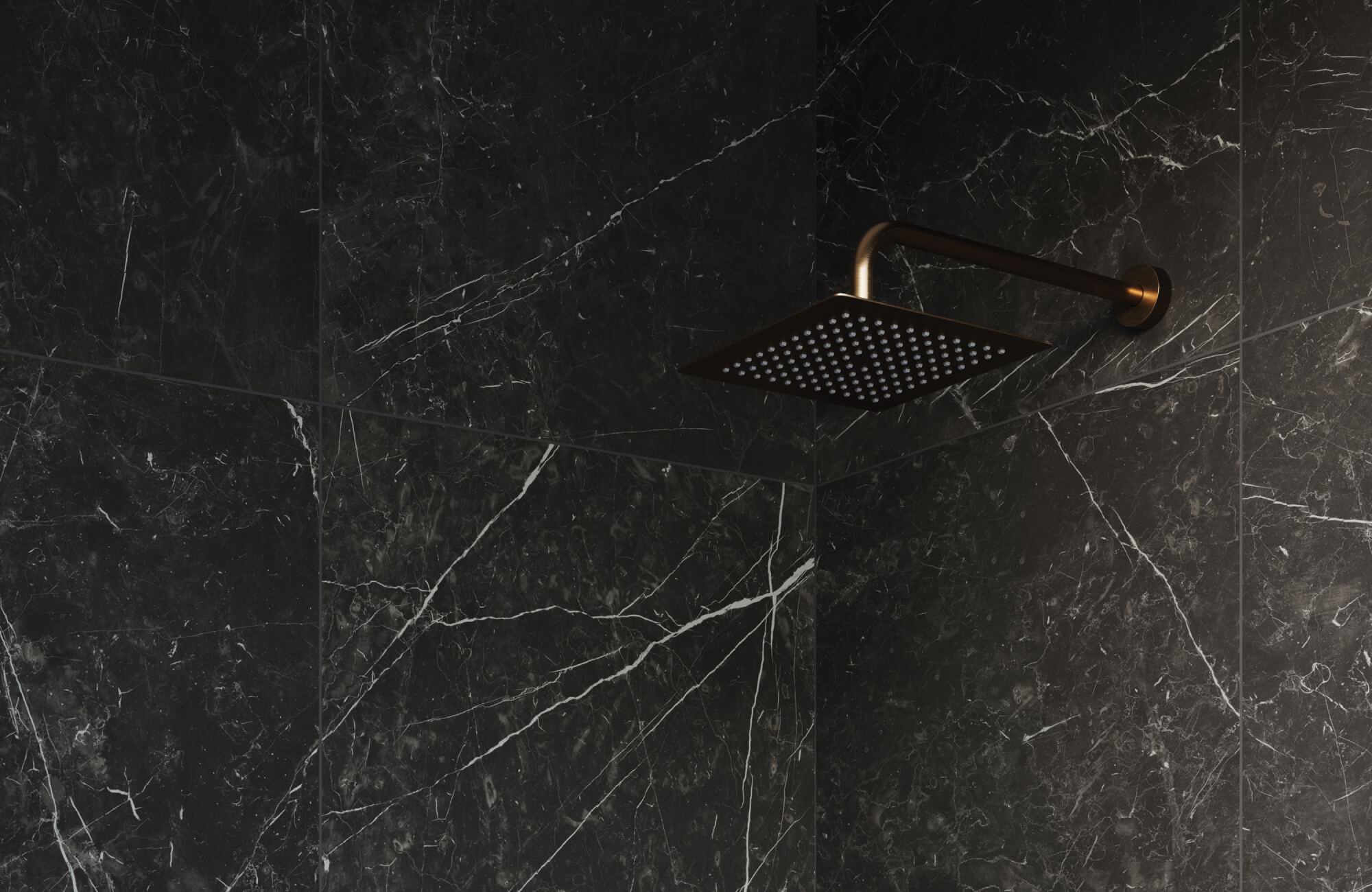
Beyond performance, porcelain offers an impressive design range. Edward Martin’s Adeline 24x24 Matte Porcelain Tile in Midnight, featured in the image above, illustrates how a deep matte finish can ground a space with modern sophistication while maintaining the durability porcelain is known for. The subdued surface also provides better traction than high-gloss alternatives. While porcelain can feel cool underfoot, it pairs well with radiant heating and delivers long-term value through minimal maintenance.
Ceramic Tile
Ceramic tile remains a practical and budget-conscious choice for many residential bathrooms. Its glazed surface provides reliable moisture resistance, making it well-suited for powder rooms and spaces with moderate daily use. Available in a wide range of colors, sizes, and finishes, ceramic offers flexibility without overwhelming the renovation budget.
While it is slightly less dense than porcelain, ceramic still delivers dependable performance when properly installed and maintained. It is particularly effective on bathroom floors where heavy impact or extreme moisture exposure is not a primary concern. For those seeking a balance of cost, style, and everyday functionality, ceramic tile continues to be a sensible and versatile option.
Natural Stone
Natural stone delivers unmatched character and organic variation. Options like granite, marble, and slate create a luxurious atmosphere that elevates bathroom design.
However, stone is porous and requires regular sealing to protect against moisture and staining. While more maintenance-intensive, it rewards you with timeless visual depth. For those who prefer similar aesthetics with easier upkeep, stone-look porcelain tiles offer a practical alternative.

Unique Alternatives Worth Considering
While traditional tile materials dominate bathroom design, alternative surfaces can introduce distinct character or added comfort. Exploring these options may reveal a solution better suited to your aesthetic or lifestyle priorities.
Mosaic Tile
Mosaic tiles are especially popular for shower floors due to their smaller format and additional grout lines, which improve slip resistance. Available in hexagons, penny rounds, and sculptural patterns, mosaics introduce visual movement while adapting easily to sloped surfaces.
Edward Martin’s Shea 13.7x14.5 Matte Porcelain Wave Mosaic Tile in Warm Blend reflects this versatility, with its soft, scalloped geometry adding texture and rhythm underfoot without overwhelming the room. Though installation and cleaning may require more attention, mosaics offer a thoughtful balance of safety and expressive design.
Luxury Vinyl Tile (LVT)
Luxury Vinyl Tile offers water resistance and a softer underfoot feel compared to ceramic or porcelain. It mimics wood or stone convincingly and is often easier to install. However, LVT may not match porcelain’s longevity in heavily used bathrooms. It works best in secondary bathrooms or spaces prioritizing comfort and cost efficiency.
Wood-Look Tile
For those drawn to the warmth of wood but concerned about moisture, wood-look porcelain tile provides an excellent compromise. It replicates grain and tone while offering superior durability and water resistance. This makes it particularly suitable for bathrooms seeking natural warmth without the maintenance risks of real hardwood.

Performance Factors That Matter Most
Material selection is only part of the decision. Evaluating how a tile performs under daily exposure to water, foot movement, and cleaning ensures long-term satisfaction.
Moisture Resistance
Bathrooms demand materials that can withstand constant humidity. Porcelain excels in this area, followed closely by glazed ceramic. Natural stone and wood require sealing and ongoing care to maintain performance. Selecting a tile with low water absorption ensures structural integrity over time.
Slip Resistance
Safety should always be prioritized, particularly in moisture-prone areas. Matte and lightly textured finishes generally provide better traction than polished surfaces, and smaller formats enhance grip through increased grout lines. Reviewing coefficient of friction (COF) ratings is essential when evaluating bathroom floor tiles.
A refined example is Edward Martin’s Chantel 12x11 Matte Porcelain Hexagon Mosaic Tile in Imperial, where the geometric layout and matte surface work together to create a floor that feels secure without sacrificing elegance. The result is a surface that performs confidently in wet conditions while maintaining a cohesive aesthetic.
Maintenance and Longevity
Porcelain and ceramic tiles require relatively minimal maintenance and can retain their appearance for decades when properly installed. In contrast, natural stone offers timeless character but typically requires periodic sealing and more attentive care to preserve its surface. Luxury vinyl tile (LVT), while easy to clean and comfortable underfoot, may have a shorter lifespan in high-traffic bathrooms.
Ultimately, choosing a material that aligns with both your lifestyle and maintenance preferences will support lasting satisfaction. To protect your investment, it is always recommended to follow the manufacturer’s care and cleaning guidelines to maintain the tile’s finish and ensure consistent performance over time.

Designing a Bathroom Floor That Lasts
Once performance needs are addressed, thoughtful design choices bring the space together. Format, color, and finish ultimately shape how the bathroom feels and functions over time.
Size and Layout
Tile size significantly influences the overall feel of a bathroom. Large-format tiles create a streamlined appearance with fewer grout lines, helping smaller spaces feel more expansive. Conversely, patterned layouts and smaller formats can introduce personality and visual structure.
Edward Martin’s Leona 24x24 Checkerboard Matte Porcelain Tile in Calacatta and Nero Marquina demonstrates how scale and contrast can work together to define a space. The bold checkerboard pattern establishes rhythm and architectural presence, while the generous 24x24 format keeps the look grounded and balanced. Ultimately, the proportions of your bathroom should guide the format you select.
Color and Finish
Color and finish have a direct impact on how a bathroom feels and functions. Lighter tones can make compact spaces feel more open by reflecting natural and artificial light, while deeper hues introduce contrast and visual depth. For flooring, matte finishes are often preferred for their grounded appearance and improved traction underfoot.
Because lighting, wall color, and surrounding materials all influence how a tile reads, visualizing your selection in context is essential. Edward Martin’s Augmented Reality (AR) Visualization Tool allows you to place different tones and finishes directly into your own bathroom setting, helping you assess scale, brightness, and overall cohesion before making a final commitment.
Sampling Before You Decide
Even the most accurate digital preview benefits from a physical evaluation. Lighting conditions vary significantly from one home to another, and subtle undertones or textures may appear differently in person than on a screen.
Ordering tile samples gives you the opportunity to review color, surface texture, and finish within your actual space. Observing how the tile responds to daylight, evening lighting, and daily use ensures your final selection feels considered, balanced, and aligned with your long-term expectations.
Choosing the Right Tile for Your Bathroom Floor
The best bathroom floor tile depends on how your space functions and the level of maintenance you’re prepared to manage. Porcelain stands out for durability and moisture resistance. Ceramic offers value and versatility. Natural stone delivers timeless luxury with added upkeep. Alternatives like mosaic and LVT provide specialized benefits.
By focusing on safety, performance, and cohesive design, you can create a bathroom floor that is both beautiful and built for longevity. Thoughtful material selection ensures your investment remains refined, functional, and resilient for years to come.