Outdoor living spaces have evolved into refined extensions of the home, where design, comfort, and durability must work in perfect harmony. Whether it’s a serene garden lounge, a poolside retreat, or a coastal terrace, the materials used in outdoor furniture are essential in maintaining both aesthetic appeal and long-term performance. Among the many challenges outdoor furnishings face, rust remains one of the most destructive and persistent.
Choosing rust-resistant outdoor furniture is not simply about avoiding unsightly corrosion—it is about investing in pieces that retain their structural integrity, visual sophistication, and value over time. Understanding which materials naturally resist rust, and why, allows you to make informed decisions that align with both climate conditions and lifestyle expectations.

The Science Of Rust And Why It Ruins Outdoor Furniture
Before selecting materials that resist rust, it is essential to understand how and why corrosion occurs in the first place. Rust is not merely a cosmetic issue but a gradual process that compromises both structure and longevity. By exploring the underlying science, it becomes easier to identify which materials are truly suited for outdoor environments.
The Difference Between Ferrous And Non Ferrous Metals
At the core of rust formation is the presence of iron. Ferrous metals, which contain iron, are highly susceptible to rust when exposed to moisture and oxygen. Common examples include steel and wrought iron, both of which require protective coatings or treatments to prevent corrosion.
Non ferrous metals, on the other hand, do not contain iron and therefore do not rust in the traditional sense. Materials such as aluminum, stainless steel, and certain alloys fall into this category. While they may still oxidize or develop surface changes over time, they do not experience the destructive rusting process that affects ferrous metals. This distinction is essential when selecting outdoor furniture designed for longevity.
How Coastal Salt And Humidity Accelerate Corrosion
Environmental conditions significantly influence how quickly rust develops. Coastal regions present one of the most challenging environments due to the presence of salt in the air. Salt acts as an electrolyte, accelerating the chemical reactions that lead to corrosion, which is especially noticeable on frequently used outdoor pieces like coffee and side tables. Combined with high humidity levels, this creates an aggressive environment where unprotected metals can deteriorate rapidly.
Even in inland areas, prolonged humidity and frequent rainfall can contribute to moisture retention on surfaces, increasing the likelihood of corrosion. This makes material selection not just a design decision, but a practical necessity for ensuring outdoor furniture, including everyday essentials like coffee and side tables, remains resilient and visually appealing.

Powder Coated Aluminum As The Ultimate Rust Proof Metal
With a clear understanding of how rust forms, the focus naturally shifts to materials that inherently resist it. Among the most reliable options, aluminum stands out for its unique ability to withstand corrosion without sacrificing design versatility. When enhanced with modern finishing techniques, it becomes one of the most dependable choices for long-lasting outdoor furniture.
The Natural Inability Of Aluminum To Oxidize
Aluminum does not rust because it contains no iron. Instead, when exposed to air, it forms a thin layer of aluminum oxide on its surface. This layer acts as a protective barrier, preventing further oxidation and shielding the underlying material from damage. Unlike rust, which weakens metal, this oxide layer actually enhances aluminum’s durability.
This inherent property allows aluminum furniture to maintain its structural integrity even when exposed to moisture, making it especially suitable for outdoor use in various climates.
Why The Powder Coating Process Outperforms Liquid Paint
While aluminum is naturally resistant to rust, powder coating elevates its performance even further. Powder coating involves applying a dry powder to the metal surface, which is then cured under heat to form a hard, uniform finish. This process creates a thicker and more durable coating compared to traditional liquid paint, as seen in the image above with Edward Martin’s Vetra Club Chair, where the smooth, matte frame reflects both durability and refined craftsmanship.
The result is a finish that resists chipping, scratching, and fading, while also providing an additional barrier against moisture and environmental contaminants. While powder coated aluminum is highly resistant to rust, long-term performance can still be influenced by environmental exposure and proper care, ensuring the furniture maintains both its appearance and durability over time.
Managing Hollow Frame Drainage After Heavy Rain
Many aluminum outdoor furniture designs feature hollow frames to reduce weight and enhance structural efficiency. However, proper drainage is essential to prevent water accumulation inside these frames. High-quality designs incorporate discreet drainage holes that allow water to escape, minimizing the risk of internal moisture buildup.
This attention to detail ensures that even after heavy rainfall, the furniture remains dry and protected from potential long-term damage, reinforcing aluminum’s reputation as a dependable outdoor material.

High Density Polyethylene Wicker For Woven Durability
While metal solutions offer exceptional durability, many outdoor spaces call for a softer, more textured aesthetic. This is where woven materials come into play, combining visual warmth with structural resilience. Advances in synthetic fibers have made it possible to achieve the timeless look of wicker without the vulnerabilities of natural materials.
Differentiating Premium HDPE From Brittle PVC
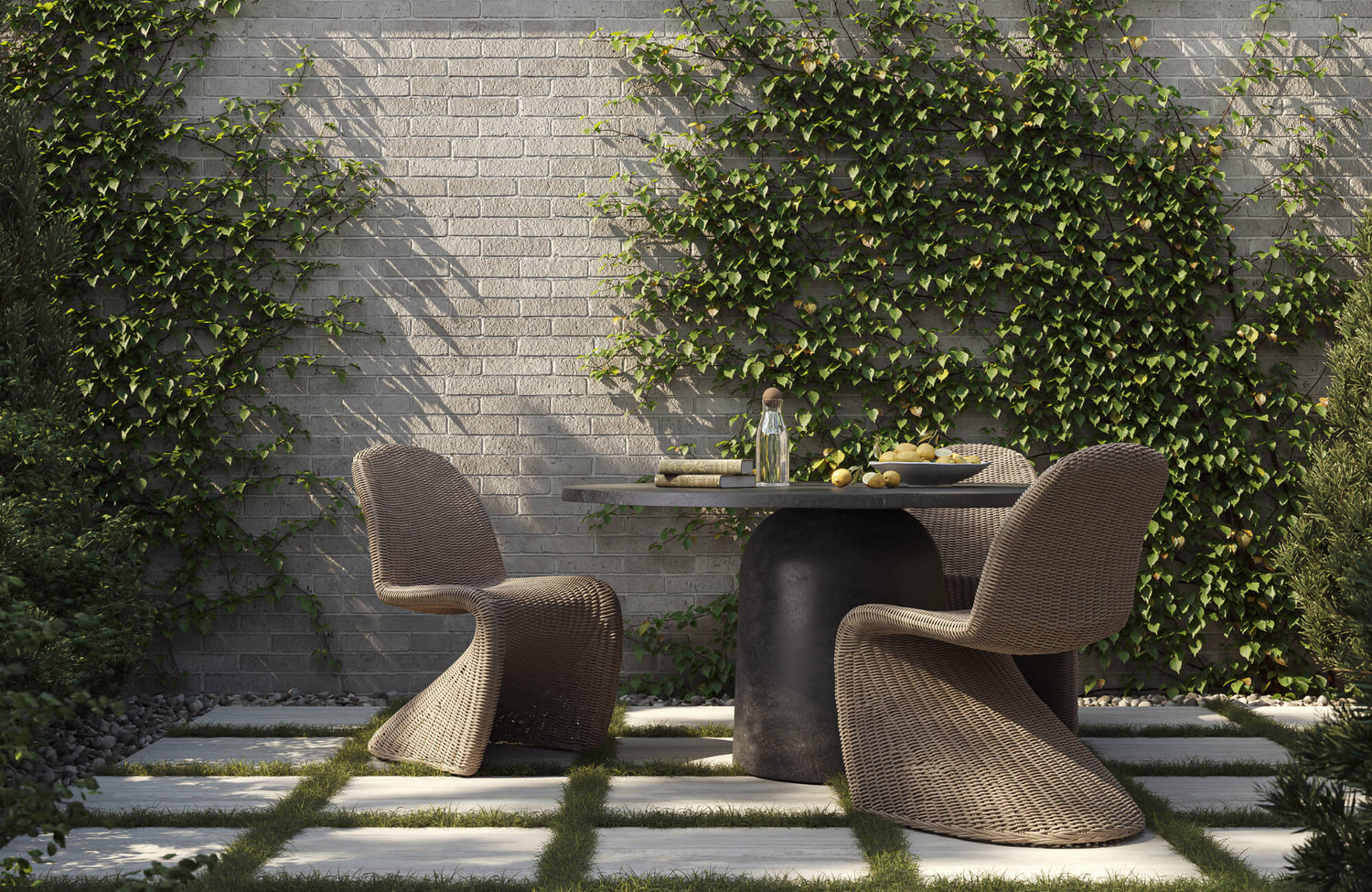
Not all synthetic wicker materials are created equal. Premium HDPE is engineered to withstand outdoor conditions without cracking, fading, or becoming brittle, a quality clearly demonstrated in Edward Martin’s Calandor Outdoor Dining Chair in Vintage Natural in the image above, where the woven structure maintains both flexibility and visual consistency. It retains strength even under prolonged exposure to sunlight and temperature fluctuations.
In contrast, lower-quality PVC wicker tends to degrade over time, becoming rigid and prone to breakage. This distinction is crucial for ensuring long-term performance and maintaining the visual integrity of outdoor furniture.
The Importance Of Rust Proof Aluminum Core Frames
HDPE wicker is typically woven over a structural frame, and the quality of this frame is a key factor in the overall durability of the furniture. High-end pieces use rust-proof aluminum frames, combining the corrosion resistance of aluminum with the visual appeal of woven textures.
This combination ensures that both the exterior and the internal structure are protected against rust, creating a cohesive and long-lasting solution for outdoor living spaces.

Premium Grade A Teak Wood For Natural Elegance
For those drawn to organic textures and classic craftsmanship, wood remains an enduring choice in outdoor design. However, not all wood performs equally under exposure to the elements. Teak, in particular, has earned its reputation for combining natural beauty with remarkable resistance to environmental wear.
How Natural Rubber And Oils Repel Moisture
Teak contains natural oils and rubber compounds that make it highly resistant to water, pests, and decay, a characteristic exemplified by Edward Martin’s Maris Teak Rectangular Dining Table, 96" x 42" in the image above, where the dense wood surface showcases both durability and a rich, organic finish. These inherent properties allow the wood to withstand exposure to rain and humidity without deteriorating. The oils act as a barrier, preventing moisture from penetrating the surface and causing damage.
This natural resistance reduces the need for chemical treatments, making teak an environmentally conscious choice for outdoor furniture.
The Silver Patina Versus Maintaining The Golden Hue
Over time, untreated teak develops a distinctive silver-gray patina as it reacts to sunlight and environmental exposure. This transformation is purely aesthetic and does not affect the wood’s durability. Many homeowners appreciate this weathered look for its understated elegance.
For those who prefer to maintain teak’s original golden hue, periodic application of teak oil or sealers can preserve its warm tones. While teak is naturally durable and low maintenance, preserving its original color does require consistent upkeep, making it important to align maintenance expectations with the desired finish.

Stainless Steel For Heavy Duty Modern Applications
As outdoor spaces continue to embrace contemporary design, the demand for materials that balance strength with refined aesthetics grows. Stainless steel answers this need with its sleek appearance and impressive durability. Its engineered resistance to corrosion makes it especially suitable for modern outdoor settings that require both performance and style.
Understanding The 304 And 316 Marine Grade Standards
Stainless steel achieves its corrosion resistance through the addition of chromium, which forms a protective oxide layer on the surface. Among the various grades, 304 stainless steel is commonly used for outdoor furniture due to its durability and resistance to everyday environmental exposure.
For more demanding environments, particularly coastal areas, 316 marine-grade stainless steel provides enhanced protection. It contains molybdenum, which improves resistance to salt and chloride corrosion, making it ideal for seaside installations. However, even high-grade stainless steel may develop surface corrosion over time in salt-heavy environments if not properly maintained, making routine care essential for preserving its finish.
Routine Polishing And Maintenance Requirements
Although stainless steel is resistant to rust, it is not entirely maintenance-free. Regular cleaning and occasional polishing help maintain its appearance and prevent surface contaminants from compromising its protective layer.
With proper care, stainless steel furniture can retain its sleek finish and structural integrity for many years, making it a worthwhile investment for modern outdoor spaces.
Investing In Rust Free Longevity
Selecting outdoor furniture that will not rust is ultimately about understanding the materials and their behavior in real-world conditions. From the lightweight resilience of powder coated aluminum to the woven sophistication of HDPE wicker, the natural elegance of teak, and the modern strength of stainless steel, each option offers distinct advantages tailored to different environments and design preferences.
Investing in rust-resistant materials ensures that outdoor spaces remain as inviting and refined as the interiors they complement. It allows you to enjoy your surroundings without the constant concern of deterioration, preserving both beauty and functionality over time. Thoughtfully designed spaces achieve even greater impact with expert direction, and Edward Martin’s design services bring a refined, cohesive vision to outdoor living. By choosing materials engineered for longevity and partnering with experienced professionals, outdoor living becomes not only effortless but enduringly elegant, explore the contact page or contact Edward Martin to start shaping your space.