
)
)
)
)
)
)
)
)
What Tiles Are Suitable For A Fireplace?
A fireplace naturally becomes a focal point, so the tile you choose plays a meaningful role in both the room’s atmosphere and the fireplace’s long-term performance. Because fireplaces produce steady warmth and occasional bursts of heat, the surrounding materials need to remain stable and dependable. Selecting the right tile helps you create a surface that’s safe, durable, and visually in harmony with the rest of your home. In this article, we’ll walk you through the essentials to help you choose tiles that are reliable, safe, and well-suited to your space.
Heat Performance and Material Behavior
A fireplace exposes tile to steady temperature increases and ongoing heating and cooling cycles. Understanding how different materials respond to these changes helps you choose options that stay dependable over time. As we walk through these factors together, you’ll have a clearer sense of what allows a tile to perform well in a heat-exposed area.
Thermal Resistance Explained
When tiles heat up, they expand, and as they cool, they contract. Although this movement is minimal, it becomes significant in a fireplace setting where temperatures shift throughout each use. Because of this, tiles such as porcelain, which are fired at higher temperatures, usually handle these changes more consistently, helping them maintain their appearance over time. As you review the specifications, pay attention to heat ratings and thermal shock resistance. These details can give you a clear indication of how well a tile can withstand temperature changes without warping or cracking.
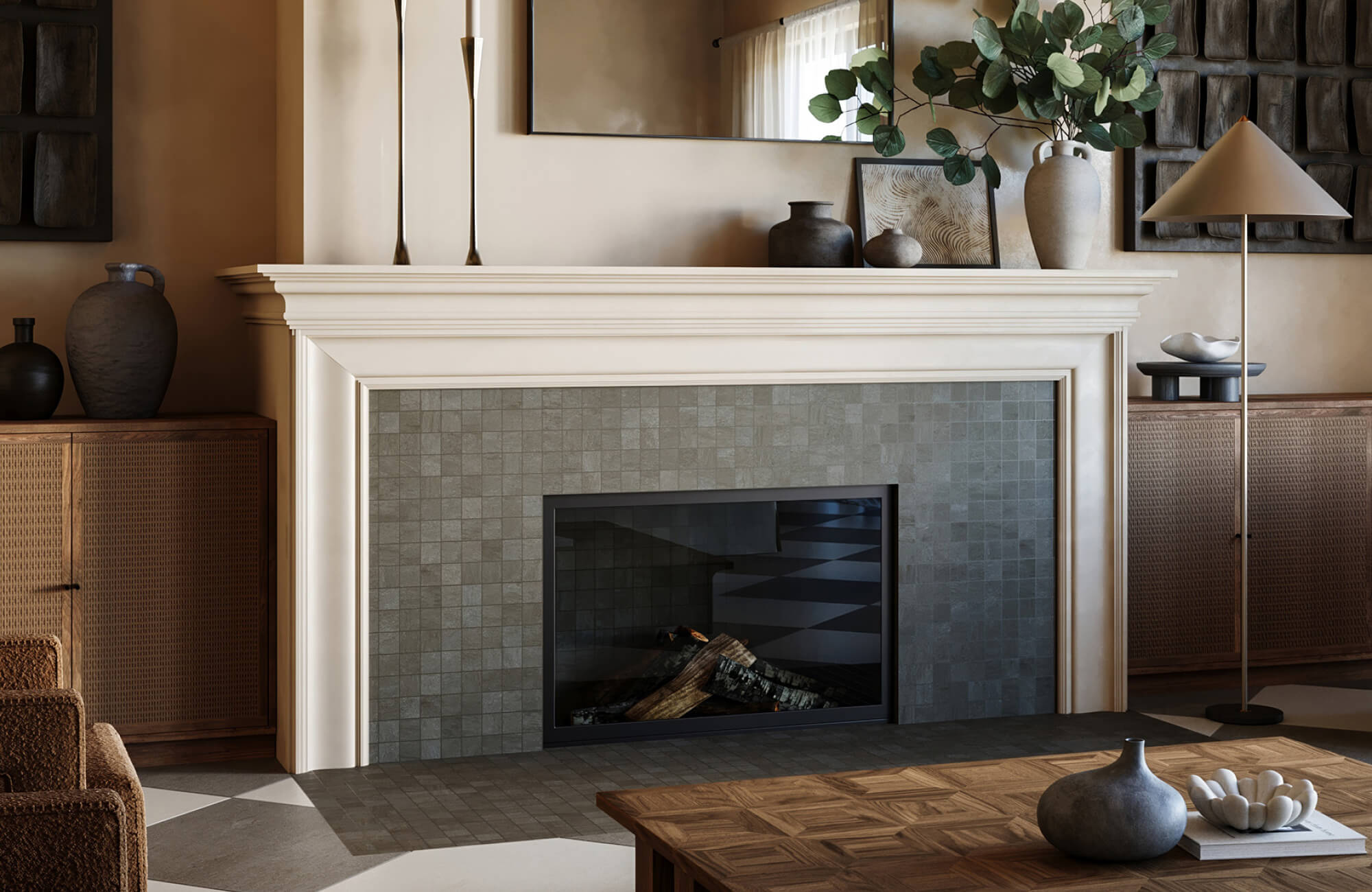
You can see this performance advantage illustrated in the photo featured above, where Edward Martin’s Brody 2x2 Matte Porcelain Mosaic Tile in Smoke surrounds the firebox. Its dense, heat-stable construction makes it well-suited for areas exposed to continuous warming and cooling cycles, offering both durability and a refined, modern look.
Porosity and Heat Tolerance
Porosity determines how much moisture a tile can absorb, which becomes important near a fireplace, where heat can draw out any water trapped within the material. Low-porosity options such as porcelain or certain natural stones handle rapid temperature changes more effectively because they contain less internal moisture that can expand under heat. When a tile absorbs too much water, that moisture can convert to steam during heating and create micro-cracks or weaken the surface over time. When choosing a fireplace tile, selecting a dense, low-absorption material helps you prevent these issues and ensures reliable performance around the firebox.
Edge and Surface Stability
The glazing or finish on a tile also needs to stay stable as temperatures rise. Some glazes can develop fine surface lines, known as crazing, when they expand at a different rate than the tile body. Because this mismatch happens gradually, the lines often become more noticeable over time. When you choose tiles designed with compatible glaze and base materials, you gain a surface that keeps its original appearance rather than shifting under heat. Unglazed tiles offer an alternative since they have no separate coating that might react differently when exposed to warmth.
Tile Materials Suitable for Fireplace Use
Material choice plays a central role in both the performance and appearance of your fireplace. Each type of tile responds to heat in its own way and contributes a distinct visual style. As we explore the options, you’ll understand which materials fit the needs for durability, maintenance, and overall design.
Porcelain Tile
Porcelain is one of the most reliable choices for fireplace installation due to its dense, durable structure. It withstands repeated temperature changes and resists edge chipping, which makes it a strong option for long-term use. When you choose porcelain, you get a material suited for the surround, the hearth extension, or even a full fireplace façade. With its wide range of shapes, finishes, and printed designs, porcelain allows you to create anything from a clean, modern look to a more textured and detailed style.
Ceramic Tile
Ceramic tile works well in areas that sit slightly farther from the firebox, where the heat is more moderate. A well-made ceramic tile has a strong clay body and a durable glaze that helps it maintain its appearance under these conditions. It’s also a practical option when you want a lighter-weight material that is easier to install on vertical surfaces. If you enjoy decorative details, ceramic tiles offer a variety of patterns, colors, and hand-finished styles that add character to the fireplace without taking over the room.
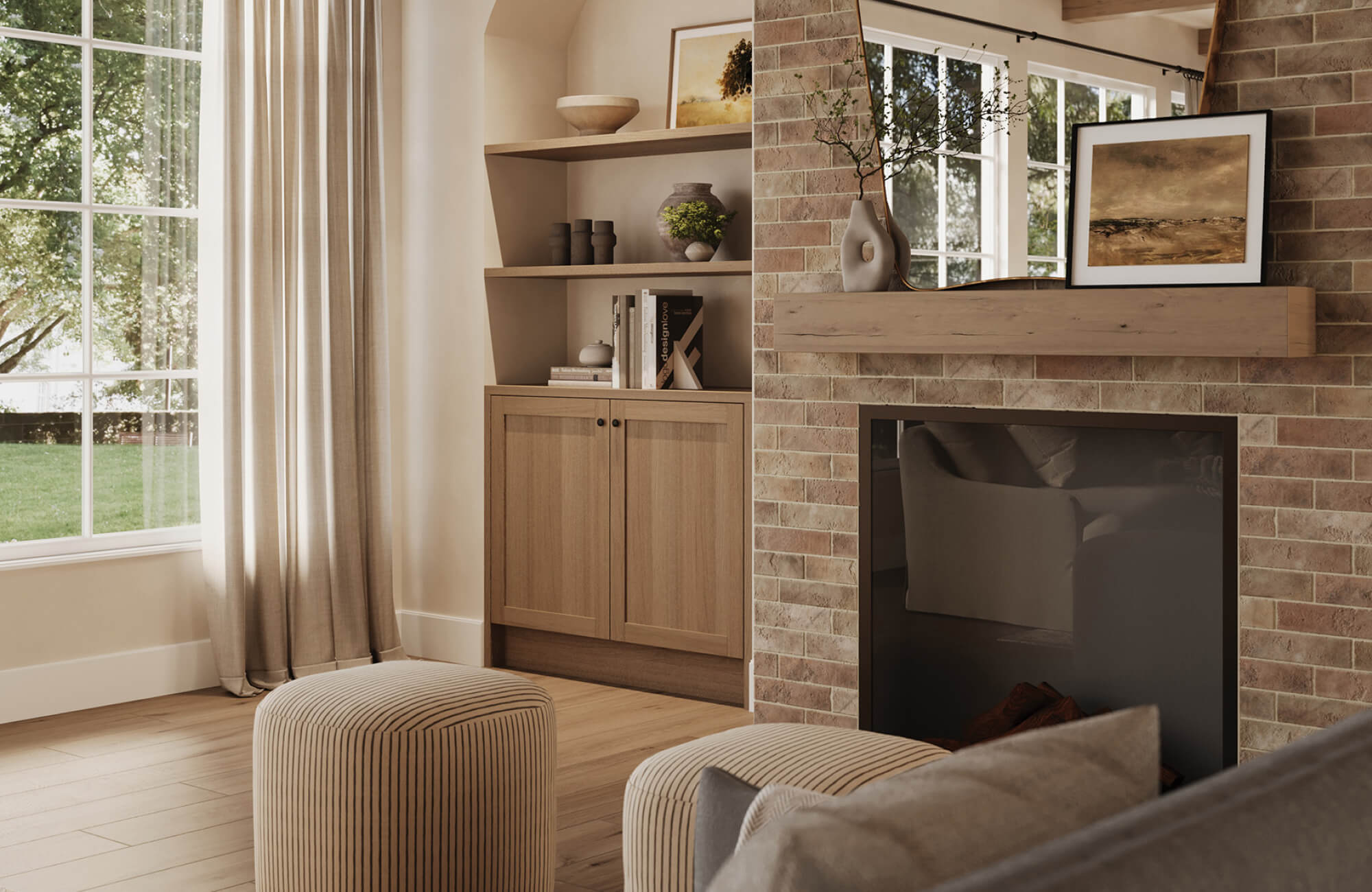
In the photo displayed above, the fireplace surround features Edward Martin’s Everett 2x10 Matte Ceramic Tile in Almond, highlighting how ceramic can bring warmth and texture to areas that experience gentler heat exposure. Its elongated shape and soft matte finish create a relaxed, natural look while still maintaining the stability needed for this part of the fireplace.
Natural Stone
Natural stone offers a unique look and adds an organic, grounded feel to the room. Slate and granite are known for their strong heat stability, while marble provides a refined appearance when placed in areas with lower heat exposure. When choosing stone, consider the finishing method, as clean-cut edges and consistent thickness make installation on vertical surfaces more manageable. Most stone types require sealing, so plan for periodic maintenance to protect the color and limit soot absorption.
If you enjoy the look of stone but want something easier to maintain, stone-look porcelain is a practical alternative. It captures the depth and variation of natural stone while offering the heat resistance, durability, and low-maintenance benefits that make porcelain particularly well-suited for fireplace use.
Concrete and Cement Tiles
Concrete tiles can bring visual depth and a handcrafted feel. They manage moderate heat reasonably well, but they should not sit directly against the firebox opening. These tiles often contain pigments that give them character, so sealing the surface helps protect the color from gradual heat exposure. If you want bold patterns or geometric designs, concrete tiles offer a strong visual impact when installed in the right location.
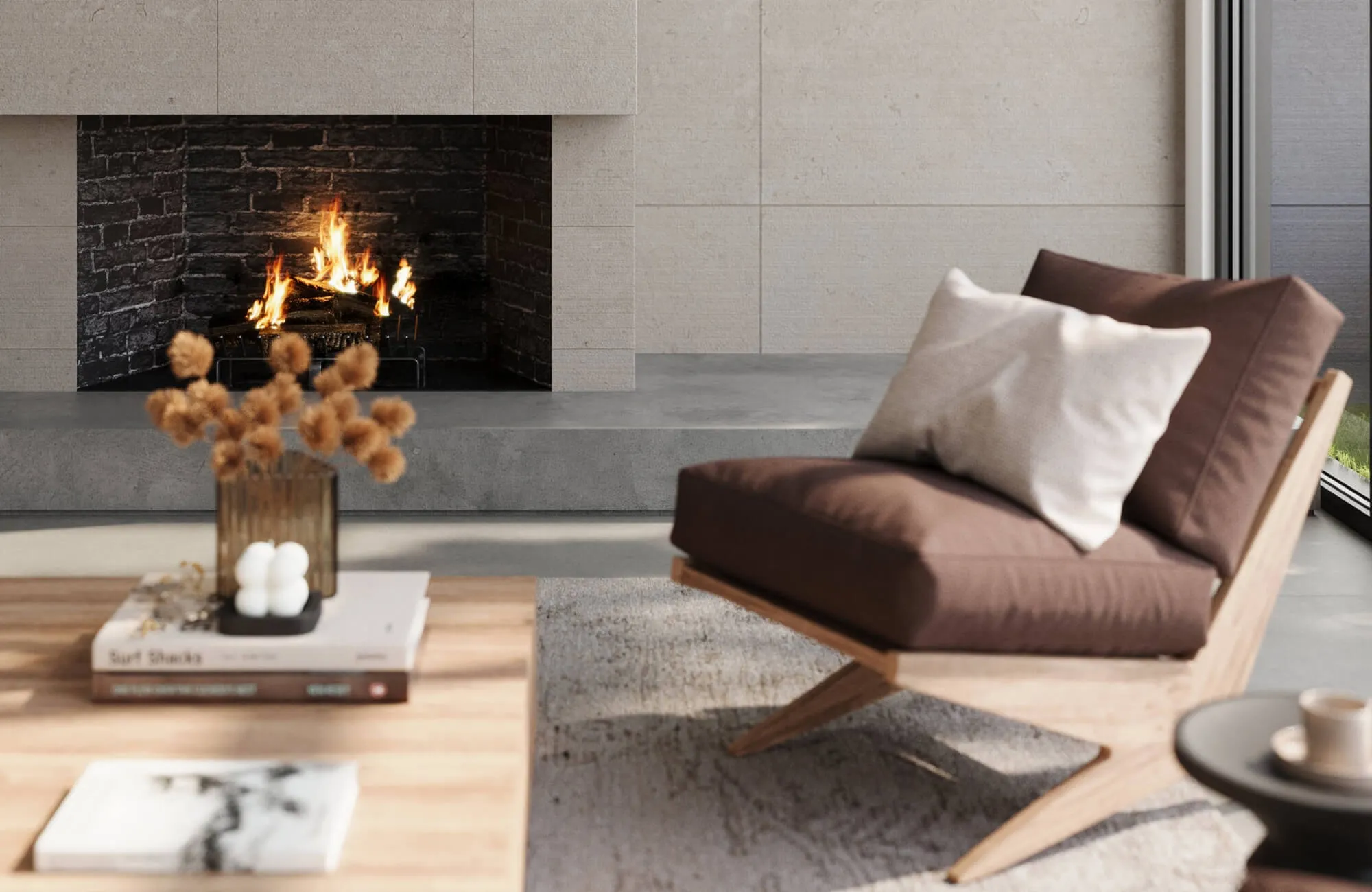
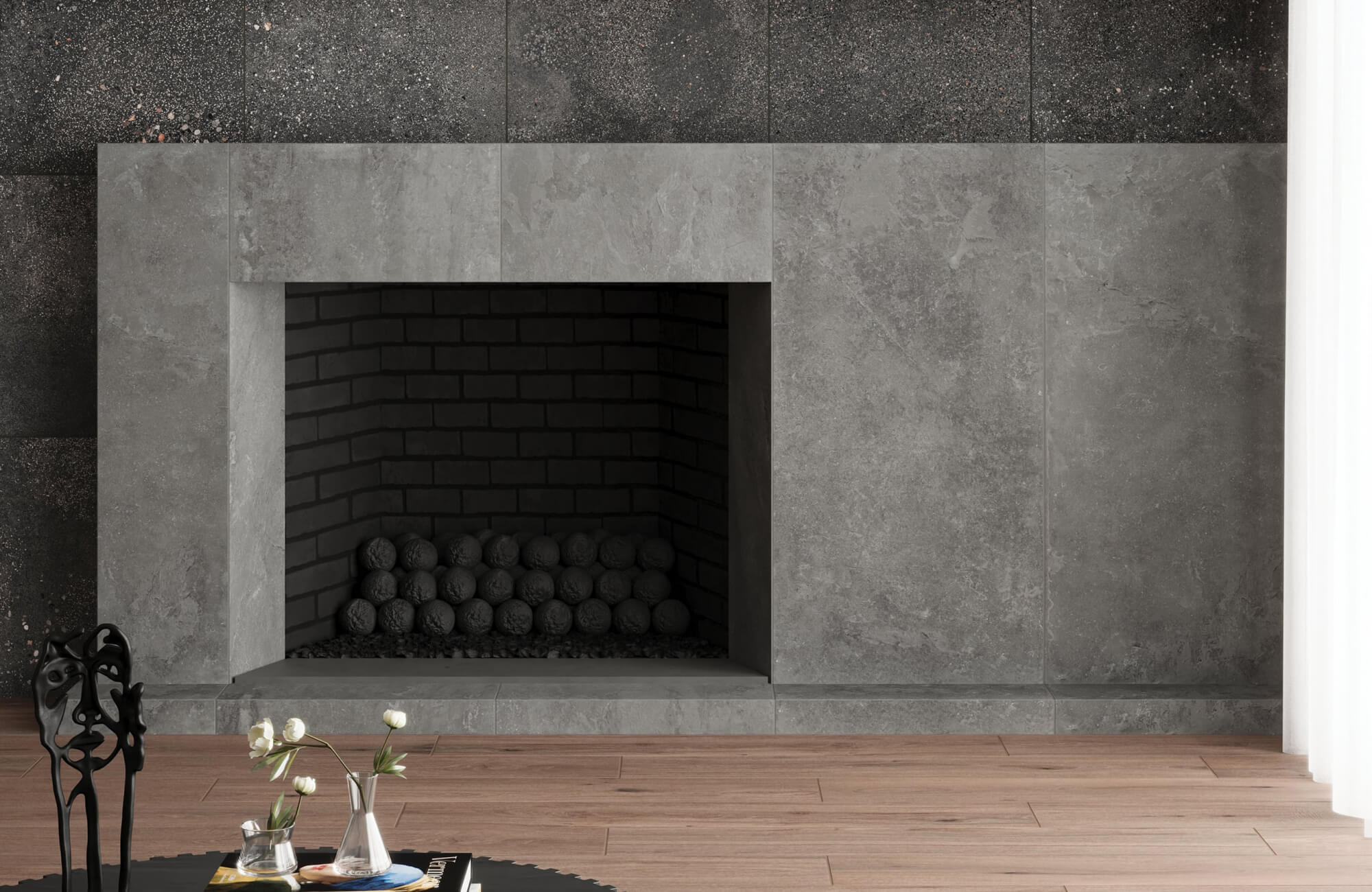
If you like the look of concrete but prefer a lower-maintenance material, concrete-look porcelain is a practical alternative. It captures the soft, textured appearance of real cement while offering better heat resistance, reduced weight, and easier upkeep, making it especially suitable for fireplace installations. A good example is our Ramsey 24x24 Matte Porcelain Tile in Smoke, which adds depth and a modern feel of poured concrete with the added durability and stability of porcelain.
Metal, Glass, and Specialty Tiles
Metal and glass tiles are great options if you’re looking for a more modern, refined look. Glass reflects light in a way that brightens the fireplace; however, it should be placed in areas where the heat stays moderate to prevent stress cracks. Metal tiles, on the other hand, heat up quickly but cool just as fast, which makes them well-suited for accent strips, borders, or raised sections that frame the fireplace without sitting too close to the firebox. For added variety, specialty tiles such as recycled composites with heat-tolerant backing provide unique textures and patterns while still meeting essential safety requirements.
Safety and Compliance Considerations
Tile selection is not only about design but also about ensuring the fireplace operates safely. Because a fireplace generates steady heat, certain requirements must be followed to prevent that warmth from affecting nearby materials. By paying close attention to clearances and choosing the right installation products, you can create a setup that remains both safe and fully compliant with essential guidelines.
Fire Ratings and Certification
When you evaluate tiles, look for fire safety information that confirms the material is non-combustible. This ensures the tile will not ignite or release harmful substances when exposed to higher temperatures. Fire-rated products are also tested to verify that they maintain their surface integrity even as conditions shift, giving you added confidence in their long-term performance.
Clearances and Protected Zones
Every fireplace has specific areas that require different levels of heat protection. As you move closer to the firebox opening, the materials you use must offer stronger resistance to higher temperatures. Building guidelines outline the minimum distances between the firebox and nearby elements such as tiles, mantels, and frames, helping you understand where added protection is needed. By following these guidelines, you can reduce the risk of future issues and create an installation that remains safe and reliable over time.
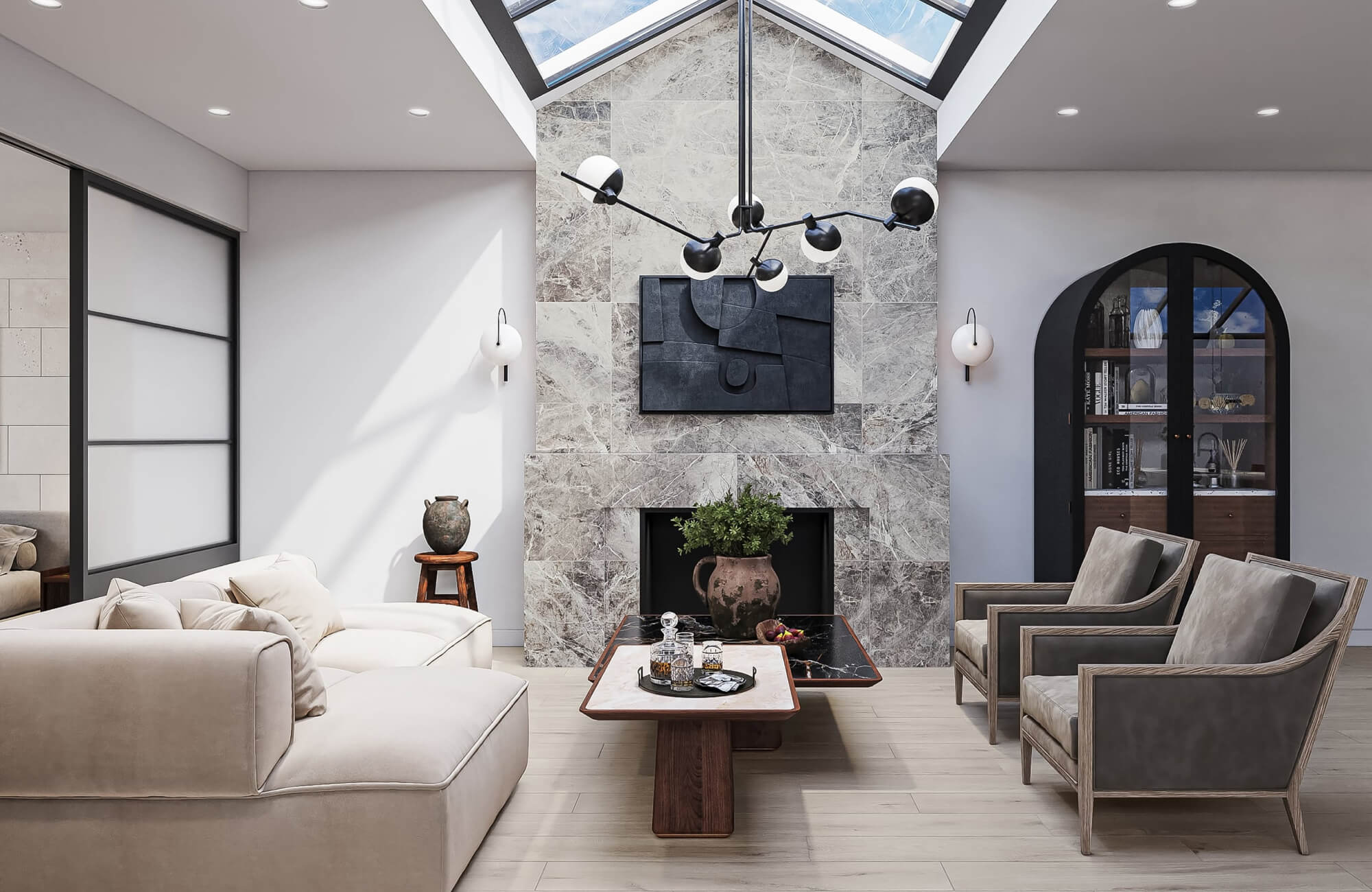
You can see this approach demonstrated in the photo featured above, where the wall features Edward Martin’s Wren 24x48 Matte Porcelain Tile in Charcoal. Its non-combustible structure and large-format design provide a protective, heat-stable surface in the zone surrounding the firebox, illustrating how the right material choice supports both safety and visual continuity.
Adhesives, Mortars, and Backer Boards
Heat-resistant tile is only one part of a safe and durable fireplace system. The right mortar and adhesive are essential because they help keep the tiles secure as temperatures rise. It’s best to choose setting materials specifically labeled for high-temperature use to reduce the risk of bond failure. The substrate is just as important, and materials like cement board hold their stability far better than drywall near warm surfaces, giving your installation a stronger, more reliable foundation.
Design Approaches for Fireplace Tile Layouts
Once we know a tile can handle the heat, we can shift our attention to the design. The layout you choose influences not only the appearance of the fireplace but also how the eye moves through the room. By understanding proportion, surface interaction, and thoughtful color placement, you can create a cohesive and welcoming focal point that enhances the entire space.
Scale and Proportion
Tile size plays a key role in how the fireplace fits within the room as a whole. Large tiles can create clean, continuous lines that suit modern spaces, while mosaics introduce finer detail that works well in more intricate interiors. As you consider scale, take into account the typical viewing distance and how the tile dimensions relate to the height and width of the surround, helping the proportions feel balanced and intentional.
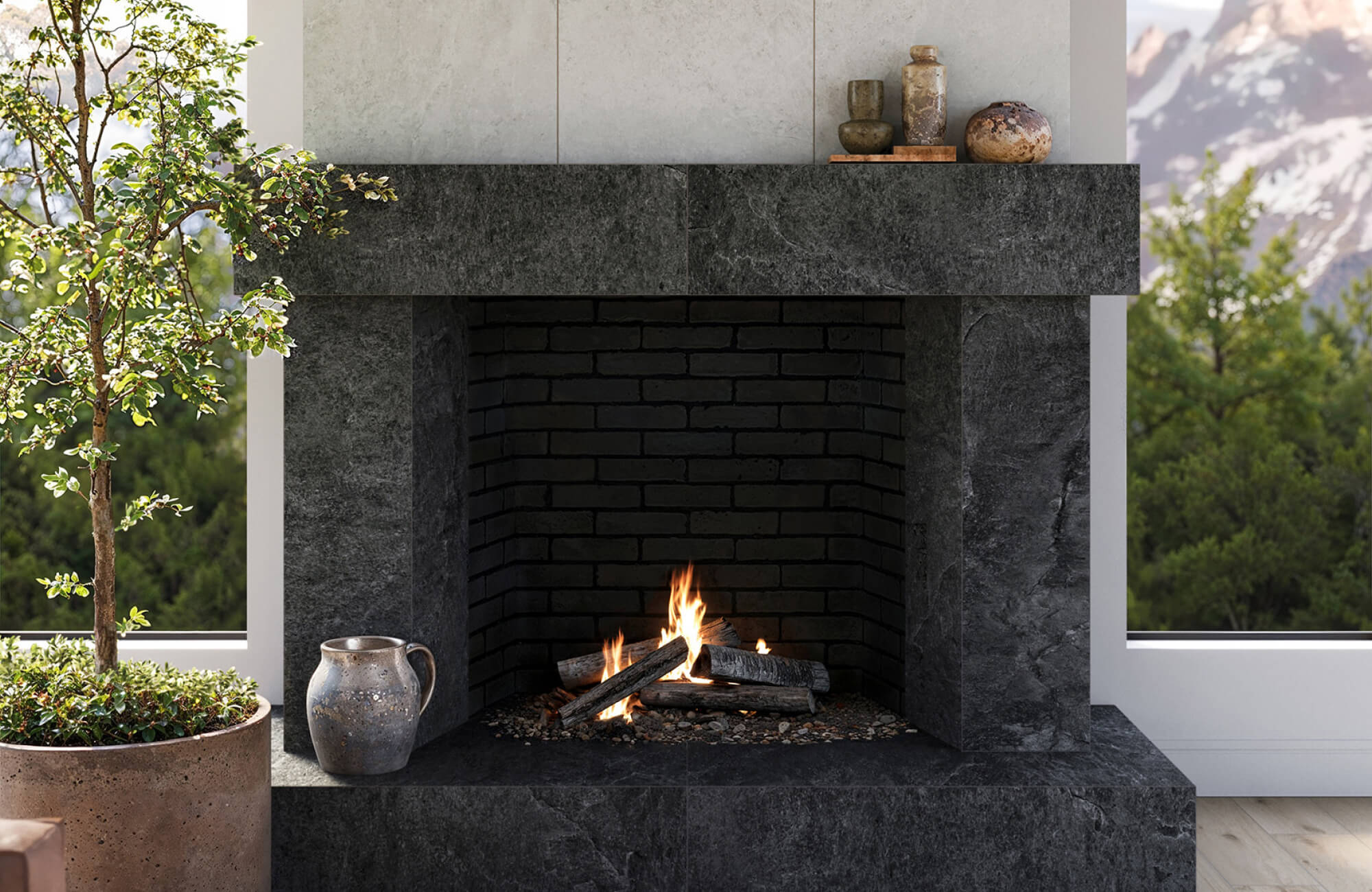
You can see this effect clearly in the photo shown above, where the fireplace is clad in Edward Martin’s Chantel 24x48 Matte Porcelain Tile in Imperial. Its large-format size and vertical layout draw the eye upward, highlighting the room’s height, showing how oversized tiles can create a striking focal point while still keeping the design clean and modern.
Texture, Finish, and Light Interaction
The way a tile interacts with light can shape the overall mood of the room. Matte finishes can soften reflections and create a more relaxed atmosphere, while glossy surfaces catch highlights and introduce a sense of energy. It also helps to consider how natural daylight and firelight play across the surface, as each will shift the appearance of the tile throughout the day and into the evening.
Color Strategy and Architectural Integration
Color helps connect the fireplace to nearby elements such as walls, flooring, and built-in features. Warm neutrals can create a comfortable, inviting feel, while deeper tones can also help draw attention to the fire and form a strong visual frame. As you choose colors, consider the broader architecture of the room so the fireplace feels fully integrated rather than standing apart from the overall design.
For added confidence during the planning stage, you can also use our AR tool to visualize different tile layouts and finishes directly in your space before starting the installation.
Installation Techniques for a Heat-Exposed Area
Even the best tiles need proper installation to perform well in a heat-exposed area. Focusing on bond strength, movement allowances, and careful substrate preparation helps ensure the materials remain secure and stable despite ongoing temperature changes. For optimal results, it’s always best to consult with a qualified professional who understands the specific requirements of fireplace installations.
High-Bond Mortars and Heat-Rated Setting Materials
Tiles expand slightly as they warm, so they need mortars that can maintain a strong hold under changing temperatures. High-bond mortars formulated for heat exposure help keep the tiles securely in place over time. When you choose setting materials designed for this type of installation, you greatly reduce the risk of tiles loosening or shifting as the fireplace continues to heat and cool.
Expansion Joints and Movement Accommodation
Expansion joints can give the tile surface room to move without cracking. These joints are placed strategically to accommodate the small but consistent shifts that occur as the fireplace heats and cools. When installed correctly, they can also help protect the surface from stress and keep patterns aligned so the finished design remains clean and cohesive over time.
Proper Substrates and Reinforcement
A reliable substrate forms the foundation of an effective tile system. Cement boards and specialty membranes perform well under heat and help prevent movement that can occur from subtle structural shifts. By reinforcing vulnerable areas with the right materials, you can support a tile assembly that stays stable, secure, and dependable over time.
Maintenance Needs and Long-Term Care
Caring for a fireplace tile setup helps it stay in good condition even with regular use. By understanding how to clean and maintain each material, you protect both its appearance and long-term performance. It’s also important to follow the manufacturer’s recommendations for both tiles and grout, as these guidelines ensure you care for each product in the way it was designed to perform.
Sealing and Surface Protection
Some materials, especially natural stone, tend to absorb soot and oils more readily. Applying a proper sealant helps minimize staining and keeps the tile’s color looking consistent. By resealing at the recommended intervals, you maintain a protective layer that supports the material’s long-term durability and overall appearance.
Cleaning Methods for Soot and Residue
Fireplaces naturally produce residue that can settle on the tile surface. Gentle, pH-balanced cleaners work well for most materials and help prevent abrasion on glazed finishes. Using soft pads or microfiber cloths allows you to lift soot and buildup effectively without scratching or dulling the tile.
Monitoring for Heat Stress
Over time, you may notice early signs of heat-related wear, such as fine lines in the glaze or slight discoloration near the hottest areas. By checking the surface periodically, you can address small issues before they develop into bigger problems. This simple habit helps your fireplace remain in good condition and perform well for years to come.
Choosing the Best Tile for a Safe and Stylish Fireplace
The most suitable tile for a fireplace is generally porcelain, as its dense structure, low porosity, and strong heat resistance allow it to perform well in both high- and moderate-heat areas. Porcelain also comes in a wide range of styles, giving you design flexibility without compromising safety or durability. Other materials, such as natural stone and ceramic for lower-heat sections, as well as specialty options like stone-look or concrete-look porcelain, can also be excellent choices, depending on your design goals and the location where the tile will be installed.
When you understand how each material reacts to heat, what safety guidelines apply, and how design decisions shape the final look, you can choose a fireplace tile that remains secure, meets safety standards, and enhances your home with a cohesive, lasting style. If you’d like help bringing your vision together, our design team can guide you through tile selections that best suit your fireplace and your home.
Follow us on Instagram
@EDWARD.MARTIN
)
)
)
)
)
)
)
)
)
)
)
)
)
)
)
)