Bathroom tile needs to do more than complete a beautiful design. In a space where water, soap residue, steam, and daily foot fall meet, the surface underfoot plays a major role in comfort and safety. According to the CDC, more than one out of four older adults falls each year, making bathroom flooring choices especially important in homes designed for long-term comfort and accessibility. A bathroom floor that looks refined when dry can become difficult to navigate once moisture settles across the tile, especially near showers, tubs, vanities, and toilet areas.
Slip resistance depends on several factors working together: tile finish, surface texture, grout spacing, material density, installation quality, and ongoing maintenance. At Edward Martin, we believe a safe bathroom should still feel intentional, polished, and personal. This guide explains what makes a bathroom tile less slippery, which materials and finishes perform best in moisture-prone areas, and how to choose options that support both everyday safety and elevated design.

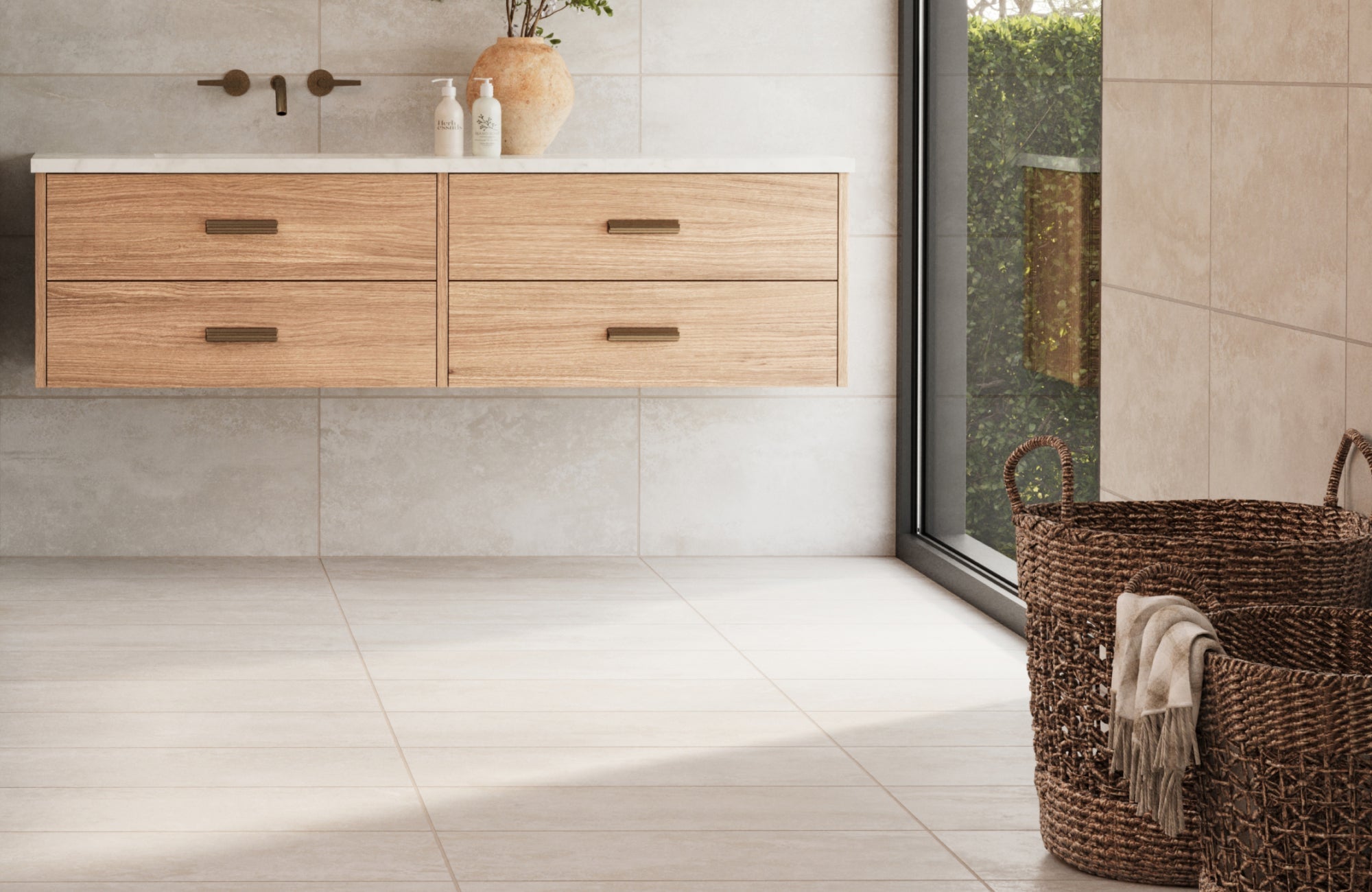
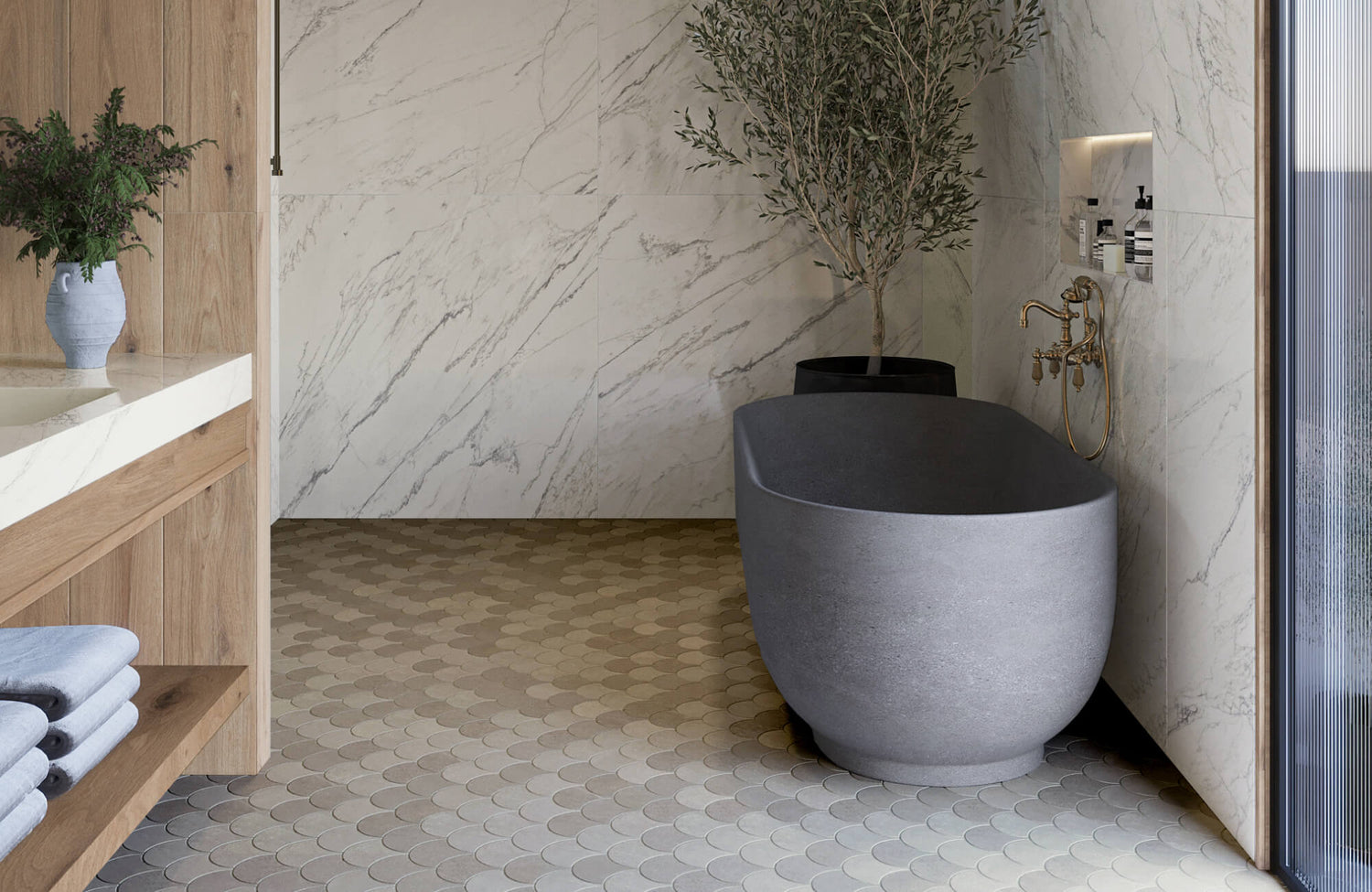
Ramsey 2x2 Matte Porcelain Mosaic Tile in Smoke grounds the wet area, while Ramsey 12x24 Matte Porcelain Tile in Chalk creates a calm, tailored bathroom.
Understanding Slip and Fall Hazards in Bathrooms
Bathrooms create a unique combination of slip risks because they are compact, frequently wet, and filled with smooth surfaces. Even a well-designed bathroom can become hazardous when flooring, drainage, cleaning habits, or transitions between surfaces are not carefully considered. Understanding these risks is the first step in choosing the right tile.
Wet Surfaces
Water is the most obvious slip factor in a bathroom, but the real concern is how it behaves once it reaches the floor. Smooth or glossy tiles can allow water to sit on the surface as a thin layer, which may reduce friction between the tile and the foot. This is especially important near shower entries, bathtub surrounds, and vanities, where moisture often collects even when the room appears generally dry.
Tile porosity also matters, though it should not be confused with slip resistance. Dense, low-absorption materials such as porcelain are valued in bathrooms because they resist water penetration, staining, and moisture-related damage. However, a low-porosity tile still needs the right surface finish to feel secure underfoot. A matte, structured, or textured porcelain tile will typically perform better in wet zones than a polished or glossy surface because it provides more tactile contact.
Proper slope and drainage are also essential in shower floors. Even a slip-resistant tile can feel unsafe if water pools across the surface. For this reason, small-format mosaics are often preferred in showers because they follow the floor pitch more easily and introduce more grout joints, which can add traction.
Soap Scum and Residues
Soap scum, shampoo, conditioner, body wash, hard-water minerals, and cleaning product buildup can all change how a tile feels underfoot. These residues form a thin, sometimes invisible layer over the tile surface, making it smoother and more slippery than the tile itself. In wet conditions, that film can become especially slick.
Textured and matte tiles can help improve grip, but they still require regular cleaning to maintain their intended slip resistance. In fact, heavily textured surfaces may trap residue in small crevices if they are not cleaned properly. The best approach is to choose a finish with enough surface grip for wet use while still being practical to maintain. For most residential bathrooms, matte porcelain mosaics or lightly textured porcelain tiles offer a strong balance between traction, durability, and cleanability.
Grout also plays a role. Smaller tiles introduce more grout lines, and those joints can provide additional underfoot friction. However, grout must be kept clean and intact; worn, dirty, or uneven grout can compromise both safety and appearance over time.
Uneven Surfaces and Changes in Elevation
Slip hazards are not limited to surface slickness. Uneven flooring, raised tile edges, cracked tiles, poorly aligned grout joints, and abrupt transitions can create tripping risks, particularly in bathrooms where people often move barefoot or step from wet to dry areas. Even a small height difference between the main bathroom floor and a shower base can become a problem if it is not clearly designed and properly finished.
Good installation is critical. Tiles should be set evenly, transitions should be smooth, and grout joints should be consistent. In shower areas, the floor must be sloped correctly toward the drain without creating awkward ridges or low spots. Thresholds, curbs, and transitions should be designed with visibility and ease of movement in mind, especially in bathrooms used by children, older adults, or anyone with limited mobility.
The safest bathroom floors combine appropriate tile selection with careful detailing. A slip-resistant tile can only perform as intended when the installation supports stable footing, proper drainage, and smooth movement through the space.

Sasha 36" Single Vanity in Mid Century Walnut with 3 cm White Zeus Quartz Top pairs warmly with Ellie 2.5x8 Matte Ceramic Tile in Eggshell, brass fixtures, and taupe checkerboard flooring.
Factors to Consider When Choosing Anti-Slip Tiles
Choosing anti-slip bathroom tile requires more than avoiding glossy finishes. Slip resistance is influenced by measurable performance ratings, surface texture, tile size, grout spacing, material composition, and where the tile will be installed. By understanding how friction, finish, format, and material work together, it becomes easier to choose tile that supports long-term safety without compromising the visual quality of the space.
Coefficient of Friction (COF)
Coefficient of Friction, often shortened to COF, measures the traction between two surfaces. In tile selection, it helps indicate how much grip a tile surface may provide underfoot. A higher COF generally means better slip resistance, though the rating should always be considered alongside the tile’s intended use, finish, and installation location.
For bathroom floors, especially those exposed to regular moisture, it is important to look for tiles rated for floor use and suitable for wet areas. Shower floors, tub surrounds, and bathroom entries may need more slip-resistant surfaces than a dry vanity wall or decorative backsplash. A matte or textured tile with an appropriate slip-resistance rating is typically a safer choice than polished or high-gloss tile in these areas.
It is also worth noting that COF is a helpful benchmark, not the only deciding factor. Tile size, grout joints, drainage, cleaning habits, and footwear or bare-foot use all influence how safe a surface feels in everyday conditions. For households with children, or older adults, choosing a tile with stronger traction characteristics can provide an added layer of confidence.
Tile Texture
Surface texture has a direct effect on how a bathroom tile performs when wet. The more contact and friction a tile provides underfoot, the less likely it is to feel slick. However, texture should be chosen thoughtfully. Extremely rough surfaces may offer grip but can be uncomfortable under bare feet or more difficult to clean, while overly smooth surfaces may look elegant but become slippery when exposed to water.
Grooved vs. Matte Tiles
Grooved tiles use channels, ridges, or linear surface detailing to create additional traction. These designs can be useful in areas where water is likely to move across the surface, as the grooves may help disrupt the water layer underfoot. However, deeper grooves can collect dirt, soap residue, and mineral buildup, so they require more attentive cleaning.
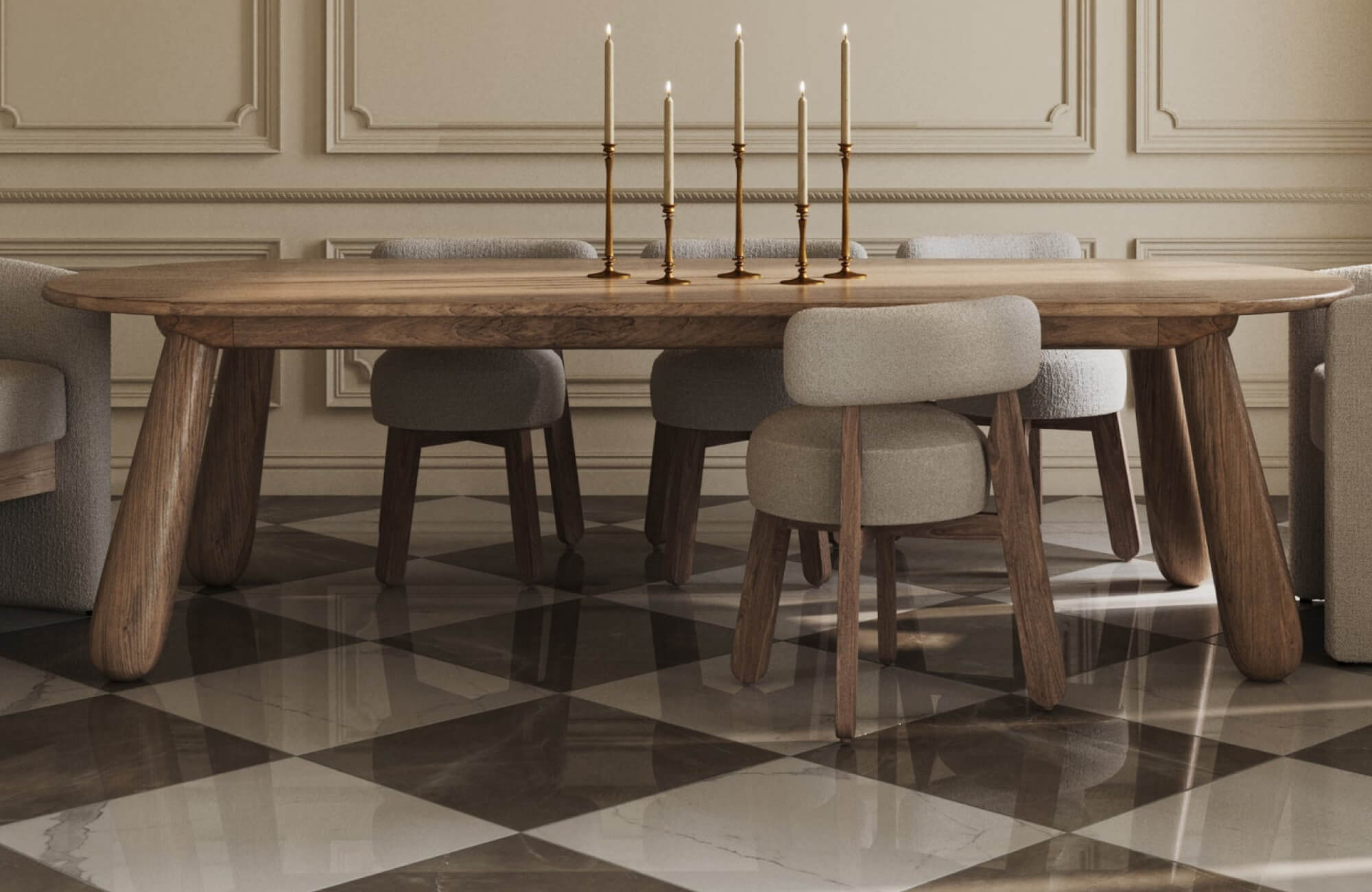
Matte tiles are often one of the most practical choices for bathroom floors. Their non-reflective surface generally provides better grip than glossy finishes while maintaining a clean, versatile look. Matte porcelain, in particular, works well in bathrooms because it pairs moisture resistance with a softer surface appearance. For example, Edward Martin’s Leona 12x12 Checkerboard Matte Porcelain Tile in Marfil and Amani Bronze offers a decorative checkerboard look while using a matte finish that is more appropriate for moisture-prone floors than a polished surface.
Smooth vs. Textured Tiles
Smooth tiles can create a sleek, contemporary appearance, but they are not always ideal for wet floors. Glossy or polished surfaces may become slick when water, soap, or lotion residue is present. These finishes are often better reserved for walls, backsplashes, or low-moisture decorative areas where underfoot traction is not a concern.
Textured tiles are designed to provide more tactile grip. The texture may come from a raised pattern, stone-like surface, brushed finish, or subtle micro-texture. In bathrooms, lightly textured tiles often strike the best balance: they improve traction while remaining comfortable and manageable to clean. For shower floors and other consistently wet zones, smaller textured mosaics can be especially effective because the grout joints add another layer of slip resistance.
Tile Material
Tile material affects durability, water resistance, maintenance, and long-term suitability in a bathroom. While finish and texture largely determine how slippery a tile feels, the material underneath influences how well the tile performs in a wet environment over time.
Edward Martin’s Augmented Reality (AR) Visualization Tool can help homeowners preview how different tile materials, colors, and formats look within their own space before making a final decision. While AR is useful for evaluating scale, pattern direction, color balance, and design compatibility, slip resistance should still be confirmed through product specifications, finish details, and intended-use recommendations.
Porcelain
Porcelain is one of the strongest choices for bathroom floors because it is dense, durable, and highly resistant to water absorption. Its low porosity makes it well suited to moisture-prone environments such as showers, tub areas, and full bathroom floors. When paired with a matte, textured, or mosaic finish, porcelain can offer both practical traction and design flexibility.
Porcelain is also available in a wide range of looks, including marble, limestone, concrete, terrazzo, and wood visuals. This makes it possible to achieve a refined design while choosing a surface that performs well in everyday bathroom conditions.
Ceramic
Ceramic tile is another common bathroom material, especially for walls, backsplashes, and moderate-use areas. It is generally more affordable than porcelain and available in a broad range of colors, shapes, and finishes. For bathroom floors, ceramic should be selected carefully, with attention to whether the product is rated for floor use and whether the finish provides enough traction.
Glossy ceramic tiles can work beautifully on walls but may be too slippery for wet floors. Matte or textured ceramic options are more appropriate where grip matters, though porcelain is often preferred for heavily used or consistently wet flooring because of its greater density and lower water absorption.
Mosaic
Mosaic tile is one of the most reliable options for wet bathroom floors, particularly shower floors. Because mosaics are made from smaller pieces, they create more grout joints across the surface. These grout lines interrupt the smoothness of the tile field and add underfoot friction, which can make the floor feel more secure when wet.
Porcelain mosaics are especially practical because they combine the traction benefits of small-format tile with the durability and moisture resistance of porcelain. Shapes such as hexagon, penny round, basket weave, pinwheel, and octagon mosaics can all support slip resistance while adding visual character to the bathroom.

Quinn 12x12 Matte Porcelain 1x1 Hexagon Mosaic Tile in Black & White Flower adds vintage pattern beneath a clawfoot tub, balanced by Mikayla 5x5 Glossy Ceramic Tile in Cerulean and soft gray drapery.
Best Tile Options for Wet Areas
Whether it's a shower, bathtub surround, or even a poolside deck, understanding the best tile options for wet areas ensures that your design combines functionality with style. Here, we dive into tile choices for wet areas, examining their slip resistance, finishes, and features.
Mosaic
Mosaic tiles are often a great choice for wet areas, thanks to their small size, versatility, and ability to provide enhanced traction due to their intricate design. While natural stone mosaics have long been the traditional choice for wet areas, porcelain mosaics are now favored due to their durability, water resistance, and ability to mimic the appearance of marble, stone, and concrete.
Octagon
Classic and timeless, octagonal mosaics often feature small square inserts between the octagons, creating a geometric, structured appearance. The combination of contrasting grout lines and multiple edges enhances slip resistance, making this a great option for bathroom floors and shower spaces.
Hexagon
Hexagon tiles, also known as honeycomb tiles, are a staple in contemporary design. Their six-sided shape offers excellent coverage with minimal grout waste, and when used in mosaic form, they provide outstanding slip resistance. The tight grout lines between each tile create added friction, helping prevent slips in wet environments.
For a stylish yet functional option, referencing the photo above, Edward Martin's Quinn 12x12 Matte Porcelain 1x1 Hexagon Mosaic Tile in Black & White Flower, is an excellent choice. The small, floral pattern of the mosaic pieces creates a textured surface that provides great traction, while the matte finish further improves slip resistance. Ideal also for wet areas like tub surrounds, and flooring, this tile not only adds an elegant, contemporary touch to the bathroom but also enhances safety by reducing the risk of slips.
Pinwheel
Pinwheel mosaics consist of small square tiles strategically placed around square tiles, forming a subtle yet dynamic pattern. This design creates visual movement in the space while also providing functional benefits. The varied grout spacing within the pattern improves slip resistance, making it an excellent choice for showers and wet floors. Pinwheel patterns often work well in transitional and eclectic bathroom designs, adding a touch of intricate detailing without overwhelming the space.
Penny Round
One of the best choices for wet areas, penny round mosaic tiles are small circular tiles that resemble old-fashioned pennies. Their curved shape and dense grout lines create a high-friction surface, making them ideal for shower floors and bathroom flooring. Unlike square or angular mosaics, penny rounds offer a softer, organic feel, making them a great option for spa-like bathrooms and minimalist designs.
Basket Weave
Basket weave mosaics create a woven illusion using rectangular tiles arranged in a crisscross pattern. This intricate layout provides a textured, three-dimensional surface, which improves grip underfoot. The pattern also has a timeless, luxurious appeal, making it a common choice in traditional and high-end bathroom designs.
Ceramic and Porcelain
When it comes to wet areas, ceramic and porcelain bathroom tiles reign supreme due to their water resistance, ease of maintenance, and ability to provide high levels of slip resistance when selected correctly. Both materials are derived from clay but differ in terms of composition and firing processes, with porcelain bathroom tiles being denser and more impervious to moisture than ceramic bathroom tiles. However, keep in mind that ceramic tiles can still be a great option for moderate-moisture areas, such as bathroom walls and those with less direct water exposure, as long as they feature a textured or matte finish to enhance grip.

Bridgette 72" Double Vanity in Whitewashed Oak with 3 cm White Zeus Quartz Top complements Astrid 2x2 Matte Porcelain Mosaic Tile in Pearl, pale marble-look flooring, and blue shower tile.
Anti-Slip Solutions for Specific Bathroom Areas
In a bathroom, certain areas are more prone to slipping hazards than others, making the selection of anti-slip solutions even more critical. Choosing the right materials, finishes, and accessories ensures that your bathroom is not only beautiful and functional but also safe for everyone who uses it.
Shower Floors
In addition to choosing the right tile, there are anti-slip mats and inserts that can be used for added safety in the shower. These mats are made from materials like rubber or textured vinyl and can be placed directly on the shower floor to provide extra grip. Anti-slip inserts or strips can be applied to existing tiles to enhance traction, especially in areas where the tiles might be too smooth for comfort.
Bathroom Floors
While tiles provide the foundational slip resistance for bathroom floors, adding area rugs in busy zones—like in front of the sink or vanity—can enhance both comfort and safety. When selecting a bathroom rug, opt for those with non-slip backings to ensure they stay securely in place. Rugs with rubber or silicone backing are ideal, as they prevent the rug from sliding, even when wet.

Tatum 24x48 Matte Porcelain Tile in Cross-Cut Straw creates a soft stone-look foundation, accented by gray grout lines, a wood bath stool, folded towel, and amber soap bottle.
Maintenance Tips for Maintaining Tile Slip Resistance
Tiles are a durable, low-maintenance option for bathrooms and other wet areas, but to ensure that they remain safe and functional, especially when it comes to slip resistance, regular care is essential.
Regular Cleaning
Soap scum is a common culprit for making bathroom tiles slippery, especially on smooth or glazed surfaces. Use a non-abrasive bathroom cleaner designed to break down soap scum. You can also use a white vinegar solution (mix 1 part vinegar with 1 part water) to help dissolve the buildup without damaging your tiles. Always wipe down the tiles after cleaning to ensure they’re dry and free from excess moisture.
Grime and dirt can also make tiles slick. Regularly mop your floors with a gentle floor cleaner and warm water to ensure dirt is removed, but be cautious not to leave excess water standing on the floor. For shower floors, using a soft-bristled brush to scrub the tiles, especially in textured or grout lines, can remove built-up debris.
While these maintenance tips will keep your tiles looking great and functioning safely, it’s always best to refer to the manufacturer's instructions for your specific tile type. Some tiles may have special care instructions, finishes, or sealants that require particular attention.
Step Into Safety With Your Bathroom Tiles
So, what tiles are not slippery in bathrooms? The answer lies in matte porcelain mosaic tiles or any tile with a matte or textured finish. These provide the ideal balance of traction, durability, and style, making them perfect for shower floors, bathroom floors, and bathtub surrounds. With a high Coefficient of Friction (COF) and a surface designed to reduce slippage, these tiles ensure your bathroom is both safe and functional.
If you’re feeling uncertain about which tile style or material is best for your space, Edward Martin's design consultation service can help. From one-on-one advice via email to mood boards and full room visualizations, our team of designers is here to help you make confident decisions about your tile choices. Browse through a range of premium, non-slip tiles with Edward Martin and create a bathroom that’s both safe and beautiful. Your feet—and your family—will thank you!