A properly sized rug grounds a king-size bed, defines the sleeping area, and improves comfort underfoot. Because a king bed has a large physical and visual presence, the rug needs to do more than simply fit beneath it. The right size helps define the sleeping area, supports comfortable movement around the bed, and creates a sense of balance within the room. In this article, we’ll discuss how to determine the ideal rug size for a king-size bed by considering room dimensions, placement options, and how the space is used.

King Bed Dimensions And Rug Size
Before choosing a rug, it’s important to understand how a king-size bed occupies both physical and visual space within a room. The right rug size should reflect not only the mattress dimensions, but also how much surrounding floor area needs to feel grounded, comfortable, and well-balanced.
Standard King Measurements
A standard king-size mattress measures about 76 inches wide by 80 inches long, but the bed rarely ends at the mattress alone. Once the frame, headboard, and occasionally a footboard are included, the overall footprint typically extends several inches in each direction. When measuring, it helps to start wall to wall, then measure outward from the edge of the bed to determine how much walking space feels comfortable on each side. The goal is to allow enough rug exposure so your feet land on a soft surface when getting out of bed, without forcing the rug too close to walls or doorways.
Why Rug Size Matters Visually
Rug size has a strong influence on how a bedroom feels the moment you enter. A rug that is too small can make a king-size bed appear crowded and disconnected from the rest of the space, while an oversized rug can overwhelm a more modest room and soften the layout’s edges. Instead of focusing on the bed, it helps to look at the room as a whole and choose a rug that supports the bed visually without competing with the surrounding walls or furniture.

Common Rug Sizes That Work Best With King Beds
Not all rug sizes work equally well with a king-size bed, even if they technically fit beneath it. Understanding how standard rug dimensions function in real bedroom layouts helps you make a more confident choice and avoid unnecessary trial and error.
8x10 Rugs
An 8x10 rug, such as Edward Martin’s Mallory Rug in Forest, can work with a king-size bed in tighter rooms or when partial placement is preferred. In this arrangement, the rug typically sits beneath the lower portion of the bed, extending past the sides while stopping short of the headboard. This setup adds comfort when you step out of bed while keeping the room from feeling crowded. However, the amount of rug visible at the foot of the bed may be limited, which can make longer bedrooms feel slightly unbalanced.
9x12 Rugs
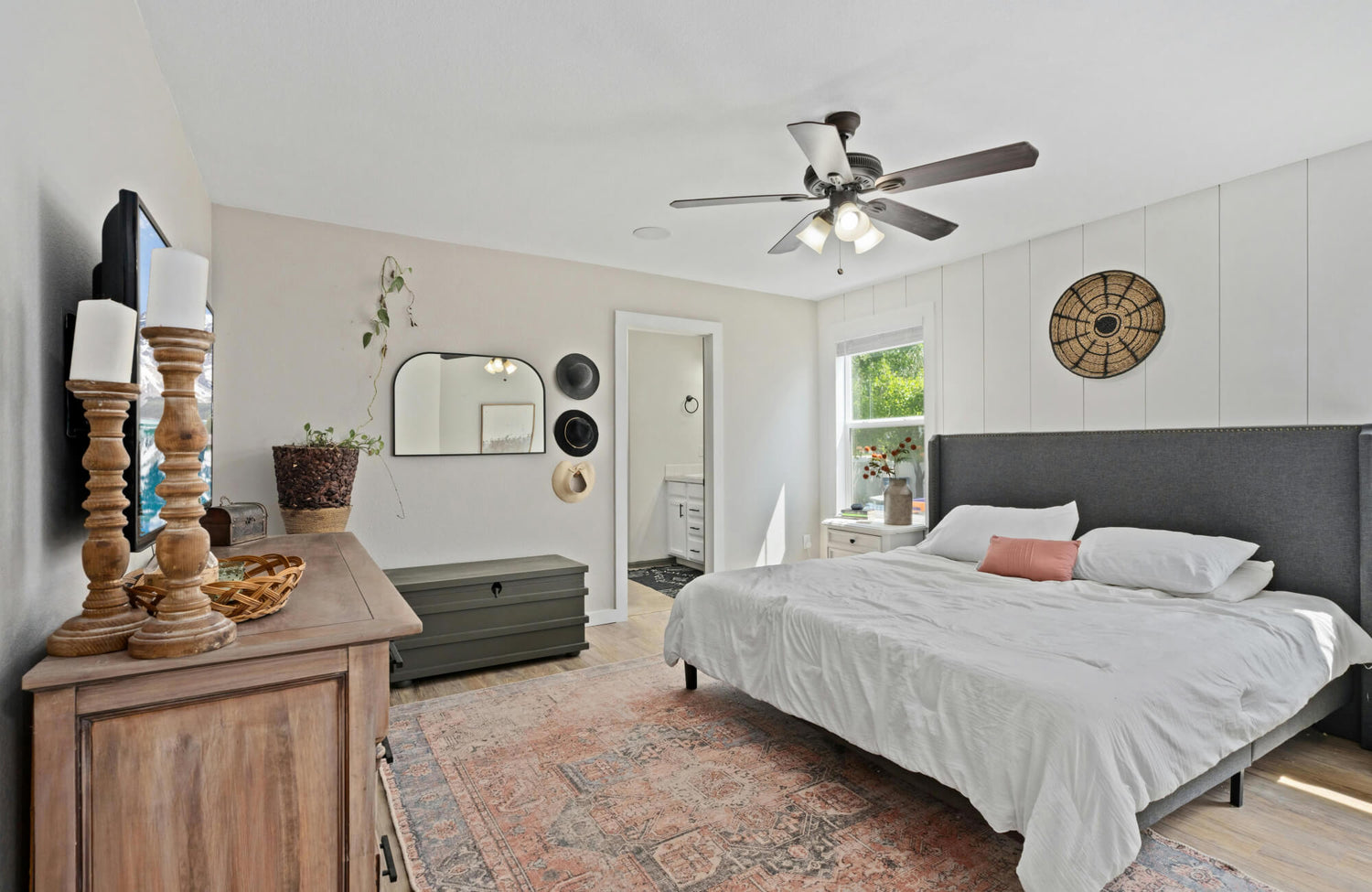
For most bedrooms, a 9x12 rug is the most reliable choice for a king-size bed. This size allows the rug to extend comfortably beyond both sides of the bed and often beneath the nightstands, creating a cohesive foundation. With these proportions, the rug frames the bed rather than feeling like an afterthought. Allowing roughly 18 to 24 inches of rug to show on each side provides enough space for comfortable footing and helps maintain visual balance without pushing the rug too close to the walls.
Larger Or Custom Sizes
In larger primary bedrooms, oversized rugs like our Davies Rug in Ash / Sand can offer a more tailored and proportionate result. These options provide generous coverage without falling short of key furniture pieces, helping the bed feel properly anchored. It’s equally important to maintain clear space between the rug’s edge and the walls so the room does not feel wall-to-wall. Leaving a few inches of exposed flooring around the perimeter keeps the layout intentional and prevents a boxed-in appearance.

Rug Placement Strategies Around A King Bed
Rug placement influences how the room functions just as much as the rug’s size. Thoughtful placement supports natural movement around the bed, creating a sense of order that feels comfortable and intentional rather than forced.
Full Bed Placement
Placing the entire bed and nightstands on the rug creates a strong focal point and works best in spacious bedrooms. This approach emphasizes symmetry, giving the bed a well-grounded presence within the room. It also allows for a consistent footing around both sides of the bed, which can improve comfort during daily use. In smaller spaces, however, full placement can take up too much floor area and limit the sense of openness around the edges.
Two Thirds Placement
A two-thirds placement is one of the most practical options for king-size beds. In this approach, the rug begins near the head of the bed and extends beyond the foot, leaving the headboard area uncovered. Positioning the rug so it extends just past the nightstands helps provide a consistent footing on both sides of the bed. This method offers a balanced combination of comfort, proportion, and flexibility across a wide range of room sizes.
Foot Of Bed Placement
Using a rug only at the foot of the bed creates a lighter visual effect while still adding comfort. This approach works well when the room has wall-to-wall flooring you prefer to keep visible, and you want softness without full coverage. It is especially effective in narrower rooms where a larger rug might interfere with circulation or door clearance.

Room Size And Layout Considerations
The same rug size can feel very different depending on a room’s proportions and layout. Before choosing a rug, consider how the space is used.
Small Primary Bedrooms
In smaller bedrooms, maximizing usable floor space becomes especially important. Rugs that extend just far enough beyond the bed can soften key walking areas while keeping door swings and pathways clear. Shifting the rug slightly lower beneath the bed can also reduce crowding near the headboard wall and help maintain smoother circulation. In many cases, a smaller rug placed thoughtfully will feel more comfortable than a larger rug that overwhelms the room.
Large Primary Bedrooms
Larger bedrooms benefit from more generous rug coverage, as it helps prevent the bed from feeling isolated within the space. A larger rug can visually connect the sleeping area with nearby seating or storage zones. The goal is to avoid a floating bed by using the rug as an anchor that brings the room together. Generous coverage also helps define the sleeping area within an open or multi-use layout.
Architectural Obstacles
Architectural features such as closets, fireplaces, and angled walls require thoughtful planning. Rather than forcing a perfectly symmetrical rug placement, it’s often better to prioritize function. Slight adjustments to accommodate door clearance or architectural elements usually result in a more comfortable and practical layout. Taking measurements with doors fully open can help prevent placement issues before the rug is installed.

Furniture Interaction And Nightstand Placement
A rug should work in harmony with your furniture rather than compete with it. When choosing a rug size for a king bed, it’s important to consider how nightstands, benches, and seating relate to the rug’s edges and placement.
Nightstands On Or Off The Rug
Placing nightstands fully on the rug creates a more unified look and can improve stability, especially when using thicker piles. In tighter rooms, keeping nightstands off the rug may help preserve floor space and prevent crowding. What matters most is maintaining consistency so both sides of the bed feel balanced and intentional. This relationship is illustrated through Edward Martin’s Hutchinson Rug in Graphite / Olive, as featured in the photo above, where the rug extends beneath the bed while aligning cleanly with the nightstand. Its placement helps visually anchor the furniture while reinforcing a sense of order and proportion within the space.
Benches And Seating
If you use a bench or chairs at the foot of the bed, the rug should extend far enough to support their front legs. This helps keep the seating stable while visually connecting it to the bed. When the rug stops short, seating can feel disconnected and less intentional within the layout. Proper rug depth also prevents chairs or benches from catching on the rug edge when moved.
Layering With Smaller Rugs
Layering smaller rugs over a larger base rug can introduce texture without sacrificing overall coverage. This approach works best when the base rug is neutral and properly sized for the room. The layered rug should draw attention to a specific area, such as the foot of the bed, while remaining visually secondary to the overall layout. Keeping patterns and colors restrained helps the layers feel cohesive rather than busy.

Material And Comfort Considerations For King Bed Rugs
While size sets the foundation, the rug’s material determines how it feels in everyday use. Comfort underfoot, durability, and ease of maintenance all influence long-term satisfaction.
Pile Height And Cushioning
Pile height plays a key role in how a rug feels when you step out of bed. Plush piles offer added softness but can compress under the weight of heavier furniture. Lower piles provide a more stable surface and are generally easier to maintain. It’s helpful to consider how barefoot comfort and furniture weight will interact in your space over time. For many bedrooms, a medium pile offers a practical balance between softness and support.
Durability And Maintenance
King beds place consistent pressure on rugs, particularly near the corners and sides, making durability an important consideration. Fibers that hold their shape under weight and resist visible wear help maintain a polished appearance over time. This is where options like our Haverford Rug in Platinum / Bronze, as shown in the photo featured above, offer a practical solution. Its soft yet highly durable 100% polyester construction resists fading, retains its shape, and dries quickly, making it well-suited for everyday use. Regular vacuuming and occasional rotation help promote even wear, allowing the rug to maintain its appearance in busy areas.
Seasonal Comfort
Rugs can also influence the feel of a bedroom from season to season. Thicker rugs add warmth and help absorb sound, while lighter weaves feel cooler and more breathable. Choosing materials that match your climate and comfort preferences helps the rug stay comfortable throughout the year. This consideration is also important in bedrooms where temperature shifts are noticeable between seasons.
Making A Confident Rug Choice For A King Bed
The rug size needed for a king-size bed extends far enough beyond the bed to provide comfortable footing, visual balance, and support for surrounding furniture. In most bedrooms, choosing a rug that frames the bed rather than simply fitting beneath it, often a 9x12 size or larger, depending on room layout. When proportion, placement, and everyday use are considered together, the rug becomes a functional foundation that helps the bedroom feel cohesive, comfortable, and thoughtfully designed.
If you would like help selecting the right rug size, material, or placement for your bedroom, contact us to explore personalized design support. Our design services can help you evaluate your space and make confident choices that align with how you use your room every day.