When you are choosing outdoor tile, safety often comes before appearance. Wet surfaces can quickly become unsafe, especially around patios, pool decks, walkways, and other exposed areas. Many people assume all outdoor tile performs the same, yet differences in material, surface texture, and design can significantly affect stability when wet. By understanding how slip resistance works and how outdoor conditions affect grip, you can choose a piece that feels steady underfoot and lets you move through outdoor spaces comfortably and with confidence each day.

Slip Resistance in Outdoor Tile
Slip resistance is not about choosing a surface that feels rough or unpleasant to walk on. It comes down to how the tile surface works with water and your footing at the same time. When considering outdoor tile safety, look beyond appearance and focus on measurable performance, since a surface that feels secure when dry can respond very differently once moisture is introduced.
How Water Changes Surface Traction
Water changes how your foot interacts with a tile surface by creating a thin layer that reduces friction. On smoother tiles, this layer allows your foot to glide more easily, increasing the chance of slipping. Outdoor tiles are designed to address this by incorporating surface texture or structural variation that interrupts the water and preserves contact between your foot and the tile.
The difference becomes clear after rain. A textured surface feels more stable because water is dispersed rather than trapped, allowing the tile to maintain grip rather than being slick.
Key Slip Resistance Measurements
Slip resistance is evaluated using friction ratings, most often COF and DCOF, which indicate how much resistance a surface provides when movement occurs across it. For outdoor settings, higher values are important because they reflect performance under wet conditions rather than dry, controlled environments. When comparing tile options, it helps to focus on ratings specifically intended for wet use. These benchmarks offer a clearer picture of how a tile is likely to perform outdoors, where moisture is a frequent and unavoidable part of daily conditions.
Why Indoor Ratings Do Not Apply Outdoors
Tiles rated for indoor floors are typically tested in controlled, dry conditions, which limits how well those results translate to outdoor use. In contrast, once outdoors, tile surfaces are exposed to rain, temperature changes, and naturally occurring debris, all of which influence how the tile performs. As a result, a surface that feels secure indoors can become slick when moisture and fine particles are introduced.
For this reason, outdoor tiles are designed and tested using different standards. They account for ongoing water exposure, gradual surface wear, and environmental changes that indoor spaces simply do not encounter.

Tile Materials That Perform Safely When Wet
Material choice plays an important role in how outdoor tile responds to moisture. Because each material interacts with water differently, understanding these distinctions helps you identify options that provide a reliable grip while still holding up well in outdoor conditions.
Textured Porcelain Tile
Textured porcelain tile is one of the outdoor tile options that is not slippery when wet. Its dense composition limits water absorption, while the textured surface provides a consistent grip even when moisture is present. Because the texture is designed into the surface rather than added later, it improves stability without making the tile uncomfortable to walk on.
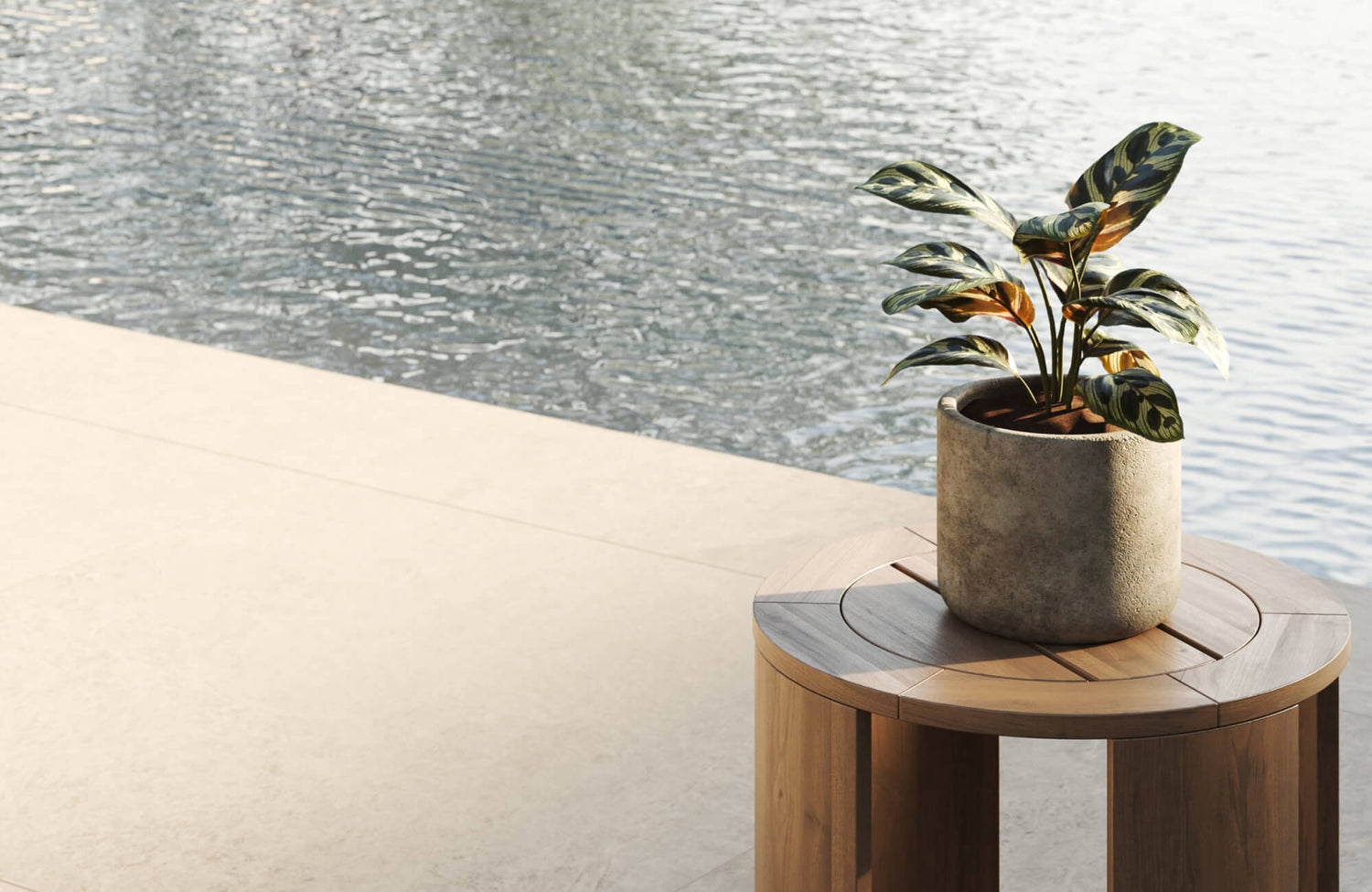
This performance is clearly illustrated in poolside settings featured above, where slip resistance is essential around constantly wet surfaces. Edward Martin’s Bowden 24x24 Grip Porcelain 2cm Paver Tile in Canvas is a great example of how textured porcelain can deliver a clean, modern look while maintaining dependable grip in wet outdoor environments.
In addition, textured porcelain handles temperature changes and long-term outdoor exposure well. This allows its slip-resistant performance to remain consistent over time, making it a practical choice for outdoor areas where moisture is part of everyday use.
Natural Stone With Inherent Grip
Some natural stone tiles offer slip resistance through their natural structure rather than added surface treatments. Stones such as slate, basalt, and certain limestones feature uneven grain patterns or cleft surfaces that interrupt water and create multiple contact points, helping the surface feel more stable when wet.
However, natural stone also comes with trade-offs. Performance can vary widely by stone type, and many options require sealing and ongoing maintenance to preserve grip and appearance. Polished or finely honed stone can become slick when exposed to moisture, and even textured stone may wear unevenly over time in exposed outdoor settings.
For those who appreciate the look of stone but want more predictable performance, stone-look porcelain tiles are often considered as an alternative. These tiles replicate the visual depth and variation of natural stone while offering more consistent slip resistance, lower water absorption, and easier maintenance, making them a practical option for wet outdoor areas.
Concrete and Cement-Based Tile
Concrete and cement-based tiles often incorporate fine aggregates that create a subtle surface texture. This exposed material helps disrupt water on the surface, improving grip by increasing friction when the tile is wet. Concrete also allows for a range of surface treatments, making it easier to design textures suited specifically for outdoor safety.
In addition, concrete tiles are typically thicker and heavier, giving them a solid, stable feel underfoot. This sense of firmness can be especially reassuring in outdoor areas where moisture is part of daily use.

Surface Finishes That Reduce Slipping
Aside from the material itself, surface finish plays a key role in how water behaves once it reaches the tile. Even within the same material category, different finishes can significantly influence how stable the surface feels when wet.
Matte and Honed Finishes
Matte and honed finishes feature a low sheen that helps prevent water from spreading evenly across the surface. Rather than forming a slick layer, moisture disperses into fine surface variations, which improves stability without making the tile uncomfortable to walk on. These finishes also limit glare, making it easier to see surface conditions when the tile is wet and reducing the chance of unexpected slips. As a result, they are often well-suited for patios and poolside areas where both comfort and safety matter.
That balance is reflected in the outdoor setting pictured above, where a subtly textured surface supports both visual calm and confident footing. Edward Martin’s Dawson 24x48 Grip Porcelain 2cm Paver Tile in Ash illustrates how a matte finish can achieve a refined, cohesive look while still delivering the grip needed for everyday outdoor use.
Structured and Relief Surfaces
Some outdoor tiles are designed with intentional surface patterns such as grooves, ridges, or directional textures. These details can help guide water away from areas where your foot makes contact, improving stability when the surface is wet. When applied thoughtfully, they can enhance grip while still supporting a cohesive overall design. Directional textures are particularly effective in areas where water naturally moves in one direction, such as near pool edges or along gently sloped patios.
Why Polished and Glossy Finishes Fail Outdoors
Polished and glossy finishes may look appealing at first, but they are not well-suited for wet outdoor environments. In practical terms, their smooth, reflective surfaces allow water to spread evenly across the tile, reducing friction and increasing the risk of slipping, even with small amounts of moisture. For this reason, polished finishes are best reserved for vertical surfaces or outdoor areas that remain well protected from direct water exposure.
A piece like our Amaya 10x11 Glossy Porcelain Lantern Tile in Midnight, as shown in the photo above, is better suited for decorative wall applications or sheltered accent areas, where its reflective finish can be appreciated without the safety concerns that come with wet, walkable surfaces.

Outdoor Locations and Their Safety Demands
Different outdoor areas place varying demands on tile performance. A surface that works well in one setting may not be suitable in another, even within the same outdoor space.
Pool Decks and Water Features
Areas around pools and water features remain wet for extended periods and are commonly used barefoot. In these spaces, tile needs stronger slip resistance to handle constant moisture and frequent barefoot use. Textured surfaces are especially important here, helping the area feel safer and more comfortable to walk on. Since water is unavoidable in these areas, choosing tile designed for wet environments makes a noticeable difference in how the space feels and functions day to day.
Patios and Entertaining Areas
Patios are spaces where safety, comfort, and appearance need to work together. Because they are used for dining, relaxing, and gathering, the tile should feel comfortable to walk on while still providing a reliable grip when wet. A moderate level of texture often works best, offering stability without feeling rough. In these areas, slip resistance should be thoughtfully incorporated into the overall design so it supports the space without drawing attention to itself.
This balance is illustrated in the outdoor entertaining area pictured above, where our Palmer 12x12 Checkerboard Raw Porcelain Tile in White and Grey shows how a visually engaging layout, paired with a rugged, slip-resistant finish, can support everyday outdoor use while maintaining comfortable footing and an intentional, inviting design.
Walkways, Steps, and Sloped Surfaces
Walkways and steps require extra attention because elevation changes naturally increase the risk of losing footing. In addition, sloped surfaces allow water to move more quickly, making smooth tiles particularly risky. Choosing tile with higher slip resistance helps maintain stability as you move across these areas. For steps, consistent texture and reliable grip are especially important, as even a minor slip can lead to a fall.

Climate and Environmental Factors That Affect Grip
Outdoor tile performance does not remain the same over time. Climate conditions and ongoing environmental exposure gradually influence how a surface behaves, which is why long-term factors are just as important as the initial tile selection.
Rainfall and Humidity Levels
In regions with frequent rainfall or high humidity, moisture tends to remain on tile surfaces for longer periods. This extended dampness can encourage algae or surface film to develop, both of which reduce grip. Tiles with textures that resist buildup are generally easier to maintain and stay safer in these conditions. Ongoing exposure to moisture also reveals how well a tile retains its original slip-resistant properties over time.
Freeze Thaw and Temperature Swings
In colder climates, water can enter microscopic pores in the tile and freeze, leading to surface wear or cracking. Over time, this process can alter the surface texture and reduce consistency underfoot. Outdoor tiles designed for freeze-thaw conditions are better able to maintain their structure and grip despite repeated temperature changes. Selecting materials rated for these conditions helps preserve both performance and safety as the seasons shift.
Debris, Dirt, and Organic Buildup
Leaves, dust, and pollen can settle on outdoor tile surfaces and form a slippery layer once wet. Tiles with deeper texture or natural variation help limit surface buildup, allowing water to rinse debris away more easily. By contrast, smoother tiles allow debris to spread more evenly, increasing the risk of slipping after rainfall.

Installation Choices That Improve Slip Safety
Even the right tile can become slippery if it is not installed properly. Installation details play an important role in how water moves across the surface and how the tile performs as a complete system.
Proper Drainage and Slope Planning
Water that pools on tile surfaces increases the risk of slipping. A proper slope allows water to drain away rather than collect, and even a slight pitch can make a noticeable difference in how quickly the surface dries. When water is directed away from walking areas, surfaces feel more stable underfoot. Addressing drainage during installation helps the tile perform as intended instead of working against standing moisture.
Grout Selection and Joint Width
Grout plays a role in overall surface grip by breaking up larger tile areas. In addition, textured grout and slightly wider joints create extra friction points, which can improve stability when the surface is wet. These joints also help interrupt water flow across the tile surface, supporting faster drying. Grout influences how water moves overall, affecting both drying time and traction.
Tile Orientation and Pattern Layout
The direction in which tiles are laid can play an important role in managing water flow. Aligning textured patterns with natural drainage paths helps guide moisture away from contact areas. With a thoughtful layout, individual tiles come together to form a cohesive surface that manages water more effectively. Although often overlooked, this detail plays a subtle yet meaningful role in overall safety.
This approach is evident in the outdoor setting pictured above, where the tile layout supports both visual order and practical drainage. Edward Martin’s Ramsey 24x24 Grip Porcelain 2cm Paver Tile in Putty shows how a well-oriented, textured porcelain paver can provide a consistent footing while maintaining a clean, structured outdoor design.
Choosing Outdoor Tile With Confidence
When choosing outdoor tile that is not slippery when wet, textured porcelain stands out as a dependable option. Its dense composition limits water absorption, while the textured surface helps manage moisture and maintain grip. Designed for exterior use, it performs consistently through changing weather and, when installed with proper drainage, provides a stable, low-maintenance surface well-suited for outdoor spaces.
If you would like guidance in selecting the right textured porcelain for your outdoor area, feel free to contact us for personalized support. You can also use our AR tool to see how different outdoor tile options will look in your space before making a final decision.