Luxury rugs are defined by more than their appearance. The finest pieces combine premium materials, skilled craftsmanship, thoughtful design, and lasting value, turning a functional floor covering into an element of art, comfort, and character. From hand-knotted wool rugs to intricate patterns inspired by cultural traditions, every detail contributes to a rug’s refined appeal.
A rug feels luxurious when it offers more than surface beauty. Natural fibers, careful construction, rich texture, balanced color, and meaningful design all work together to create a rug that feels refined and enduring. In this article, we’ll explore what makes a rug luxurious, from the materials and weaving techniques used to the design elements, heritage, and ownership experience that give these pieces their lasting appeal.

Materials That Define Luxury Rugs
A rug’s material plays a major role in its quality, durability, softness, and overall appearance. Premium fibers can give a rug its luster, texture, resilience, and long-term value. From fine wool to silk-like fibers, each material brings distinct qualities that shape both the look and feel of a luxury rug.
New Zealand Wool
New Zealand wool is celebrated for its softness, strength, and natural resilience. Its long fibers create a smooth yet durable texture, allowing rugs made from this material to maintain their beauty over time. The wool also has a natural luster that enhances color depth and gives the rug a refined finish. Luxury rugs crafted from New Zealand wool offer comfort, durability, and timeless appeal. Their softness and strength make them a natural choice for homeowners who want a rug that feels elegant but can still handle everyday use.
Indian Wool
Indian wool is valued for its softness, resilience, and adaptability in rug-making. With a long history of hand-knotting and hand-tufting, India has become known for producing rugs that balance durability with intricate artistry. Premium Indian wool can support detailed patterns, rich textures, and a plush yet sturdy surface.
This balance is reflected in Edward Martin’s Sweeney Rug in Khaki, as shown in the photo featured above. Made from premium 100% wool, it gives the dining room a soft yet durable foundation, while its khaki tone complements the wood cabinetry, warm brown chairs, and dark dining table. Its woven texture also adds depth without distracting from the room’s refined architectural details.
Rugs made from Indian wool often work well in both traditional and contemporary interiors. Their ability to retain beauty over time makes them a lasting investment in luxury décor, especially when paired with skilled craftsmanship and thoughtful design.
Bamboo Silk
Bamboo silk is a regenerated fiber known for its smooth texture and soft sheen. It is often used as a more accessible alternative to traditional silk, offering a luminous surface that can make colors appear richer and more dimensional. Its elegant finish gives rugs a refined look, especially in designs that rely on subtle color movement or a delicate sheen. When responsibly sourced and processed, bamboo silk can also appeal to homeowners looking for materials with a lighter environmental footprint. Because it has a smooth feel and graceful shine, it works especially well in decorative spaces or quieter rooms where its visual softness can be appreciated.
Himalayan Yak Wool
Himalayan yak wool is a rare and distinctive fiber, prized for its warmth, durability, and soft natural sheen. It is naturally insulating, making it especially suitable for cooler climates and cozy interiors. Its texture carries a quiet richness that can add depth and character to a rug. When responsibly sourced, yak wool can also support traditional fiber-gathering communities in the Himalayan region. Rugs crafted with this material can offer a refined, naturally warm feel while reflecting the value of rare fibers and artisanal production.

The Role of Craftsmanship in Luxury Rugs
Craftsmanship is what turns a rug from a functional floor covering into a lasting work of art. The techniques used to create luxury rugs require skill, patience, and close attention to detail. From hand-knotting to refined loom weaving, construction plays a major role in how a rug looks, feels, and lasts.
Hand-Knotted Rugs
Hand-knotted rugs are often one of the finest forms of rug craftsmanship. Each knot is tied by hand, allowing artisans to create detailed patterns and textures that machines cannot fully reproduce. The number of knots per square inch, or KPSI, can affect a rug’s detail, durability, and overall refinement, with higher knot counts often allowing for more intricate designs.
Edward Martin’s Micah Rug in Cream / Dove, as shown in the photo above, highlights this level of craftsmanship. Its hand-knotted construction gives the rug a refined, tactile quality, while the cream and dove tones create a soft foundation for the light-filled living room. The raised geometric pattern adds subtle dimension, showing how careful handwork can bring depth and character to a neutral design.
Because of the time and skill required to make them, hand-knotted rugs are valued not only as decorative pieces but also as expressions of artistry and labor.
Persian Knotting
Persian knotting is a respected technique with a history that spans centuries. Also known as the asymmetrical Senneh knot, this method allows for fine detail and precision, making it well-suited for intricate floral, medallion, and geometric designs. The technique is closely associated with Persian rug traditions, where pattern, symbolism, and craftsmanship come together.
Persian rugs are often valued for their beauty, cultural meaning, and durability. Many finely knotted pieces can last for generations when properly maintained, which is one reason they are often considered heirloom-quality rugs.
Modern Loom Weaving
Modern loom weaving combines traditional rug aesthetics with advanced production methods. Computer-aided design helps consistently reproduce complex patterns, while advanced weaving technology allows for varied textures, blended fibers, and refined finishes.
Loom-woven rugs can offer an accessible entry point to a luxury look, especially when made with quality fibers, thoughtful patterns, and careful finishing. While they may not carry the same artisanal value as hand-knotted heirloom rugs, they can still provide visual richness, durability, and style for those who want an elevated design at a more approachable level.

Design Elements That Enhance Luxury Rugs
The design of a luxury rug does more than add beauty. It shapes the mood, movement, and character of a space. Pattern, texture, color, and proportion all shape how refined a rug feels and how naturally it fits within the room.
Geometric Patterns and Their Enduring Appeal
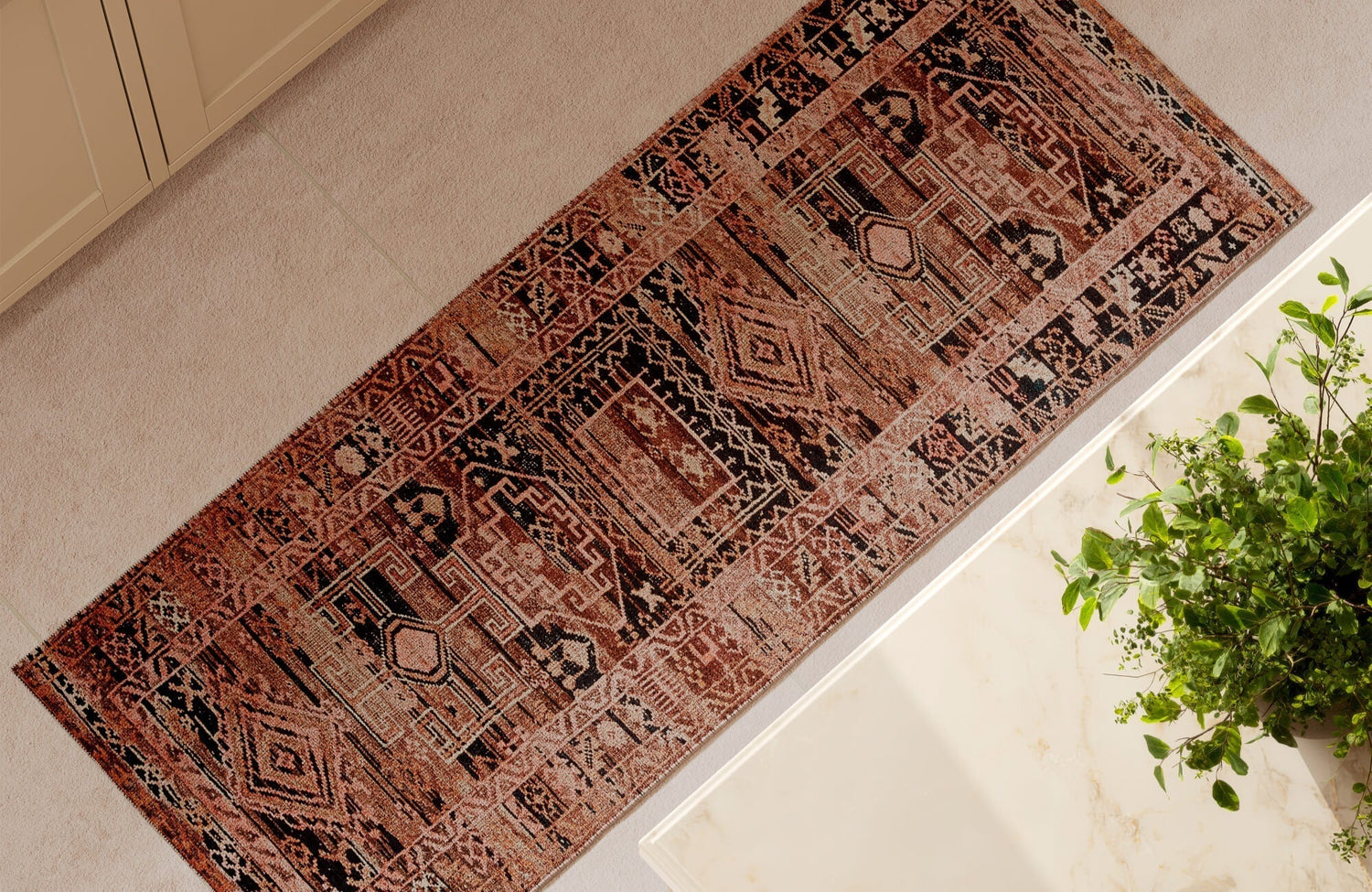
Geometric patterns are a timeless choice for luxury rugs because they bring structure, rhythm, and balance to a space. Designs such as diamonds, hexagons, and arabesques create movement without feeling overly ornate, making them suitable for both traditional and modern interiors. Many geometric motifs also draw from historic patterns, giving contemporary rugs a subtle sense of heritage.
This blend of order, artistry, and cultural influence is reflected in Edward Martin’s Pascal Rug in Rust / Multi, as shown in the photo above. Its repeated geometric motifs and detailed border bring visual rhythm to the kitchen, while the rust, beige, brown, and muted blue tones add warmth against the wood cabinetry, marble surfaces, and neutral flooring. The result is a rug that feels heritage-inspired yet versatile enough for a refined modern space
Abstract Art for Contemporary Rugs
Abstract rugs offer a modern and expressive approach to luxury design. These rugs often feature organic shapes, painterly movement, layered colors, or bold contrasts that create a strong visual statement. Unlike traditional patterns, abstract designs allow for more personal interpretation, giving each space a distinct character.
Their flexibility makes them suitable for a wide range of interiors, from minimalist rooms to eclectic spaces. Layered pile heights, carved details, or subtle tonal shifts can further enhance the sense of depth, creating a dynamic interplay of light, shadow, and texture.
The Importance of Texture in Rug Design
Texture adds sensory richness to a rug, influencing both how it looks and how it feels underfoot. A high-pile rug can create plush comfort, while a low-pile rug offers a sleeker, more tailored look. Techniques such as shearing, carving, and varied pile heights can add detail and dimension to the surface.
In luxury rugs, texture often separates a simple design from a more refined one. A rug with tactile depth can make a room feel warmer, more layered, and more thoughtfully designed, even when the color palette is understated.

Cultural Stories Behind Luxury Rugs
Luxury rugs are often shaped by history, heritage, and tradition. Many designs preserve cultural stories through motifs, colors, and weaving techniques passed down through generations. This connection to origin can add artistic, emotional, and collectible value to a rug.
Tribal Rugs as Symbols of Identity
Tribal rugs are woven expressions of cultural heritage, regional identity, and personal storytelling. Their geometric motifs may represent themes such as protection, fertility, nature, or community. Colors and patterns often vary by region or tribe, making each rug a reflection of a specific cultural background.
These rugs do more than decorate a home. They create a connection to the people, traditions, and stories behind the design, giving the piece a sense of meaning that extends beyond its visual appeal.
Antique Rugs as Historical Treasures
Antique rugs are valued for their rarity, craftsmanship, and historical significance. Many were made with time-intensive techniques, premium materials, and elaborate patterns that reflect the artistic influences of their era. Their wear, patina, and preserved details can offer a glimpse into the past.
Collectors often prize antique rugs because they carry both beauty and history. In modern interiors, they can add character, depth, and a sense of permanence that newer pieces may not always provide.
Traditional Motifs in Modern Rugs
Traditional motifs continue to influence modern rug design, connecting heritage with contemporary living. Designers often refresh classic patterns with updated colors, cleaner layouts, and practical materials that suit today’s interiors. These familiar details can bring depth, character, and a sense of history to a room without making the space feel overly formal.
Edward Martin’s Charlise Rug in Bone / Denim, as shown in the photo above, reflects this balance. Its traditional-inspired pattern brings subtle character to the modern kitchen; its neutral tones work naturally with the checkered floor, wood cabinetry, marble surfaces, and deep green cabinets. With old-world inspiration and modern finishes, the rug feels timeless while fitting naturally into a contemporary home.

The Experience of Owning a Luxury Rug
Owning a luxury rug is about more than aesthetics. It is an investment in comfort, design, craftsmanship, and personal expression. A well-chosen rug can anchor a room, soften the atmosphere, and bring a sense of history or artistry into everyday life.
Tips for Choosing the Perfect Rug
Choosing the right rug involves considering the size, material, design, and purpose of the space. A properly sized rug can anchor furniture and create a cohesive layout, while the right pattern and color can support the room’s overall mood.
Material choice is equally important. Wool offers softness and resilience, silk-like fibers add sheen, and durable blends work well in busier spaces. This balance can be seen in Edward Martin’s Davies Rug in Ash / Sand, as shown in the photo featured above, which helps define the dining area with a soft, grounded palette that complements the dark wood table, light upholstered chairs, and textured fireplace wall. Its generous size also allows the furniture to sit comfortably within the rug’s borders, reinforcing a cohesive and well-proportioned layout.
Considering how the room is used, along with maintenance needs and design goals, can help ensure the rug feels both beautiful and practical. Consulting with experts can also make it easier to find a piece that balances style, function, and personal expression.
Proper Care to Preserve Your Rug
Caring for a luxury rug helps preserve its quality and extend its lifespan. Regular vacuuming prevents dirt buildup, while rotating the rug encourages even wear. A rug pad can reduce friction, provide support, and help the rug stay in place.
Professional cleaning is also important for deeper maintenance, especially for fine fibers, hand-knotted construction, or intricate patterns. Protecting rugs from prolonged direct sunlight can help preserve color, while prompt spot cleaning can prevent stains from setting. With consistent care, a luxury rug can remain beautiful for many years.
Heirloom Rugs and Their Enduring Value
Heirloom rugs carry stories, memories, and sentimental value across generations. These pieces often become part of a family’s history, connecting the present to the past through craftsmanship and design. Over time, some heirloom rugs may require restoration to maintain their beauty and structure.
Their value is not only financial. Heirloom rugs can hold emotional, artistic, and cultural significance, making them meaningful additions to a home. When properly cared for, they can continue to enrich interiors while preserving a sense of legacy.
Why Luxury Rugs Are Timeless Investments
Luxury rugs are more than decorative accents. They bring together high-quality materials, skilled craftsmanship, thoughtful design, cultural meaning, and long-term value. Whether hand-knotted from fine wool, inspired by traditional motifs, or designed with rich texture and careful detail, a luxurious rug has the power to elevate a space while offering lasting beauty.
Choosing the right luxury rug is a meaningful decision, and expert guidance can make the process easier. Whether you are seeking a statement piece, a timeless classic, or an heirloom-quality design, Edward Martin is here to help. Explore our design services or contact our team for personalized guidance in choosing a rug that complements your space, suits your lifestyle, and brings lasting elegance to your home.