Lighting is the language of interior design, shaping how a space feels, functions, and inspires. The right balance of illumination can highlight architectural beauty, enrich textures, and create moods that shift effortlessly from vibrant energy to serene calm. Interior designers approach lighting with the same artistry and precision as selecting the perfect materials and finishes, where every choice enhances both performance and style. Through layered strategies that combine ambient, task, accent, and decorative sources, lighting becomes more than function—it becomes the soul of a room. With innovation, technology, and timeless design, interior lighting transforms ordinary spaces into elegant environments that are both practical and unforgettable.

Ambient Lighting
Ambient lighting provides the foundational brightness that ensures a room feels balanced and comfortable from the moment you enter. It sets the stage for more specialized layers of light by unifying the overall atmosphere and preventing visual gaps.
Ceiling-Mounted and Recessed Fixtures
Flush mounts, pendants, and recessed can lights are relied upon because they distribute light evenly and establish a cohesive base. Designers consider ceiling height, room dimensions, and the desired mood to calculate spacing, ensuring that illumination feels consistent rather than patchy or overwhelming. Recessed cans are also often paired with dimmers, which allow brightness to shift smoothly from functional daytime levels to softer evening tones. Pendants, while often decorative, are strategically placed to contribute to this general illumination without disrupting balance.
Edward Martin’s Kane Pendant in Matte White Plaster is a prime example. As displayed in the picture above, it is suspended gracefully over a utility sink in a laundry space. Its clean, tapered silhouette casts a soft downward glow that provides both task clarity and ambient warmth. By focusing light directly onto the work surface while still blending seamlessly with the cabinetry and finishes, this Kane pendant also shows how a single fixture can anchor a room with subtle sophistication. By creating a wash of consistent light, these fixtures give depth and harmony to a space. In much the same way, evenly distributed ceiling lighting provides seamless visual continuity that defines the character of an entire room.
Color Temperature Control
The ability to control color temperature has revolutionized how ambient lighting supports both mood and functionality. For example, warm tones around 2700K establish a relaxed atmosphere ideal for bedrooms and lounges, while cooler tones of 4000–5000K enhance focus and clarity in kitchens or offices. Designers also often integrate tunable LED systems that shift throughout the day, supporting circadian rhythms and improving comfort.
These gradual changes allow a single space to transition naturally from morning activity to evening rest. The adaptability is particularly valuable in open-plan homes, where one area must serve multiple purposes without feeling disjointed. Much like wall paint or finish selections that alter the depth and vibrancy of a room, color temperature controls transform how surfaces and finishes are perceived indoors.
Lumen Calculations
Precise lumen calculations ensure a room is properly illuminated without wasting energy or causing glare, creating a foundation for thoughtful lighting design. For example, living rooms are typically designed around 20 lumens per square foot, while kitchens and task-heavy areas may demand closer to 50 lumens for safety and accuracy. Beyond these baseline measurements, natural daylight is also factored into the calculations so that artificial light complements rather than competes with the sun.
To further refine this balance, designers often pair lumen planning with dimmable fixtures, making it easy to adjust intensity as needs change throughout the day. Within these strategies, LEDs are almost always specified for their efficiency, longevity, and precision, ensuring dependable performance in every application. In the same way that a well-planned floor layout blends durability with aesthetic appeal, properly planned lumen levels guarantee lighting that is both practical and visually satisfying.

Task Lighting
Task lighting delivers focused illumination where activities require accuracy and visual comfort. Designers give this layer special attention to reduce eye strain and ensure that functional zones perform effectively without compromising style.
Kitchen and Food Preparation Zones
In kitchens, under-cabinet LED strips are a trusted solution because they eliminate the shadows that overhead lighting alone often creates, ensuring consistent visibility. To enhance this effect, designers specify fixtures with CRI ratings above 90 so that food colors appear natural and appealing, which is vital for both safety and presentation. Building on these qualities, brightness levels are carefully calibrated to deliver 70–100 foot-candles, providing ample clarity for precise food preparation.
Many systems also incorporate dimming capabilities, allowing lighting to transition effortlessly from focused cooking tasks to relaxed entertaining. To achieve the best performance, placement is meticulously planned so that light falls directly onto work surfaces rather than reflecting off polished countertops. This careful layering of specifications ensures task lighting that is both functional and visually refined.
Our Phineas Pendant in Historic Bronze shows how pendants can serve as true task lighting when positioned over central work areas. In the kitchen photo shown above, the fixtures are suspended above the island, casting a clear and even glow across the surface where prepping, serving, and gathering naturally take place. Their opal glass diffusers soften brightness while ensuring enough direct light for functional clarity, making them both practical and visually grounding. By integrating pendants like Phineas with under-cabinet systems, designers create layered task lighting that combines precision with style, ensuring the kitchen remains efficient and inviting.
Workspaces and Offices
Productivity spaces demand lighting that is precise, adaptable, and gentle on the eyes during long periods of use, creating an environment where focus can be sustained. For this reason, LED task lamps with adjustable arms and dimmable options are often selected, as they provide both flexibility and control in a variety of situations. To further support performance, designers calculate light levels to around 70–100 foot-candles, which is considered ideal for reading, writing, or computer work.
Glare is minimized by selecting optics that carefully reduce reflection on digital screens, preserving visual comfort over time. In addition to technical performance, fixtures are specified for their ability to integrate seamlessly into an office design without unnecessary distraction. In the same way that ergonomic desk designs enhance comfort and adaptability, task lighting improves efficiency while ensuring that work environments remain both functional and comfortable.
Grooming and Vanity Areas
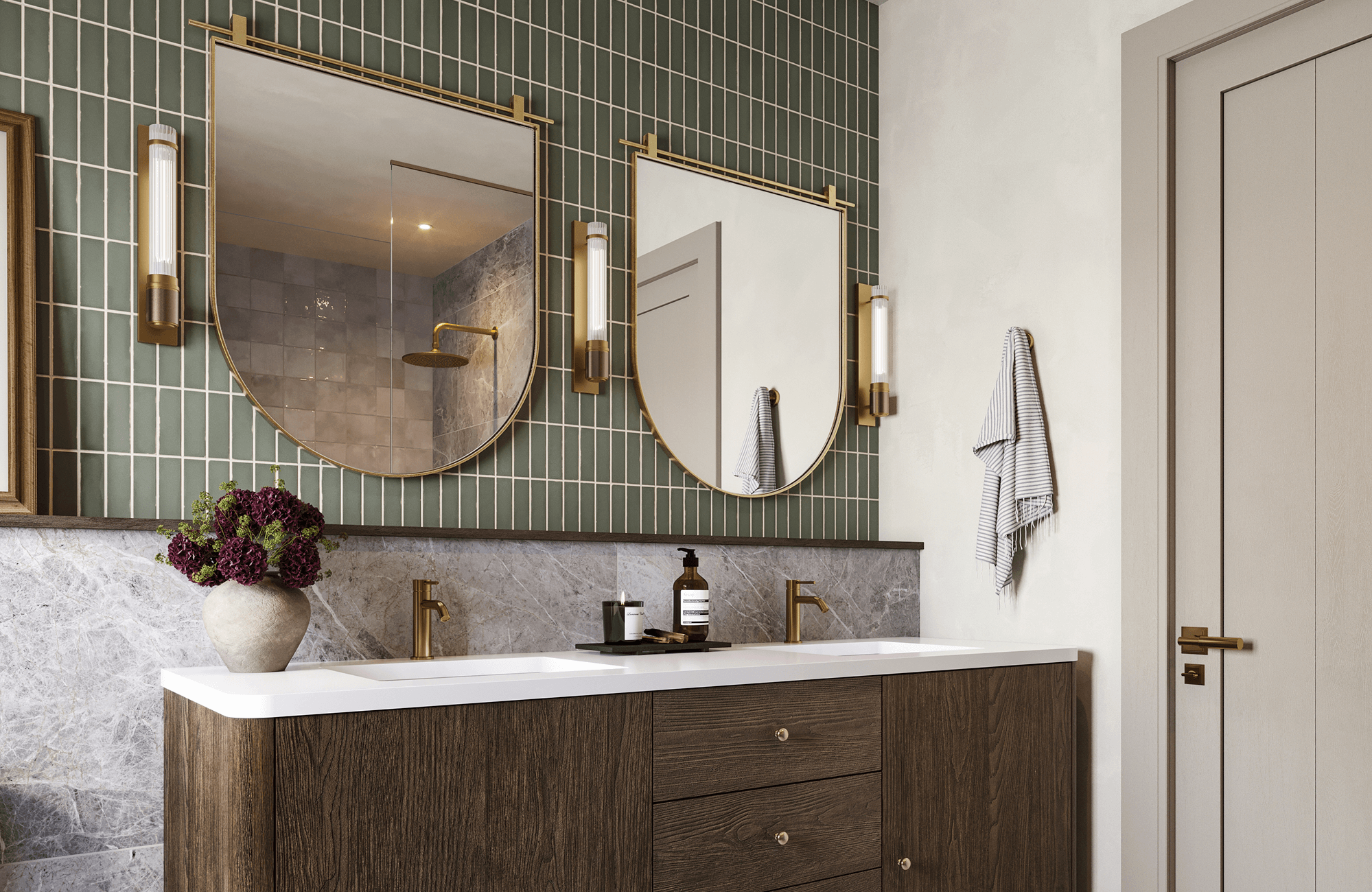
Lighting around mirrors requires careful planning to avoid the harsh shadows that overhead fixtures can create, ensuring that illumination enhances rather than detracts from daily routines. To achieve this, designers typically install vertical sconces or LED bars at eye level on either side of the mirror, which provides even distribution of light across the face. Complementing this placement, color temperatures between 3000K and 3500K are selected because they render skin tones naturally and attractively, creating flattering and functional results.
Brightness levels are then calibrated between 70 and 80 foot-candles, striking a balance that delivers clarity without introducing discomfort. Many modern systems also incorporate dimmers, allowing light levels to shift effortlessly depending on the time of day or personal preference. In much the same way that carefully designed mirror layouts elevate both aesthetics and practicality, well-planned vanity lighting ensures technical accuracy while prioritizing user comfort.

Accent Lighting
Accent lighting introduces drama and focus by highlighting the elements of a room that deserve special attention. It enriches interiors by guiding the eye, enhancing textures, and establishing a sense of depth that ambient lighting alone cannot provide.
Spotlighting Artwork and Sculptures
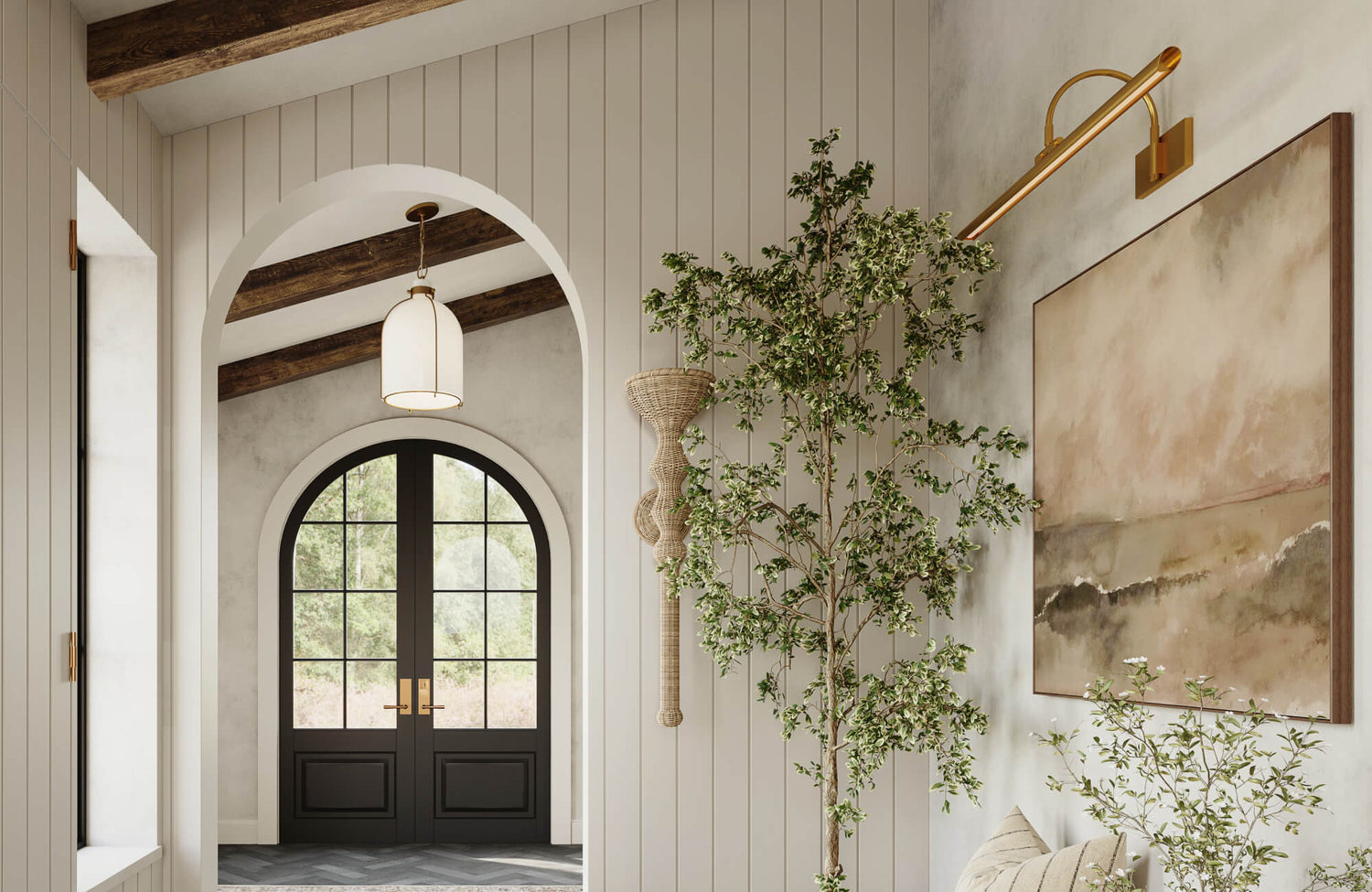
Track lights and recessed gimbals are often selected for their ability to direct light precisely where it is needed, offering both accuracy and flexibility in display settings. To highlight artwork effectively, designers typically specify a 30-degree beam spread, which emphasizes the piece while avoiding unnecessary spill into surrounding areas. This precision is further supported by calculating the angle of incidence so that texture and color are enhanced while glare is carefully minimized.
For sensitive art collections, LEDs with UV filtering are also chosen to preserve finishes and prevent long-term damage. To adapt to changing conditions, adjustable dimmers are included, allowing illumination levels to transition seamlessly between daytime and evening viewing. Together, these strategies ensure artwork is presented in a way that is visually striking, technically accurate, and protective over time.
A perfect example, as shown in the photo above, is the McAvoy 24" Picture Light in Aged Brass, which demonstrates how a fixture can highlight framed pieces or curated displays with understated sophistication. Positioned above open shelving, it casts a warm and even wash of light that draws attention to both artwork and surrounding accents without overwhelming the space. Its slim silhouette and aged brass finish integrate effortlessly with cabinetry and décor, proving that lighting can act as both a functional and decorative detail. Just as a thoughtfully chosen frame enhances the presence of artwork, accent lighting transforms everyday shelves and decorative arrangements into focal points.
Wall Grazing and Wash Effects
When linear LEDs are placed close to textured walls, they create striking patterns of shadow and light that highlight materiality. This wall-grazing technique works particularly well with stone, brick, or wood, as it brings out depth that might otherwise go unnoticed. By contrast, wall washing produces a soft, even glow that smooths surfaces and visually expands the room.
With this, designers carefully balance fixture distance and beam angle to achieve the right effect without overwhelming the architecture. Dimmable controls further enhance versatility, allowing lighting to shift from subtle ambiance to dramatic impact. Much like textured wall finishes that enhance interior depth, wall grazing draws attention to architectural details in ways that feel both natural and intentional.
Outdoor Accents
Accent lighting extends outdoors to highlight landscapes, façades, and water features with equal precision. Uplights, for instance, are placed to dramatize trees, while sconces frame doorways and paths with subtle definition. Fountains and ponds are also often enhanced with underwater LEDs, some of which feature color-changing capabilities that adapt to different moods and occasions.
To achieve this, designers choose beam spreads that provide visual drama without contributing to light pollution. Additionally, weather-rated fixtures ensure durability against the elements, maintaining both safety and beauty over time. In the same way that high-quality exterior materials withstand exposure while enhancing design, outdoor accent lighting is engineered to deliver long-lasting impact.

Decorative Lighting
Decorative lighting is both functional and expressive, serving as a design statement while contributing to overall illumination. Designers focus on fixture scale, material, and finish so that these pieces enhance a room’s character without overwhelming it.
Chandeliers and Pendants
Chandeliers are often the centerpiece of entryways and dining areas, capturing attention while also anchoring the overall design of the room. To maintain proper proportion, their size is carefully calculated by converting the room’s width in feet into inches, ensuring the fixture complements the surrounding architecture. In more functional spaces, pendants are commonly arranged in groups over islands or tables, creating a sense of visual rhythm while delivering practical illumination. Designers then balance placement, scale, and material so that each fixture not only serves its technical role but also feels seamlessly integrated into the larger scheme.
As displayed in the picture above, the Rosa Triangular Pendant in Aged Brass illustrates how pendants can blend sculptural form with functional clarity. Suspended in a trio above a kitchen island, these fixtures provide targeted task illumination while contributing to the room’s ambient glow. Their elongated cone shape also directs light downward to support prep and dining activities, while the aged brass finish adds a note of refined warmth that complements surrounding hardware. By aligning proportion, placement, and finish, pendants like Rosa achieve the dual purpose of utility and artistry. Just as statement rugs frame living spaces with elegance, chandeliers frame interior zones with artistry and distinction.
Materiality and Finish Selection
The finishes of decorative fixtures are chosen to align seamlessly with surrounding materials and colors. Brass and bronze, for example, introduce warmth and richness, while matte black or chrome establishes a more contemporary edge. Designers then consider how light interacts with these finishes, as reflective metals amplify brightness and matte textures soften it.
Moreover, shades in glass, rattan, or fabric are added to bring depth and visual layering. A consistent approach to finishes across fixtures also ensures cohesion throughout the space. Much like coordinated hardware finishes unify a kitchen or bathroom design, carefully chosen lighting finishes bring harmony to interior schemes.
Diffusers and Light Quality
Diffusers play a crucial role in transforming harsh light into a soft and inviting glow, making fixtures both functional and visually appealing. For example, opal glass shades disperse illumination evenly across a space, while fabric shades introduce a warmer, more textured quality that enriches the atmosphere. Designers also carefully select diffuser materials to complement the overall mood, striking a balance between brightness and ambiance.
At the same time, lumen output is evaluated to ensure that visual comfort does not come at the expense of functionality. When paired with dimmers, diffusers add flexibility, enabling a single fixture to shift seamlessly between different moods and activities. Much like frosted glass softens reflections with subtle elegance, diffusers bring comfort, refinement, and cohesion to decorative lighting designs.

Layered Lighting Strategies
The true sophistication of lighting design lies in layering, where different sources work together to achieve a balance of versatility and mood. Designers orchestrate these elements to create environments that can adapt seamlessly to shifting activities and atmospheres.
Combining Light Sources
By combining ambient, task, accent, and decorative lighting, designers create depth and flexibility that give a space both character and function. Each type of illumination works in harmony with the others, preventing the room from appearing flat or one-dimensional. With the addition of scene-setting controls, it becomes effortless to shift from bright, functional settings to softer, more intimate atmospheres. This balance also ensures that interiors remain practical while still feeling dynamic and adaptable to different moments. As layers share responsibility rather than relying on a single source, the overall system becomes more efficient and enduring.
The bathroom photo shown above demonstrates this layered approach beautifully. Natural light floods through the large window, establishing a bright and airy foundation during the day. Edward Martin’s Wilma Wall Sconce in Aged Brass flanking the vanity provides warm, flattering illumination ideal for grooming, while the Kaley 16" Pendant in Aged Brass suspended above the tub creates a soft, decorative glow that enhances relaxation. Together, these light sources balance utility with atmosphere, ensuring the space functions seamlessly while maintaining an inviting, spa-like mood. Much like layered textiles that combine comfort with decorative detail, layered lighting achieves both utility and beauty in harmony.
Smart Controls and Automation
The evolution of smart technology has elevated lighting design, making it more responsive and energy-efficient. Systems such as DALI and DMX allow designers to program scenes, dimming levels, and zoned lighting for complete customization. Daylight harvesting also automatically adjusts interior brightness to complement natural sunlight, reducing waste while maintaining comfort. In the same way, occupancy sensors ensure spaces are only lit when in use, increasing efficiency without compromising safety. Mobile apps and voice controls further extend convenience, giving homeowners effortless adaptability. Just as smart home systems integrate technology with artistry, automated lighting merges innovation with design intent.
Human-Centric Lighting
Human-centric lighting recognizes that illumination directly influences health, productivity, and mood, making it a vital consideration in modern interior planning. Tunable LEDs exemplify this approach, as they are designed to shift spectrum and intensity throughout the day, effectively simulating the natural progression of daylight indoors. In the morning, cool white tones promote alertness and focus, while in the evening, warmer tones foster relaxation and rest.
To strengthen this connection, designers often integrate these systems to align artificial lighting with circadian rhythms, thereby enhancing comfort in both residential and workplace environments. Growing research continues to demonstrate how these solutions improve wellness, which explains their rising popularity in contemporary design. Much like ergonomic furniture prioritizes user comfort and adaptability, human-centric lighting prioritizes human well-being within the built environment.
The Art of Illuminated Design
Lighting is more than a practical necessity; it is a design element that breathes character and emotion into every interior. When layered with care and guided by precision, it elevates functionality while enhancing the artistry of a space. Smart controls and human-centric innovations also refine this harmony, allowing light to adapt seamlessly to life’s rhythms. Much like selecting the perfect furnishings to balance beauty and durability, lighting defines the timeless elegance and experience of a well-crafted home.
For homeowners and designers seeking expert guidance, Edward Martin’s design services offer personalized solutions that transform ideas into luminous realities. To explore tailored lighting strategies or bring your vision to life, contact us and discover how thoughtful design can illuminate your space with timeless sophistication!