
)
)
)
)
)
)
)
)
What Is The Standard Depth Of A 48 Inch Bathroom Vanity?
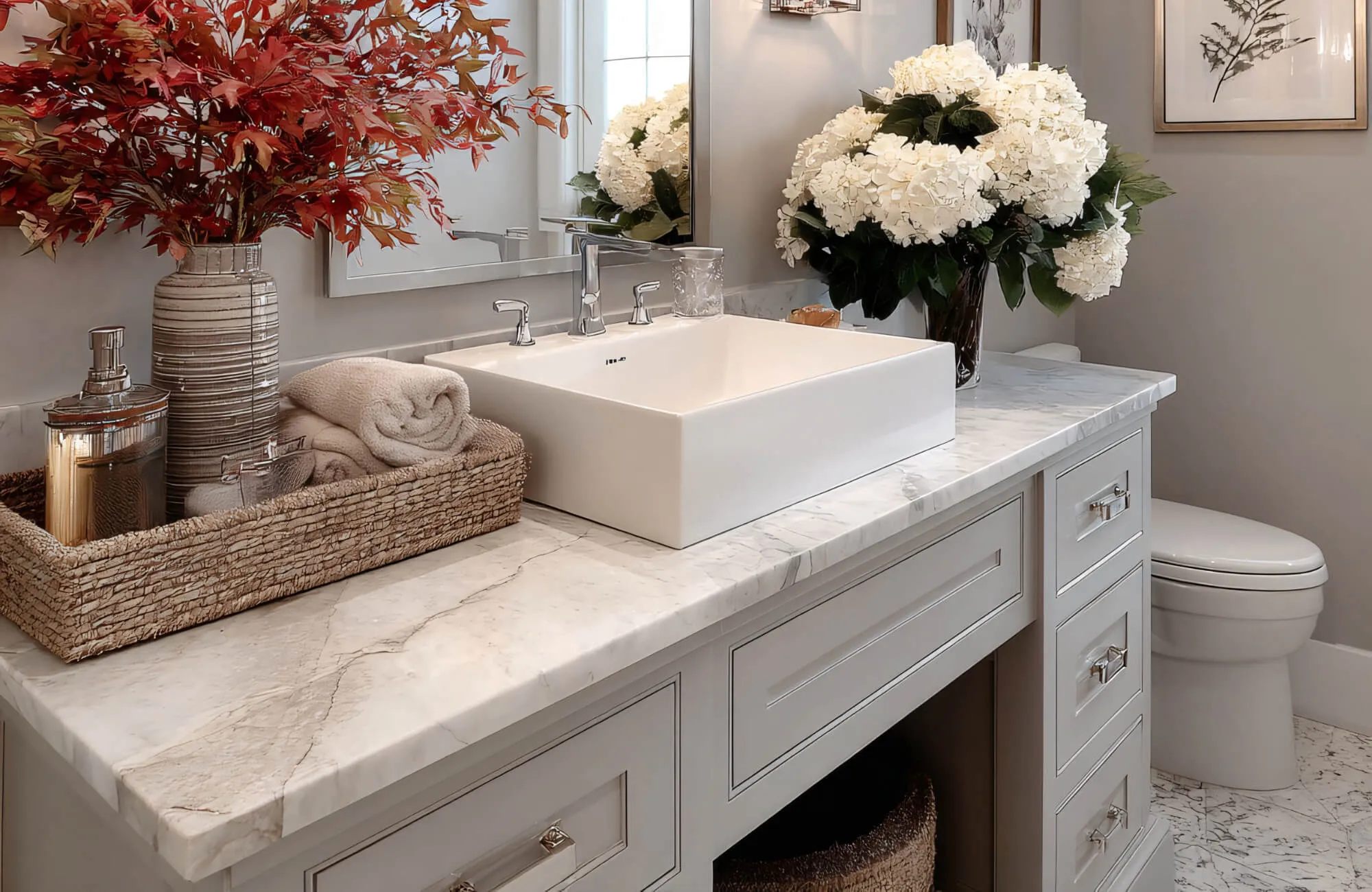
A 48-inch bathroom vanity strikes a sweet spot for many homeowners, offering generous counter space without overwhelming the room. Yet the element that most determines how comfortably it fits, and how functional it feels day to day, is not its width, but its depth. Depth influences circulation, storage, plumbing layout, sink and faucet compatibility, and the overall flow of the bathroom.
Homeowners often assume a 48-inch vanity comes in a one-size-fits-all depth, but variations exist for good reason. The standard depth is designed to maximize usability and comfort, while alternative depths help solve spatial limitations or architectural constraints. This guide breaks down those standards, explores the spatial dynamics at play, and explains how depth affects design and functionality. With this knowledge, you can confidently choose a vanity that enhances both performance and aesthetics in your home.
Defining the Industry Standards for Vanity Depth
Before choosing a 48-inch vanity, it helps to understand the depth measurements manufacturers rely on and why those standards exist. These benchmarks shape everything from ergonomics to aesthetics, giving you a clearer starting point before diving into layout decisions.
The 21 Inch Standard for Master Bathrooms
In most primary bathrooms, the 21-inch depth has become the benchmark. This profile stems from ergonomic research that identifies how far users naturally reach when washing up, brushing teeth, or completing grooming routines. A vanity at this depth creates enough distance from the wall to accommodate standard plumbing while offering a comfortable amount of counter surface. Homeowners often find that a 48-inch-wide vanity at 21 inches deep feels substantial without dominating the room, particularly in spaces designed around a double-sink configuration or a single sink with generous prep areas.
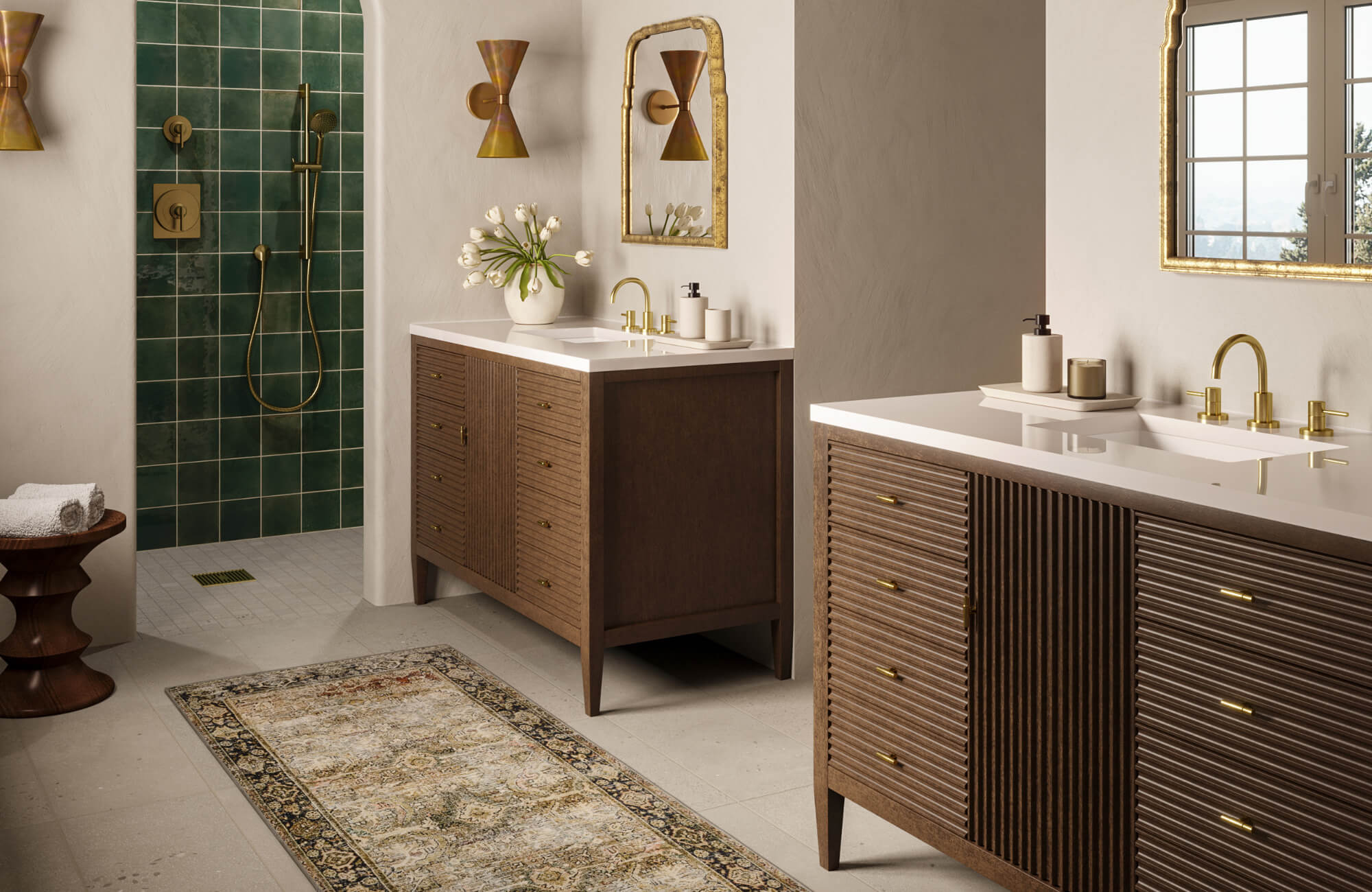
This standard also aligns with common countertop materials, which are often fabricated in slabs that naturally accommodate a little more depth. In master suites, designers appreciate how the 21-inch profile maintains proportion, especially when paired with a substantial piece like Edward Martin’s Royce 48" Single Vanity in Chestnut with 3 cm White Zeus Quartz Top, seen in the image above, which demonstrates how this depth supports both storage and a generously scaled countertop. Because of its versatility, it remains the most widely used depth for 48-inch vanities in modern homes.
The 18 Inch Solution for Narrow Spaces
The alternative 18-inch depth exists to solve a very different challenge: limited floor space. In many older homes or compact secondary bathrooms, a standard-depth cabinet may intrude too far into the walkway, making the room feel tight or awkward. An 18-inch-deep vanity preserves essential circulation without sacrificing the advantages of a 48-inch width. It gives homeowners a streamlined form factor that still allows for a full-size sink, usable storage, and a visually balanced presence.
This slimmer option also provides opportunities to make a smaller bathroom feel more open. With less projection into the room, fixtures such as towel bars, toilets, and shower entrances become easier to navigate. Designers often select an 18-inch depth when working with narrow footprints or when a door swings close to the vanity. The reduced depth does mean a slight trade-off in interior storage and countertop depth, but many homeowners find the improved spatial comfort well worth it.
Accounting for Countertop Overhang
While the cabinet box defines the foundational depth, the countertop typically extends beyond the front edge by about one inch. This slight overhang adds a polished finish, protects the cabinet face from drips, and improves ergonomics by softening the transition between counter and door fronts. Homeowners should consider this detail when measuring the total footprint of their new vanity. A 21-inch cabinet becomes roughly 22 inches with overhang, and an 18-inch cabinet becomes about 19 inches.
This seemingly minor addition can influence clearance around doors, drawers, and other fixtures. In tight spaces, even a single inch can determine whether a vanity aligns cleanly with a wall return or disrupts the swing path of a bathroom door. When planning a renovation, measuring both the cabinet depth and the expected countertop projection ensures the vanity fits without compromise.
Calculating Clearance and Bathroom Flow
Once you understand the typical depth options, the next step is seeing how those measurements interact with the room around them. Depth affects the way you move through the space, so evaluating clearance and overall flow ensures your vanity feels comfortable rather than cramped.
The 30 Inch Walkway Rule
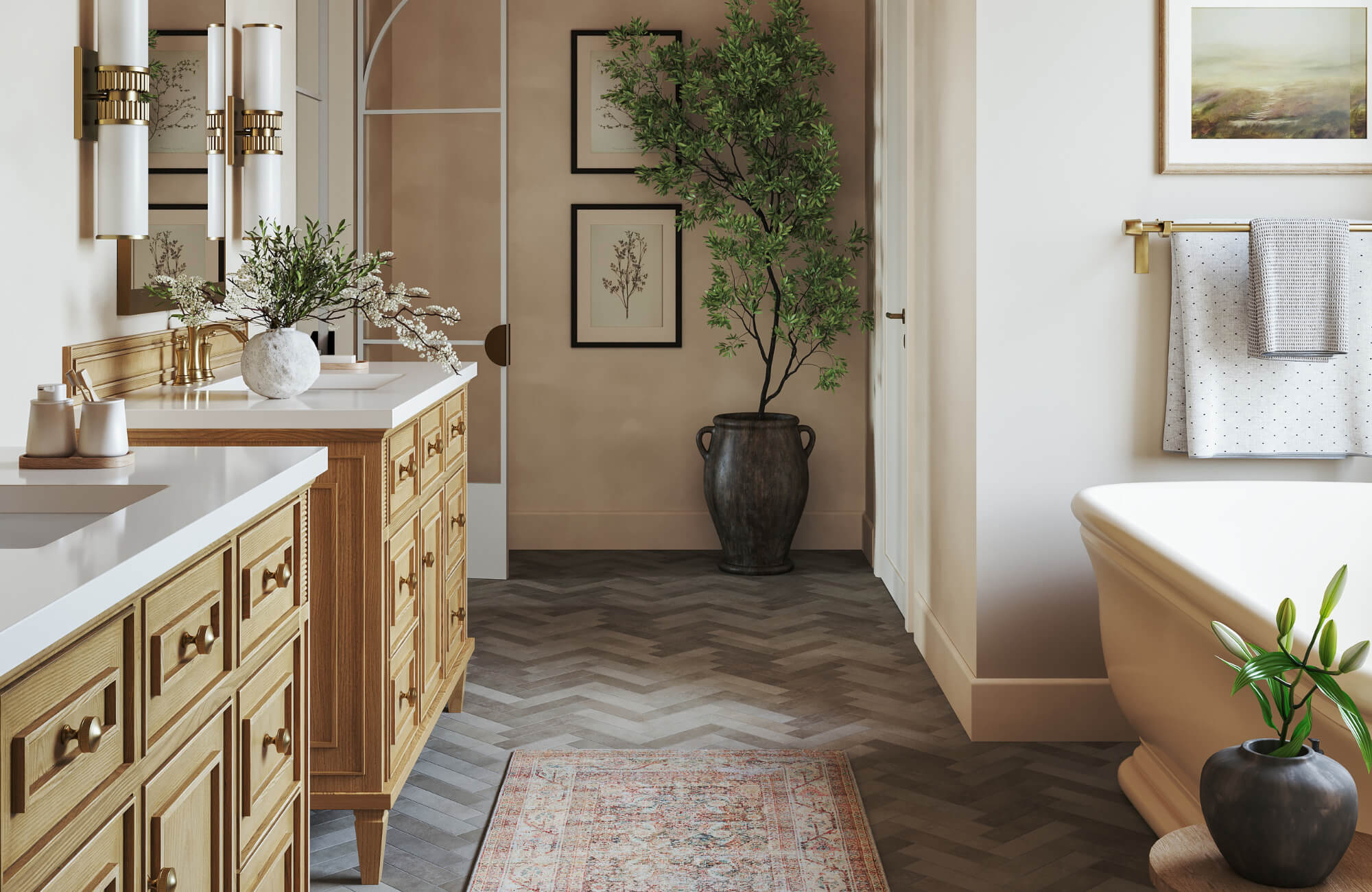
Design professionals frequently reference a 30-inch guideline when planning circulation paths in bathrooms. This measurement reflects the minimum clear width needed for a person to move easily through the space without turning sideways or brushing against furniture, and it becomes even more apparent when visualized beside a piece like Edward Martin’s Elodie 48" Single Vanity in Light Natural Oak with 3 cm White Zeus Quartz Top, shown in the image above, which balances an elegant footprint with a comfortable distance from surrounding fixtures.
In primary suites, achieving this clearance is usually straightforward. However, secondary bathrooms with tighter footprints may require deliberate planning. Ensuring that the space between the vanity and any opposing element, whether a wall, towel rack, or edge of a tub, maintains this 30-inch pathway keeps the room from feeling congested. Homeowners who test this measurement with painter’s tape on the floor often gain clarity on whether a standard-depth or shallow-depth vanity is more appropriate.
Obstructions from Doors and Drawers
A vanity isn’t just a static cabinet; it includes moving elements such as drawers, doors, and sometimes pull-out organizers. Each of these components requires enough clearance to function properly. A drawer that cannot fully extend or a door that scrapes a nearby wall quickly becomes a daily frustration. Evaluating the swing path of drawers and doors ensures the vanity depth complements the architectural layout rather than competing with it.
Bathroom entry doors also have a meaningful impact. In many older homes, doors open inward and may swing perilously close to the vanity edge. A standard 21-inch depth could force the door to stop prematurely or create a pinch point, while an 18-inch depth may correct the issue entirely. Homeowners should measure both the open and closed door positions to understand how the vanity’s depth interacts with the door arc. Countertop overhangs, hardware projections, and faucet placements can also influence clearances, making precise planning essential.
Navigating the Toilet and Shower Relationship
Beyond circulation space and door mechanics, the relationship between the vanity, toilet, and shower significantly affects bathroom flow. Building codes often require at least fifteen inches from the center of the toilet to the nearest side obstruction, but design guidelines prefer a more generous buffer. A vanity that pushes too close to the toilet can create awkward spacing and limit accessibility, especially in bathrooms shared by multiple users.
A similar dynamic applies to showers. If a glass shower door opens outward, its clearance must be considered alongside the vanity depth. A standard-depth vanity may impede the shower door’s movement or require users to step awkwardly around it. A shallower vanity often resolves these challenges by reducing visual and physical friction in the space. The ideal layout creates a smooth interplay between all fixtures, allowing the room to feel balanced and easy to navigate.
How Depth Impacts Sink and Faucet Choices
After considering spatial flow, it becomes easier to evaluate how your chosen depth supports the fixtures that sit on top of the vanity. Sink size, faucet reach, and splash control all depend on depth, making this connection essential for a bathroom that performs as well as it looks.
The Undermount Sink Limitation
Undermount sinks remain a favorite for their clean lines and easy maintenance, but they require adequate cabinet depth to accommodate the bowl size and plumbing connections. A 21-inch vanity comfortably supports a standard undermount basin, which typically ranges between 16 and 20 inches from front to back. This provides enough space for the sink to sit securely within the counter while preserving counter depth in front for daily tasks, much like the layout seen with Edward Martin’s Sasha 48" Single Vanity in Mid Century Walnut with 3 cm White Zeus Quartz Top in the image above.
On an 18-inch vanity, the options narrow. The decreased cabinet depth leaves less room for the sink basin and reduces the available space for the faucet and backsplash alignment. Homeowners who prefer undermount sinks in shallower vanities often select compact sink models specifically engineered for limited spaces. Choosing the right sink prevents crowding, ensures proper drainage slope, and maintains a visually appealing counter layout.
Faucet Reach and Splash Zones
Faucet selection is also influenced by vanity depth. A faucet with inadequate reach may result in water splashing on the counter instead of directly into the sink bowl, creating maintenance issues. On a 21-inch-depth vanity, most standard faucets perform well because there is comfortable distance between the faucet hole and the front edge of the counter. Users can wash hands without feeling pressed against the edge, and water flow aligns naturally with the sink’s center.
With an 18-inch vanity, faucet reach becomes more critical. The compressed space between the faucet and the front edge can shift the splash zone outward, making water more likely to land on the counter. Selecting a faucet with an extended spout or one specifically designed for compact vanities helps prevent daily cleanup frustrations. Proper faucet alignment also protects the countertop material by reducing prolonged water exposure.
The Vessel Sink Advantage for Shallow Depths
Vessel sinks present a creative solution for homeowners working with shallow vanities. Instead of dropping into the counter, a vessel sink sits above it, requiring less cabinet depth because the bowl does not extend into the interior space. This design opens up opportunities for visual expression, with materials ranging from ceramic to stone to glass, while also solving spatial challenges inherent to 18-inch vanities.
Vessel sinks allow more flexibility with faucet placement as well. Wall-mounted faucets pair beautifully with vessel sinks and eliminate the need for extra counter depth behind the bowl. This combination helps maintain ergonomic comfort while maximizing usable counter space. For homeowners drawn to a modern or boutique-style look, vessel sinks offer a functional and aesthetic advantage when cabinet depth is limited.
Functionality and Storage Capacity Trade Offs
With fixtures accounted for, the final layer is understanding how depth influences everyday usability behind the cabinet doors. Storage volume, drawer configurations, and plumbing placement all shift with depth, helping you decide which option best supports your routines.
Drawer Length and Volume Realities
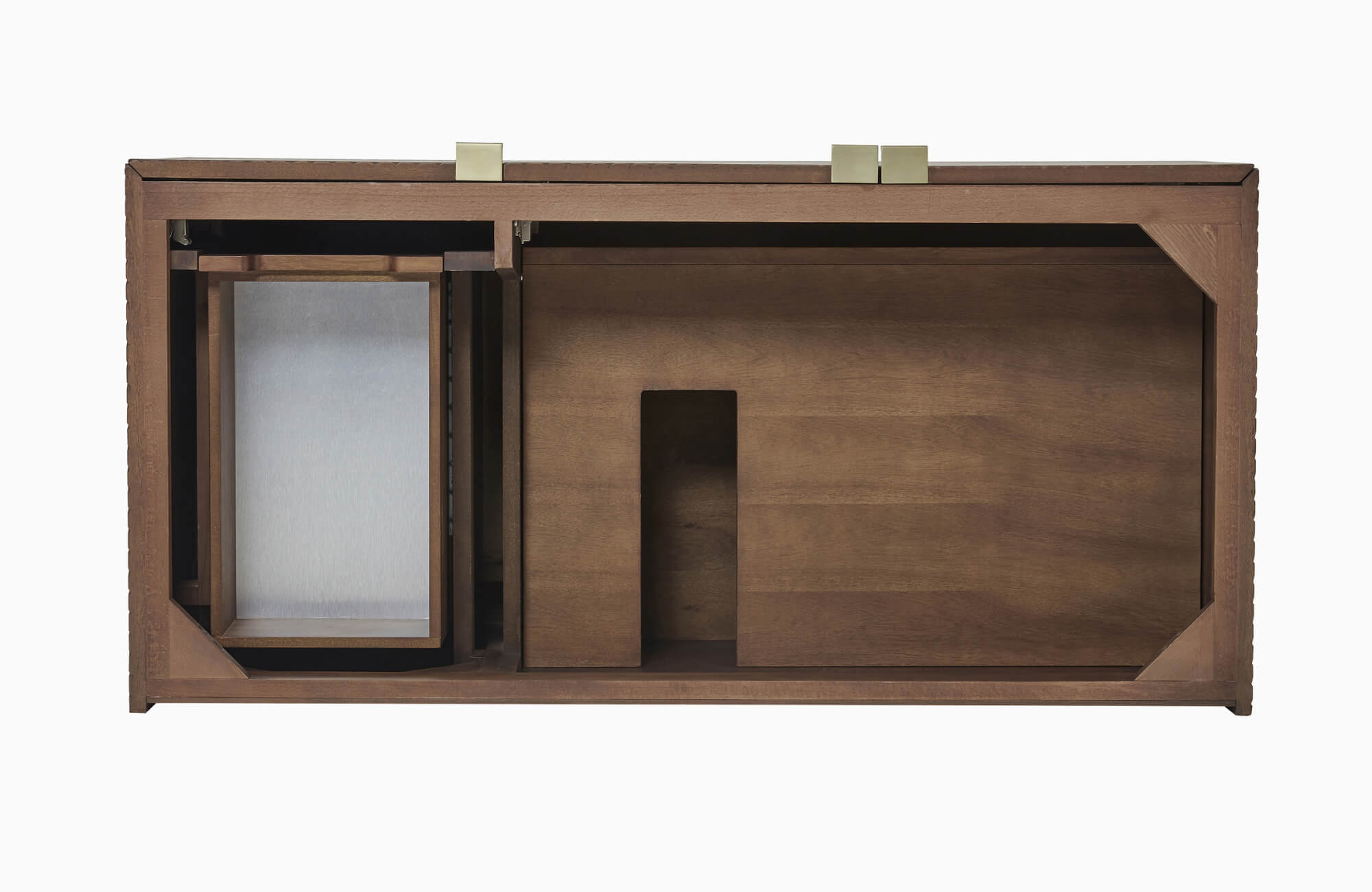
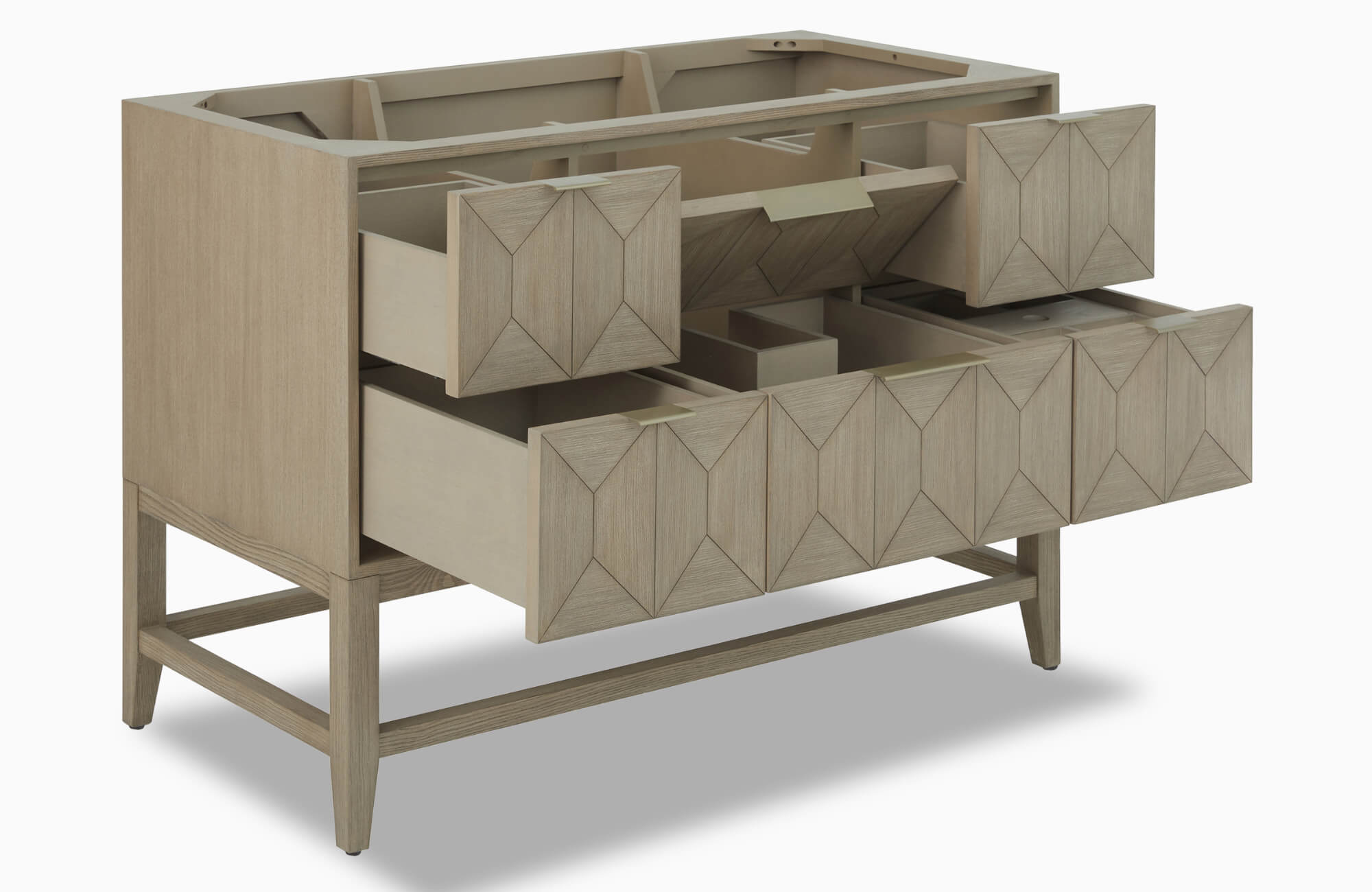
Deeper vanities yield longer drawers and greater interior volume, which means more room for hair tools, toiletries, and cleaning supplies. A 21-inch depth typically allows drawers to extend to their full design length, making it easier to organize items without stacking them. The added depth also minimizes the need for narrow, shallow drawers that can feel restrictive, as illustrated by the generous interior framework of Edward Martin’s Gwen 48" Single Vanity in Pebble Oak with 3 cm White Zeus Quartz Top, shown in the image above.
With an 18-inch vanity, storage remains usable but becomes more strategic. Drawers may need to be slightly shorter to clear the plumbing chase, and homeowners may rely more heavily on vertical storage solutions such as dividers or organizers. While the difference is not drastic, the day-to-day experience can vary, especially for those who store bulkier items in the bathroom. The key is to match depth selection with actual storage habits rather than assuming all vanities hold the same volume.
Countertop Real Estate for Daily Use
Counter space greatly influences how functional a bathroom feels. The surface in front of the sink becomes the landing zone for morning routines, personal care items, and decorative accents. A 21-inch-deep vanity offers ample space for grooming tools, makeup, and everyday essentials without creating clutter. The additional depth helps prevent items from crowding the edge, allowing them to remain comfortably within reach, and homeowners who want guidance blending these functional needs with style can benefit from Edward Martin’s design consultation service, which offers personalized recommendations for everything from vanities to coordinating tile, rugs, or furniture.
An 18-inch vanity provides less front-to-back counter area, which may require more intentional organization. Homeowners who prefer a minimalist surface often find the shallower depth helpful for maintaining visual simplicity, but those who use the counter heavily may feel constrained. Understanding personal habits, whether you keep several products within reach or prefer everything stored away, ensures the chosen depth supports your lifestyle, and if questions arise during planning, you can always contact Edward Martin for assistance selecting pieces or navigating product details with confidence.
The Plumbing Cutout Factor
Every vanity must accommodate plumbing, but the impact of the cutout varies by depth. In a 21-inch vanity, the plumbing chase typically occupies a smaller percentage of cabinet volume, leaving more room on either side for drawers or shelves. The larger depth provides flexibility in routing supply lines and drains without impeding usable storage.
In an 18-inch vanity, the plumbing cutout becomes more influential. The reduced cabinet depth can compress the space available for plumbing, which in turn may limit drawer configurations or require modified internal layouts. Factory-built vanities often compensate for this by designing specialized drawer shapes or shifting storage compartments. While still functional, these adaptations underscore the importance of aligning vanity depth with both plumbing constraints and storage expectations.
Finding Your Perfect Fit
Selecting the right depth for a 48-inch bathroom vanity involves balancing standards, spatial constraints, and personal preferences. The industry-standard 21-inch depth delivers comfort, functionality, and generous storage, making it ideal for master bathrooms or spaces where circulation is not compromised. The 18-inch alternative serves homeowners who need to preserve walkway clearance or accommodate existing architectural limitations while still enjoying the presence of a full-size vanity.
By considering circulation pathways, door and drawer mechanics, fixture relationships, and the interplay of sinks, faucets, and plumbing, homeowners can approach their remodel with clarity and confidence. Vanity depth is more than a measurement; it is a design decision that shapes how a bathroom looks, feels, and functions every day. When thoughtfully selected, the right depth harmonizes the entire room, supporting both beauty and practicality in equal measure.
Follow us on Instagram
@EDWARD.MARTIN
)
)
)
)
)
)
)
)
)
)
)
)
)
)
)
)