A bathroom vanity is more than a storage cabinet—it is the centerpiece that defines both the style and the functionality of the space. The height of this essential fixture shapes how effortlessly daily routines unfold, from washing hands to preparing for the day ahead. Choosing the right bathroom vanity height also requires balancing timeless design with ergonomic comfort, ensuring every detail aligns with modern living standards. Whether embracing the elegance of traditional proportions, the efficiency of comfort height vanities, or the precision of ADA-compliant measurements, the correct height transforms the bathroom into a space of seamless beauty and practicality. By understanding these carefully considered dimensions, homeowners and designers can create bathrooms that are not only visually striking but also built for comfort, accessibility, and enduring appeal.

The Historical Standard Vanity Height
Traditional bathroom vanity height was established during a time when grooming habits and design preferences were very different from today. While these lower measurements are often considered outdated, they continue to serve unique purposes in specific bathroom layouts and design styles.
Traditional Height Measurements
The original bathroom vanity standard height ranged from 30 to 32 inches (76 to 81 cm), measured from floor to countertop. This dimension reflected the idea of a vanity as a seated grooming station, resembling a dressing table more than the upright work surfaces we see today. As bathrooms became more functional, however, these low counters felt less suitable for daily standing use. Even so, many restorations and remodels retain the original measurements to preserve historical authenticity and character. In compact bathrooms, the shorter vanity also helps maintain balance between vertical and horizontal space, preventing the room from feeling crowded. Because of these advantages, the traditional height continues to play a role despite the shift toward taller designs.
Why Lower Vanities Still Exist
Although comfort height vanities are now the standard, lower bathroom vanities still have their place. In powder rooms, the smaller scale complements tight layouts, making the space feel proportionate and inviting. Families with young children often prefer traditional measurements because the lower surface makes sinks more accessible without the need for stools. Designers working on vintage-inspired projects also choose this height, as it pairs well with architectural styles that emphasize period authenticity. For shorter adults, the reduced height provides greater comfort during everyday routines, ensuring the vanity is practical as well as stylish. In this way, the traditional vanity height remains relevant for specific needs and design goals.

Comfort Height Bathroom Vanities
Comfort height bathroom vanities represent a shift toward designs that emphasize ergonomics and ease of use. By raising the countertop closer to the average standing height, they provide a more natural and comfortable experience during daily routines.
Standard Comfort Height Range
Measuring 34 to 36 inches (86 to 91 cm) from floor to countertop, comfort height vanities align closely with the dimensions of kitchen counters. This consistency allows homeowners to enjoy a familiar and efficient working surface across different areas of the home. By reducing the amount of bending required, these vanities also help minimize back strain and promote better posture. Moreover, the height integrates seamlessly with undermount and drop-in sinks, which do not significantly alter the finished measurement.
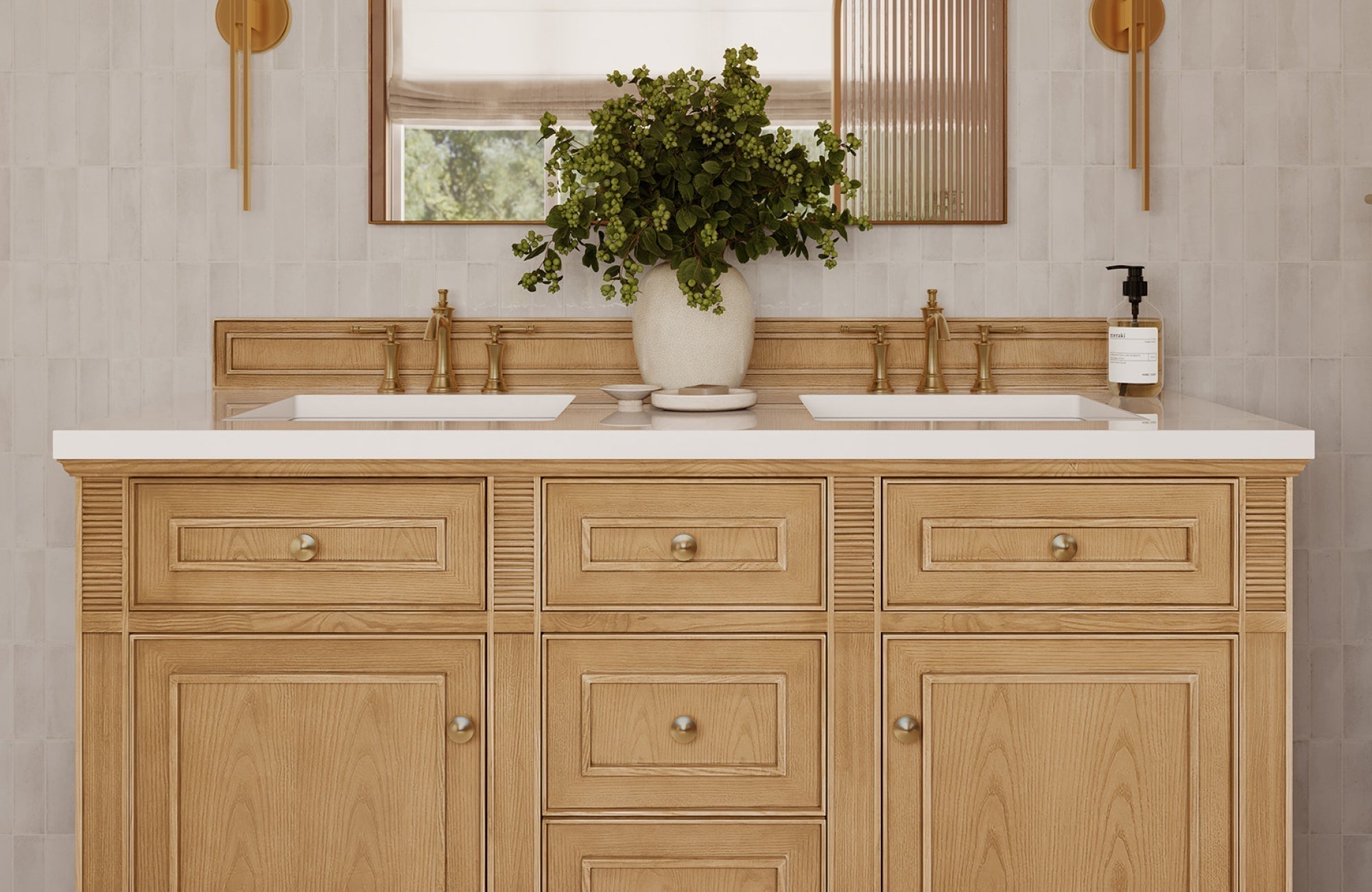
A perfect example of this, as displayed in the photo above, is Edward Martin’s Delilah 72" Double Vanity in Seaside Oak with 3 cm White Zeus Quartz Top, which is crafted at a comfort height of 35.88 inches. Its generous double-sink layout and refined quartz-based surface combine ergonomic practicality with timeless elegance, making it an excellent choice for modern master bathrooms. By featuring both functionality and design sophistication, it demonstrates how comfort height vanities serve as the benchmark for today’s bathroom upgrades.
Benefits of Comfort Height
The advantages of comfort height extend beyond posture and convenience, making it a preferred choice for many homeowners. Seniors and individuals planning for aging in place benefit greatly from the taller measurement, as it reduces physical strain and improves long-term usability. The increased cabinet size also offers more storage capacity, a feature especially valued in busy family bathrooms. From a design standpoint, the taller proportions pair well with modern fixtures and finishes, creating a sleek and contemporary look. Real estate professionals often highlight comfort height vanities as a premium upgrade, which can enhance a property’s resale appeal. By combining ergonomic benefits with aesthetic and functional advantages, comfort height vanities have become the benchmark for today’s bathroom design.

Vessel Sink Vanity Height Adjustments
The growing popularity of vessel sinks has changed how vanity heights are planned, since these sinks sit above the countertop rather than within it. To ensure usability and comfort, the base cabinet must be adjusted so the total height remains within ergonomic standards.
Adjusted Cabinet Measurements
Because vessel sinks add 5 to 6 inches (12 to 15 cm) above the countertop, they can quickly push the vanity beyond a comfortable working height. To maintain usability, designers typically reduce cabinet height to around 30 inches (76 cm), allowing the finished sink rim to fall within the 34–36 inch comfort range. Without this adjustment, the vanity may feel awkwardly tall and difficult to use. This requires careful calculation, as countertop thickness and sink material can further influence the total height. By planning for these details, designers strike a balance between aesthetics and functionality.
An excellent example is the Gabriella 48" Single Vanity in Light Natural Oak with 3 cm White Zeus Quartz Top, which is designed with technical precision to accommodate different sink styles, including vessel sinks. Crafted at a height of 34.25 inches, it ensures that the finished sink rim stays within ergonomic standards while maintaining visual balance. Its 3 cm quartz-based top also ensures structural stability, while the cabinet proportions are carefully balanced to keep the overall sink height practical and comfortable. This thoughtful combination of craftsmanship and measurement accuracy allows this vanity to deliver both usability and visual harmony in modern bathrooms.
Technical Design Considerations
Planning a vessel sink installation involves more than lowering the cabinet height; it also demands technical precision. Faucet placement is critical, as the spout must reach comfortably over the rim of the sink without creating excessive splash. In addition, countertop depth must be considered, since the added bulk of the vessel reduces available workspace and affects faucet positioning. For heavier vessels, such as stone or glass sinks, reinforcing the countertop may be necessary to ensure stability. Designers often recommend wall-mounted faucets to improve ergonomics and create a clean, modern aesthetic. When these factors are carefully integrated, vessel sinks enhance the bathroom with both visual impact and functional reliability.

ADA-Compliant Bathroom Vanity Heights
When accessibility is a priority, vanity dimensions must follow the Americans with Disabilities Act (ADA) to ensure inclusive and safe design. These requirements extend beyond surface height to address clearance and maneuverability for wheelchair users.
Maximum Countertop Height
The ADA specifies that the maximum countertop height should not exceed 34 inches (86 cm). This ensures that wheelchair users can comfortably reach faucets and handles without strain. Exceeding this measurement creates unnecessary barriers and limits accessibility. In commercial projects, compliance is mandatory, while residential spaces often adopt the standard as part of universal design principles. Adhering to the maximum height not only improves accessibility but also demonstrates a commitment to inclusive design.
A practical example of ADA alignment is our Janelle 48" Single Vanity in Glossy White with 3 cm White Zeus Silestone® Top, which is built at an exact height of 33.76 inches. This precise measurement keeps it within ADA’s 34-inch maximum while offering a refined, polished aesthetic. With its durable Silestone® top and streamlined proportions, this Janelle vanity illustrates how thoughtful design can merge accessibility compliance with timeless elegance.
Required Knee and Toe Clearance
Equally important as countertop height is the clearance beneath the vanity. ADA standards require 27 inches (69 cm) of vertical knee space and at least 9 inches (23 cm) of toe clearance, allowing wheelchair users to roll close to the sink. Without these clearances, the vanity would be difficult or impossible to approach directly. To meet these standards, many designers specify floating vanities or open-base cabinets that combine style with compliance. By integrating clearance requirements into the design, bathrooms become both functional and inclusive. This balance ensures that accessibility is achieved without sacrificing visual appeal.
Floor Space and Depth Requirements
ADA guidelines mandate a clear floor space of 30 by 48 inches (76 by 122 cm) in front of the vanity. This unobstructed area allows wheelchair users to maneuver and approach the sink head-on. Depth must also be carefully controlled so that controls and fixtures remain within comfortable reach. Because of this, many accessible bathrooms incorporate shallower vanities or wall-mounted units to satisfy this requirement while maintaining modern aesthetics. By observing both horizontal and vertical dimensions, designers create bathrooms that are easy to navigate and visually cohesive. These specifications together form the foundation of fully accessible bathroom design.

Factors That Influence Vanity Height Selection
Determining the best vanity height involves weighing household demographics, room type, sink style, and long-term usability. Each factor contributes to creating a bathroom that is both comfortable for daily routines and adaptable for future needs.
Household Demographics
The age and height of household members strongly influence vanity height decisions. Families with children may prefer traditional heights, since the lower counter is easier for kids to access independently. In households composed primarily of adults, comfort height also provides a more ergonomic solution for everyday use. Multi-generational homes often require a balance, which can be achieved with dual-height vanities or adjustable wall-mounted units. This approach ensures everyone in the home can comfortably use the bathroom. Aligning vanity dimensions with household demographics creates a space that is both practical and inclusive.
Room Type and Layout
The function of the room also plays an essential role in determining vanity height. For instance, powder rooms often retain traditional dimensions, as their compact layouts and primary purpose—quick handwashing—require little adjustment. In contrast, master bathrooms benefit from comfort-height vanities, where daily grooming and extended routines call for greater ergonomics and ease. Larger bathrooms, with their spacious proportions, can also seamlessly accommodate taller or deeper units, while smaller layouts achieve harmony through shorter vanities that prevent visual heaviness. Ultimately, tailoring vanity height to each setting ensures that both form and function are preserved, creating bathrooms that feel thoughtfully designed and proportionally balanced.
A refined example, as featured in the picture above, is our Sasha 36" Single Vanity in Mid Century Walnut with 3 cm White Zeus Quartz Top, crafted at a comfort height of 34 inches. Its warm brown finish and clean mid-century lines bring a timeless yet contemporary character, while the durable quartz-based top ensures lasting beauty and function. This combination of proportion, practicality, and design elegance makes this Sasha vanity a versatile choice for both compact powder rooms and stylish master bathrooms.
Sink Type and Installation Style
The choice of sink plays a decisive role in shaping the final working height of a vanity, often influencing whether the overall design feels comfortable and functional. Undermount and drop-in sinks, for instance, have little impact on elevation, making them highly versatile with both traditional and comfort-height cabinets. Vessel sinks, by contrast, add noticeable height and therefore call for shorter cabinetry to maintain ergonomic balance. Wall-mounted sinks also introduce the greatest flexibility, since they can be installed at virtually any height to suit the needs of the user. Meanwhile, pedestal sinks eliminate cabinetry altogether, establishing a fixed working surface that creates its own ergonomic standard. By thoughtfully factoring in sink style, designers ensure vanity height integrates seamlessly with both functionality and aesthetic intent.
Design Trends and Aesthetic Direction
Contemporary bathroom design trends continue to influence how vanities are installed and perceived. Floating or wall-mounted vanities, for example, provide flexibility in placement and create a sense of spaciousness. Their elevated design also makes small bathrooms feel larger while simplifying cleaning beneath the unit. When combined with comfort height measurements, they deliver both ergonomic benefits and modern aesthetics. The choice of material and finish further enhances the effect, with sleek surfaces and tall profiles adding a touch of luxury. As wellness-focused interiors grow in popularity, designers are also incorporating natural wood finishes, soft lighting, and organic textures to create spa-inspired retreats. Likewise, minimalist hardware and seamless storage solutions align with modern lifestyles, ensuring vanities remain both visually refined and highly functional.
Long-Term Usability
Considering long-term usability ensures that the bathroom remains practical as needs change over time. Comfort height vanities align with aging-in-place strategies, making them suitable for homeowners who wish to maintain independence as they age. ADA-compliant features can further improve accessibility, broadening the vanity’s functionality for diverse users. Wall-mounted designs add adaptability, allowing adjustments in future remodels to meet evolving requirements. Durable materials also support longevity, ensuring the vanity withstands years of regular use. With long-term usability in mind, vanity height becomes an investment in both comfort and resilience.
Creating Balance with the Right Vanity Height
The evolution of the standard bathroom vanity height reflects a thoughtful balance between tradition, comfort, and accessibility. From the classic 30–32 inches to the modern 34–36 inch comfort range, each measurement carries its own purpose and design advantage. Vessel sink adjustments and ADA-compliant guidelines further expand the possibilities, ensuring every bathroom can be both functional and inclusive. By selecting the right height with intention, homeowners and designers craft spaces that combine everyday comfort with timeless beauty.
To bring this balance into reality, Edward Martin’s design services provide expert guidance tailored to your space, ensuring every detail aligns with both style and functionality. Whether you are starting a remodel or creating a custom bathroom from the ground up, our team helps you achieve seamless results with precision and elegance. For personalized recommendations and design expertise, contact us today and let Edward Martin transform your vision into a bathroom built for comfort and enduring appeal!