Rustic bathroom vanities are more than storage; they also bring warmth, texture, and a sense of permanence to a space where comfort matters most. Crafted from natural materials and enriched with handcrafted details, they add character that feels both grounded and timeless. Additionally, rustic style is remarkably versatile, adapting to a range of aesthetics. You might be drawn to the cozy charm of farmhouse design, the crisp lines of modern minimalism, or the rugged edge of industrial interiors. Whatever your preference, a rustic vanity provides a strong foundation that you can personalize with finishes, fixtures, and accessories to suit your style.
In this article, we’ll walk you through the key choices that define rustic bathroom vanities. We’ll explore how materials set the tone, how rustic design blends seamlessly with other styles, and how to adapt vanities to fit different spaces. You’ll also discover ways to introduce color, style with the right accessories, and care for your vanity so it remains beautiful for years to come.

Exploring the Character of Natural Materials
Rustic design starts with materials that stay true to their natural origins. Wood and stone bring lasting strength while adding authenticity to the bathroom. By understanding how each material responds over time, you can find a vanity that not only enhances the space visually but also delivers durability for years of daily use.
Reclaimed Wood
Reclaimed wood brings a sense of history into your bathroom. Its knots, natural weathering, and subtle imperfections create character that new lumber simply cannot match. No two pieces are ever the same, which means your vanity will always feel distinctive rather than manufactured. Choosing reclaimed wood is also an environmentally responsible option, as it gives fresh purpose to materials that might otherwise be discarded.
To help it withstand bathroom humidity, make sure every surface is sealed—inside, outside, and underneath. Stick to mild, wood-safe cleaners to preserve its finish. With consistent care, reclaimed wood will age beautifully while retaining its authentic charm.
Solid Hardwoods
When consistency and resilience are a priority, solid hardwoods such as oak, walnut, and maple are dependable choices. Oak’s bold grain allows it to take on both light and dark stains, making it one of the most adaptable woods for different design palettes. In contrast, walnut offers a naturally rich tone that deepens beautifully with age, lending quiet sophistication to the space. Maple, on the other hand, features a fine, even grain and a lighter base color, which creates a clean surface that works equally well with clear finishes or darker stains. Ultimately, the finish you choose has a powerful effect on the final look: a matte coat enhances the natural grain, while satin or gloss finishes lend a sleeker, more polished appearance.
Stone Pairings
Stone countertops bring both strength and contrast to rustic vanities, making them as practical as they are visually appealing. Slate provides a textured, matte surface that hides marks and resists slipping, making it a reliable everyday choice. Marble, with its distinctive veining, adds elegance and brightness, though it requires more attentive care to prevent staining. Soapstone takes on a different character, gradually darkening with use and developing a soft patina that many appreciate for its lived-in charm.
When pairing wood with stone, consider the balance: darker stone against lighter wood creates a striking contrast, while similar tones between the two result in a more seamless and unified look. With the right combination, your vanity becomes both durable and visually harmonious.

Blending Rustic With Other Design Styles
Rustic design doesn’t need to exist on its own. In many cases, it shines even brighter when paired with another style that balances its natural textures with a touch of refinement. By blending rustic elements with modern, farmhouse, or industrial influences, you can shape a bathroom that feels distinctive, personal, and perfectly suited to your home.
Rustic Modern
Modern rustic design thrives on the balance between sleek structure and natural warmth. Imagine a clean-lined vanity crafted from oak, its grain standing out against matte black fixtures. The straight edges create order and simplicity, while the wood’s texture prevents the room from feeling stark or cold. Pairing the vanity with neutral tile or a smooth quartz counter reinforces a calm, minimal look that feels both grounded and contemporary. The key is to keep details understated; let the texture of the materials take center stage rather than relying on heavy ornamentation.
This balance is well-illustrated in Edward Martin’s Abigail 48" Single Vanity in Light Natural Oak with a 3 cm White Zeus Quartz Top, as pictured above. The natural oak brings organic warmth, while the crisp quartz surface adds refinement and clarity. Together, they show how rustic texture and modern simplicity can merge seamlessly to create a bathroom that feels both inviting and contemporary.
Farmhouse Rustic
Farmhouse rustic embraces comfort and a lived-in feel that instantly feels inviting. Apron-front sinks, painted cabinet bases, and open shelving can set the tone with their practical yet welcoming charm. Rather than using heavy distressing, use subtle finishes that hint at age and use without looking worn. Soft whites, gentle creams, or muted shades paired with warm wood tops can create a balanced and approachable look. To finish the space, add thoughtful touches such as woven baskets or a vintage-inspired mirror, which reinforce the farmhouse character while keeping the room uncluttered and relaxed.
Industrial Rustic
For those drawn to a stronger, more rugged aesthetic, industrial rustic is an appealing choice. Picture exposed plumbing, blackened steel frames, and raw wood grain working together to create a bold design. This style often incorporates practical features such as open shelving supported by sturdy metal brackets, which keep the look functional and stylish. Lighting with cage or pipe details also adds authenticity while improving visibility around the vanity. The overall effect is a design that feels tough and purposeful, making it especially well-suited to loft-style or urban homes.

Adapting Rustic Vanities to Different Spaces
Not all bathrooms are the same size or serve the same purpose, which is why rustic vanities can be adapted to suit a variety of layouts. By planning carefully, you can ensure your vanity enhances the function of your space.
Small Powder Rooms
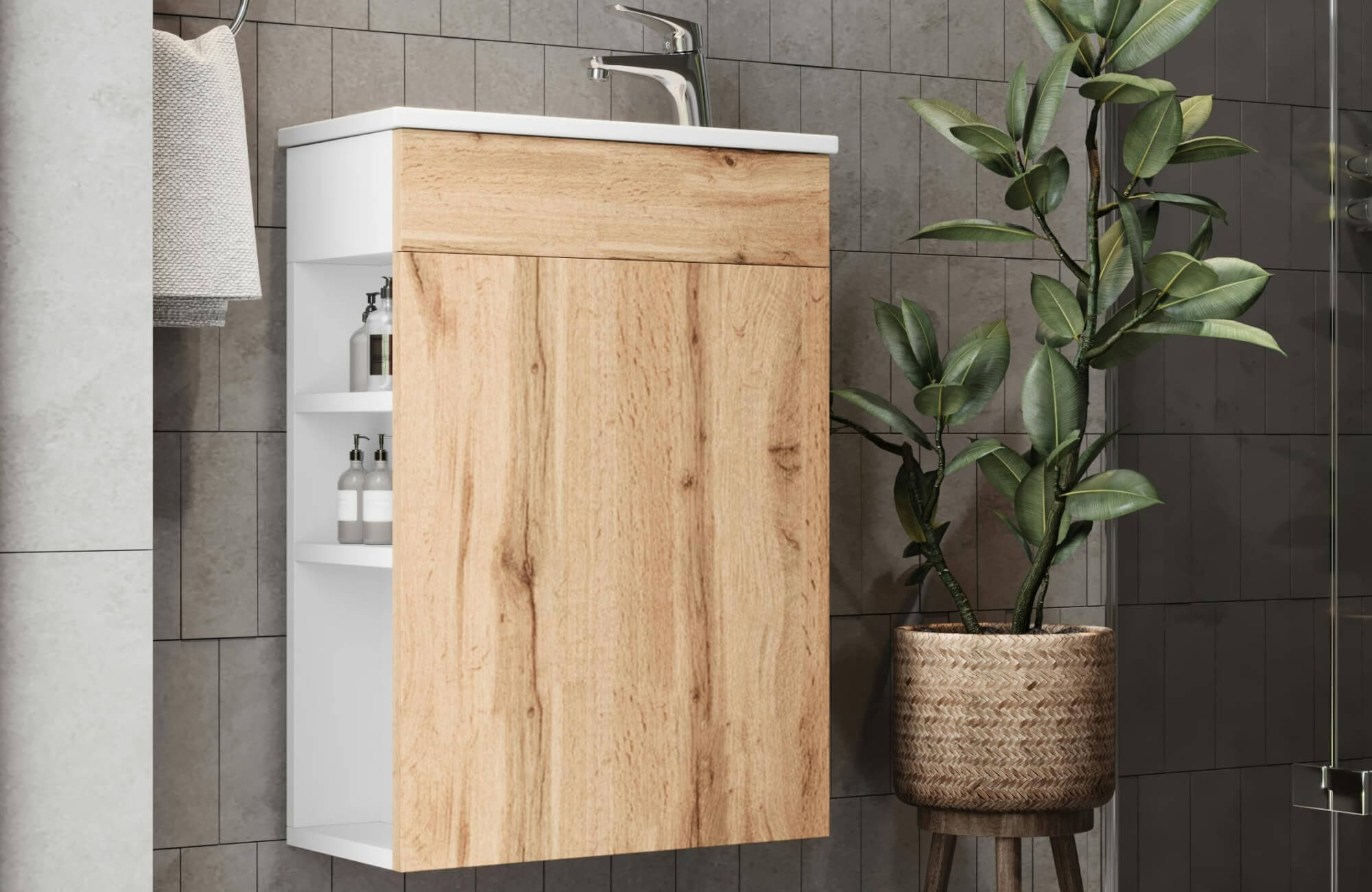
Powder rooms often have limited floor space, so compact solutions make all the difference. A floating wood vanity opens up the floor beneath, giving the room a lighter, more spacious feel. Corner units are a practical choice, seamlessly fitting into tight layouts without disrupting flow. Open shelving can also work well here, keeping the vanity practical while avoiding a crowded look. To maintain balance, use light finishes and clean lines so the piece feels proportional to the room.
Shared Family Bathrooms
In family bathrooms, durability and storage are the top priorities. A larger rustic vanity with deep drawers or dual sinks helps streamline daily routines and reduces crowding. Hardwoods with protective finishes withstand moisture and frequent use, while stone counters provide a sturdy, long-lasting surface. Built-in organizers or drawer dividers are also useful for keeping toiletries and supplies neatly arranged. With these practical features, a rustic vanity becomes both functional and family-friendly, helping everyone share the space with ease.
Master Suites
In a master suite, the vanity often serves as the focal point of the room. Oversized rustic designs with dual sinks bring both balance and convenience to larger layouts. Pairing reclaimed wood with stone tops creates a look that feels luxurious while still grounded in natural character. Open shelving underneath also works well for neatly stacked towels, and integrated lighting enhances both style and function. In this setting, the rustic vanity goes beyond practicality, becoming a defining feature that anchors the entire space.
Edward Martin’s Elodie 72" Double Vanity in Light Natural Oak with a 3 cm White Zeus Quartz Top, as pictured above, captures this balance beautifully. Its generous size makes it ideal for shared spaces, while the natural oak base keeps the design warm and inviting. The crisp quartz surface adds refinement, ensuring the piece feels well-suited to everyday use and moments of retreat. Together, these elements show how a rustic vanity can transform a master suite into a space that feels both personal and elevated.

Adding Personality With Color and Finish
Color and finish play a key role in personalizing rustic wood. The same material can take on a completely different character, shifting from bold and eye-catching to subtle and understated depending on the choices you make.
Painted Finishes
Painting a rustic vanity is a simple way to add color without losing the warmth of wood. Shades like muted green, deep blue, or soft gray work especially well, complementing rustic details while maintaining a balanced overall look. Paint is also useful for unifying different wood tones, giving the vanity a cohesive appearance. For lasting results, choose a high-quality enamel paint that resists moisture and cleans easily, ensuring both style and durability in a bathroom setting.
Edward Martin’s Josephine 48" Single Vanity in Satin Drifted Black Veneer with Carrara Marble Top, as shown in the photo above, demonstrates how a darker finish can bring a rustic piece into a more modern direction. The black veneer highlights the wood’s texture while creating a bold contrast against the light marble surface. This combination shows how painted finishes not only personalize rustic vanities but also add depth and sophistication to the bathroom environment.
Weathered Surfaces
For those who prefer a natural, timeworn look, weathered finishes are an excellent choice. Techniques such as wire brushing, liming, or light distressing highlight the grain and soften sharp edges, adding gentle variation that feels authentic. Unlike heavy distressing, which can sometimes appear artificial, these methods can bring depth without overpowering the design. A weathered finish also works well in bathrooms where you want a relaxed, lived-in atmosphere that still feels intentional and refined.
Natural Patina
Some people prefer to let wood age naturally, allowing time and use to shape its character. With minimal sealing or a light oil finish, the surface develops a patina that deepens in color and enhances the grain over time. Sunlight, humidity, and daily use all leave their mark, creating a finish that feels personal and lived-in. This approach is ideal if you appreciate materials that evolve naturally and tell a story over time. To keep the wood healthy, monitor moisture levels and reapply protective oils as needed.

Styling and Accessorizing for Impact
While the vanity forms the base of the bathroom, accessories can shape the overall experience. Choosing the right pieces enhances both appearance and practicality.
Mirrors and Lighting
Mirrors play a big role in setting scale and balance. A wood-framed mirror can echo the vanity base for a cohesive look, while a metal frame introduces contrast and variety. Proportion is key, so choosing a mirror slightly narrower than the vanity helps maintain visual harmony. Lighting is just as important, adding both function and atmosphere. Wall sconces placed at eye level minimize shadows for practical use, while pendant lights above the vanity can serve as a striking focal point.
In the photo above, Edward Martin’s rustic vanity pairs seamlessly with the Enola Wall Sconce in Aged Brass and the Esmeralda Wide Mirror in Polished Brass, showing how thoughtful lighting and mirrors can highlight the vanity while tying the whole room together with warmth and balance.
Storage and Organization
Many rustic vanities feature open shelving, which works best when paired with careful organization. Woven baskets, wooden crates, or ceramic containers can help keep essentials tidy while still letting the natural textures remain visible. Inside drawers, dividers or trays also make it easier to separate items and avoid clutter. When storage is both functional and well-organized, the vanity remains efficient without losing its rustic charm.
Decorative Accents
Accents are the finishing touch that brings the whole design together. Soft textiles such as patterned rugs or linen hand towels help balance the harder surfaces in the room. Handmade ceramics and glass jars can add character while serving a practical purpose for storage or display. The key is moderation; by choosing just a few thoughtful pieces, you allow the vanity to remain the focal point. With the right balance, the space feels personal, inviting, and cohesive.

Caring for Rustic Vanities Over Time
A rustic vanity is more than a functional piece; it’s also an investment in both style and durability. Like any natural material, it requires regular care to maintain its beauty and durability. With the right protection and maintenance, you can extend its lifespan and keep it looking beautiful for years to come. Always remember to follow the manufacturer’s guidelines for specific cleaning products, finishes, and treatments to ensure proper care for your vanity.
Sealing and Protecting
Wood performs best when sealed with water-resistant finishes such as polyurethane, tung oil, or marine-grade varnish. Stone countertops also require attention, usually requiring resealing every year, depending on the material. Even metals like copper and iron can benefit from a thin wax coating, which helps slow oxidation and preserve their appearance. By taking these preventive steps early, you protect each surface from damage and keep your vanity looking its best over time.
Cleaning Methods
Daily cleaning should be gentle to protect the natural surfaces. For wood, a mild soap and a damp cloth are usually sufficient, while abrasive sponges should be avoided to prevent scratches. Stone surfaces respond best to pH-neutral cleaners, which help maintain the sealant and guard against etching. Metal can be wiped with warm water and dried right away to minimize spotting. By following these simple habits, you can further keep each material in good condition and extend the life of your vanity.
Routine Maintenance
With daily use, drawers can loosen, finishes may lose their sheen, and hardware may begin to tarnish. Performing seasonal checkups helps you catch these small issues before they become larger problems. Take time to tighten handles, refresh oils or sealants, and inspect for any signs of water seepage. Consistent upkeep also keeps your vanity functional while preserving the rustic character that made it appealing from the start.
The Lasting Appeal of Rustic Vanities
Rustic bathroom vanities can bring warmth, practicality, and timeless character into the home. From reclaimed wood to painted finishes or bold industrial designs, the options are versatile enough to complement any style. When you choose materials, finishes, and accessories thoughtfully, the result is a bathroom that feels authentic and personal. With proper care, these vanities only grow more beautiful over time, gaining a richness that manufactured pieces cannot replicate. Rustic style adapts effortlessly to various styles, and when chosen well, a vanity becomes more than a storage place; it also becomes the centerpiece that defines the heart of your bathroom.
If you’d like guidance in finding the right rustic vanity for your space, feel free to contact us or explore our design services. We’re here to help you create a bathroom that feels both personal and timeless.