Kitchen island lighting sits at the intersection of function and design. It has to illuminate prep space, support daily tasks, and at the same time anchor the visual identity of the kitchen. Among designers, homeowners, and architects, one principle comes up again and again when planning island lighting: the rule of three. While it may sound like a simple styling tip, the rule of three is rooted in visual psychology, spatial balance, and proportion. When applied thoughtfully, it can transform a kitchen island from a purely utilitarian surface into a refined centerpiece that feels intentional and complete.
Understanding why three pendants work so well, when they do not, and how to adapt the rule to your specific kitchen is essential for achieving a polished result. This guide breaks down the logic behind the rule of three, explains how to scale and space fixtures correctly, and explores how fixture design choices influence the final look. By the end, you will see the rule not as a rigid formula, but as a flexible framework that helps you make confident lighting decisions.

Understanding The Visual Psychology Of Odd Numbers
The rule of three is not exclusive to kitchen lighting. It appears across art, photography, architecture, and interior design because it aligns with how the human brain processes visual information. Odd-numbered groupings feel more dynamic and engaging than even-numbered ones, which tend to divide attention evenly and can feel static.
Why The Brain Prefers Asymmetry And Dynamic Balance
Human perception is wired to look for patterns, but it also craves variation. An odd number of objects creates asymmetry, which encourages the eye to move rather than settle. In a kitchen, this subtle movement makes the space feel alive and layered instead of overly formal or rigid. Three pendants introduce a sense of balance without perfect symmetry, allowing the lighting to feel curated rather than mechanical.
This dynamic balance is especially important in kitchens, where straight lines dominate. Cabinets, countertops, and islands are typically rectangular and highly structured. Introducing an odd-numbered lighting arrangement softens that rigidity and adds visual interest without overwhelming the space.
Creating A Clear Central Focal Point
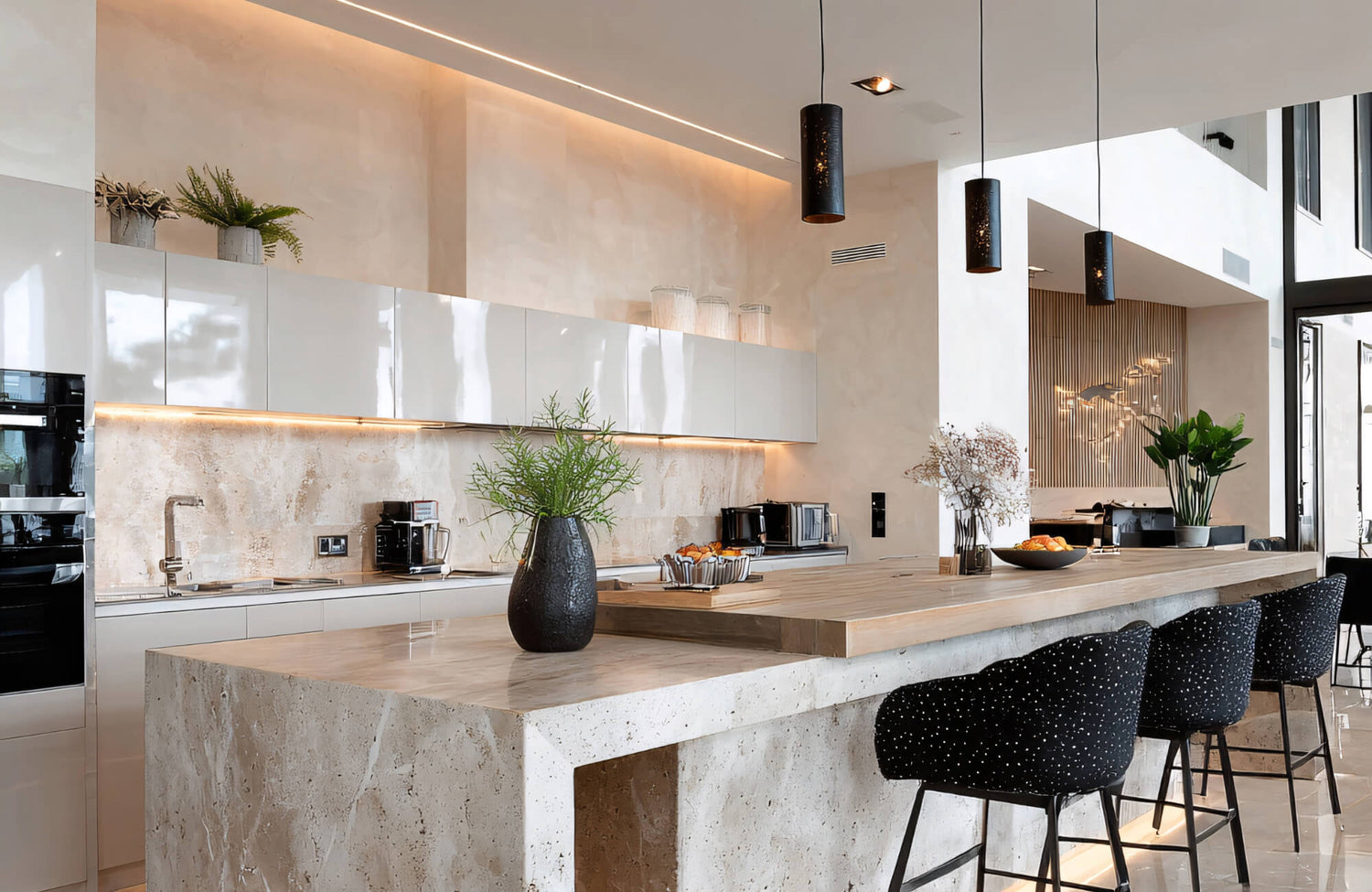
Three pendants naturally establish a strong center. The middle fixture acts as an anchor, while the two flanking fixtures provide support. This hierarchy gives the island a visual spine, guiding the eye along its length and reinforcing its role as the heart of the kitchen. A trio like Edward Martin’s Kealy 16" Socket Pendant in White, as shown in the image above, reinforces this visual clarity through consistent scale and a softly contoured silhouette. With two pendants, attention can feel split. With four, the eye may struggle to identify where to land. Three resolves that tension by offering clarity and focus.
In open-concept homes, where the kitchen often shares sightlines with dining and living areas, this focal clarity becomes even more important. The island lighting helps define the kitchen zone without the need for walls or visual barriers.
Establishing Rhythm And Repetition Across The Room
Repetition is a core design principle, and the rule of three supports it beautifully. Three identical or closely related fixtures create a rhythm that feels intentional and cohesive. This rhythm echoes other repeated elements in the kitchen, such as cabinet panels, bar stools, or window mullions, reinforcing a sense of harmony throughout the space.
At the same time, because the grouping is odd-numbered, it avoids monotony. The result is a lighting scheme that feels both orderly and relaxed, which is exactly the balance most homeowners want in a kitchen.

Scaling The Rule To Fit Your Specific Island Dimensions
While the rule of three is popular, it is not universal. Island size is a key factor in determining whether three pendants are appropriate or whether another configuration will serve the space better.
The Seven Foot Threshold For Three Pendants
As a general guideline, kitchen islands that are seven feet long or longer can comfortably support three pendants. At this length, the fixtures have enough horizontal space to breathe without feeling crowded. Each pendant can be spaced evenly, maintaining proportion and visual balance across the island.
On an island of this size, three pendants also provide adequate task lighting coverage. Light is distributed more evenly across the work surface, reducing shadows and making food prep and casual dining more comfortable.
When To Break The Rule And Use Two Pendants
For islands shorter than seven feet, three pendants can feel cramped and visually heavy. In these cases, two pendants often create a cleaner and more proportional look. While even numbers are typically less dynamic, scale always trumps rules, especially when larger statement fixtures like Edward Martin’s Carly 34" Pendant in Vintage Brass are used to command attention without crowding the space. Two well-sized fixtures on a smaller island will look far more intentional than three undersized or tightly packed pendants.
Ceiling height also influences this decision. In kitchens with lower ceilings, fewer fixtures help avoid visual clutter and keep the space feeling open. Two pendants with strong design presence can still deliver impact without overwhelming the room.
Expanding To Five Or More For Luxury Kitchens
In expansive kitchens with oversized islands, the rule of three can be extended rather than abandoned. Five or even seven pendants can work beautifully in luxury settings, especially when the island exceeds ten or twelve feet in length. The key is maintaining odd-numbered groupings and consistent spacing so the rhythm remains intact.
In these larger configurations, fixture scale becomes especially important. Slimmer pendants or minimalist designs prevent the lighting from dominating the space, allowing the island to remain the star while the lighting enhances its presence.

Mastering The Mathematics Of Spacing And Suspension
Even the most beautiful fixtures can fall flat if they are poorly spaced or hung at the wrong height. Precision matters when translating the rule of three into a real-world installation.
Calculating The Thirty Inch Center To Center Gap
A widely accepted standard for pendant spacing is approximately thirty inches from the center of one fixture to the center of the next. This measurement provides enough separation to distinguish each pendant while maintaining a cohesive grouping.
However, this number is not absolute. Fixture width, island length, and overall kitchen scale all influence the outcome. Larger pendants may require slightly more space, while slimmer designs can sit closer together. The goal is consistent spacing that feels balanced across the island rather than adherence to a single number.
Respecting The Edge Zones And Headroom
Pendant lights should not be pushed too close to the edges of the island. Leaving adequate space on both ends prevents the fixtures from feeling like afterthoughts or from interfering with seating and circulation. A margin of twelve to eighteen inches from the island edge to the center of the nearest pendant is a common guideline that works well in most kitchens, particularly when using designs with a pronounced profile like Edward Martin’s Oswald Pendant in Dusty Iron, seen in the image above.
Headroom is equally important. Pendants that hang too low can obstruct sightlines and feel intrusive, especially in open layouts. Those hung too high may lose their impact and fail to provide sufficient task lighting.
Determining The Ideal Height Above The Counter
Most kitchen pendants are hung between thirty and thirty-six inches above the countertop. This range strikes a balance between functionality and aesthetics, ensuring the light illuminates the work surface without glaring into the eyes of those seated or standing nearby.
Ceiling height can influence this measurement. In rooms with higher ceilings, pendants may be hung slightly higher to maintain proportion. Adjustable fixtures offer flexibility, allowing you to fine-tune the height after installation.

Selecting The Correct Fixture Design For Repetition
The rule of three does not require identical fixtures, but cohesion is essential. The design of the pendants themselves strongly shapes how successful the repetition feels.
Balancing Visual Weight With Transparent Materials
When using three pendants, especially in smaller kitchens, visual weight matters. Heavy, opaque fixtures can quickly overwhelm the island and make the ceiling feel lower. Glass, acrylic, or open-frame designs help mitigate this effect by allowing light and sightlines to pass through, a quality exemplified by Edward Martin’s Otis Pendant in Aged Brass in the image above, where transparency keeps the composition feeling airy.
Transparent materials also enhance the sense of rhythm without adding bulk. The repeated form is still visible, but it feels lighter and more integrated into the space. This approach works particularly well in transitional and contemporary kitchens.
The Linear Chandelier Alternative
For those who like the idea of repetition but prefer a more streamlined look, a linear chandelier can serve as an alternative interpretation of the rule of three. Many linear fixtures feature three or more light sources within a single frame, offering the same visual rhythm in a cleaner, more architectural form.
This option is especially effective over long islands where multiple pendants might feel busy. A linear chandelier provides continuity and strong horizontal emphasis while simplifying installation and visual impact.
Mixing Shapes To Keep It Interesting
While identical pendants are the safest choice, mixing shapes within a consistent material or finish can add personality. For example, three pendants in the same metal finish but with slightly varied silhouettes can introduce subtle variation while preserving cohesion, especially when guided by expert input through Edward Martin’s design consultation, which helps translate personal style into balanced, well-considered selections.
The key is restraint. Too much variation undermines the rhythm that makes the rule of three effective. When questions arise around lighting, tile, rugs, or furniture coordination, contacting Edward Martin provides tailored recommendations and product guidance to ensure the final mix feels deliberate and refined rather than random.
Guidelines Are Meant To Be Customized
The rule of three for kitchen island lighting is best understood as a design principle rather than a strict mandate. Its power lies in its ability to create balance, focus, and rhythm, but those outcomes depend on thoughtful application. Island size, ceiling height, fixture scale, and overall kitchen style all influence whether three pendants are the right choice or whether the rule should be adapted.
Great kitchens are not designed by blindly following formulas. They are shaped by understanding why guidelines exist and knowing when to adjust them. When you approach the rule of three with this mindset, kitchen island lighting becomes less about checking a box and more about crafting a space that feels intentional, comfortable, and visually compelling. In the end, the most successful lighting schemes are the ones that respect the rules just enough to know how to bend them.