Wool rugs have long held a place of distinction in American homes, valued for their warmth, durability, and ability to ground a space with texture and character. Yet when shopping for a wool rug, many homeowners quickly encounter two common categories that seem similar on the surface but differ significantly in construction, performance, and long-term value: tufted wool rugs and knotted wool rugs.
At first glance, tufted and knotted rugs can appear nearly identical. Both can feature rich colors, intricate patterns, and soft wool fibers underfoot. The true distinction lies beneath the surface, in how each rug is made and how that construction influences everything from durability to price. By exploring their structural differences, wear characteristics, aesthetic qualities, and overall value, you can better determine which option aligns with your lifestyle, budget, and design priorities.

How They Are Made The Structural Differences
The most fundamental difference between tufted and knotted wool rugs begins at the loom—or, in some cases, away from it entirely. Construction methods shape not only how a rug looks and feels but also how it performs over time.
The Ancient Art Of Hand Knotting
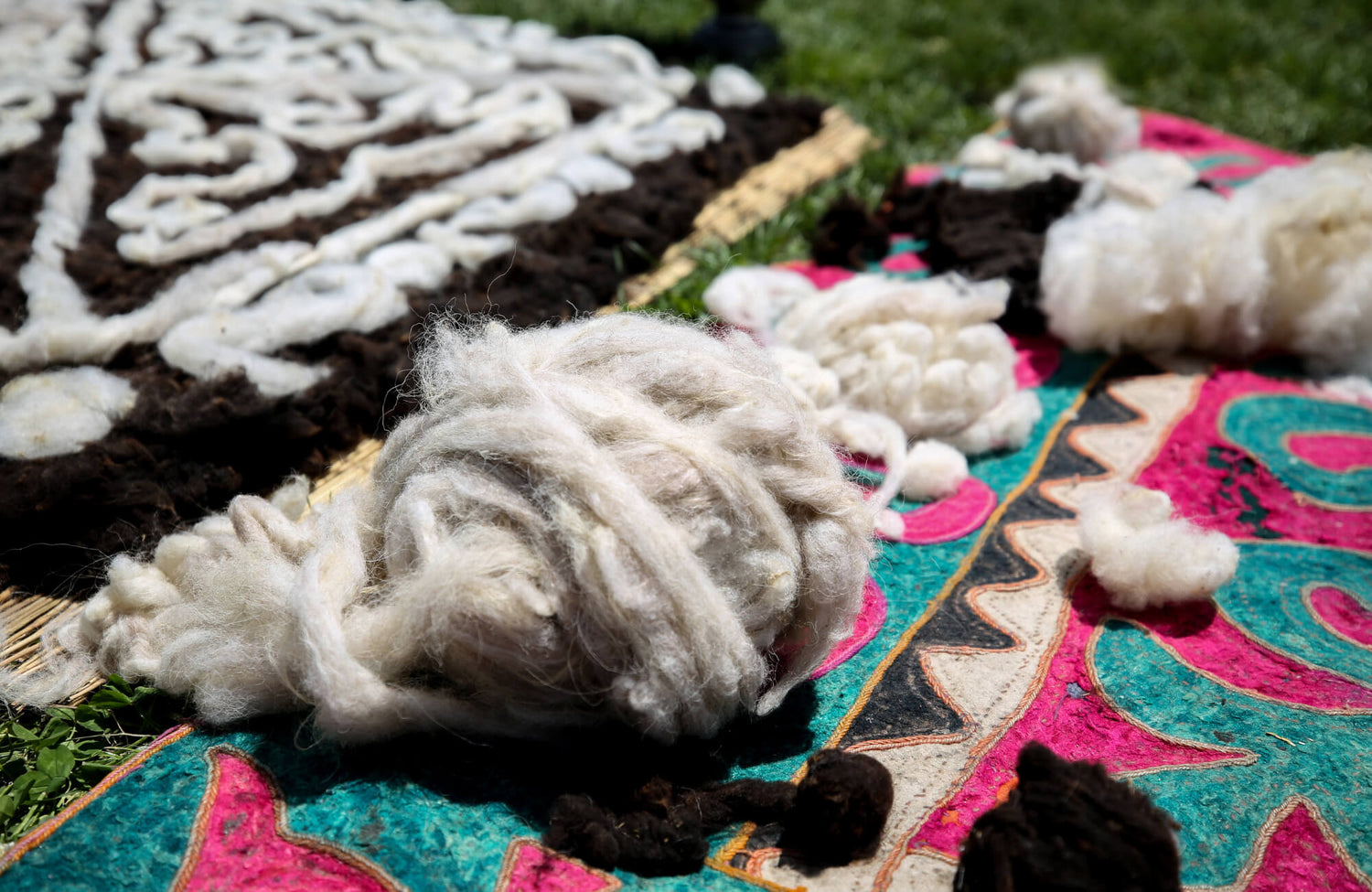
Hand-knotted wool rugs represent one of the oldest textile traditions in the world, with techniques refined over thousands of years. Each rug is created on a loom where individual strands of wool are tied by hand around vertical warp threads. Every knot is secured independently, forming the pile of the rug one knot at a time. Once a row of knots is completed, horizontal weft threads are woven through to lock everything in place.
This process is painstakingly slow and requires exceptional skill. A single hand-knotted rug can take months, or even years, to complete depending on its size, knot density, and complexity of design. The result is a textile where the pattern is integral to the structure of the rug itself, not applied or glued on later. Because each knot is tied directly into the foundation, the rug gains remarkable strength and structural integrity.
The Mechanics Of Hand Tufting
Hand-tufted wool rugs, by contrast, rely on a faster, more modern production method. Instead of tying individual knots, artisans use a tufting gun to punch loops of wool yarn through a pre-stretched fabric backing, typically made of cotton. The design is drawn onto the backing first, and the yarn is then inserted following that outline.
Once the tufting is complete, the loops are often cut to create a plush pile. A layer of adhesive is applied to the back of the rug to hold the yarns in place, and a secondary backing is attached to cover the glue and provide stability. This method dramatically reduces production time, allowing rugs to be completed in days or weeks rather than months.
While hand tufting still involves manual labor and artistic skill, the structure depends heavily on adhesive rather than interwoven fibers. This distinction has a significant impact on how the rug ages and wears over time.
Identifying The Rug By Flipping It Over
One of the simplest ways to tell whether a wool rug is tufted or knotted is to turn it over and examine the back. A hand-knotted rug will show a clear mirror image of the pattern on the reverse side. You can often see the individual knots and the design looks almost as defined as it does on the front.
A tufted rug, on the other hand, will typically have a fabric backing that obscures the pattern. The design will not be visible on the reverse because it is not structurally woven through the rug. Instead, the backing serves as a protective layer over the glued yarns, making the construction differences immediately apparent.

Longevity And Wear Over Time
Beyond how they are made, tufted and knotted wool rugs diverge significantly in how they hold up under daily use. Longevity is often one of the most important considerations for homeowners, especially in busy areas like living rooms, hallways, and family spaces.
Why Knotted Rugs Last For Generations
Hand-knotted wool rugs are renowned for their durability. Because each knot is individually tied into the foundation, the rug does not rely on adhesives that can break down over time. This method creates a structurally sound textile capable of withstanding decades of foot movement without losing integrity, as seen in Edward Martin’s Micah Rug in Natural / Graphite in the image above, where the tightly knotted construction supports both strength and refinement.
In many cases, high-quality knotted rugs actually improve with age. The wool fibers develop a soft patina, colors mellow gracefully, and the rug retains its shape even after years of use. It is not uncommon for hand-knotted rugs to be passed down through generations, serving as both functional furnishings and cherished heirlooms.
The Lifespan Limitations Of Tufted Rugs
Tufted wool rugs, while attractive and comfortable, generally have a shorter lifespan. The adhesive that holds the yarns in place can dry out or weaken over time, especially in environments with fluctuating humidity or heavy use. As the glue degrades, fibers may loosen or shed more noticeably, and the rug can begin to lose definition.
For many households, a tufted rug performs well for several years, particularly in low- to moderately-active areas. However, it is not typically designed to last for decades. This makes tufted rugs better suited for homeowners who enjoy refreshing their interiors periodically rather than committing to a single piece long-term.
Shedding And Maintenance Realities
Shedding is a common concern with wool rugs, and both tufted and knotted varieties can shed initially. In hand-knotted rugs, shedding usually decreases significantly after the first few months as loose fibers from the weaving process are released. Regular vacuuming helps manage this phase and does not compromise the rug’s structure.
Tufted rugs may shed more persistently, partly because cut yarn ends are held in place by adhesive rather than knots. Over time, this shedding can contribute to thinning in high-use areas. Maintenance for both types involves routine vacuuming and occasional professional cleaning, but knotted rugs generally respond better to long-term care and restoration.

Texture Aesthetics And Design Flexibility
The way a rug is constructed also influences how it feels underfoot and how freely designers can experiment with pattern, color, and texture. For homeowners focused on aesthetics as much as performance, these differences matter.
The Dense And Plush Feel Of Tufted Wool
Hand-tufted wool rugs are often chosen for their soft, plush texture. The tufting process allows for thicker piles and a cushioned feel that many people associate with comfort. This makes tufted rugs particularly appealing in bedrooms, lounges, and spaces where barefoot comfort is a priority.
Because tufting allows yarns to be inserted quickly and at varying heights, designers can easily create sculpted patterns, bold motifs, and contemporary designs. The flexibility of the process supports a wide range of styles, from modern geometrics to oversized florals.
The Intricacy And Flatness Of Knotted Wool
Knotted wool rugs typically have a denser, firmer feel underfoot. While they can still be comfortable, their pile height is often lower and more uniform, allowing for crisp definition across the surface. This type of construction supports exceptional detail, evident in Edward Martin’s Micah Rug in Cream / Dove, where fine linework and subtle tonal shifts are clearly articulated in the image above.
Traditional motifs, complex borders, and layered designs are hallmarks of hand-knotted rugs. Even in more modern interpretations, the precision of knotting allows for a level of visual depth that is difficult to replicate with tufting. The flatter profile also makes knotted rugs ideal for dining rooms or spaces where furniture stability is important.
Design Limitations And Possibilities
While tufted rugs excel in bold, graphic designs and tactile appeal, they are somewhat limited in how finely detailed a pattern can be. Knotted rugs, though more labor-intensive, offer unmatched versatility in pattern complexity and longevity of design. Choosing between the two often comes down to whether you prioritize immediate visual impact and softness or enduring detail and craftsmanship.

Understanding The Price Tag And Value
Price is often where the difference between tufted and knotted wool rugs becomes most apparent. While both can represent a meaningful investment, the reasons behind their costs are very different.
Labor Hours As The Main Cost Driver
The primary factor influencing the price of a hand-knotted rug is labor. The sheer number of hours required to tie thousands, or even millions, of individual knots accounts for much of the cost. Skilled artisans dedicate months to completing a single piece, and that expertise is reflected in the final price.
Hand-tufted rugs, by comparison, require far fewer labor hours. The use of tufting guns and adhesives significantly speeds up production, making these rugs more accessible to a wider range of budgets. While still handcrafted, the process is more efficient and less time-intensive.
Material Quality And Resale Value
Both tufted and knotted rugs can be made with high-quality wool, but knotted rugs often use finer fibers and tighter construction. This combination not only enhances durability but also contributes to potential resale or appraisal value, as demonstrated by Edward Martin’s Micah Rug in Graphite / Espresso in the image above, where dense weaving and material consistency reflect long-term craftsmanship.
Tufted rugs generally do not hold resale value in the same way. They are considered decorative furnishings rather than long-term assets, and their value is tied more closely to current trends than enduring quality.
Which Option Is The Better Investment For You
Determining which rug is the better investment depends on how you define value. If you are seeking a long-lasting piece with potential heirloom status, a hand-knotted wool rug offers unparalleled longevity and craftsmanship. If your priority is achieving a specific look, enjoying plush comfort, and staying within a more moderate budget, a hand-tufted rug can be an excellent choice.
For those weighing these considerations, Edward Martin’s design consultation service can provide personalized guidance based on your space, lifestyle, and aesthetic goals, whether you are selecting a rug, tile, or furniture. If questions arise along the way, you can always contact Edward Martin for expert support and product insight to help you move forward with confidence.
Making The Right Choice For Your Home
Choosing between a tufted and knotted wool rug ultimately comes down to understanding how you live and what you value most in your home. Knotted rugs appeal to those who appreciate tradition, durability, and the quiet luxury of time-intensive craftsmanship. They reward patience and care with decades of beauty and performance. Tufted rugs, on the other hand, cater to homeowners who enjoy expressive design, tactile comfort, and the freedom to update their interiors as tastes evolve.
By recognizing the structural differences, lifespan expectations, aesthetic qualities, and value considerations of each type, you can select a rug that not only complements your space but also aligns with your long-term vision for your home. A well-chosen wool rug, whether tufted or knotted, has the power to anchor a room, tell a story, and elevate everyday living.