If you're updating your bathroom, you've likely come across both vanities and cabinets and paused to consider what truly sets them apart. At first glance, they might seem similar; both offer storage and contribute to the room’s overall look. But as you get into planning and design, the distinctions become far more important than they first appear. Understanding the difference between a bathroom vanity and a cabinet can influence how your space functions, feels, and stands up over time. In this article, we’ll unpack each piece in detail to help you make confident, well-informed choices for your bathroom.

Understanding Their Basic Functions and Purposes
While vanities and cabinets may seem similar at first, they serve fundamentally different purposes in the bathroom. Understanding what each is designed to do, beyond just holding bathroom essentials, can help you choose the right solution for your space and lifestyle.
What Is a Bathroom Vanity
A bathroom vanity is more than just a cabinet with a sink, it’s a multi-functional fixture that supports essential daily routines. Designed to integrate plumbing, a vanity typically includes a sink, faucet, and countertop, all built into a cohesive unit. It provides a designated space for grooming, handwashing, and other hygiene tasks, making it one of the most-used areas in the bathroom.
Although vanities do offer storage, part of their interior must accommodate plumbing components, which reduces usable space. Still, the convenience of having water access, surface area, and storage all in one location makes the vanity an indispensable and efficient feature in any bathroom.
Edward Martin’s Abigail 60" Single Vanity in Light Natural Oak with a 3 cm White Zeus Quartz Top, as displayed in the photo above, showcases this balance beautifully. With its clean lines, warm wood tones, and seamless quartz top, it offers both functionality and visual appeal, demonstrating how a thoughtfully designed vanity can elevate the bathroom experience.
What Is a Bathroom Cabinet
In contrast, a bathroom cabinet is a dedicated storage unit without plumbing integration. Its sole purpose is to organize and conceal everyday items, from towels and toiletries to cleaning supplies, keeping the bathroom looking neat and uncluttered.
Because cabinets don’t need to house plumbing, their internal space can be fully optimized. Whether you're using deep drawers, adjustable shelves, or vertical compartments, cabinets provide customizable storage options that support a wide range of needs. Their role is straightforward but essential: to keep everything in its place, supporting the bathroom’s overall functionality.

How Each One Impacts Bathroom Planning and Layout
Where and how you place a vanity or cabinet can significantly shape your bathroom’s layout, movement flow, and future adaptability. These decisions affect how you interact with the space every day, so it’s important to understand each piece’s spatial demands and design flexibility.
Fixed vs Flexible Positioning
Vanities are typically anchored in place due to their plumbing requirements. Most are installed beneath a mirror and lighting fixture, forming a fixed point that shapes the entire layout. Relocating a vanity usually also means rerouting plumbing and making electrical adjustments, changes that require both time and budget. Because of this, the vanity’s placement often determines the positioning of surrounding features such as mirrors, lighting, and even door swings.
Cabinets offer much more freedom. Since they aren’t dependent on plumbing, they can be installed virtually anywhere, above the toilet, recessed into a wall, or tucked into unused corners. Their flexibility allows you to fine-tune your layout or make adjustments later without significant renovation, making them ideal for evolving needs or compact spaces.
Flow and Daily Function
The location and size of your vanity can strongly influence how fluidly you move through the bathroom. As the main work zone for tasks like washing up and grooming, a well-placed vanity supports an intuitive routine and enhances comfort. However, if it’s too bulky or poorly situated, it can interrupt movement and create a cramped, inefficient feel.
Cabinets, by comparison, are generally installed along the periphery of the room and contribute to flow without obstructing it. Whether mounted above fixtures or integrated into wall niches, they deliver storage where needed without dominating the space. This also helps maintain a sense of openness and organization, especially in smaller bathrooms or shared layouts.

Material Choices and Durability Factors
The materials you’ll choose have a significant impact on how well your bathroom furniture performs and lasts. From standing up to daily moisture to aligning with your overall design, understanding what each piece is made of helps you select options that are both durable and visually cohesive.
Common Vanity Materials
Since vanities are regularly exposed to water and humidity, their materials need to withstand daily moisture without showing signs of wear or deterioration. Moisture-resistant plywood, sealed MDF, and treated solid wood are frequently used for the base, offering stability while minimizing the risk of swelling or warping. For countertops, durable surfaces like marble, quartz, and granite are especially popular, not just for their ability to resist stains and scratches, but also for their low-maintenance care.
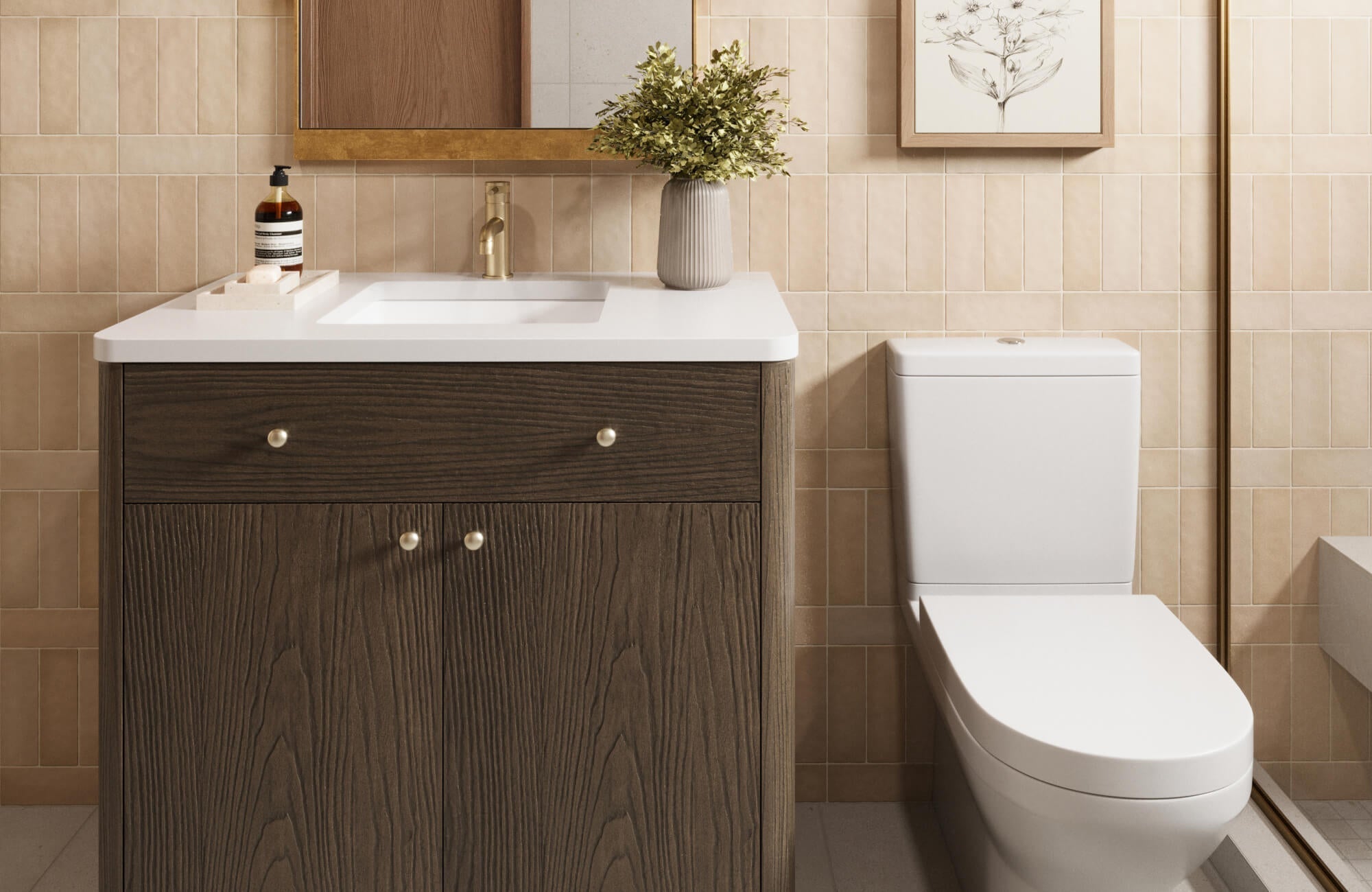
In addition to performance, these materials contribute to the overall look of the vanity. A thoughtfully selected finish can also tie the entire room together, making the vanity both a practical feature and a design statement. That balance of durability and design is perfectly captured in Edward Martin’s Josephine 48" Single Vanity in Satin Drifted Black Veneer with a Carrara Marble Top, as displayed in the photo above. Its rich black finish and soft marble surface bring a bold yet timeless elegance to the space, demonstrating how the right material combination can elevate a vanity from a simple fixture to a refined focal point.
Cabinet Material Variations
Cabinets, particularly those installed away from direct water exposure, allow for more variety in material choices. Options like melamine-coated MDF, powder-coated metal, and thermoplastic are lightweight, budget-friendly, and easy to maintain, making them ideal for everyday use. That said, when placing cabinets near showers, tubs, or other moisture-prone areas, it's still wise to opt for materials and finishes specifically designed to resist humidity and condensation. This extra layer of protection also helps ensure long-term durability without compromising on style.

Maintenance and Durability Considerations
The materials and design choices you make not just shape the look of your bathroom but also influence how well your vanity or cabinet holds up over time. Understanding what each piece requires in terms of upkeep and how it ages can help you choose options that remain functional and beautiful for years to come.
Maintenance
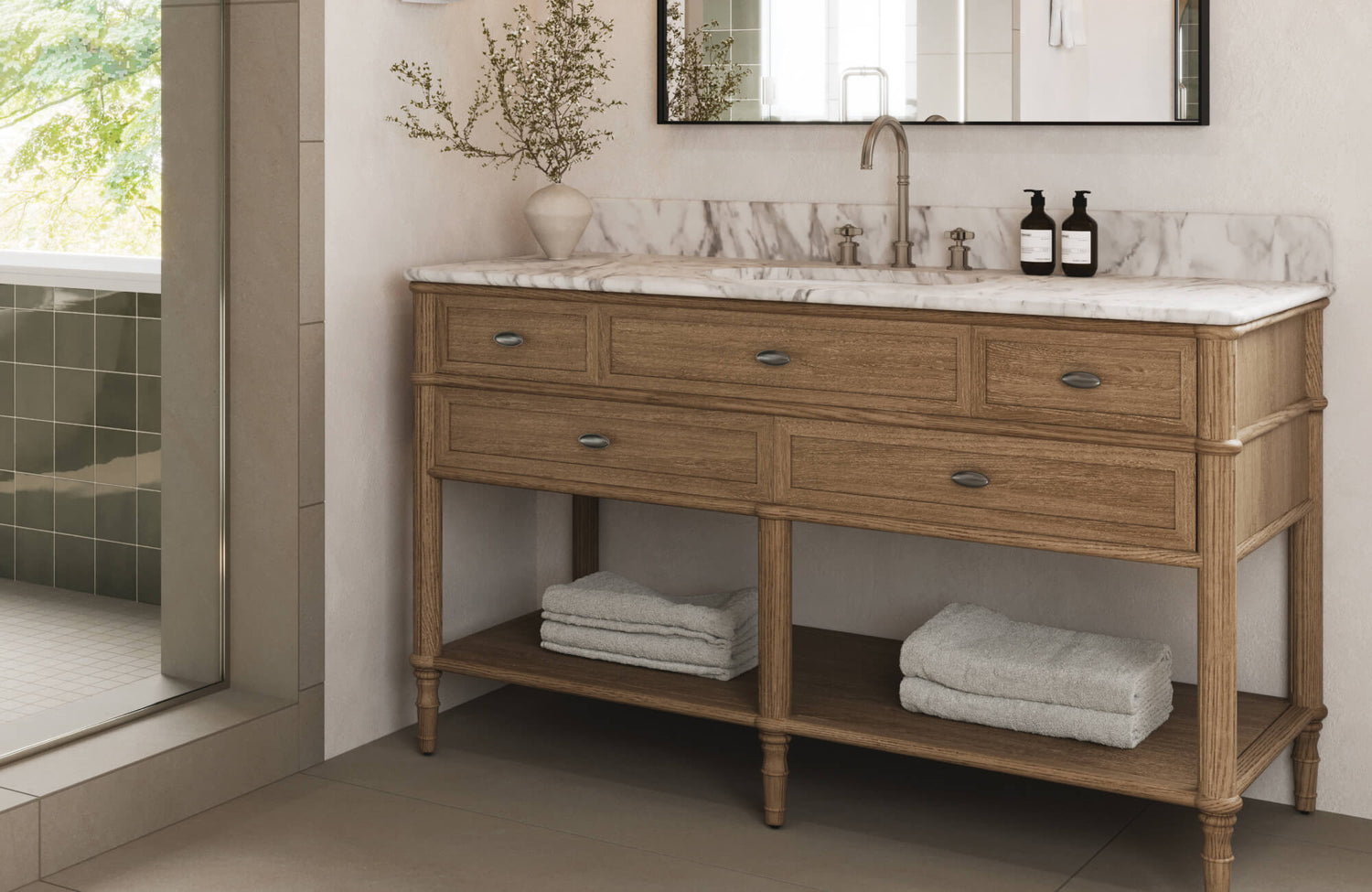
Vanities typically need more frequent upkeep, particularly around the sink and faucet, where water spots, soap residue, and toothpaste tend to accumulate. However, when made with quality materials and thoughtful finishes, maintenance becomes more manageable. Edward Martin’s Maxine 72" Double Vanity in Washed Natural Veneer with a Carrara Marble Top, featured in the photo above, is a perfect example; its surface is premiumly coated with a bath-safe sealant for moisture resistance.
Additionally, countertop upkeep often depends on the surface. Quartz is highly resistant to stains and typically only requires a damp cloth, while natural stones like marble may need occasional sealing to prevent etching. Since stone is porous, spills should be blotted quickly, and harsh cleaners, especially those with bleach, should be avoided. For best results, always follow the manufacturer's care and maintenance guidelines.
Cabinets, by contrast, tend to need less day-to-day attention, particularly when installed away from splashing zones. A quick wipe or light dusting is typically enough to keep them looking tidy. Because they’re exposed to less moisture, cabinets generally retain their appearance with minimal effort, making them a practical, low-maintenance choice for any bathroom.
Durability
Durability is another key when selecting bathroom furniture, as both vanities and cabinets are exposed to varying levels of moisture and daily use. Vanities are specifically built to endure regular contact with water, especially around the sink area. Edward Martin’s vanities are premiumly coated inside and out to resist both UV damage and moisture, helping to protect their structure over time. Brushed aluminum laminate on drawer bottoms also adds extra strength, making them more resistant to wear.
Cabinets, while often placed in lower-moisture zones, still need to be made from durable, bathroom-rated materials to perform well. Those constructed from untreated or lower-grade components may not hold up in humid environments, potentially leading to warping or peeling. To ensure durability, it’s important to choose cabinets with moisture-resistant finishes and sealed edges that can stand up to the demands of a bathroom setting.

Style and Design Options
Vanities and cabinets each contribute to your bathroom’s overall look, but they do so in distinct ways. Understanding how to coordinate or contrast them gives you the freedom to express your style while creating a space that feels cohesive and thoughtfully designed.
Visual Anchor vs Functional Accent
The vanity often serves as the visual centerpiece of the bathroom. With its countertop, hardware, and finish, it sets the tone for the room’s overall style, whether that’s modern, traditional, coastal, or somewhere in between. A well-designed vanity can ground the space and introduce textures or tones that define the room’s character.
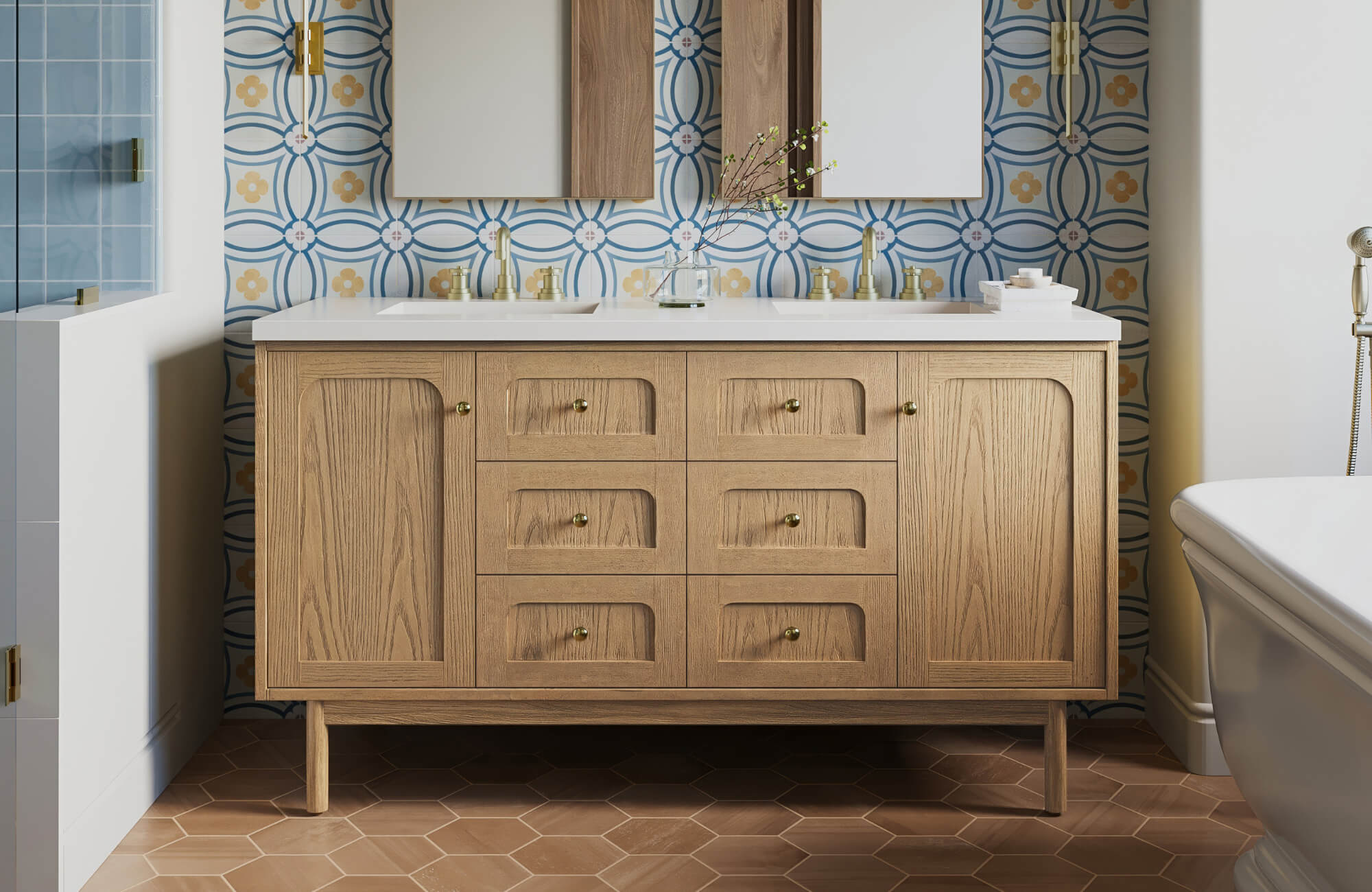
A great example is Edward Martin’s Gwen 48" Single Vanity in Pebble Oak with a 3 cm White Zeus Quartz Top, as displayed in the photo above. Its bold geometric front, paired with a clean quartz surface and warm oak finish, instantly draws the eye while still feeling refined and balanced. It not only establishes a clear focal point but also brings a touch of artistry to the overall design.
Cabinets, by contrast, play a more supportive role. Rather than competing for attention, they complement the vanity, either through matching finishes or subtle contrasts that add visual interest. This layered approach also creates a more cohesive, thoughtfully styled bathroom that feels both functional and visually harmonious.
Matching and Mixing Styles
Coordinating materials and colors between vanities and cabinets is a reliable way to create a seamless, unified look. However, mixing styles, like pairing a rustic wood vanity with sleek, modern cabinets, can introduce personality and depth to your space. The key is to maintain consistency in your color palette and hardware finishes, which also helps tie everything together and ensures the overall design still feels balanced and intentional.

Cost and Value
Understanding how vanities and cabinets differ in cost and long-term value is essential when planning your bathroom investment. Whether you’re working within a set budget or prioritizing durability, knowing how each option delivers over time helps you spend wisely without sacrificing performance.
Vanities
Vanities typically come at a higher upfront cost, largely due to their integrated plumbing, built-in countertops, and more involved construction. A well-made single-sink vanity generally ranges from $1,000 to $3,000, while custom models, particularly those featuring solid wood or natural stone, can exceed $4,000. Despite the greater initial expense, vanities still offer strong value over time by combining multiple functions into one dependable fixture that supports daily routines and enhances usability.
Edward Martin’s Paxton 72" Double Vanity in Pebble Oak with a 3 cm White Zeus Quartz Top, shown in the photo above, is a clear example of this long-term value. Its integrated quartz-based sinktop is designed to resist stains and mildew while offering easy cleaning, and the brushed aluminum laminate drawer bottoms add durability where it counts. Premium coating inside and out also helps protect the vanity from UV exposure and moisture, ensuring lasting performance.
Cabinets
Cabinets, by contrast, are typically more budget-friendly, with prices ranging from $200 to $1,500 depending on size, materials, and construction quality. They don’t require plumbing, which makes installation faster and more cost-effective. Though cabinets don’t serve as multifunctional fixtures like vanities, they provide dependable storage and are especially valuable in bathrooms where flexibility and organization are key.
In the long run, investing in a high-quality vanity, especially one that’s built to last, like Paxton, can offer greater functionality and value. When complemented by thoughtfully placed cabinets, you get the best of both worlds: practical storage and lasting performance tailored to how you use your space.
Choosing the Right Fit
Choosing between a bathroom vanity and a cabinet ultimately depends on how you plan to use your space. If you're aiming to make a lasting impression in both form and function, a vanity is often the smarter investment. As a central, all-in-one feature, it supports your daily routine with integrated plumbing and storage while also setting the tone for the entire room. From the countertop to the hardware, a well-crafted vanity blends practicality, elegance, and structure into a single statement piece that anchors the design and elevates the experience.
To ensure you select the right vanity for your space and lifestyle, we’re here to help. Our design consultation service offers expert guidance on everything from sizing and layout to material choices and finish coordination. Contact us today to start planning a bathroom that balances performance, beauty, and lasting value.