
)
)
)
)
)
)
)
)
What Is A Bathroom Vanity?
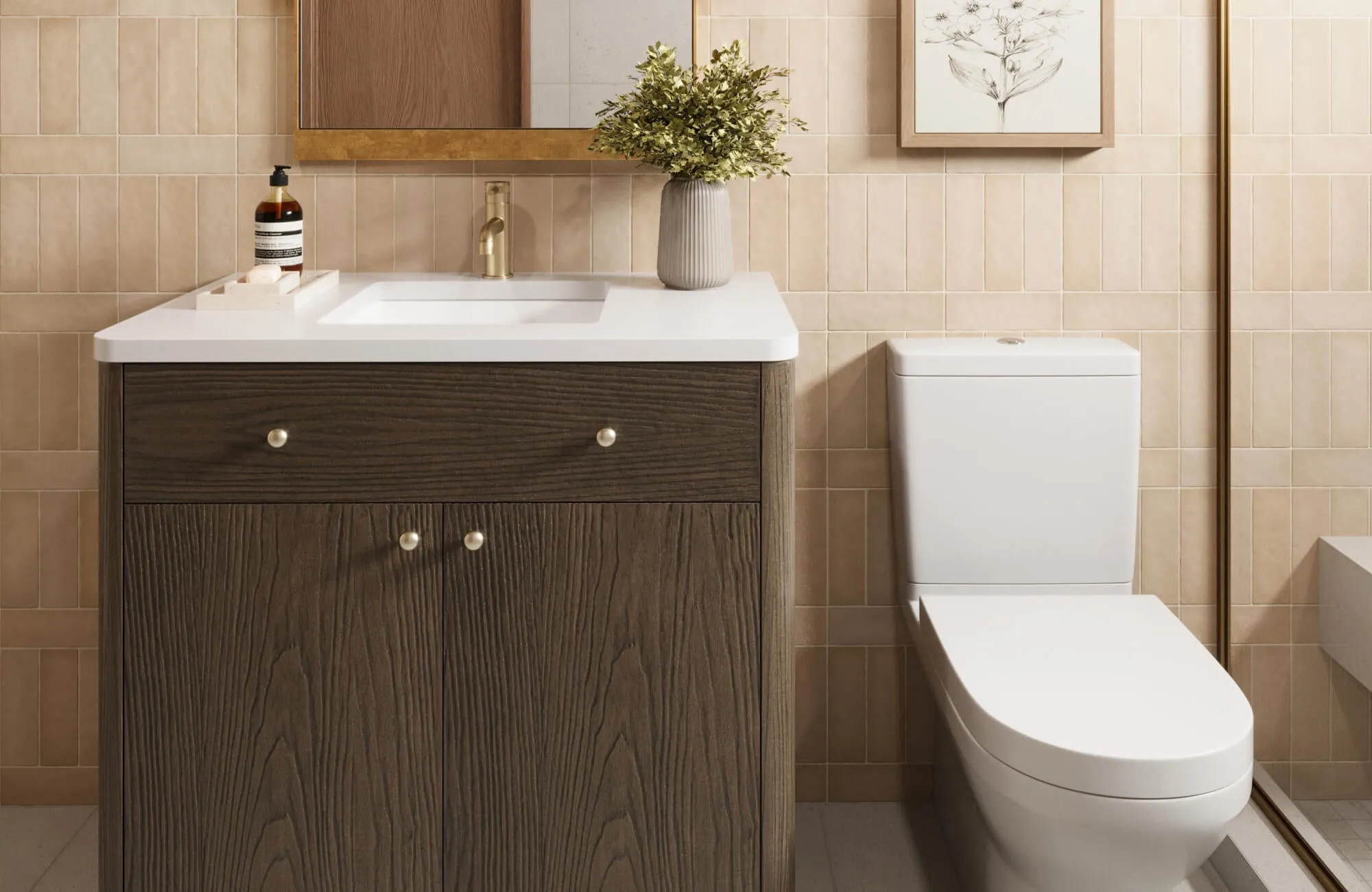
A bathroom vanity is far more than a place to wash your hands. It’s the true heart of your bathroom where function meets style and routine meets design. Whether you're rushing through your morning prep or unwinding at the end of the day, the vanity silently anchors your experience, shaping how efficiently and comfortably you move through your space.
Today’s vanities do much more than hold a sink. They define the room’s personality, conceal plumbing with elegance, and provide essential storage in increasingly clever ways. This article dives deep into the layers of vanity design, from its core components and aesthetic styles to materials, storage strategies, and installation details, so you can confidently choose a piece that enhances both your bathroom’s performance and its visual impact.
Understanding the Core Structure and Function
A bathroom vanity merges visual appeal with essential functionality. It supports daily tasks like washing and grooming while also organizing the tools and toiletries needed for those routines. The design of a vanity, including its layout, height, and accessibility, greatly influences comfort and efficiency in the bathroom.
Key Components That Define a Vanity
At its core, a bathroom vanity brings together three primary elements: the sink, the countertop, and the base cabinet. These parts are not just physically connected; they’re functionally interdependent. The sink serves as the most interacted-with component and is often crafted from materials like porcelain, quartz, or glass. Whether you choose an undermount, vessel, or integrated sink, each style impacts not only how the water drains and flows but also the visual balance of the vanity. Moreover, the faucet's position and design must match the sink type, influencing the plumbing layout and how easily you can complete daily tasks.
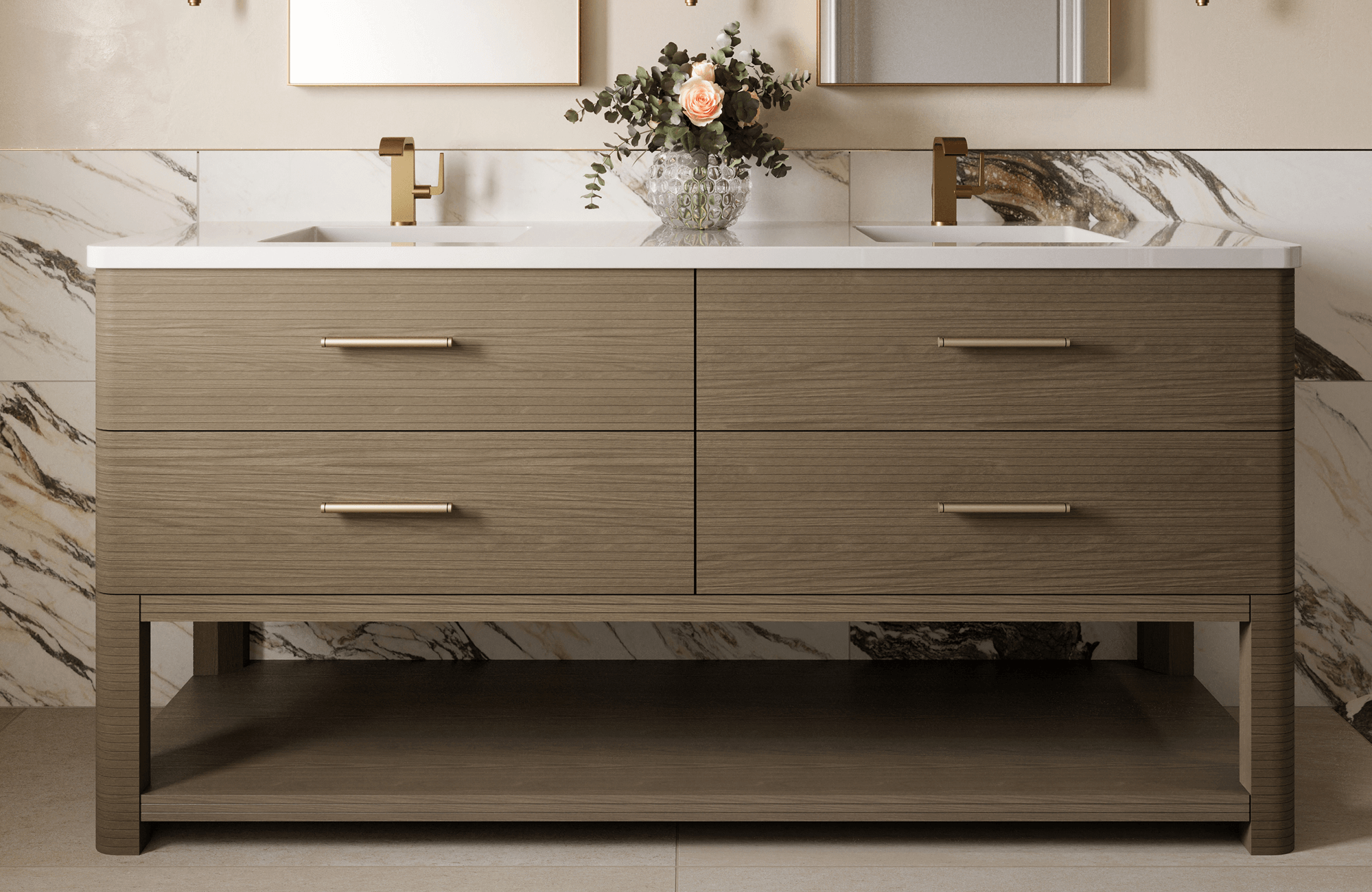
Directly supporting the sink is the countertop, which plays a key role in both aesthetics and durability. Since it’s exposed to frequent splashes, soaps, and grooming tools, the material must be non-porous and water-resistant. Because of that, quartz is one of the best options because it maintains a sleek appearance while resisting stains and wear. A great example is the Paxton 72" Double Vanity in Pebble Oak with 3 cm White Zeus Quartz Top, shown in the image above, which features a warm light-oak finish paired with a white quartz surface, striking a perfect balance between visual warmth and everyday functionality.
Beneath the countertop lies the base cabinet, which holds everything together and provides valuable storage. Its material will determine how well it withstands humidity and daily use. To complete the setup, most vanities also feature a mirror and often integrated lighting, which transforms this piece from simple storage into a full grooming station.
How Vanities Contribute to Bathroom Workflow
Although the vanity’s form is important, it’s the thoughtful function that truly defines your daily bathroom experience. An effectively designed vanity eliminates friction from your morning and evening routines. When it’s built at an appropriate height, you won’t have to hunch or strain, making grooming and washing much more comfortable. Smart design also ensures that drawers and shelves are positioned where your hands naturally reach, so everything from your toothbrush to your skincare products has a place and stays accessible.
Lighting also plays a major role in your workflow. Integrated or strategically positioned lighting around the mirror ensures you’re never fighting shadows while shaving, applying makeup, or simply washing your face. A well-designed vanity also considers the overall layout of your bathroom, aligning with electrical outlets and leaving enough space for easy movement. This creates a seamless transition between different tasks and prevents bottlenecks, especially during busy mornings. Ultimately, your vanity is the command center of your personal care routine.
Vanity Styles for Every Design Preference
Bathroom vanities define the visual language of the bathroom. Their design sets the tone for the entire space and often serves as the stylistic anchor. Selecting a style that aligns with your interior vision ensures that the bathroom feels cohesive and personalized.
Freestanding Versus Wall-Mounted
Freestanding vanities offer the look and feel of standalone furniture, making them a solid and classic choice for many bathroom styles. They sit directly on the floor, often supported by legs or a full cabinet base, and are especially common in more traditional or transitional settings. Their bulk lends a grounded aesthetic, and because they rely on floor support, you typically won’t need extensive wall modifications during installation. This can be an advantage if you’re updating an existing bathroom without a full remodel. Plus, their generous cabinet bases provide plenty of storage, making it easier to keep your space organized.
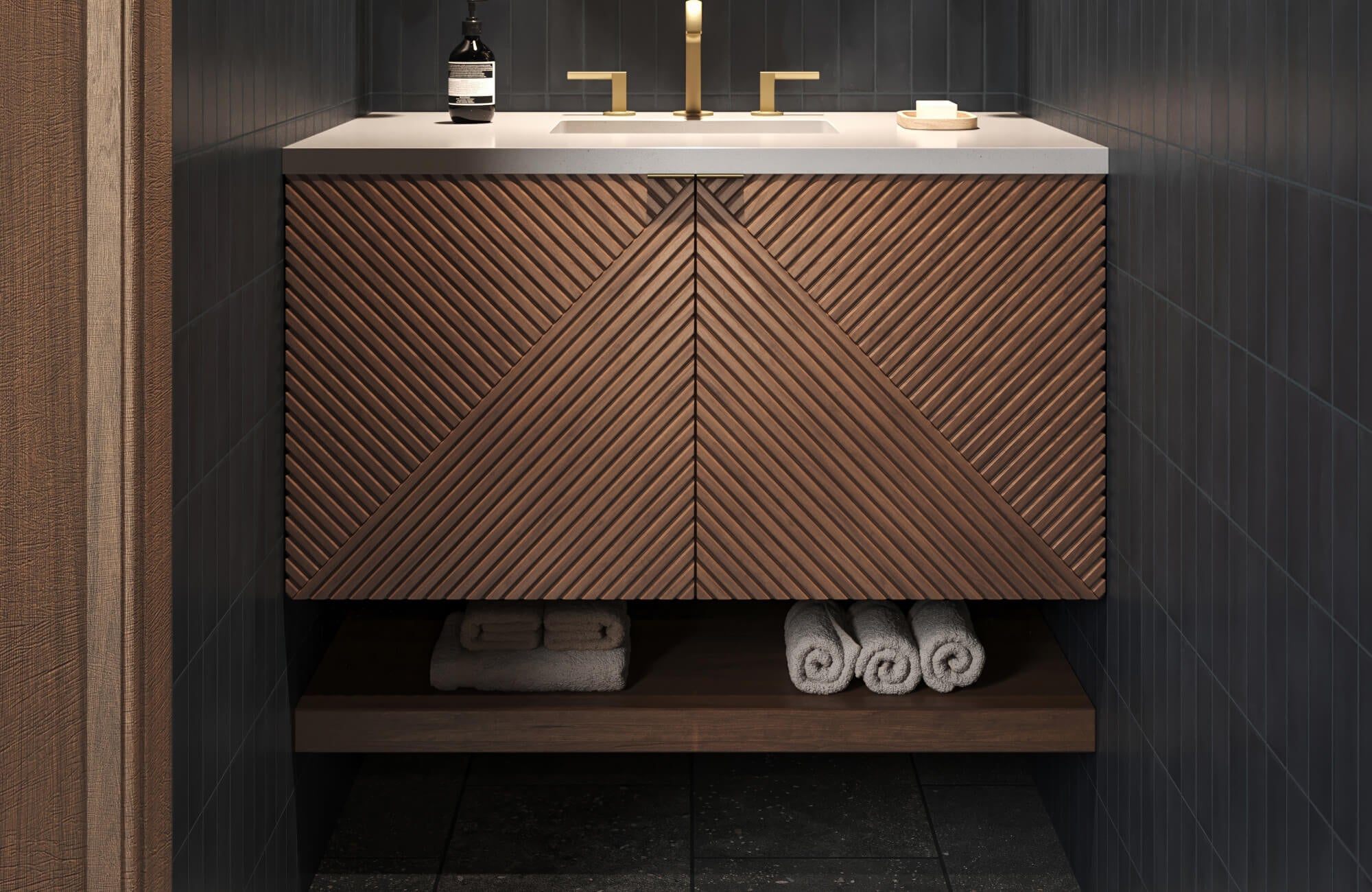
On the other hand, wall-mounted vanities, often called floating vanities, deliver a strikingly modern appearance. Suspended above the floor, they create a sense of openness that visually enlarges smaller bathrooms. Their elevated form not only enhances airflow but also makes cleaning the floor underneath a breeze. One standout design is the Royce 36" Single Vanity in Chestnut with 3 cm White Zeus Quartz Top, seen in the picture above. Its warm chestnut finish and chevron-textured doors bring rich depth to the space, while the crisp white quartz top adds contrast and refinement. Although floating vanities excel in contemporary or minimalist interiors, installation can be more complex. You’ll need to ensure your wall can support the weight, especially when the vanity is fully loaded. Proper plumbing alignment and secure mounting are key to long-lasting performance and style.
Rustic, Contemporary, and Transitional Designs
If you’re drawn to a cozy, natural atmosphere, rustic vanities may be the ideal fit. These designs emphasize raw textures, visible wood grains, and earthy finishes. They often incorporate elements like reclaimed wood, weathered stains, and hammered metal hardware that evoke charm and authenticity. This style works beautifully in farmhouse, cottage, or industrial bathrooms where the goal is to feel grounded and connected to organic materials.
Contemporary vanities take the opposite route, embracing sleek lines and understated elegance. These designs are all about simplicity and function, often incorporating flat-panel doors, high-gloss finishes, and innovative features like handle-less drawers and integrated lighting. Their minimalist aesthetic suits modern bathrooms where clutter-free surfaces and a streamlined appearance are key priorities. You’ll find these vanities in a range of neutral tones that promote a calm, sophisticated environment.
For something more balanced, transitional vanities bring together the best of both worlds. They blend traditional touches, such as framed doors or subtle molding, with cleaner lines and modern finishes. This style is ideal if you want a design that won’t feel outdated as trends change. Transitional vanities are also highly versatile, adapting well to a wide range of bathrooms, whether you're leaning classic, modern, or somewhere in between.
Color, Finish, and Hardware Details
The color of your vanity can dramatically shape the atmosphere of your bathroom. Soft tones like whites, light grays, or pastels enhance brightness and give your space a clean, spacious feel. These shades are particularly effective in bathrooms with limited natural light. A timeless example of a bright, clean aesthetic is the Bridgette 60" Double Vanity in Bright White with 3 cm White Zeus Quartz Top. Its crisp white finish lends a fresh, airy feel to the space, while the matching white quartz countertop adds a seamless, polished look that reflects light beautifully. This combination is ideal for those looking to enhance a bathroom’s openness without compromising on elegance.
On the other hand, darker colors such as navy blue, charcoal, or espresso bring a sense of richness and drama, grounding the room and making a bold design statement. If you prefer something warmer, natural wood tones introduce a soothing, organic character that complements both rustic and modern styles.
Moving beyond color, finish selection adds another layer of personality and practicality. A matte finish lends a soft appearance and hides fingerprints, making it a smart choice for busy spaces. Glossy finishes, in contrast, reflect light and amplify the sense of cleanliness, often appearing in high-end or contemporary bathrooms. If you’re looking for something in between, satin or semi-gloss finishes offer a subtle sheen that balances elegance with durability.
Finally, hardware may seem like a small detail, but it has a big impact. The style, shape, and material of handles, knobs, or pulls can reinforce your vanity’s overall theme. Sleek chrome or brushed nickel suits modern designs, while or oil-rubbed bronze can elevate a traditional or rustic look. These components are not only decorative but also functional, influencing how comfortably and easily you interact with your vanity each day. Their placement and style tie everything together, giving your bathroom a polished, intentional finish.
Materials That Matter
Materials used in a bathroom vanity determine its longevity and performance under constant moisture exposure. Selecting the right combination of base and countertop materials ensures durability, ease of maintenance, and alignment with the desired look.
Common Vanity Base Materials
The material used for the vanity base sets the stage for how well your vanity will handle daily use and changing humidity levels.
Wood
Among the most enduring and versatile options, solid wood continues to be a favorite for its natural durability and timeless character. Solid wood is a popular choice if you’re looking for warmth and richness. It brings a high-end feel, especially when stained or painted to highlight the grain.
MDF
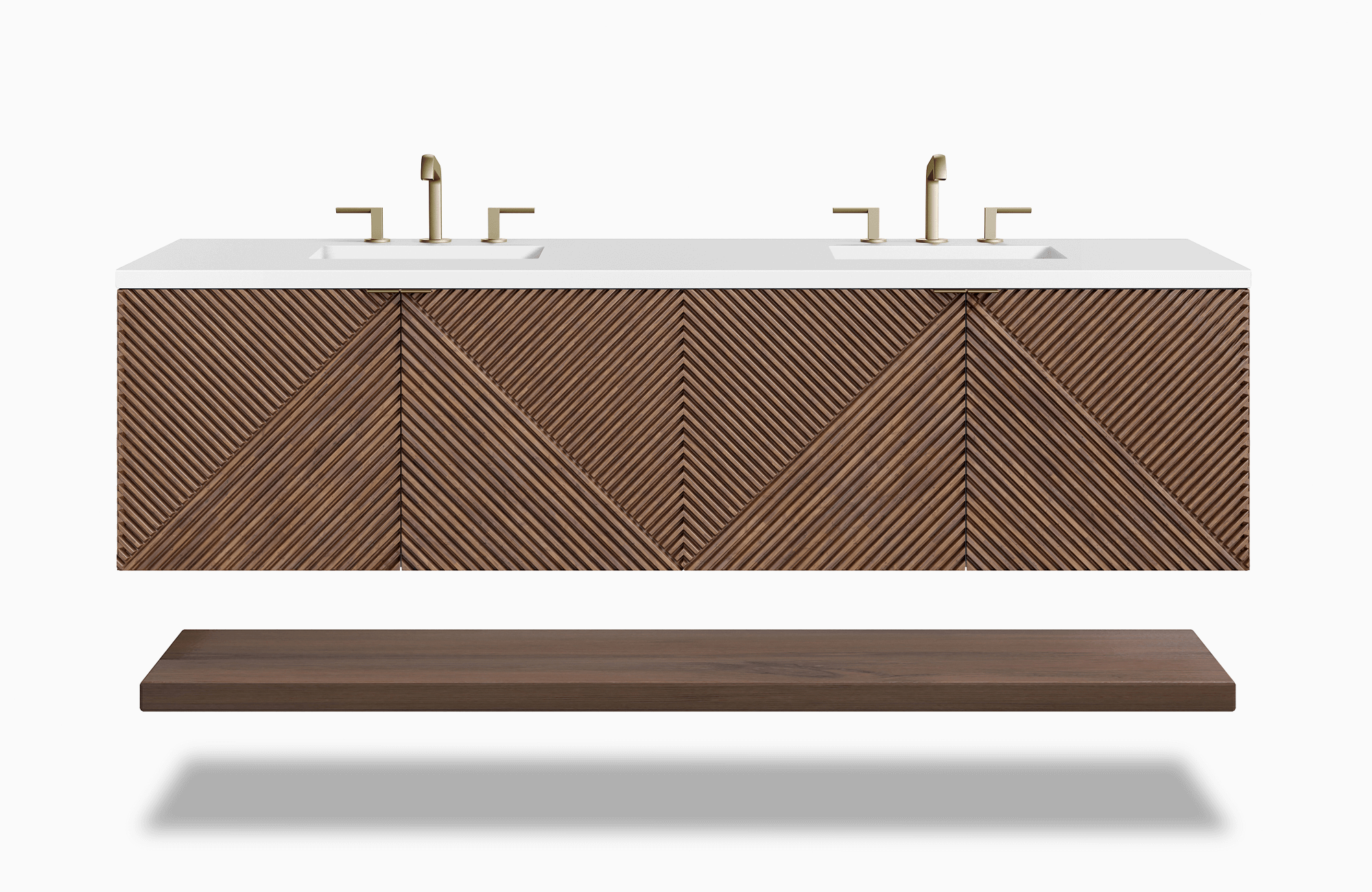
If you prefer something more budget-friendly, medium-density fiberboard (MDF) offers a smooth surface that holds paint well and resists expansion due to temperature fluctuations. Edward Martin’s Royce 72" Double Vanity in Chestnut with 3 cm White Zeus Quartz Top, shown in the image above, is a great example. Its geometric wood-textured façade in a warm chestnut finish adds depth and elegance, while its MDF core provides stability and cost efficiency. This combination of aesthetic design and practical construction makes it an ideal choice for those who want high-end style without the high-end price tag.
Plywood
Plywood provides a sturdier option and, especially in its marine-grade form, offers excellent moisture resistance. It consists of layered wood sheets bonded together, creating a strong, long-lasting structure. However, it can be more expensive than MDF and may still warp over time if not properly sealed and maintained.
Metal
For a more industrial or contemporary look, metal bases like stainless steel or aluminum can provide both sleek aesthetics and top-tier durability. They're resistant to moisture, mold, and mildew but may not suit every bathroom style. Metal surfaces can also show fingerprints and scratches more easily, and they may feel cold or impersonal in warmer design schemes.
Synthetic
Synthetic materials such as PVC are completely waterproof and easy to clean. Though they lack the tactile warmth of natural materials, they’re practical and low-maintenance, especially for busy or rental bathrooms. However, they can sometimes appear less refined or lower in quality compared to wood or stone, which may affect the overall aesthetic of a high-end space.
Countertop Material Selection
When choosing a vanity countertop, it’s essential to balance looks with practicality.
Quartz
Quartz is one of the most popular choices due to its non-porous nature, which means you won’t need to seal it or worry about stains from water or beauty products. Its engineered structure also makes it highly resistant to scratches, heat, and everyday wear.
Marble
If you’re drawn to something more luxurious, marble offers unmatched elegance with its unique veining and soft, luminous finish. Its natural beauty and timeless appeal make it a favorite in upscale bathroom designs. Because it’s porous and prone to staining, regular sealing and cautious use are necessary to keep it looking its best.
Granite
Granite presents a slightly more forgiving alternative. It still delivers a premium appearance but is denser and more resistant to moisture and scratches than marble. However, it is still a porous material and requires periodic sealing to prevent staining and bacteria buildup.
Solid Surface
Solid surface materials, such as Corian, offer seamless construction and the advantage of easy repair; scratches can often be buffed out with minimal effort. These materials also allow for integrated sinks, creating a sleek, unified look. However, they are more prone to scratching than stone and can be damaged by impact or harsh bathroom products if not properly maintained.
Laminate
If you’re working within a tighter budget, laminate countertops are a customizable and affordable solution. They come in a wide variety of patterns and finishes but require careful maintenance, as they can delaminate or bubble when exposed to excessive moisture or heat.
Eco-Friendly and Sustainable Alternatives
Sustainability is becoming a major consideration in bathroom design, and there are plenty of environmentally friendly materials to explore for your vanity.
Bamboo
Bamboo is a standout option. It grows rapidly, making it a highly renewable resource. It’s also naturally resistant to moisture and has a clean, minimalist appearance that works well in both modern and transitional bathrooms. With proper sealing, it can offer long-term durability while maintaining a light, airy look.
Reclaimed Wood
Reclaimed wood adds both sustainability and character to your vanity. Each piece tells a story, often featuring weathered textures and irregular grain patterns that give a rustic, handcrafted feel. Using reclaimed wood reduces the demand for new lumber and brings a unique visual warmth to your space. However, it may contain imperfections or hidden damage that require extra preparation, sealing, or reinforcement to ensure long-term durability in a moisture-prone bathroom environment.
Recycled Materials
If you want something truly different, countertops made from recycled materials such as crushed glass, paper composites, or eco-friendly resins introduce unexpected color and texture combinations. These surfaces are designed to withstand bathroom conditions while making a bold environmental statement. Even so, their durability and maintenance needs can vary depending on the specific material, and some options may be more prone to chipping, staining, or discoloration over time.
To ensure that the materials you choose meet recognized green standards, look for certifications like FSC (Forest Stewardship Council) for responsibly harvested wood or GREENGUARD for low chemical emissions. These labels provide peace of mind that your vanity doesn’t just look good; it’s also good for the planet.
Storage and Organization Solutions
Today’s vanities prioritize smart storage that keeps clutter at bay and supports streamlined routines. Storage solutions vary based on user needs, room size, and the number of people sharing the space. Choosing the right layout and features can turn a basic vanity into an efficient, stress-reducing hub for daily life.
Drawer vs Cabinet Storage
The internal structure of your vanity plays a big role in how organized your bathroom stays. Drawers offer a high level of accessibility, especially for smaller items you reach for every day, like toothbrushes, hairbrushes, skincare products, or makeup. With full-extension mechanisms, you can pull the entire drawer out and clearly see everything inside. This eliminates the need to dig through crowded spaces or knock over bottles to find what you need. Many drawers also come with dividers, which you can use to group similar items together and maintain neatness without constantly rearranging.
Cabinets, on the other hand, work better for storing bulkier items such as cleaning supplies, extra towels, or larger grooming tools like hair dryers. However, without added features, they can become a deep, underutilized space. That’s where enhancements like pull-out trays, stacking bins, or tiered shelving come in. These additions improve visibility and function, transforming the cabinet from a catch-all into an organized and intentional storage zone. When deciding between drawers and cabinets, it’s all about identifying how you use your bathroom and what kinds of storage best support your habits.
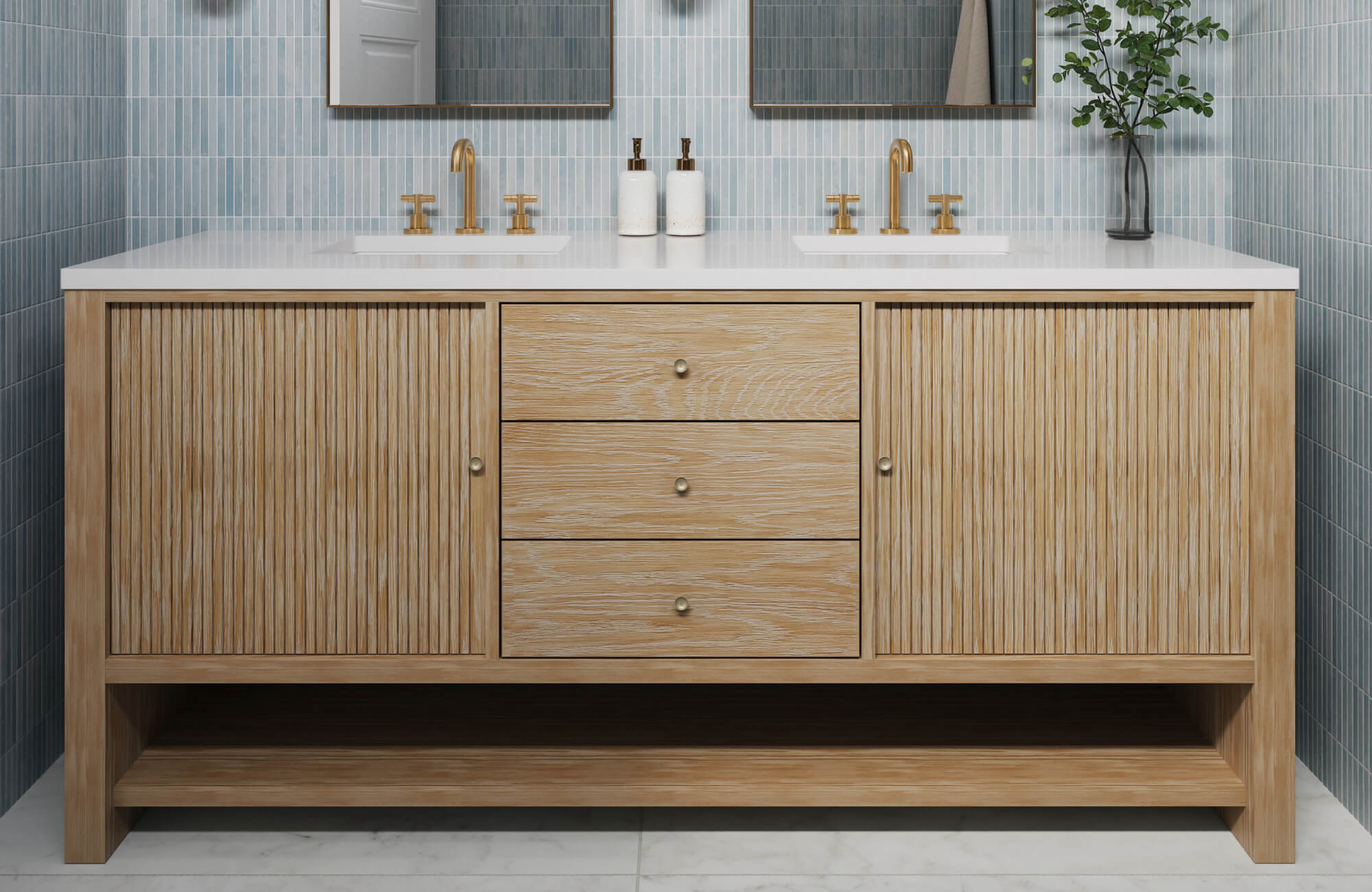
A thoughtful combination of both storage types is seen in the Holly 72" Double Vanity in Sunwashed Oak with 3 cm White Zeus Quartz Top, as seen in the picture above. With its balanced layout of center drawers flanked by spacious cabinets, it accommodates a wide variety of storage needs. The soft, sunwashed oak finish also lends a relaxed and breezy feel, while the clean white quartz top adds brightness, making it an elegant solution for organized, stylish bathrooms.
Built-In Organizational Features
Today’s bathroom vanities are evolving with built-in features designed to simplify your routine and reduce clutter. Pull-out trays can hide away grooming tools like curling irons and electric razors while keeping them accessible when needed. Many of these trays now include integrated electrical outlets, so you can plug in devices without creating a tangled mess on your countertop. This thoughtful integration not only keeps your space looking cleaner but also improves safety and convenience.
Drawer dividers and sectioned compartments are other popular upgrades, making it easy to keep different categories of items like cosmetics, first-aid supplies, and toiletries organized and visible. Some vanities even offer hidden hampers for managing laundry discreetly, as well as designated slots for paper products or extra toiletries. By tailoring the internal configuration of your vanity to fit your daily rhythm, you reduce visual noise and speed up your routine, all while maintaining a more polished, put-together bathroom.
Adapting Storage for Shared Bathrooms
When multiple people use the same bathroom, storage becomes more complex and more important. To minimize conflicts and streamline usage, it helps to create personalized zones. If you’re sharing with a partner, a double sink vanity instead of a single sink vanity can provide separate areas, allowing each person to have their own drawers or shelves. This also keeps essentials within arm’s reach and avoids the overlap that leads to clutter. Custom inserts or color-coded organizers can further help keep items distinct and easy to find.
For family bathrooms, especially those used by children, accessibility is key. Lower drawers make it easier for younger users to reach their things without help, and labeled containers keep shared products orderly and easy to identify. In guest bathrooms, where storage needs vary, a balanced combination of open shelving and concealed compartments works best. You can also display towels or decorative items for an inviting look, while still providing hidden storage for toiletries and cleaning supplies. Regardless of the arrangement, organizing a shared vanity means thinking beyond storage. It’s about creating a respectful, functional environment for everyone who uses the space.
Plumbing and Installation Considerations
Proper planning and installation ensure that your vanity performs well and lasts long. Understanding plumbing needs and installation complexity is key to avoiding surprises during renovations. Whether you’re upgrading an old vanity or starting from scratch, aligning design with technical requirements is essential for a seamless fit.
Plumbing Compatibility and Constraints
Before selecting a vanity, it’s crucial to understand how its design interacts with your bathroom’s existing plumbing layout. The type of sink you choose whether it’s undermount, vessel, or integrated, directly affects how both the drain and faucet are installed. For example, vessel sinks often require taller faucets or wall-mounted fixtures, which might not align with your current plumbing setup. If you go with an undermount or integrated sink, the faucet typically needs to be deck-mounted, which could mean drilling into the countertop or adjusting the faucet spread.
You also need to verify the placement and height of your water supply and drain lines. If the vanity’s internal layout or drawer configuration doesn’t accommodate the plumbing, you might face time-consuming and expensive modifications. Checking measurements and pipe alignment in advance allows you to choose a vanity that fits without forcing a redesign of the entire bathroom. A bit of upfront diligence will spare you the headache of cutting through back panels or rerouting pipes after installation has begun.
Installation Types and Complexity
Not all vanities are created equal when it comes to installation. Freestanding vanities are generally the simplest to install and are well-suited to DIY projects. Because they rest directly on the floor and often require only minimal anchoring to the wall, they can be positioned and connected with relative ease, especially if you’re working with an existing plumbing setup that doesn’t need changes.
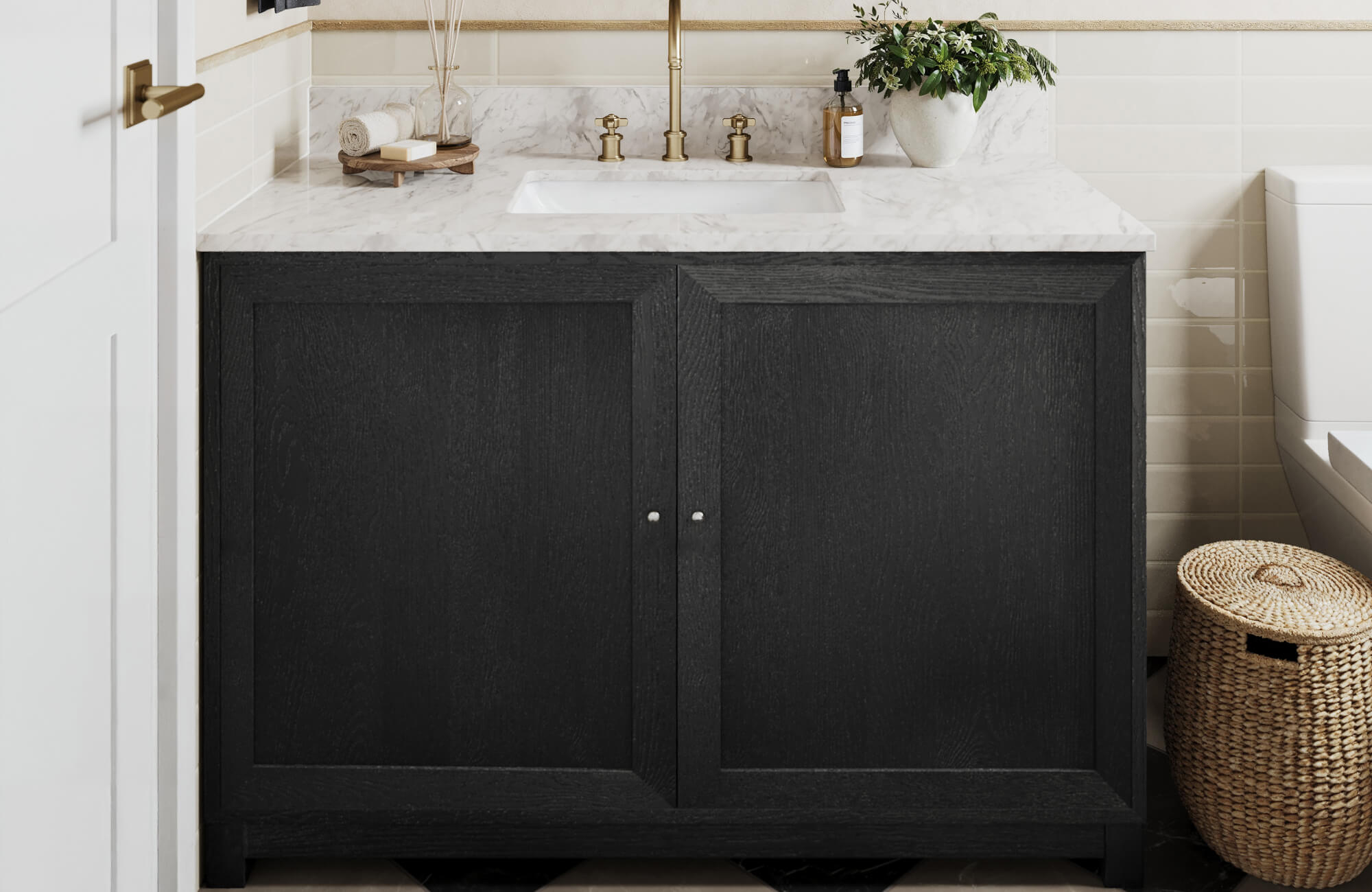
A beautiful example of this type is the Josephine 48" Single Vanity in Satin Drifted Black Veneer with Carrara Marble Top, shown in the bathroom image above. The rich black finish gives the piece a refined yet grounded presence, while the Carrara marble top adds a layer of timeless elegance. Its floor-mounted design not only simplifies the installation process but also enhances stability, making it an excellent choice for both classic and transitional spaces.
Wall-mounted vanities, in contrast, bring added complexity. These units must be securely anchored to wall studs to support the weight of the vanity, sink, and stored items. If your chosen vanity includes integrated lighting or electrical outlets, you may also need to adjust wiring or install new outlets. Custom vanities, especially those designed around specific storage or layout needs, can require even more preparation, including moving plumbing lines or reinforcing walls. Knowing when to bring in a professional not only saves time but also ensures that everything from water flow to electrical safety meets local building codes.
Designing with Purpose
A bathroom vanity is a defining element that blends beauty, efficiency, and personal style. From the structure and materials to the hardware, layout, and installation, every decision shapes how the space serves you day after day. By understanding the full potential of what a bathroom vanity can offer, you transform it from a standard sink base into a thoughtfully curated centerpiece, one that reflects your taste, supports your routine, and elevates the entire bathroom experience.
If you're ready to bring your vision to life or have questions about choosing the right vanity for your space, we are here to help. Whether you're planning a full renovation or simply upgrading key elements, our experts can guide you through finishes, materials, and custom options that align with your aesthetic and practical needs. Connect with us to explore solutions tailored to your bathroom—because great design starts with a thoughtful conversation.
Follow us on Instagram
@EDWARD.MARTIN
)
)
)
)
)
)
)
)
)
)
)
)
)
)
)
)